1.1.1 - Stable Angina Patterns
Why it matters
- Stable angina is one of the most common shelf-tested chest pain patterns because the diagnosis depends on history structure, not just biomarkers.
- The exam often hides the correct answer behind noise: diabetes, GERD symptoms, anxiety, or musculoskeletal tenderness that may be present but do not explain an exertional pressure pattern.
- Correct next-step testing depends on two pivots: can the patient exercise? and is the resting ECG interpretable?
- Management questions commonly test the difference between symptom relief, event prevention, and red flags that require reclassification to ACS.
Key Terms & Must-Know Facts
1.1.1.1 Key terms
- Stable angina: Predictable chest discomfort triggered by exertion or emotional stress and relieved by rest or nitroglycerin.
- Demand ischemia: Myocardial oxygen demand exceeds supply without acute plaque rupture.
- Obstructive CAD: Flow-limiting coronary atherosclerosis, classically producing exertional symptoms.
- Typical angina: Substernal discomfort, provoked by exertion/emotion, relieved by rest or nitroglycerin.
- Atypical angina: Meets 2 of the 3 classic features.
- Nonanginal chest pain: Meets 0-1 of the classic features.
- Functional capacity: Ability to exercise enough for exercise-based testing.
- Baseline ECG uninterpretable: Findings such as LBBB, paced rhythm, or marked resting ST abnormalities that limit standard exercise ECG interpretation.
- Stress ECG: Preferred initial test when the patient can exercise and the resting ECG is interpretable.
- Stress imaging: Stress echo or nuclear perfusion testing used when exercise ECG alone is not appropriate.
- Coronary CT angiography: Anatomic test sometimes used in stable chest pain evaluation, especially lower-intermediate risk settings.
- Sublingual nitroglycerin: Short-acting symptom relief for angina episodes.
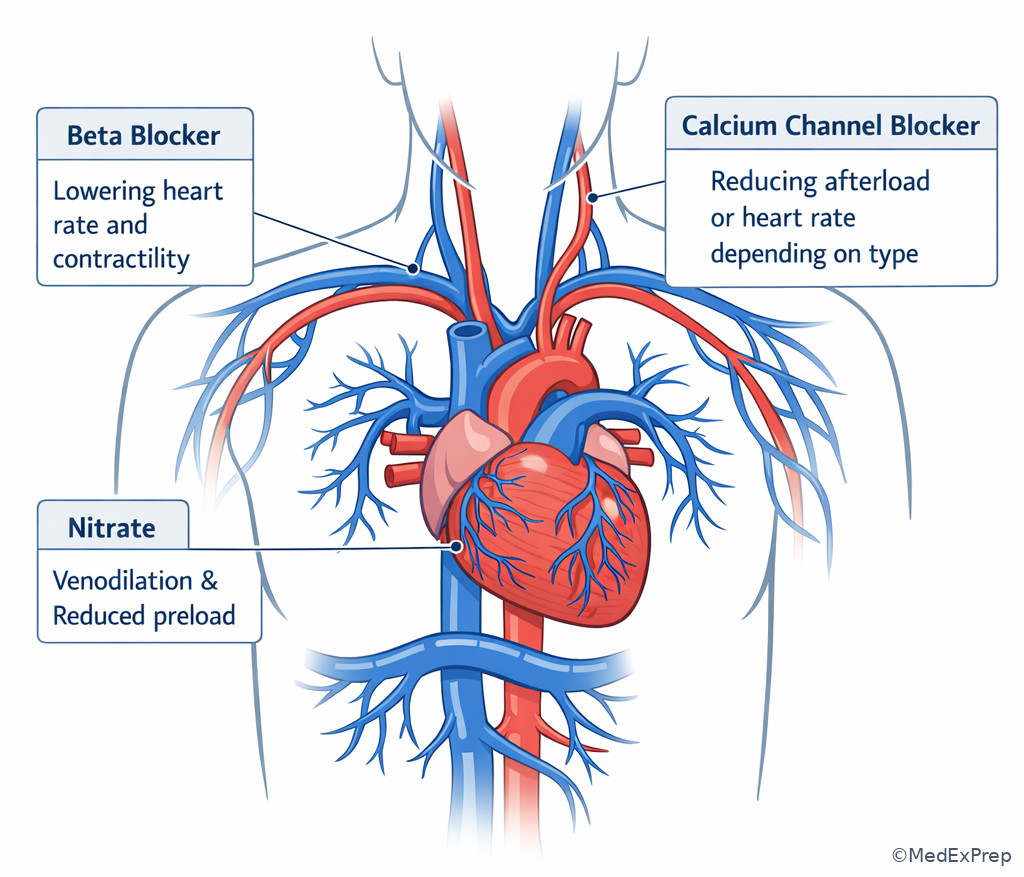
- Beta blocker: First-line antianginal agent for chronic symptom control in many patients.
- Secondary prevention: Aspirin, statin, blood pressure control, diabetes management, smoking cessation, exercise, and risk-factor modification.
1.1.1.2 Must-know facts
- Stable angina is predictable; unstable angina is new, worsening, or at rest.
- Normal troponin does not prove stable angina if the history suggests unstable symptoms.
- Classic duration is often minutes, not seconds and not many continuous hours without change.
- Relief with nitroglycerin is not specific; esophageal spasm can also improve.
- Chest wall tenderness lowers the likelihood of angina but does not fully exclude CAD if the exertional pattern is classic.
- Exercise treadmill ECG is best when the patient can exercise and has a readable resting ECG.
- Do not order routine stress testing during active ischemic symptoms concerning for ACS; treat as acute first.
- Beta blockers reduce myocardial oxygen demand by lowering heart rate and contractility.
- Aspirin and statins reduce future ischemic events; nitrates mainly improve symptoms.
- Red-flag progression from predictable exertional pain to pain at rest should trigger ACS thinking, not “more stable angina therapy.”
Core content
Exam takeaway: Use the trigger-relief pattern first, then decide whether the symptoms are still truly stable.
flowchart TD
A[Chest discomfort] --> B{Triggered by exertion or stress?}
B -- Yes --> C{Relieved by rest or nitroglycerin in minutes?}
C -- Yes --> D[Stable angina pattern likely]
C -- No --> E[Reconsider ACS or another cause]
B -- No --> F{Pleuritic, positional, reproducible, or burning post-meal?}
F -- Yes --> G[Consider nonischemic causes]
F -- No --> H[Need broader chest pain differential] Exam takeaway: The two test-selection pivots are exercise capacity and whether the resting ECG can be interpreted.
flowchart TD
A[Suspected stable ischemic symptoms] --> B{Can exercise?}
B -- Yes --> C{Baseline ECG interpretable?}
C -- Yes --> D[Exercise treadmill ECG]
C -- No --> E[Exercise stress imaging]
B -- No --> F[Pharmacologic stress imaging]
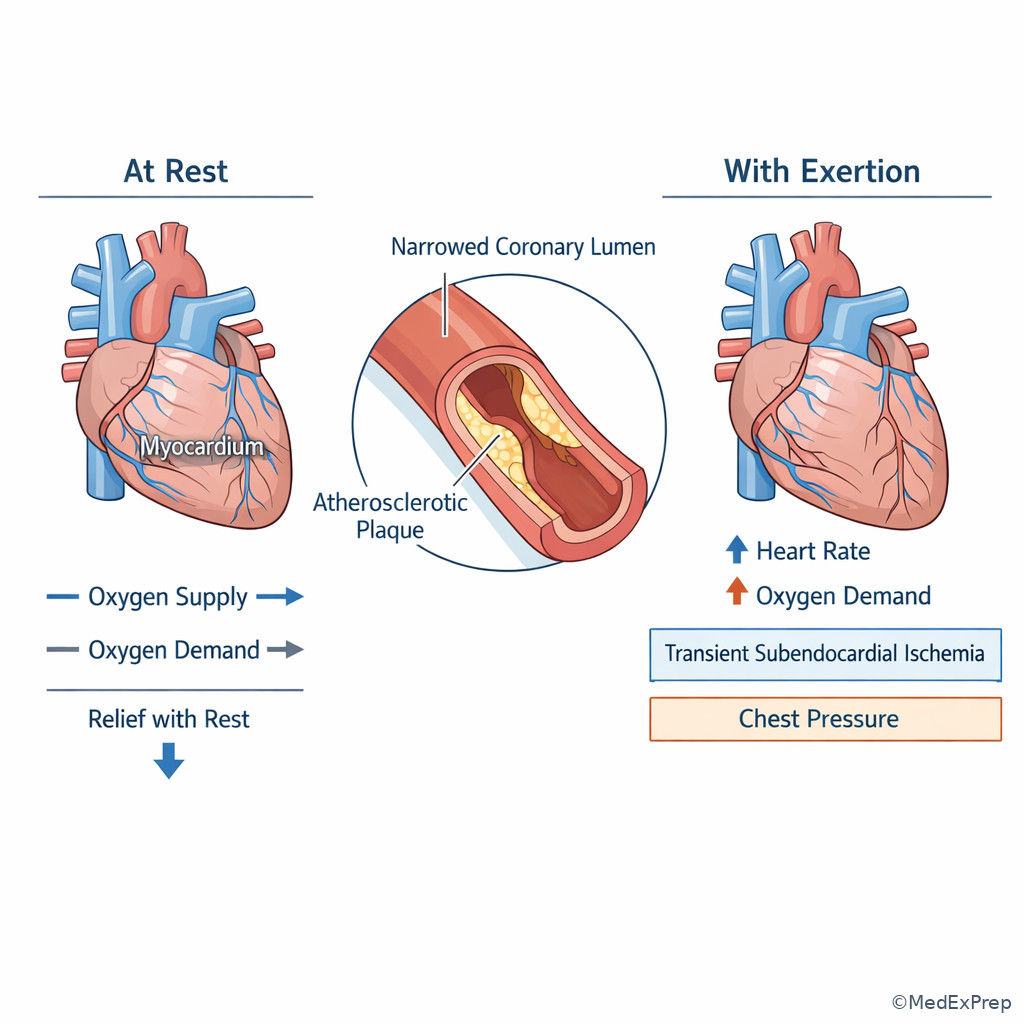
F --> G[Consider anatomic testing in selected patients] Exam takeaway: Stable angina reflects fixed coronary narrowing causing ischemia during increased demand rather than acute plaque rupture.
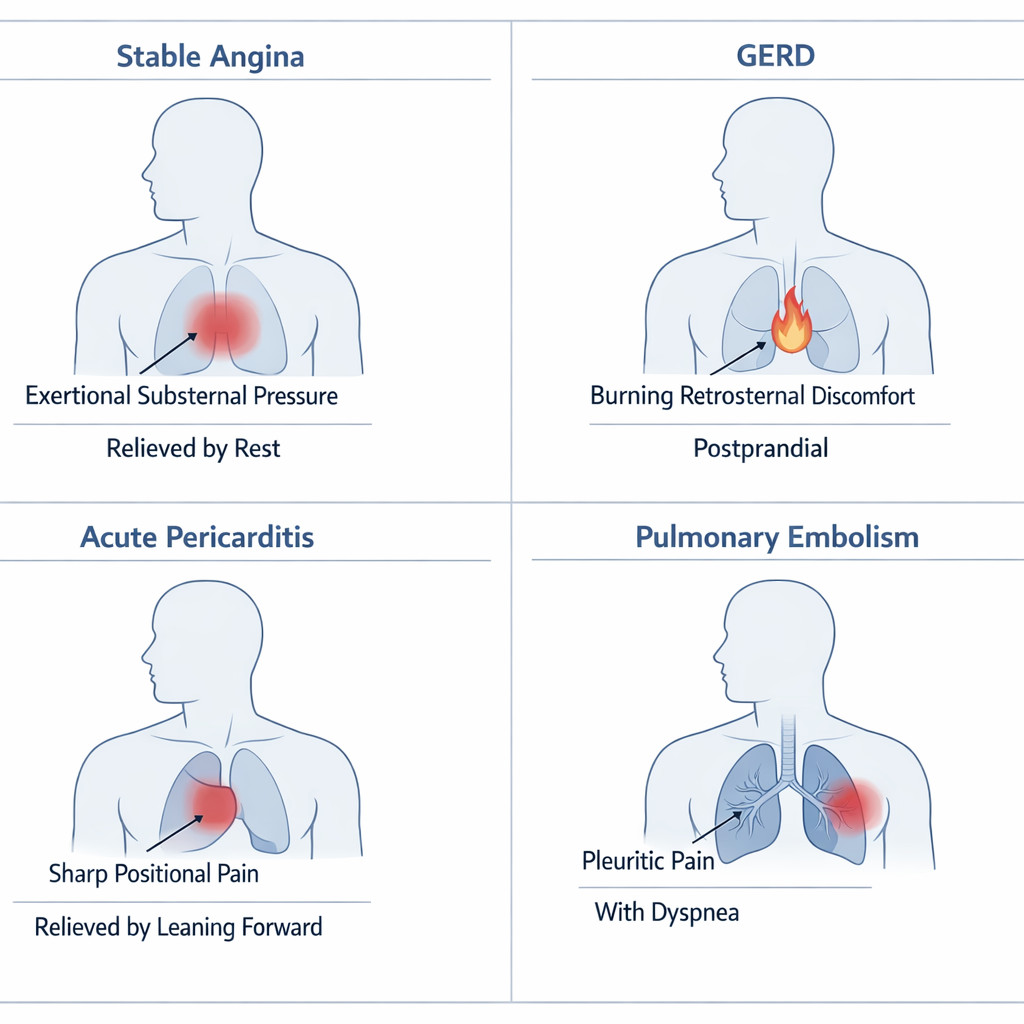
Exam takeaway: Focus on the discriminating symptom clue rather than the patient's risk factors alone.
Exam takeaway: Separate symptom relief from event prevention and escalate only when symptoms persist or risk is high.
flowchart TD
A[Confirmed or suspected stable angina] --> B[Immediate symptom relief: sublingual nitroglycerin]
B --> C[Chronic symptom control: beta blocker first line]
C --> D[If persistent symptoms: add calcium channel blocker or long-acting nitrate]
D --> E[Secondary prevention: aspirin, statin, risk-factor control]
E --> F[High-risk or refractory symptoms: cardiology evaluation and possible angiography]
Exam takeaway: A change in pattern to rest pain, longer duration, or crescendo frequency should reclassify the problem as possible ACS.
flowchart TD
A[Known exertional chest pressure] --> B{Still predictable?}
B -- Yes --> C[Stable angina pathway]
B -- No --> D{At rest, longer, or more frequent?}
D -- Yes --> E[Possible unstable angina or MI]
E --> F[Urgent ECG, troponin, ACS management]
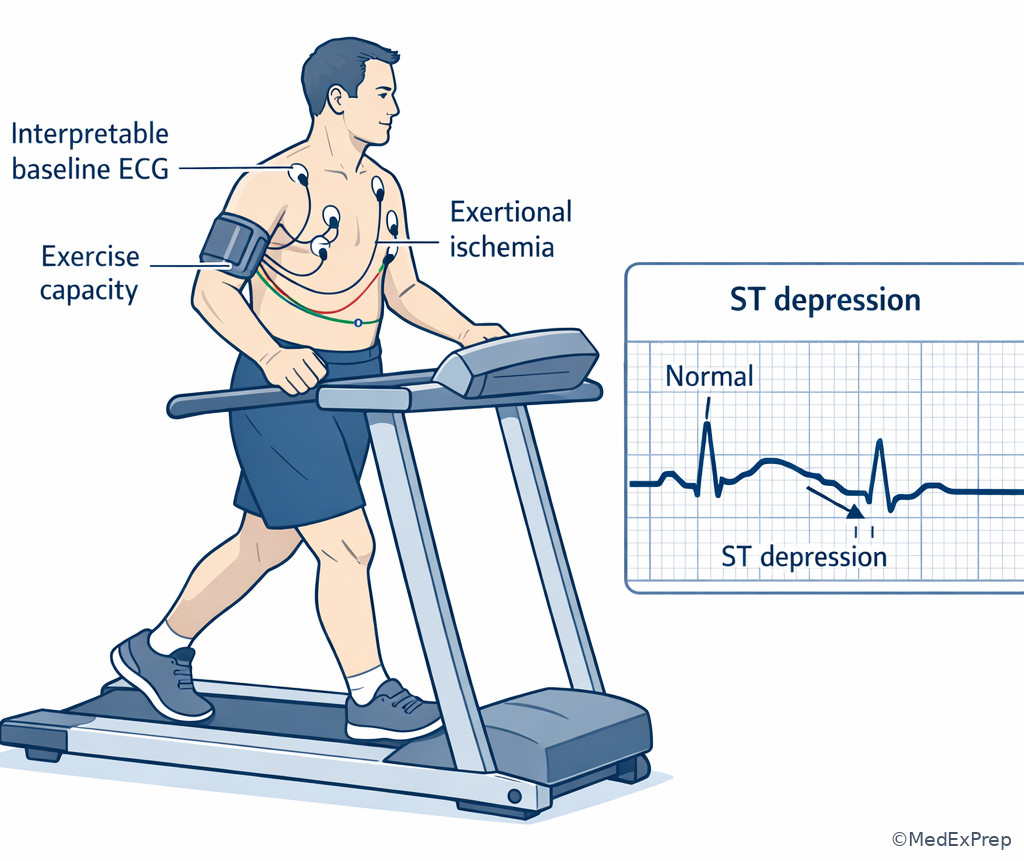
D -- No --> G[Reassess differential and risk] Exam takeaway: Exercise treadmill ECG is useful only when the patient can exercise and the baseline tracing is interpretable.
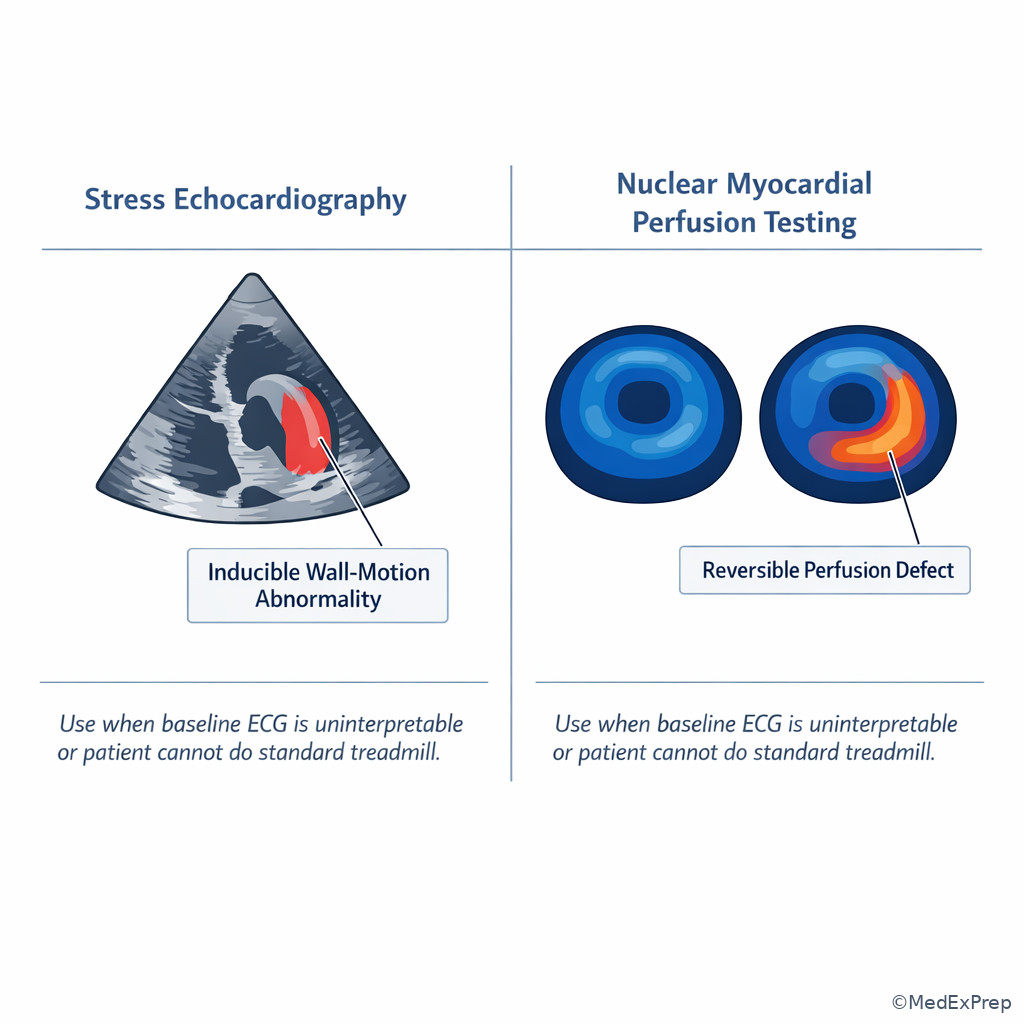
Exam takeaway: Stress echo and nuclear perfusion testing are the usual substitutes when plain treadmill ECG will mislead.
Exam takeaway: Beta blockers lower demand, nitrates venodilate for symptom relief, and calcium channel blockers are common add-on options.
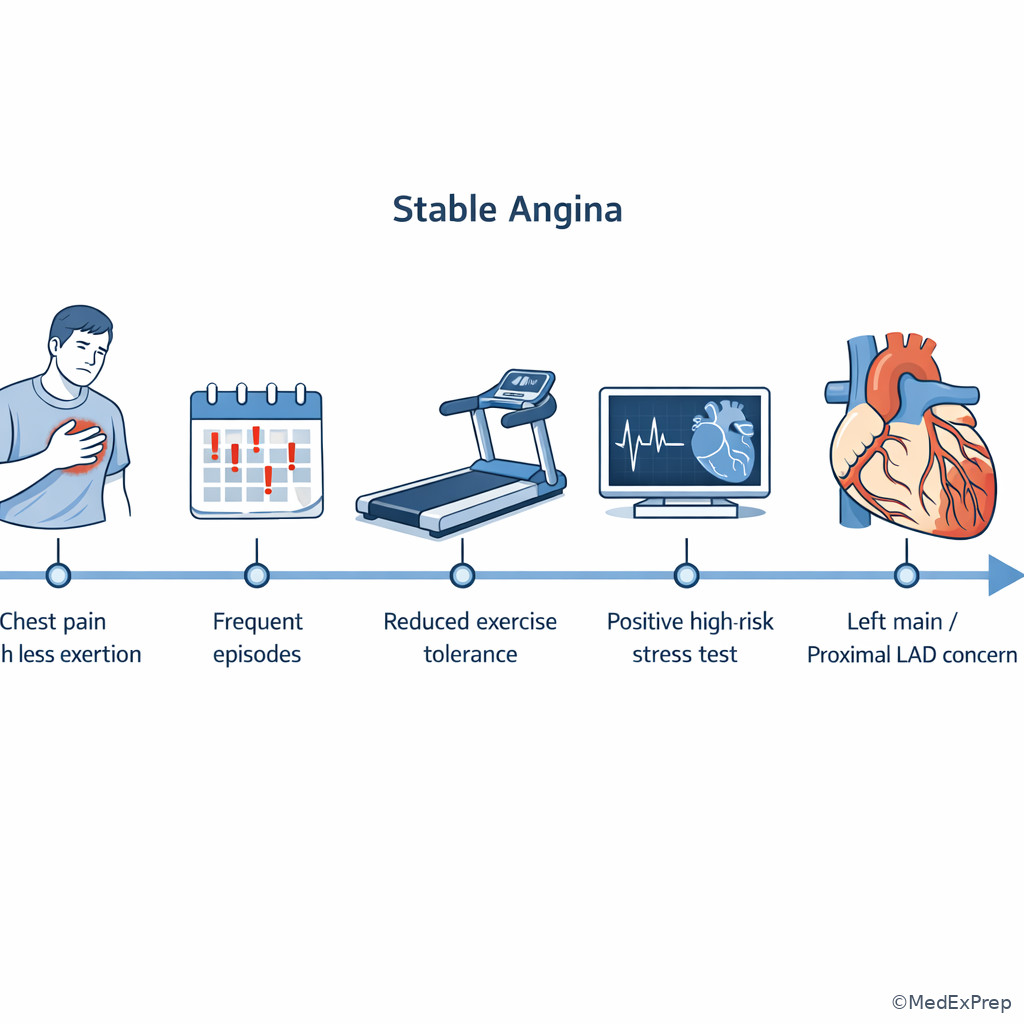
Exam takeaway: Refractory symptoms, low exercise tolerance, or high-risk stress findings move the patient beyond simple outpatient symptom management.
1.1.1.3 Foundational pattern recognition: when chest pain fits stable angina
A Explanation
The first decision conflict is simple but heavily tested: Is this pain truly a stable ischemic pattern, or is the stem trying to lure you toward a noncardiac diagnosis or ACS? Stable angina is a predictable discomfort pattern caused by fixed atherosclerotic narrowing. The decisive rule is that symptoms appear with a reproducible increase in myocardial oxygen demand, usually exertion or emotional stress, and improve with rest within minutes. See Fig 1 and Fig 3.
On shelf questions, the pain is often described as pressure, heaviness, squeezing, or substernal tightness. It may radiate to the jaw, shoulder, or arm, but radiation alone does not make the diagnosis. The key is pattern consistency. If the patient can predict that climbing stairs or walking uphill brings on symptoms and stopping relieves them, think stable angina. If the pain is new at rest, increasing in frequency, or lasting longer than the prior pattern, reject stable angina and think ACS instead.
WHY THIS IS TESTED: Exam writers know many students overvalue isolated features like “burning,” “relieved by nitroglycerin,” or “normal troponin.” The tested pattern is that chronic demand-induced symptoms point to stable angina, while changing or rest symptoms move the case out of the stable category.
B Worked example
A 64-year-old man presents for clinic evaluation of chest discomfort for 4 months. He has type 2 diabetes, hypertension, and GERD. He reports a substernal “burning pressure” that starts after walking two blocks uphill and resolves 4-5 minutes after sitting. He takes omeprazole without change in these episodes. Yesterday he had mild reproducible tenderness over the left pectoralis after lifting boxes. Resting ECG is normal, and a recent high-sensitivity troponin drawn in urgent care was normal. What is the most likely explanation for his recurring exertional symptoms?
Reasoning chain: Identify task: this is a diagnosis/pattern-recognition question. Extract key facts: age and CAD risk factors, reproducible exertional trigger, relief with rest in minutes, predictable symptoms over months. Apply rule: that pattern is stable angina until proven otherwise. Eliminate distractors: GERD is tempting because of “burning” and known reflux, but GERD is usually meal- or recumbency-related rather than predictably exertional. Musculoskeletal pain is tempting because of chest wall tenderness, but that tenderness followed lifting boxes and does not explain the recurring uphill episodes. Normal troponin does not refute stable angina because the stem is not describing acute infarction. Verify: chronic, unchanged exertional chest pressure fits stable angina from fixed coronary obstruction.
C Exam trap
D Checkpoint
Question: A 59-year-old woman with hyperlipidemia and smoking history has 3 months of chest tightness when climbing stairs. The discomfort resolves within several minutes of stopping. Which feature most strongly supports stable angina rather than a nonischemic cause?
- Relief after using an antacid
- Reproducible onset with exertion and relief with rest
- Pain lasting 8 hours continuously after exercise
- Sharp pain worse with inspiration
- A. Tempting because GERD commonly causes retrosternal discomfort, but antacid response is not the defining rule for angina and points away from ischemia.
- B. Tempting because it sounds almost too classic, and it is right because predictability with exertion plus relief with rest is the core stable angina discriminator.
- C. Tempting because ischemia can follow exertion, but prolonged continuous pain without change is less typical for stable angina.
- D. Tempting because patients may use “chest pain” broadly, but pleuritic pain suggests pulmonary or pleural causes rather than demand ischemia.
1.1.1.4 Pathophysiology and symptom mechanics: why exertion unmasks ischemia
A Explanation
The next decision conflict is whether the mechanism is a fixed obstruction with exertional supply-demand mismatch or an acute plaque event. Stable angina usually reflects atherosclerotic coronary narrowing that limits flow reserve. At rest, baseline flow may be enough. During exertion, heart rate, contractility, and blood pressure rise, increasing oxygen demand; the stenotic vessel cannot augment supply adequately, and transient ischemia produces chest pressure. See Fig 3.
This mechanism explains the management logic. Beta blockers reduce heart rate and contractility, so they lower demand. Nitrates reduce preload and wall stress, improving the balance between oxygen supply and demand. Calcium channel blockers are useful when beta blockers are contraindicated or inadequate. The shelf point is not memorizing every drug nuance; it is linking mechanism to choice.
Symptoms can be atypical in older adults, women, and patients with diabetes. Instead of classic pressure, they may report exertional dyspnea, fatigue, or epigastric discomfort. The single question is still the same: does the symptom appear with increased demand and improve when demand falls? If yes, ischemia remains plausible. If symptoms are random, positional, pleuritic, or reproducible by palpation alone, reject the stable angina mechanism.
WHY THIS IS TESTED: Students often memorize “substernal pressure” but miss anginal equivalents and do not use pathophysiology to choose therapy. Examiners want you to know why beta blockers help chronic stable angina while antiplatelet and statin therapy mainly prevent future events rather than immediately relieve pain.
B Worked example
A 71-year-old woman with diabetes, CKD stage 3, and osteoarthritis reports 2 months of exertional “shortness of breath and upper chest fullness” while walking from the parking lot to clinic. She denies sharp pain. She also has chronic reflux and says belching sometimes helps. Resting oxygen saturation is normal, lungs are clear, and ECG shows old nonspecific ST-T changes. Which mechanism best explains her recurrent symptoms?
Reasoning chain: Identify task: mechanism. Extract key facts: exertional and reproducible symptoms, anginal equivalent dyspnea/fullness, multiple CAD risk factors, normal lung exam. Apply rule: exertional symptoms in a high-risk patient often represent transient myocardial ischemia from supply-demand mismatch across fixed coronary narrowing. Eliminate distractors: reflux is tempting due to belching relief, but the reproducible exertional trigger is stronger. Pulmonary disease is tempting because of dyspnea, but the normal oxygen saturation and stereotyped exertional threshold argue against a primary lung process. Verify: this is stable angina physiology, even without classic crushing pain.
C Exam trap
D Checkpoint
Question: Which therapy most directly improves anginal symptoms by lowering myocardial oxygen demand in chronic stable angina?
- Atorvastatin
- Metoprolol
- Aspirin
- Clopidogrel
- A. Tempting because statins are essential in CAD, but they primarily reduce future events rather than acutely lower demand-related symptoms.
- B. Tempting because it is both common and mechanistically targeted, and it is right because beta blockers reduce heart rate and contractility, lowering demand.
- C. Tempting because aspirin is standard CAD therapy, but its main benefit is secondary prevention, not direct antianginal symptom relief.
- D. Tempting because antiplatelet therapy matters in coronary disease, but like aspirin it does not directly control exertional symptom generation in stable angina.
- The most useful symptom discriminator for stable angina is predictable exertional onset with relief by rest.
- True or False: Relief with nitroglycerin proves the pain is cardiac. False.
- Name the 3 classic criteria for typical angina: substernal discomfort, provoked by exertion/emotion, relieved by rest or nitroglycerin.
1.1.1.5 Initial evaluation and test selection: choose the right noninvasive study
A Explanation
The decision conflict here is not “which cardiac test exists,” but which initial study is appropriate for this specific patient with suspected stable angina. The single rule that resolves most questions is: if the patient can exercise and the resting ECG is interpretable, choose exercise treadmill ECG. If the patient cannot exercise adequately, use pharmacologic stress testing. If the baseline ECG cannot be interpreted for ischemia, choose stress imaging rather than plain treadmill ECG. See Fig 2.
Uninterpretable ECG settings commonly tested include left bundle branch block, ventricular paced rhythm, pre-excitation, and substantial resting ST-segment abnormalities. A patient with severe arthritis, frailty, deconditioning, or significant peripheral arterial disease may not reach an adequate exercise endpoint, making standard treadmill testing a poor choice even if the ECG is readable.
Resting ECG is still part of the initial workup because it may show prior infarct patterns, baseline conduction abnormalities, or another explanation for symptoms, but a normal resting ECG does not rule out stable ischemia. Likewise, routine troponins are not the main test for a chronic unchanged exertional syndrome unless the history suggests an acute event.
WHY THIS IS TESTED: The shelf loves near-identical answer choices such as exercise ECG, stress echo, nuclear perfusion imaging, and coronary angiography. The correct answer hinges on one operational detail: exercise capacity and ECG interpretability.
B Worked example
A 67-year-old man with diabetes, prior stroke, and bilateral knee osteoarthritis reports 3 months of substernal pressure when hurrying to catch the bus. It resolves after 5 minutes of rest. He denies rest pain. Resting ECG shows left bundle branch block. His hemoglobin is 11.8 g/dL, which distracts toward anemia as a cause of dyspnea. Which is the most appropriate initial noninvasive test?
Reasoning chain: Identify task: choose the test. Extract key facts: stable exertional symptoms, cannot reliably interpret ischemia on ECG because of LBBB, and osteoarthritis may limit exercise. Apply rule: unreadable baseline ECG excludes plain treadmill ECG; limited exercise ability favors pharmacologic stress imaging. Eliminate distractors: standard exercise ECG is wrong because ST changes cannot be interpreted well with LBBB. Coronary angiography is too invasive as an initial test in a stable patient without high-risk features. Troponin testing is for acute injury, not chronic unchanged exertional symptoms. Verify: stress imaging is the appropriate first noninvasive pathway.
C Exam trap
D Checkpoint
Question: A 56-year-old woman with hypertension has predictable chest pressure when climbing stairs. She walks daily without limitation, and her resting ECG is normal. What is the most appropriate initial test?
- Exercise treadmill ECG
- Pharmacologic nuclear stress test
- Immediate coronary angiography
- Serial troponins only
- A. Tempting because it is the simplest option, and it is right because she can exercise and has an interpretable baseline ECG.
- B. Tempting because imaging feels more comprehensive, but it is not the best initial choice when plain exercise ECG is appropriate.
- C. Tempting because the symptoms are suggestive of CAD, but invasive angiography is not the first diagnostic step in an otherwise stable patient.
- D. Tempting because chest pain often prompts troponins, but serial biomarkers alone do not evaluate chronic stable exertional symptoms.
1.1.1.6 Management priorities: symptom control, event prevention, and when to escalate
A Explanation
The management decision conflict is whether you are being asked to choose symptom relief, long-term event reduction, or escalation for worsening disease. These are not interchangeable. In stable angina, sublingual nitroglycerin provides rapid relief of episodes. Beta blockers are often first-line chronic therapy for symptom control because they lower myocardial oxygen demand. If symptoms persist or beta blockers are contraindicated, calcium channel blockers or long-acting nitrates are common alternatives or add-ons. See Fig 5.
Separate that from secondary prevention. Aspirin and high-intensity statin therapy reduce future cardiovascular events. Blood pressure control, diabetes management, smoking cessation, exercise, and weight management matter because the disease is systemic atherosclerosis, not just chest pain. On shelf stems, a patient may feel better with nitrates, but the “most important long-term therapy” may still be statin or aspirin, depending on the options.
Escalation is tested when symptoms become more frequent, occur with less exertion, resist medical therapy, or when stress testing shows high-risk findings. That is when cardiology referral and possible coronary angiography become appropriate. Stable angina is not synonymous with “do nothing urgent.” It means the syndrome is not currently unstable, but risk can still be meaningful.
WHY THIS IS TESTED: Students commonly choose a preventive drug when the stem asks for symptom control, or choose a nitrate when the question asks which therapy reduces future MI risk. The exam is testing whether you understand the job of each intervention.
B Worked example
A 62-year-old man with hypertension, hyperlipidemia, and tobacco use has known stable angina confirmed by exercise stress testing. He uses sublingual nitroglycerin twice weekly with good relief. He asks which medication is most important to reduce his chance of future MI. He also reports occasional heartburn after spicy meals, a distracting detail. Which therapy best addresses that goal?
Reasoning chain: Identify task: event reduction, not symptom control. Extract key facts: established chronic coronary disease, symptoms already relieved by nitroglycerin, asking about future MI prevention. Apply rule: high-intensity statin therapy and antiplatelet therapy reduce future atherosclerotic events; nitrates do not. Eliminate distractors: nitroglycerin is tempting because it works for symptoms, but that is not the asked endpoint. A proton pump inhibitor addresses the distracting reflux clue but not coronary risk. Verify: a statin is central for long-term risk reduction; aspirin is also standard unless contraindicated.
C Exam trap
D Checkpoint
Question: A patient with stable angina continues to have exertional chest pressure despite appropriate use of sublingual nitroglycerin during episodes. Which medication is the best first-line chronic antianginal therapy if there is no contraindication?
- Metoprolol
- Alteplase
- Omeprazole
- Heparin infusion
- A. Tempting because it targets the ischemic mechanism, and it is right because beta blockers are standard first-line chronic symptom-control agents.
- B. Tempting only if one mistakes the scenario for STEMI, but thrombolysis has no role in routine stable angina management.
- C. Tempting because reflux can mimic chest pain, but this stem already established stable angina and asks for chronic antianginal therapy.
- D. Tempting if one confuses stable disease with ACS, but anticoagulation is not indicated for uncomplicated chronic stable angina.
- Best first-line chronic antianginal in many patients: beta blocker.
- True or False: Nitrates lower long-term MI risk. False.
- Name 3 secondary prevention pillars: aspirin, statin, smoking cessation.
1.1.1.7 Integration: stable angina versus unstable angina and chest pain mimics
A Explanation
The final and most exam-relevant decision conflict is whether the patient truly belongs in the stable angina bucket or has crossed into unstable ischemia or a noncoronary mimic. The one finding that reclassifies the case is change in pattern: pain at rest, increasing frequency, longer duration, lower exertional threshold, or reduced response to usual relief. That is the bridge to the upcoming ACS topic. See Fig 6 and Fig 4.
Common mimics each have a discriminator. GERD is classically postprandial, burning, or worse when lying down. Pericarditis is sharp and positional, better with leaning forward. Pulmonary embolism is pleuritic and dyspnea-predominant, often with risk factors for venous thromboembolism. Costochondritis is reproducible with palpation. Aortic dissection is abrupt, severe, and often tearing, with pulse or neurologic asymmetry. The shelf trick is that a patient may have CAD risk factors and still not have angina; likewise, a patient may have atypical wording and still have ischemia if the pattern is exertional and reproducible.
Unstable angina can have normal troponin levels because there is ischemia without detectable necrosis. Therefore, when the story is worsening or rest pain, do not be reassured by a negative biomarker snapshot. That nuance is tested constantly.
WHY THIS IS TESTED: The exam rewards pattern reclassification. A stem that starts sounding like stable angina but then adds “now occurs while watching television” or “more frequent over 2 days” is no longer a routine outpatient workup question.
B Worked example
A 68-year-old man with known stable angina, diabetes, and prior tobacco use reports that his usual chest pressure used to occur only after walking three blocks. Over the last 2 days, he has had episodes while dressing and once while sitting after dinner. Each lasts 15-20 minutes. He says the pain still “feels like his usual angina,” and today’s initial troponin is normal. He also mentions spicy food, making GERD tempting. What is the most appropriate interpretation?
Reasoning chain: Identify task: reclassify the syndrome. Extract key facts: lower exertional threshold, symptoms at rest, longer episodes, known prior stable pattern now changing. Apply rule: change in pattern means unstable ischemia until proven otherwise. Eliminate distractors: GERD is tempting because of post-dinner timing, but the key discriminator is recent rest pain and crescendo course. “Stable angina with poor control” is tempting because the pain feels similar, but the threshold change makes it unstable. Verify: this presentation is concerning for unstable angina/ACS despite an initial normal troponin.
C Exam trap
D Checkpoint
Question: Which new historical feature most strongly requires reclassification away from stable angina?
- Chest pressure after brisk walking that resolves after 3 minutes of rest
- Episodes occurring with less exertion than usual and once at rest
- Mild improvement with nitroglycerin
- Occasional associated belching
- A. Tempting because it still sounds ischemic, but it remains compatible with stable exertional angina if unchanged from baseline.
- B. Tempting because it appears only slightly different, and it is right because reduced exertional threshold and rest pain indicate unstable ischemia.
- C. Tempting because medication response often matters, but nitroglycerin response alone does not define stability.
- D. Tempting because it points toward GERD, but a GI symptom does not override the more important change-in-pattern clue.
Exam Traps & Differentiators
- Most common wrong answer: GERD. Why: “burning” and post-meal details are emotionally sticky. Eliminator: stable angina is tied to exertion and relieved by rest.
- Another common wrong answer: exercise treadmill ECG in a patient with LBBB. Why: it is the default test many students memorize. Eliminator: baseline ECG is uninterpretable, so use stress imaging.
- Another common wrong answer: nitrates for long-term MI prevention. Why: they make the patient feel better. Eliminator: the question asks about future event reduction, pointing to statin and antiplatelet therapy.
- Another common wrong answer: stable angina despite normal troponin and new rest pain. Why: biomarker anchoring. Eliminator: symptom progression defines unstable angina even without biomarker elevation.
| Pattern | Key clue | Typical trigger | Best immediate framing on exam |
|---|---|---|---|
| Stable angina | Predictable threshold | Exertion or emotional stress | Chronic ischemia evaluation and symptom control |
| Unstable angina | Crescendo or rest pain | Often minimal exertion or none | ACS pathway even if troponin is initially normal |
| GERD | Burning, sour taste, recumbency/post-meal pattern | Meals, lying down | GI source more likely than ischemia |
| Pericarditis | Sharp, positional, better leaning forward | Inspiration, supine position | Inflammatory chest pain |
| Pulmonary embolism | Pleuritic pain with dyspnea/tachycardia | Acute onset | VTE evaluation based on probability/instability |
| Aortic dissection | Abrupt severe tearing pain, pulse deficit | Sudden onset | Vascular emergency, not stress testing |
If the stem says...
- “Occurs every time he climbs two flights of stairs and resolves after sitting” - think stable angina.
- “Now happening while folding laundry or at rest” - think unstable angina/ACS.
- “Baseline ECG shows LBBB” - think stress imaging, not plain treadmill ECG.
- “He cannot walk because of severe arthritis” - think pharmacologic stress testing.
- “Question asks which therapy lowers future MI risk” - think statin/antiplatelet prevention, not just nitrate relief.
- “Pain is pleuritic and worse when lying flat” - think pericarditic or pulmonary differential, not stable angina.
| Look-alike pair | Why they seem similar | Single discriminating clue |
|---|---|---|
| Stable angina vs unstable angina | Both can feel like pressure and occur in CAD patients | \(Stable = unchanged exertional threshold\); \(unstable = rest pain or crescendo course\) |
| Stable angina vs GERD | Both may be retrosternal and “burning” | Stable angina is exertional; GERD is meal/position-related |
| Stable angina vs costochondritis | Both may be localized chest discomfort | Costochondritis is reproducible with palpation; stable angina is exertional |
| Stable angina vs PE | Both can present with chest discomfort and dyspnea | PE is usually acute pleuritic with dyspnea/tachycardia; stable angina is predictable with exertion |
| Stable angina vs pericarditis | Both involve chest pain in adults | Pericarditis is positional/pleuritic and better leaning forward |
Related upcoming trap: in Acute Coronary Syndromes, the exam will use a nearly identical CAD-risk-factor patient but replace predictability with rest pain or troponin rise. Related upcoming trap from Chest Pain Differentials: the correct answer often turns on pleurisy, positional pain, tearing quality, or pulse deficits rather than on the patient's atherosclerotic risk profile.
Tables
| Key fact/value | High-yield rule | Exam use |
|---|---|---|
| Typical angina criteria | Substernal discomfort + exertional/emotional trigger + relief with rest/nitroglycerin | 3/3 = typical; 2/3 = atypical; 0-1/3 = nonanginal |
| Stable symptom timing | Minutes, not seconds and not persistent unchanged all day | Helps reject noncardiac or unstable patterns |
| Exercise treadmill ECG | Use when patient can exercise and baseline ECG is interpretable | Most common first-step testing answer |
| Stress imaging | Use when ECG is uninterpretable or exercise-only testing is unsuitable | Key for LBBB, paced rhythm, major resting ST changes |
| Sublingual nitroglycerin | Relieves episodes | Symptom relief, not event reduction |
| Beta blocker | First-line chronic antianginal in many patients | Controls recurrent exertional symptoms |
| Statin and aspirin | Reduce future ischemic events | Secondary prevention answer choice |
| Red flags for instability | Rest pain, lower threshold, longer duration, crescendo frequency | Reclassify to ACS evaluation |
| Test option | Choose when | Reject when | Classic shelf clue |
|---|---|---|---|
| Exercise treadmill ECG | Can exercise; readable baseline ECG | LBBB, paced rhythm, major resting ST abnormalities, inability to exercise | Normal resting ECG and good functional capacity |
| Exercise stress echo | Can exercise but baseline ECG not useful | Poor exercise capacity | Need imaging because ECG alone will mislead |
| Pharmacologic nuclear or stress echo | Cannot exercise adequately | Ongoing unstable symptoms needing ACS pathway | Severe arthritis or frailty |
| Coronary angiography | High-risk testing, refractory symptoms, concerning anatomy | Routine first test in uncomplicated stable outpatient | Persistent symptoms despite therapy |
| Differential | Overlapping features | Discriminating finding | Most appropriate next thought |
|---|---|---|---|
| Stable angina | Chest pressure, CAD risk factors | Predictable exertion-related, relieved by rest | Stable ischemic evaluation |
| Unstable angina | Same pain quality as prior angina | Now occurs at rest or with lower threshold | ACS evaluation |
| GERD | Retrosternal discomfort, burning | Postprandial/recumbent pattern, acid regurgitation | GI cause favored |
| Pericarditis | Chest pain and diffuse discomfort | Positional, pleuritic, relief leaning forward | Inflammatory chest pain workup |
| Pulmonary embolism | Chest pain and dyspnea | Acute pleuritic pain, tachycardia, VTE risk factors | PE probability-based testing |
| Costochondritis | Localized chest pain | Reproducible by palpation | Musculoskeletal source |
Algorithm / Approach
Rapid Review
- Stable angina - predictable exertional threshold is the discriminator.
- Unstable angina - same pain quality can still be unstable if the threshold drops.
- Nitroglycerin response - symptom relief only; not diagnostic proof of cardiac pain.
- Normal troponin - does not rescue a rest-pain story from ACS concern.
- Exercise treadmill ECG - only when exercise is possible and resting ECG is readable.
- LBBB or paced rhythm - pushes you to stress imaging.
- Severe arthritis - pushes you away from exercise-based testing.
- Beta blocker - best default chronic antianginal answer.
- Statin - best answer when the question asks about future event reduction.
- GERD mimic - meal/position pattern beats burning quality alone.
- Pericarditis mimic - positional pleuritic pain beats CAD risk factors.
- PE mimic - acute pleuritic dyspnea pattern beats chronic exertional reproducibility.
- Costochondritis - reproducible tenderness is the key separator.
- Escalation trigger - symptoms despite therapy or high-risk test findings.
Self-check quiz
1. A 60-year-old man with hypertension and hyperlipidemia reports 4 months of substernal pressure whenever he walks uphill to work. It resolves after he rests for several minutes. Which diagnosis is most likely?
- Stable angina
- Unstable angina
- Acute pericarditis
- Gastroesophageal reflux disease
2. A 58-year-old woman with diabetes has predictable exertional chest pressure. She walks 2 miles daily and has a normal resting ECG. What is the most appropriate initial test?
- Exercise treadmill ECG
- Pharmacologic nuclear stress test
- Coronary angiography
- Serial troponin measurements only
3. A 66-year-old man with known CAD, tobacco use, and hypertension has exertional chest pressure twice weekly that resolves with rest. He asks for a medication to reduce the frequency of these episodes. He already takes aspirin and a high-intensity statin. Which is the best initial chronic antianginal therapy?
- Metoprolol
- Clopidogrel
- Omeprazole
- Heparin infusion
4. A 70-year-old woman with diabetes, osteoarthritis, and chronic stable exertional chest pressure is being evaluated. She cannot exercise adequately because of knee pain, and her ECG shows a paced ventricular rhythm. Which is the most appropriate next diagnostic test?
- Exercise treadmill ECG
- Pharmacologic stress imaging
- No further evaluation because the ECG is abnormal at baseline
- Serial troponins as the sole test
5. A 63-year-old man with hyperlipidemia and smoking history has known stable angina controlled with occasional sublingual nitroglycerin. He asks which intervention most reduces his risk of future myocardial infarction. Which is the best answer?
- Long-acting nitrate therapy
- High-intensity statin therapy
- As-needed antacid therapy
- Short-acting albuterol before exercise
6. A 68-year-old man with diabetes, CKD, and known prior exertional angina reports that over the last 48 hours he has had the same pressure sensation while shaving and once while watching television. The episodes last 20 minutes. Initial troponin is normal, and he mentions recent spicy meals. Which is the most likely diagnosis?
- Stable angina
- Unstable angina
- Gastroesophageal reflux disease
- Costochondritis
7. A 61-year-old woman with hypertension, obesity, and tobacco use reports chest pressure after walking three blocks for 3 months. Today she asks which feature would most require immediate clarification because it would change management away from routine stable angina workup. Which is it?
- The pain sometimes radiates to the left arm
- The pain improves after she stops walking
- The pain occurred this morning while sitting quietly
- The pain is associated with mild anxiety
8. A 72-year-old woman with diabetes, hyperlipidemia, and prior stroke has exertional dyspnea and upper chest fullness when climbing stairs, relieved by rest. Resting ECG shows left bundle branch block, and she can walk only short distances because of severe hip arthritis. Which is the most appropriate initial diagnostic strategy?
- Exercise treadmill ECG
- Exercise stress echocardiography
- Pharmacologic stress imaging
- Reassurance because dyspnea without classic chest pain is noncardiac
Answer key
1.1.1.8 1. Answer: A. Stable angina
Task identification: diagnose the chest pain pattern. Key clues extracted: months of symptoms, reproducible with uphill walking, relief after rest, classic CAD risk factors. Governing rule: predictable exertional symptoms relieved by rest indicate stable angina due to fixed coronary obstruction.
- A. Stable angina - Tempting because it perfectly fits the classic pattern, and it is correct because the single discriminating clue is predictable exertional onset with rest relief. Source support: chronic coronary disease guidance and standard internal medicine texts describe this as the core stable angina pattern.
- B. Unstable angina - Tempting because any angina can involve CAD risk factors and chest pressure, but it is incorrect because there is no rest pain, crescendo course, or reduced exertional threshold. The discriminating clue is unchanged reproducibility over 4 months.
- C. Acute pericarditis - Tempting because both involve chest discomfort, but it is incorrect because pericarditis is usually sharp, pleuritic, and positional. The discriminating clue is exercise trigger with relief by stopping, not leaning forward.
- D. Gastroesophageal reflux disease - Tempting because retrosternal discomfort may mimic ischemia, but it is incorrect because GERD is more meal- or position-related. The discriminating clue is uphill exertion, not food or recumbency.
Sources: Gulati et al.; Loscalzo, Fauci, et al., Harrison's Principles of Internal Medicine.
1.1.1.9 2. Answer: A. Exercise treadmill ECG
Task identification: choose the most appropriate initial test. Key clues extracted: stable exertional symptoms, can exercise, normal resting ECG. Governing rule: exercise treadmill ECG is preferred when exercise is feasible and the baseline ECG is interpretable.
- A. Exercise treadmill ECG - Tempting because it seems basic, and it is correct because the patient meets both required conditions: exercise ability and readable ECG. This is the standard initial test in many stable presentations.
- B. Pharmacologic nuclear stress test - Tempting because imaging feels more sensitive, but it is incorrect because there is no reason to skip the simpler appropriate first test. The discriminating clue is she can walk 2 miles daily.
- C. Coronary angiography - Tempting because it definitively defines anatomy, but it is incorrect as an initial step in a stable ambulatory patient. The discriminating clue is stable outpatient presentation without high-risk features.
- D. Serial troponin measurements only - Tempting because chest pain often prompts biomarkers, but it is incorrect because chronic stable symptom evaluation requires functional or anatomic ischemia assessment, not just infarct exclusion. The discriminating clue is predictable exertional symptoms, not an acute episode.
Sources: Gulati et al.; AHA/ACC chronic coronary disease recommendations.
1.1.1.10 3. Answer: A. Metoprolol
Task identification: choose chronic symptom-control therapy. Key clues extracted: known CAD, recurrent exertional symptoms, already on preventive therapy with aspirin and statin. Governing rule: beta blockers are first-line chronic antianginal therapy in many patients because they lower myocardial oxygen demand.
- A. Metoprolol - Tempting because it is a familiar cardiology drug, and it is correct because lowering heart rate and contractility directly reduces the frequency of demand-triggered angina. The discriminating clue is the stem asks about symptom frequency.
- B. Clopidogrel - Tempting because CAD patients do take antiplatelet therapy, but it is incorrect because antiplatelets do not primarily reduce exertional symptom frequency in stable angina. The discriminating clue is antianginal symptom control, not dual antiplatelet indication.
- C. Omeprazole - Tempting because reflux can mimic chest discomfort, but it is incorrect because the syndrome is established CAD-related exertional angina. The discriminating clue is known CAD with exertional reproducibility.
- D. Heparin infusion - Tempting only if one mistakes the condition for ACS, but it is incorrect because heparin is used in acute thrombotic syndromes, not routine chronic stable angina. The discriminating clue is twice-weekly exertional symptoms relieved by rest.
Sources: AHA/ACC chronic coronary disease guideline; Harrison's Principles of Internal Medicine.
1.1.1.11 4. Answer: B. Pharmacologic stress imaging
Task identification: choose the initial diagnostic test in a stable patient. Key clues extracted: cannot exercise adequately because of osteoarthritis and has a paced rhythm, which makes the ECG uninterpretable for standard exercise ECG ischemia analysis. Governing rule: when exercise is not possible and baseline ECG is uninterpretable, choose pharmacologic stress imaging.
- A. Exercise treadmill ECG - Tempting because it is the default stress test, but it is incorrect because both major requirements fail here. The discriminating clues are poor exercise capacity and paced rhythm.
- B. Pharmacologic stress imaging - Tempting because it solves both practical problems, and it is correct because pharmacologic imaging bypasses exercise limitation and ECG interpretability issues.
- C. No further evaluation because the ECG is abnormal at baseline - Tempting because the ECG may be confusing, but it is incorrect because baseline abnormalities are exactly why imaging-based stress methods exist. The discriminating clue is stable symptoms still require evaluation.
- D. Serial troponins as the sole test - Tempting because chest pain suggests ischemia, but it is incorrect because biomarkers alone do not evaluate chronic stable exertional symptoms. The discriminating clue is longstanding stable pattern rather than acute infarction concern.
Sources: Gulati et al.; standard chronic coronary disease testing recommendations.
1.1.1.12 5. Answer: B. High-intensity statin therapy
Task identification: select the intervention that reduces future MI risk. Key clues extracted: known stable angina, symptoms controlled with nitroglycerin, question specifically asks about event prevention. Governing rule: symptom-relief drugs are not the same as event-reduction drugs; statins are central for secondary prevention in chronic coronary disease.
- A. Long-acting nitrate therapy - Tempting because nitrates help angina and sound cardiovascular, but it is incorrect because they improve symptoms rather than substantially reduce future MI risk. The discriminating clue is future myocardial infarction prevention.
- B. High-intensity statin therapy - Tempting because it addresses the underlying atherosclerotic disease, and it is correct because statins reduce future ischemic events through plaque stabilization and lipid lowering.
- C. As-needed antacid therapy - Tempting only if one chases a mimic, but it is incorrect because the disease in question is established CAD. The discriminating clue is known stable angina.
- D. Short-acting albuterol before exercise - Tempting if dyspnea is misread as bronchospasm, but it is incorrect because there is no pulmonary trigger pattern. The discriminating clue is known angina relieved by nitroglycerin.
Sources: AHA/ACC chronic coronary disease guideline; Loscalzo, Fauci, et al.
1.1.1.13 6. Answer: B. Unstable angina
Task identification: reclassify a previously stable patient. Key clues extracted: episodes now at rest, lower exertional threshold, longer duration, initial normal troponin, distracting meal-related detail. Governing rule: worsening frequency, longer episodes, or rest symptoms indicate unstable ischemia even without biomarker elevation.
- A. Stable angina - Tempting because the pain quality is the “same pressure” as before, but it is incorrect because the pattern has changed. The discriminating clue is rest episodes over the last 48 hours.
- B. Unstable angina - Tempting because it explains the progression, and it is correct because unstable angina is defined by new rest pain or crescendo angina without troponin elevation.
- C. Gastroesophageal reflux disease - Tempting because of spicy meals and chest discomfort, but it is incorrect because the recent evolution from exertional to rest pain is far more specific for unstable ischemia. The discriminating clue is lowered anginal threshold.
- D. Costochondritis - Tempting because chest pain can be nonspecific, but it is incorrect because there is no reproducible palpation finding and the history shows ischemic progression. The discriminating clue is known prior exertional angina now becoming rest pain.
Sources: AHA/ACC ACS guidance; Harrison's Principles of Internal Medicine.
1.1.1.14 7. Answer: C. The pain occurred this morning while sitting quietly
Task identification: identify the historical feature that changes management away from routine stable angina testing. Key clues extracted: chronic exertional symptoms, now one possible new feature being tested. Governing rule: pain at rest reclassifies the syndrome toward ACS until proven otherwise.
- A. The pain sometimes radiates to the left arm - Tempting because radiation sounds more “cardiac,” but it is incorrect because radiation does not determine stability. The discriminating clue is that radiation can occur in both stable and unstable ischemia.
- B. The pain improves after she stops walking - Tempting because relief matters, but it is incorrect because this actually supports the stable pattern rather than changing it. The discriminating clue is exertional relief with rest.
- C. The pain occurred this morning while sitting quietly - Tempting because it seems like only one episode, and it is correct because rest pain is the single feature that most requires reclassification and urgent clarification.
- D. The pain is associated with mild anxiety - Tempting because anxiety can complicate chest pain interpretation, but it is incorrect because anxiety does not override the objective trigger pattern. The discriminating clue is rest pain matters more than emotional context.
Sources: ACS evaluation guidance; standard internal medicine chest pain algorithms.
1.1.1.15 8. Answer: C. Pharmacologic stress imaging
Task identification: choose the best initial test in an atypical-but-ischemic presentation. Key clues extracted: exertional dyspnea/chest fullness as an anginal equivalent, LBBB, and inability to exercise due to hip arthritis. Governing rule: anginal equivalents still warrant ischemic evaluation, but LBBB and poor exercise capacity eliminate exercise treadmill ECG and favor pharmacologic stress imaging.
- A. Exercise treadmill ECG - Tempting because the symptoms are exertional, but it is incorrect because LBBB makes ECG interpretation unreliable and hip arthritis limits exercise. The discriminating clues are LBBB plus poor functional capacity.
- B. Exercise stress echocardiography - Tempting because imaging is appropriate when ECG is uninterpretable, but it is incorrect because she cannot exercise adequately. The discriminating clue is severe hip arthritis.
- C. Pharmacologic stress imaging - Tempting because it bypasses both exercise limitation and ECG confounding, and it is correct because it fits both operational constraints while still evaluating inducible ischemia.
- D. Reassurance because dyspnea without classic chest pain is noncardiac - Tempting because symptoms are atypical, but it is incorrect because exertional dyspnea/fullness in a high-risk patient can be an anginal equivalent. The discriminating clue is reproducible exertional onset relieved by rest.
Sources: Gulati et al.; AHA/ACC chronic coronary disease guidance.
Keep going with the full Internal Medicine Shelf Prep Course (IM Shelf)
You just studied the way members do, in the same lesson interface. Full access unlocks every lesson, the question bank and flashcards for a full year.
One payment · 1 year of access · No auto-renewal