1.1.1 - Domain Map And Emphasis
Domain Map and Emphasis
What you'll learn
- D1 Assessment and Reassessment → Exam framing: Identify how pain assessment and reassessment appear across PMGT-BC item stems.
- D3 Pharmacologic Management → Nursing monitoring emphasis: Distinguish what the exam expects the RN to assess, monitor, teach, document, and escalate rather than prescribe.
- D5 Complications, Safety, and Risk Reduction → Priority recognition: Recognize why oversedation, respiratory compromise, delirium, falls, withdrawal, and undertreatment are repeatedly tested.
- D6 Care Coordination, Education, and Transitions → Continuity of care: Map patient teaching, handoff, and follow-up to common PMGT-BC question structures.
- D7 Ethical, Legal, Regulatory, and Advocacy Issues → Scope-safe reasoning: Use a domain map to reject out-of-role answer choices and choose the safest nursing action.
- D1 Assessment and Reassessment → pain history, functional impact, validated tools, reassessment timing, documentation trends
- D2 Pain Mechanisms and Clinical Presentations → mechanism recognition, pattern matching, red flags, special populations
- D3 Pharmacologic Management → analgesic classes, opioid monitoring, adjuvants, recognition-level conversions, safety teaching
- D4 Nonpharmacologic and Multimodal Management → comfort measures, behavioral strategies, rehabilitation support, procedural support
- D5 Complications, Safety, and Risk Reduction → respiratory depression, sedation, delirium, GI effects, falls, withdrawal, misuse/diversion concerns
- D6 Care Coordination, Education, and Transitions → SBAR, interdisciplinary communication, discharge teaching, follow-up, reconciliation
- D7 Ethical, Legal, Regulatory, and Advocacy Issues → bias reduction, policy-aware practice, documentation, patient rights, controlled-substance safeguards
Why it matters
- The PMGT-BC does not reward memorizing drug names alone; it rewards recognizing the nursing decision point in a pain scenario.
- Many wrong answers are clinically sensible actions at the wrong priority or outside RN scope; your domain map helps you eliminate them fast.
- Pain questions often hide the real test inside noise such as comorbidities, distracting labs, family pressure, or a tempting medication clue.
- If you know which domain a stem belongs to, you can predict whether the best answer is assessment, monitoring, teaching, documentation, implementation of ordered care, or escalation.
Exam takeaway: Sort the stem into the correct domain first, then choose the safest nursing action tied to that domain.
flowchart TD
A[PMGT-BC stem] --> B{What is being tested?}
B --> C[D1 Assessment and reassessment]
B --> D[D2 Mechanisms and presentations]
B --> E[D3 Pharmacologic monitoring]
B --> F[D4 Nonpharmacologic and multimodal care]
B --> G[D5 Safety and risk reduction]
B --> H[D6 Coordination education transitions]
B --> I[D7 Ethical legal advocacy]
C --> J[Assess tool function trend reassess]
D --> J
E --> J
F --> J
G --> J
H --> J
I --> J
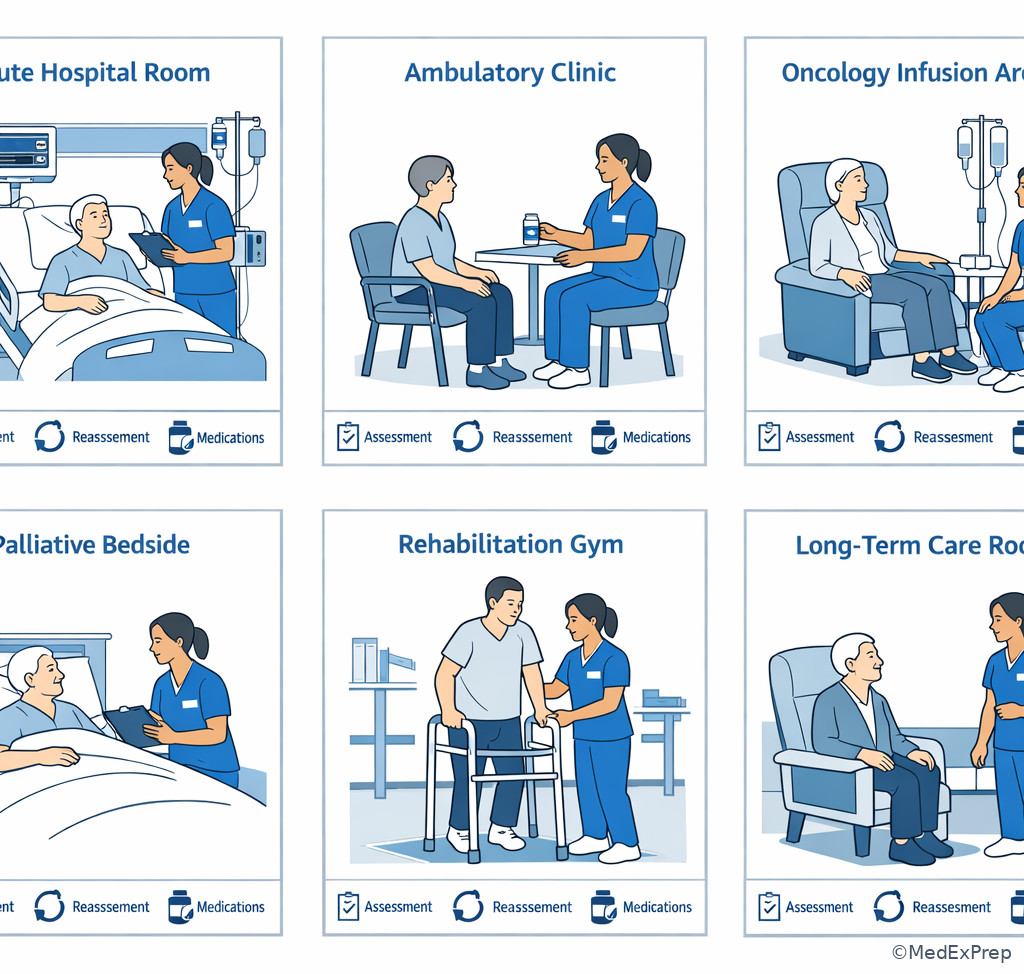
J[Choose safest RN action within scope] Exam takeaway: The same pain principles recur across settings, but priorities shift with monitoring intensity, goals, and transition risks.
Key Terms & Must-Know Facts
1.1.1.1 Key terms
- Assessment: the initial structured pain evaluation using patient report, observations, history, function, and context.
- Reassessment: follow-up evaluation after an intervention to judge response, safety, and need for escalation.
- Functional impact: how pain changes sleep, mobility, mood, self-care, participation, and recovery.
- Multimodal pain management: combining pharmacologic and nonpharmacologic strategies.
- Nociceptive pain: pain from tissue injury or inflammation patterns.
- Neuropathic pain: pain linked to nerve injury or dysfunction patterns.
- Breakthrough pain: transient flares despite otherwise controlled baseline pain.
- Oversedation: excessive sedation that may precede respiratory compromise.
- Respiratory compromise: slowed, shallow, or ineffective breathing requiring urgent action.
- Delirium: acute change in attention and cognition that can alter pain expression and safety.
- Equity in pain care: bias-aware, stigma-free, culturally responsive assessment and advocacy.
- Escalation: notifying the appropriate clinician or activating protocol when findings exceed RN authority or signal danger.
- Within scope: actions the RN can assess, implement as ordered, monitor, teach, document, and communicate.
1.1.1.2 Must-know facts
- PMGT-BC stems are usually testing a nursing priority, not provider-level regimen selection.
- On exam day, airway and breathing threats outrank pain score alone.
- Reassessment is not optional; it is a core pain-management competency and a frequent answer discriminator.
- Pain care questions often combine relief, safety, function, and communication in the same stem.
- A tempting wrong answer often offers a reasonable intervention before sufficient assessment.
- “Clarify,” “notify,” “follow protocol,” and “escalate” are often correct when the order, patient response, or safety status is concerning.
- Controlled-substance handling, wastage, storage, and documentation are policy-sensitive and must be framed as follow local protocol.
- Across lifespan and settings, the exam expects adaptation of tools and goals, not a one-size-fits-all pain approach.
| Domain tag | High-yield subskills | What the exam usually asks the RN to do |
|---|---|---|
| D1 | Assess history, intensity, function, pattern, reassessment timing | Choose the best tool, reassess after intervention, document trend |
| D2 | Recognize mechanism clues and clinical patterns | Match descriptors to likely pain pattern and nursing implications |
| D3 | Medication monitoring, adverse effects, safety teaching | Monitor effect, identify complication, educate, clarify or escalate |
| D4 | Nonpharmacologic measures and multimodal pairings | Support ordered plan, reinforce strategies, evaluate effect on function |
| D5 | Respiratory, neurologic, GI, fall, misuse, withdrawal risk | Prioritize safety threat, intervene within protocol, notify promptly |
| D6 | Teaching, handoff, follow-up, transition planning | Give return precautions, coordinate team communication, reconcile plan |
| D7 | Bias, advocacy, documentation, policy-aware practice | Use respectful language, protect rights, document clearly, follow policy |
Core content
1.1.1.3 Foundational domain map: what the exam is really sorting
A Explanation
The first decision conflict in PMGT-BC stems is not “Which medication?” but “Which domain is being tested?” If the stem centers on baseline pain story, tool choice, or timing of follow-up, choose D1 thinking. If it emphasizes side effects, sedation, or naloxone-type concerns, shift to D3 plus D5. If it asks about discharge teaching, storage, or handoff, move toward D6 or D7. WHY THIS IS TESTED: candidates often miss questions because they answer the clinical topic they notice first rather than the nursing task the stem is actually asking.
Use choose-vs-reject framing. Choose assessment and reassessment when the patient status is still unclear. Choose safety action and escalation when an acute threat is present. Choose teaching or coordination only after immediate instability is ruled out. Reject options that jump to provider-level decision making, such as selecting a new regimen independently, changing a dose without authority, or diagnosing the etiology as a provider act.
See Fig 1 for the quickest way to sort stems before reading the options.
B Worked example
A 68-year-old patient on an orthopedic unit reports pain 8/10 six hours after knee arthroplasty. History includes obstructive sleep apnea, chronic kidney disease stage 3, and anxiety. The chart shows an as-needed opioid order and scheduled acetaminophen. The patient’s daughter says, “He always needs stronger medicine than this.” Oxygen saturation is 93% on room air, respiratory rate 12/min, and the patient is drowsy but arousable. A tempting clue is the high pain score; a distracting detail is the daughter’s pressure for stronger medication.
Identify task: this is not primarily a regimen-selection question; it is a nursing prioritization question. Extract key facts: high pain, opioid available, but sleep apnea and drowsiness create safety risk. Apply rule: safety and assessment come before simply giving more sedating medication. Eliminate distractors: “Request a stronger opioid” is out of role and premature; “teach relaxation first” may help but ignores immediate assessment; “document pain and reassess later” delays action. Verify: the best nursing action is to assess sedation and respiratory status more fully, review recent analgesics, and follow protocol or notify the provider if oversedation concern is present before administering more opioid.
C Exam trap
D Checkpoint
Question: A hospitalized adult reports severe pain after receiving an opioid 30 minutes ago. The patient is difficult to keep awake, respiratory rate is 9/min, and family asks for another dose because “the pain is still bad.” What is the most appropriate nursing action?
- Administer the next available opioid dose because untreated pain can worsen recovery.
- Assess sedation and respiratory status immediately, follow institutional protocol, and escalate concern promptly.
- Teach the family about nonpharmacologic methods and return in 1 hour for reassessment.
- Ask the provider for an increased opioid order before reassessing because the current plan is inadequate.
- A: Tempting because pain remains severe; wrong because ABCs and opioid safety outrank further dosing when respirations are already depressed.
- B: Tempting because it may delay pain relief; right because impaired alertness and low respiratory rate signal an immediate safety threat requiring assessment, protocol use, and escalation.
- C: Tempting because multimodal care is good practice; wrong because teaching is not the first priority during possible respiratory compromise.
- D: Tempting because the regimen may indeed need change; wrong because provider contact without immediate bedside assessment misses the highest-priority nursing duty.
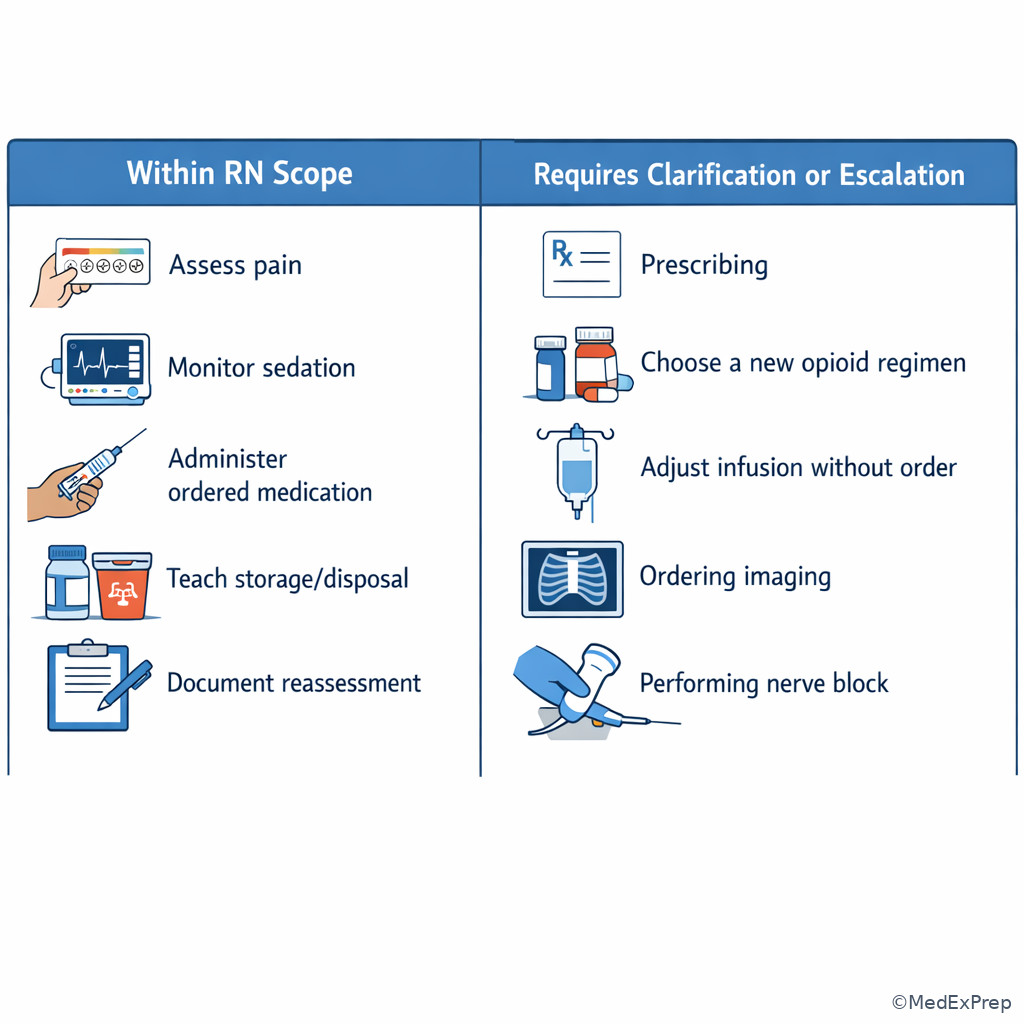
1.1.1.4 Scope and role emphasis: what the RN can do versus what must be escalated
A Explanation
The next decision conflict is action within scope versus action that requires clarification or escalation. PMGT-BC is explicit in its nursing lens: the RN assesses, monitors, teaches, documents, implements ordered care, reinforces nonpharmacologic strategies, and communicates concerns. The RN does not independently prescribe, diagnose as a provider, select a new regimen, or change doses/routes outside an order or protocol. WHY THIS IS TESTED: stems often include one option that sounds decisive and clinically advanced but is outside RN authority.
Choose “clarify the order,” “notify the prescriber,” “follow institutional policy,” or “activate protocol” when the patient status changes, an order appears unsafe or incomplete, or the situation exceeds standing authority. Reject options that make you act as the pain physician, anesthesia provider, or autonomous prescriber. Scope errors can hide inside otherwise reasonable actions: adjusting an infusion rate, selecting a different opioid, ordering a diagnostic test, or clearing the patient for discharge may all be wrong because of role, not because the clinical idea is impossible.
See Fig 2 for a quick decide-now versus escalate-now framework.
Exam takeaway: If the option changes the medical plan without an order or protocol, reject it and choose assessment, implementation of ordered care, or escalation instead.
flowchart TD
A[Option in stem] --> B{Within RN scope?}
B -->|Yes| C[Assess monitor teach document]
B -->|Yes| D[Implement ordered intervention]
B -->|No| E[Clarify order or notify provider]
E --> F[Follow protocol and document]
C --> G[Reassess response]
D --> G
G --> H[Escalate if patient worsens] Exam takeaway: Separate bedside nursing actions from provider-level plan changes when eliminating options.
B Worked example
A 54-year-old ambulatory oncology patient with metastatic breast cancer calls the clinic reporting worsening burning foot pain despite the current plan. History includes diabetes and mild chemotherapy-induced neuropathy; the patient also mentions a recent dental infection treated with antibiotics. The patient says, “Can you switch me to something stronger today?” The distracting detail is the dental infection, which may tempt overthinking the cause. The tempting wrong clue is the request for a stronger medication, which may pull you toward choosing a new regimen.
Identify task: the question is about the RN response to inadequate pain control in outpatient follow-up. Extract key facts: worsening neuropathic-type pain, current plan not sufficient, ambulatory setting, patient seeking a medication change. Apply rule: the RN should assess severity, function, adverse effects, adherence, and urgent safety concerns, document clearly, and notify the appropriate prescriber rather than independently selecting a new medication. Eliminate distractors: independently recommending a dose increase or new agent is out of scope; advising the patient to stop treatment entirely is unsafe; focusing on unrelated infection details misses the pain-management task. Verify: best nursing action is comprehensive reassessment plus timely escalation to the prescriber under clinic workflow.
C Exam trap
D Checkpoint
Question: A patient receiving PCA reports uncontrolled pain and asks the RN to increase the dose because “the button is not enough.” Which action is most appropriate?
- Increase the PCA dose slightly because the patient remains in pain.
- Assess pain pattern, sedation status, PCA use, and recent response, then notify the authorized clinician per protocol.
- Tell the family to press the PCA button more often for better relief.
- Discontinue the PCA and switch the patient to oral medication to reduce risk.
- A: Tempting because PCA therapy may need adjustment; wrong because changing the dose without order or protocol exceeds RN scope.
- B: Tempting because it takes more time; right because it combines nursing assessment with appropriate escalation inside scope.
- C: Tempting because family wants to help; wrong because family-activated PCA is unsafe unless specifically authorized in a permitted context and policy.
- D: Tempting because oral routes may seem safer; wrong because discontinuing and switching therapy is a provider-level plan change.
- Fill in the blank: If an option changes dose, route, or regimen without an order, the RN should ______ and ______.
- True or False: A clinically reasonable action can still be wrong on PMGT-BC if it exceeds RN scope.
- Name 3 verbs commonly found in correct PMGT-BC nursing actions: ______, ______, ______.
1.1.1.5 Emphasis areas across the course and exam: where the highest yield lives
A Explanation
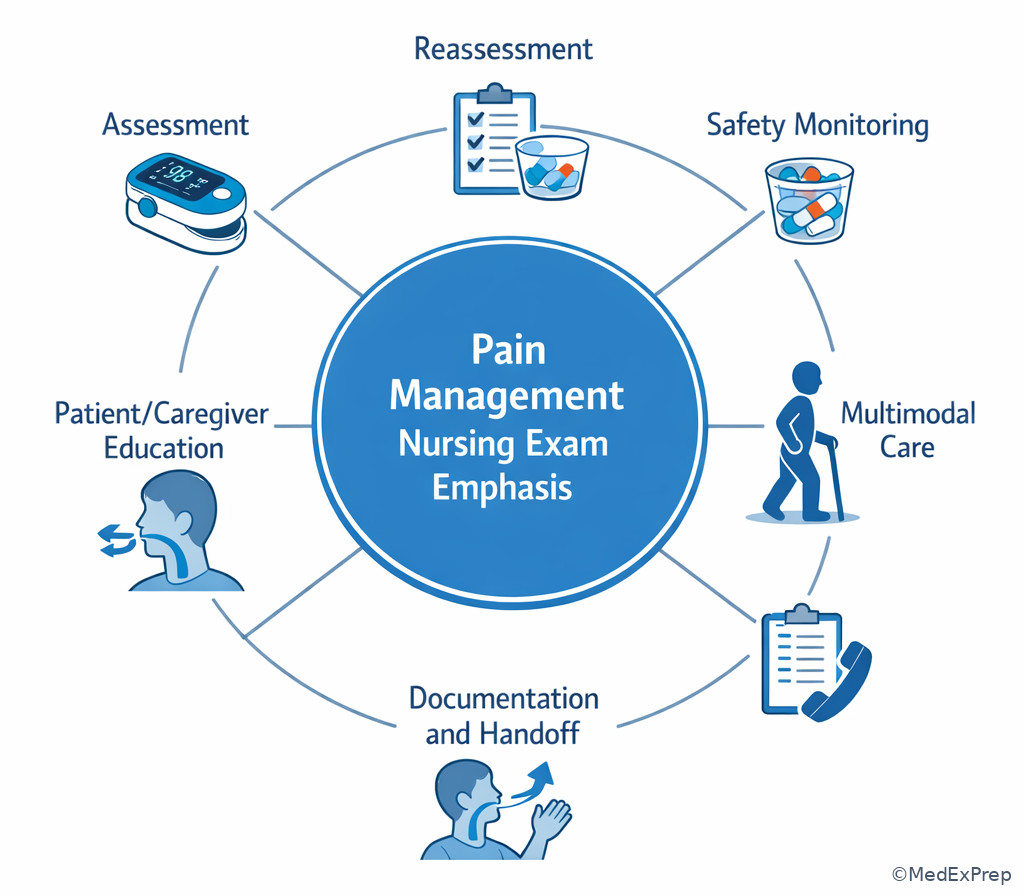
Not all content categories are tested the same way. The PMGT-BC emphasis is broad, but several themes recur: comprehensive assessment and reassessment, opioid safety, multimodal care, documentation trends, patient education, care transitions, and bias-aware advocacy. The decision conflict here is memorize isolated facts versus organize around repeated exam moves. WHY THIS IS TESTED: candidates who organize content by high-frequency nursing actions retrieve information faster under time pressure.
Choose study emphasis that tracks the RN workflow: assess pain and function; implement ordered strategies; reassess effect and safety; teach patient and caregiver; document clearly; communicate changes. Reject a study approach built only around rare procedures or provider decisions. You do need mechanism knowledge and pharmacology, but mostly as tools for recognizing patterns, monitoring adverse effects, and escalating appropriately.
See Fig 3 for the most testable emphasis zones and how they connect to typical item stems.
Exam takeaway: The most tested questions combine assessment, safety, reassessment, and communication rather than isolated content recall.
flowchart LR
A[Assessment] --> B[Intervention]
B --> C[Reassessment]
C --> D[Documentation]
C --> E[Education]
C --> F[Escalation]
A --> G[Function and goals]
B --> H[Multimodal care]
C --> I[Safety monitoring]
I --> F
D --> F
Exam takeaway: Build study around reassessment, safety, function, education, and coordination because those priorities repeatedly drive the correct answer.
B Worked example
A 79-year-old long-term care resident with osteoarthritis, mild dementia, constipation history, and frequent nighttime waking is grimacing with transfers and refusing therapy. The MAR shows scheduled nonopioid therapy and as-needed opioid use. Staff report “pain seems better after the pill,” but no structured reassessment is charted. A urinalysis from yesterday shows trace leukocyte esterase, a distracting finding that may tempt you toward unrelated workup. The tempting wrong clue is to focus only on the medication administered rather than what happened afterward.
Identify task: this is a documentation and reassessment emphasis question. Extract key facts: older adult, cognitive impairment, functional consequence, intervention given, missing follow-up trend. Apply rule: PMGT-BC emphasizes reassessment of both relief and safety, especially when communication barriers and function are involved. Eliminate distractors: adding new medication independently is out of scope; blaming refusal on behavior ignores pain assessment; focusing on unrelated lab detail misses the tested domain. Verify: best answer is to reassess pain using an appropriate tool, include functional response and adverse effects, document the response, and communicate ongoing barriers to the team.
C Exam trap
D Checkpoint
Question: Which documentation element best reflects a high-yield PMGT-BC pain-management emphasis after an ordered intervention?
- Medication name, dose, and route only
- Pain score before treatment only
- Patient response including pain trend, function, and adverse effects at reassessment
- Family satisfaction with the plan only
- A: Tempting because medication administration must be recorded; wrong because it omits effectiveness and safety outcomes.
- B: Tempting because baseline matters; wrong because it fails to show whether the intervention helped or harmed.
- C: Tempting because it takes more effort; right because PMGT-BC repeatedly tests the reassessment loop, not just the intervention.
- D: Tempting because patient-centered care includes family concerns; wrong because satisfaction alone is not the core clinical reassessment metric.
1.1.1.6 Question architecture: how board-style PMGT-BC stems are built
A Explanation
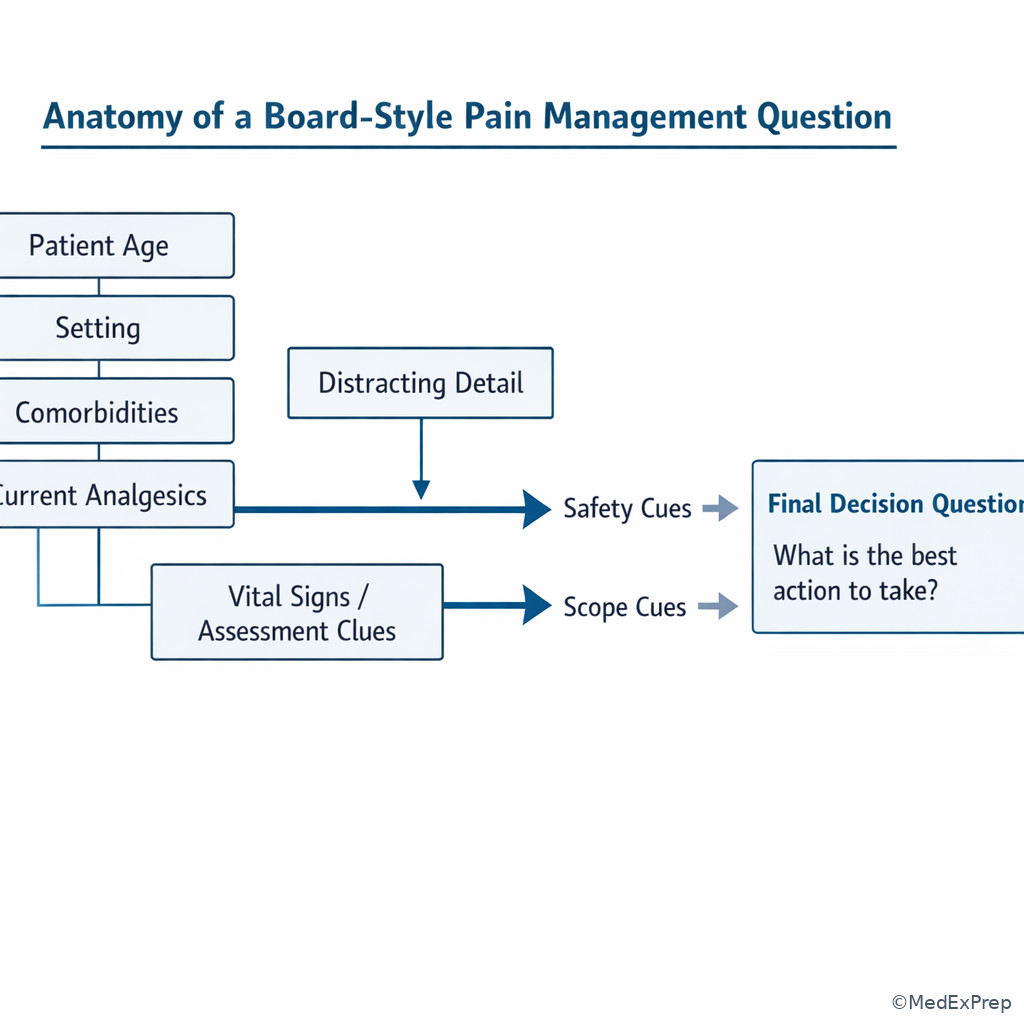
Board-style pain questions are usually built with four parts: a patient scenario, one or two comorbidities, a distracting detail, and a nursing decision point. The conflict is react to the loudest symptom versus answer the exact task. WHY THIS IS TESTED: disciplined stem reading predicts the correct option better than isolated memorization.
Most strong PMGT-BC questions can be solved by this sequence: identify the task, extract key facts, apply the governing nursing principle, eliminate distractors, verify within scope. The governing principle is often one of five: assess first, protect ABCs, reassess after intervention, stay within scope, or escalate when findings exceed standing authority. A common exam trick is to include a correct action at the wrong priority. For example, patient teaching may be appropriate but not before you address respiratory depression; provider notification may be necessary but not before your immediate bedside assessment.
See Fig 5 for a visual of the option-elimination sequence.
Exam takeaway: Solve the question in order: task, key facts, nursing principle, option elimination, scope check.
flowchart TD
A[Read the final sentence first] --> B[Identify task]
B --> C[Pull key assessment and safety clues]
C --> D{Which principle rules?}
D --> E[Assess first]
D --> F[ABCs and safety]
D --> G[Reassess after intervention]
D --> H[Scope and escalation]
E --> I[Eliminate options]
F --> I
G --> I
H --> I
I --> J[Choose safest best next step] Exam takeaway: Recognize distractors, comorbidities, and the decision point so you do not answer the wrong question.
B Worked example
A 43-year-old postoperative patient with obesity, asthma, and chronic low back pain says, “Nothing works for me,” 20 minutes after receiving ordered IV analgesia. Temperature is 37.2°C, heart rate 104/min, respiratory rate 10/min, oxygen saturation 92% on 2 L nasal cannula. The patient’s spouse reports that the patient “always needs double doses at home.” A mildly elevated heart rate is the distracting detail; the spouse statement is the tempting wrong clue because it invites premature dose escalation.
Identify task: best next nursing step after recent analgesic administration. Extract key facts: recent opioid exposure, borderline respiratory status, complaint of no relief, obesity and asthma as added risk. Apply rule: reassess effect and safety before repeating or intensifying analgesia. Eliminate distractors: asking for double doses is outside role and unsafe; teaching incentive spirometry alone misses the immediate issue; waiting passively ignores recent change in status. Verify: assess sedation, breathing quality, and timing/response to the medication now, then escalate if concerning findings persist.
C Exam trap
D Checkpoint
Question: Which stem clue most strongly tells you a PMGT-BC item is testing reassessment priority rather than initial intervention?
- The patient has chronic pain history.
- An ordered pain treatment was given recently and the stem now asks for the next action.
- The family requests more aggressive treatment.
- The chart includes several comorbidities.
- A: Tempting because chronic pain adds complexity; wrong because history alone does not specify the tested action.
- B: Tempting because it can feel too obvious; right because recent intervention plus “next action” commonly signals reassessment of response and safety.
- C: Tempting because family pressure often appears in stems; wrong because it is usually noise, not the core action cue.
- D: Tempting because comorbidities matter; wrong because they refine risk but do not by themselves define the tested step.
- True or False: The best answer may be correct content but wrong timing.
- Fill in the blank: Read the ______ sentence first to identify the task.
- One-liner: A recent intervention in the stem should make you think ______.
1.1.1.7 Integration across settings, populations, and ethics: the lens you carry into every topic
A Explanation
The final integration conflict is apply one universal pain approach versus adapt the same principles to setting, lifespan, communication ability, and equity concerns. PMGT-BC expects the RN to carry the same core framework across acute care, ambulatory care, oncology, palliative care, perioperative care, rehabilitation, long-term care, and specialty pain settings. WHY THIS IS TESTED: the exam rewards flexible nursing judgment, not rigid memorization.
Choose adaptations that preserve the same priorities: use an appropriate pain tool, consider function and goals, check for adverse effects, teach in a way the patient can use, and document clearly. Reject assumptions that older adults under-report because pain is “normal aging,” that a patient with substance use history should automatically receive less attention, or that inability to self-report means pain cannot be assessed. Ethical and advocacy themes are not separate from clinical care; they change what good assessment and communication look like.
See Fig 6 for an integrated algorithm that shows how setting and patient factors modify, but do not replace, the core nursing process.
Exam takeaway: Adapt tools and communication to the setting and patient, but keep assessment, safety, reassessment, teaching, and escalation in the same order.
flowchart TD
A[Patient with pain concern] --> B[Assess report behavior function goals]
B --> C{Any immediate safety threat?}
C -->|Yes| D[Stabilize within protocol and escalate]
C -->|No| E[Implement ordered pharmacologic and nonpharmacologic care]
E --> F[Reassess relief function adverse effects]
F --> G{Setting transition teaching needed?}
G -->|Yes| H[Educate coordinate handoff document]
G -->|No| I[Continue trend monitoring]
H --> I Exam takeaway: Adjust pain assessment tools and teaching methods for age, cognition, and communication barriers without lowering the quality of pain care.
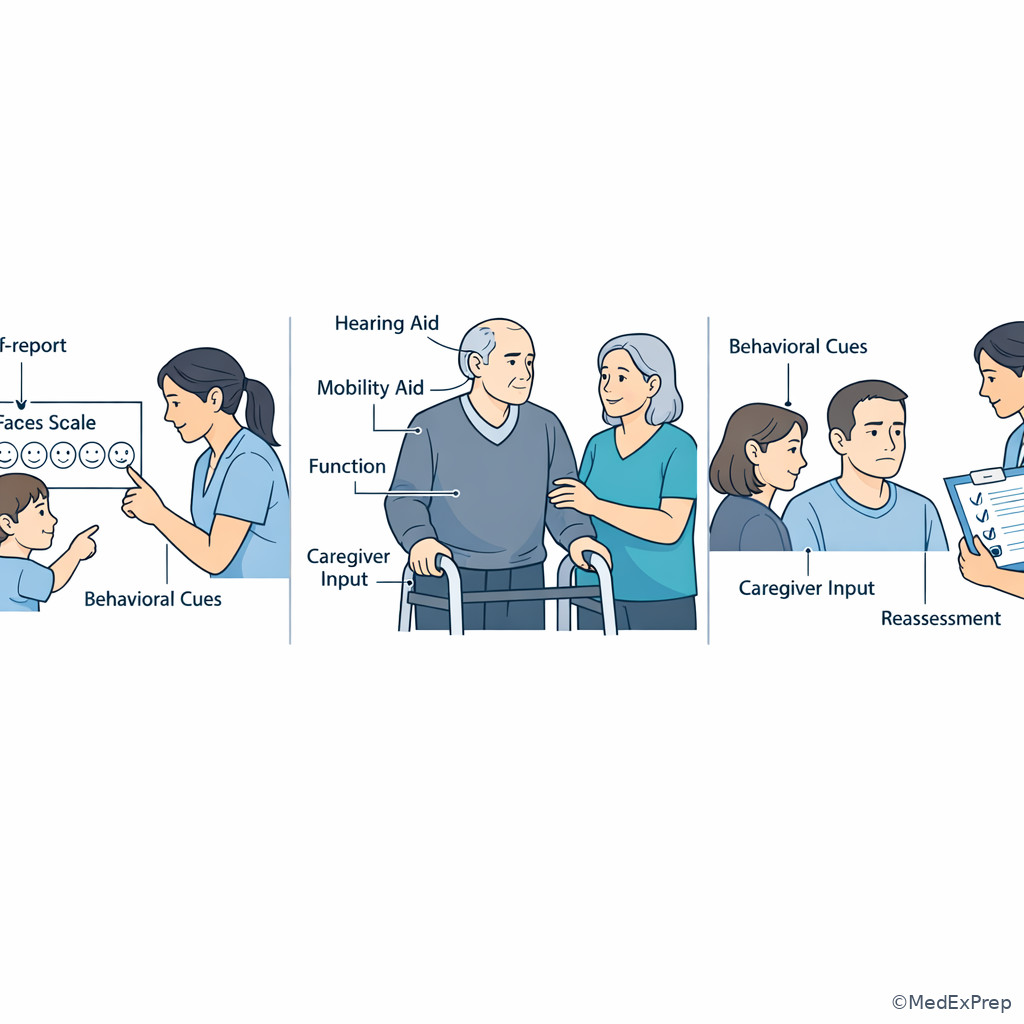
Exam takeaway: Visual cues such as sedation level, respiratory effort, and pulse oximetry frequently outweigh the pain score alone in priority decisions.
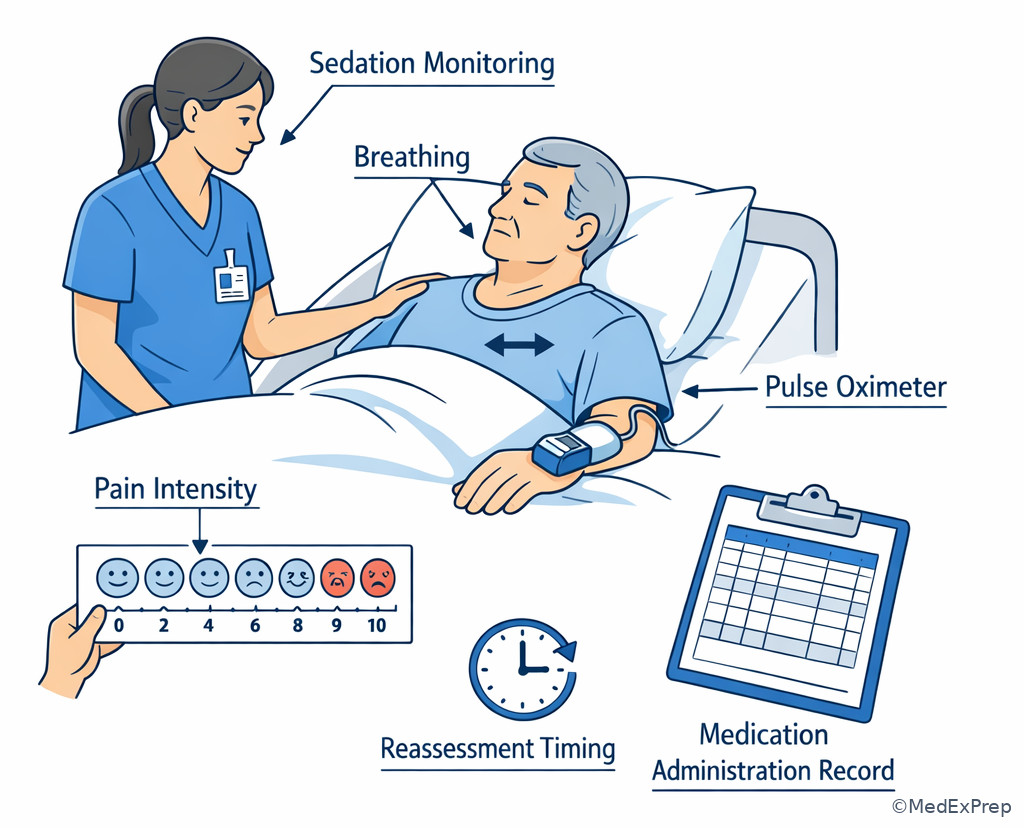
B Worked example
An 84-year-old rehabilitation patient after hip fracture has hearing impairment, mild cognitive impairment, constipation risk, and fear of falling. The patient says little during rounds but grimaces during therapy and refuses to stand. Family says, “She never complains, so she must be okay.” A recent blood glucose of 204 mg/dL is the distracting detail. The tempting wrong clue is the family interpretation that silence equals comfort.
Identify task: integrate setting, older-adult factors, and communication barriers in pain assessment. Extract key facts: pain behaviors with movement, rehab setting where function matters, communication barriers, safety risks. Apply rule: lack of verbal complaint does not rule out pain; use appropriate assessment methods, include function, and advocate against undertreatment. Eliminate distractors: accepting family reassurance is weak evidence; increasing therapy pressure without reassessment ignores pain; independently changing the analgesic plan is outside scope. Verify: best action is a structured pain assessment adapted to hearing/cognition, evaluation of treatment timing and side effects, implementation of ordered measures, and team communication to support functional goals.
C Exam trap
D Checkpoint
Question: Which statement best reflects the PMGT-BC cross-setting and equity lens?
- Patients who do not self-report pain reliably usually cannot be assessed for pain.
- Older adults often feel less pain, so functional decline is usually unrelated.
- Across settings, the RN adapts tools and communication but still prioritizes assessment, safety, reassessment, and advocacy.
- When a patient has substance use history, education should be deferred until pain improves.
- A: Tempting because self-report is preferred; wrong because behavioral cues, function, and caregiver input support assessment when self-report is limited.
- B: Tempting because aging changes presentation; wrong because pain is not a normal condition to dismiss, and function decline may be a key pain clue.
- C: Tempting because it sounds broad; right because it captures the exam’s adaptive but consistent nursing framework.
- D: Tempting because complex histories can make education harder; wrong because respectful teaching and safety planning remain essential.
Exam Traps & Differentiators
Most common wrong answer and why: selecting the action that sounds most aggressive or decisive, even when it is outside RN scope or before adequate assessment. On PMGT-BC, the best answer usually protects safety, clarifies uncertainty, or closes the reassessment loop.
| Looks similar | Actually tested concept | Single discriminator |
|---|---|---|
| Treat severe pain immediately with more opioid | Assess opioid safety first | Low respiratory rate, heavy sedation, or recent opioid dose |
| Call for a new regimen | Reassess and escalate within scope | No order or protocol authorizes plan change |
| Document medication administration | Document response trend | Stem asks what to do after an intervention |
| Assume silence means comfort | Adapt assessment for barriers | Behavioral clues or function decline despite limited report |
| Teach before acting | Address immediate ABC/safety issue first | Respiratory, neurologic, or fall-risk signal in the stem |
If the stem says...
- “20 minutes after receiving analgesia” → think reassessment of relief and adverse effects.
- “Difficult to arouse” or “respiratory rate 8–10/min” → think ABCs and opioid safety before further analgesia.
- “Patient asks you to change the dose/medication” → think scope boundary, assessment, and prescriber communication.
- “Older adult with confusion, falls, or frailty” → think function, delirium risk, and cautious monitoring.
- “Discharge, clinic follow-up, or home use” → think teaching, storage/disposal, return precautions, and care coordination.
- “Nonverbal, cognitively impaired, or communication barrier” → think adapted assessment, behavioral cues, caregiver input, and advocacy.
Tables
| Reference focus | What to look for in the stem | Best initial RN emphasis | Common wrong move |
|---|---|---|---|
| Assessment/reassessment | Tool choice, timing, baseline versus follow-up, function | Gather and compare trend data | Acting without enough assessment |
| Medication monitoring | Recent dose, sedation, nausea, constipation, respiratory cues | Monitor therapeutic and adverse effects | Changing regimen independently |
| Safety/risk | Low RR, hypoxia, delirium, falls, misuse concern | Protect ABCs and follow protocol | Teaching before stabilizing |
| Education/transitions | Discharge, home use, caregiver questions, storage/disposal | Teach and verify understanding | Ignoring follow-up or return precautions |
| Ethics/advocacy | Bias, undertreatment, stigma, communication barriers | Use respectful language and advocate | Dismissing pain due to assumptions |
| Comparison | Assessment-first option | Implementation option | Escalation option | When each wins |
|---|---|---|---|---|
| Uncontrolled pain after recent medication | Reassess pain, sedation, timing | Use ordered nonpharmacologic support | Notify if response inadequate or adverse effects occur | Assessment first unless immediate protocol-driven action is triggered |
| Possible opioid adverse effect | Assess breathing, LOC, vitals | Support airway/oxygen per protocol | Notify/activate protocol urgently if unstable | ABCs dominate |
| Unclear or unsafe order | Review chart and patient status | Hold action if unsafe per policy | Clarify with prescriber/pharmacist | Escalation wins once concern is recognized |
| Discharge teaching gap | Assess understanding and barriers | Teach storage, side effects, follow-up | Escalate if confusion or unsafe plan remains | Teaching after stability is confirmed |
| Differential classification | Stem pattern | Likely domain center | RN-safe answer style |
|---|---|---|---|
| Initial pain complaint | No treatment yet, need baseline data | D1 | Assess comprehensively using appropriate tool |
| Post-intervention follow-up | Treatment already given, asks next step | D1 with D5 overlay | Reassess relief, function, and safety |
| Adverse effect concern | Sedation, low RR, delirium, constipation, falls | D5 with D3 overlay | Prioritize safety, monitor, follow protocol, escalate |
| Home management or clinic call | Questions about use, side effects, storage, worsening symptoms | D6/D7 | Teach, assess red flags, coordinate follow-up |
| Bias or undertreatment scenario | Stigma, assumptions, unequal response to report | D7 | Advocate, use respectful assessment, document objectively |
Algorithm / Approach
Rapid Review
- Domain sorting → identify the task before evaluating options
- Recent analgesic given → reassessment usually beats immediate redosing
- High pain score + low RR → safety threat outranks pain number
- Plan-changing option → reject unless order or protocol authorizes it
- Charted intervention only → incomplete without response trend
- Family pressure for stronger medication → noise unless tied to safety or function clues
- Quiet older adult → assess behavior and function, do not assume comfort
- Nonverbal patient → behavioral and caregiver-supported assessment still counts
- Discharge stem → think teaching, storage, side effects, return precautions, follow-up
- Clinic call about worsening pain → assess first, then communicate to authorized clinician
- Ethics item → respectful language and objective documentation often discriminate
- Board-style options → one may be correct care at the wrong priority
- ABCs concern → bedside assessment before phone calls when feasible
- RN scope → assess, monitor, teach, document, implement ordered care, escalate
Self-check quiz
1.1.1.8 Question 1
A nurse reviews a PMGT-BC practice stem that asks, “What is the most appropriate next step 30 minutes after administering ordered analgesia?” Which nursing action is most likely being tested?
- Selecting a stronger opioid regimen for the patient
- Reassessing pain relief, function, and adverse effects
- Diagnosing the underlying source of pain progression
- Ordering a lab test to evaluate medication metabolism
1.1.1.9 Question 2
A patient in an ambulatory pain clinic asks the RN to increase the opioid dose because pain has worsened. Which response best stays within PMGT-BC RN scope?
- Increase the dose slightly and document the patient’s request
- Assess pain, function, and adverse effects, then notify the authorized prescriber as indicated
- Stop the opioid and substitute a nonopioid of the nurse’s choosing
- Schedule the patient for a diagnostic imaging study
1.1.1.10 Question 3
A 72-year-old postoperative patient with obesity and obstructive sleep apnea received an ordered IV opioid 15 minutes ago. The patient reports pain 9/10, is difficult to arouse, has a respiratory rate of 9/min, and oxygen saturation of 91% on 2 L nasal cannula. The spouse says, “He always needs more medication than other people.” Which action is the most appropriate next step?
- Administer another ordered opioid dose because the pain score remains high
- Assess sedation and respiratory status immediately and follow institutional protocol for opioid-related safety concerns
- Provide discharge teaching about safe opioid storage
- Ask the spouse to help stimulate the patient and reassess in 1 hour
1.1.1.11 Question 4
A 63-year-old long-term care resident with osteoarthritis, mild dementia, chronic constipation, and limited mobility received an ordered analgesic before physical therapy. One hour later, the resident is less guarded during transfer but still declines hallway ambulation. Which charting entry best reflects the most appropriate nursing reassessment emphasis?
- Analgesic given as ordered; family updated
- Pain medication administered; resident remains elderly and at baseline
- Reassessed after intervention: less guarding with transfer, declined ambulation, no excessive sedation noted, constipation risk continues
- Resident probably has chronic pain and may need stronger medication
1.1.1.12 Question 5
A 46-year-old oncology clinic patient with diabetes and chemotherapy-induced neuropathy calls reporting worsening burning foot pain, poor sleep, and difficulty walking to the bathroom. The patient denies shortness of breath, is taking medications as prescribed, and asks, “Can you switch me to something stronger today?” Which is the best nursing response?
- Recommend doubling the current dose until the next visit
- Assess pain pattern, function, adherence, and adverse effects, then communicate findings to the prescriber per clinic protocol
- Tell the patient that neuropathic pain is expected and should be tolerated
- Advise stopping the current analgesics immediately to avoid dependence
1.1.1.13 Question 6
A 58-year-old patient on a surgical unit has severe pain after abdominal surgery. History includes COPD, chronic opioid therapy, and anxiety. The provider’s as-needed opioid order is present. The patient is somnolent but arousable, respiratory rate is 10/min, oxygen saturation is 90% on room air, and a nursing assistant reports the patient “keeps asking for pain medicine.” Which action requires the RN to take direct responsibility rather than delegate or delay?
- Ask the nursing assistant to continue checking routine pain scores while the RN finishes another medication pass
- Personally assess sedation, respiratory effort, recent opioid use, and immediate safety needs before any further analgesia
- Have the LPN independently decide whether to hold the opioid because the patient is sleepy
- Call the provider first for a stronger plan because chronic opioid therapy makes current orders ineffective
1.1.1.14 Question 7
A 77-year-old rehabilitation patient after hip surgery has hearing impairment, mild cognitive impairment, and a history of falls. The patient rarely asks for pain medication but grimaces during standing practice and refuses the afternoon therapy session. The daughter says, “She’s always stoic, so if she isn’t asking, she’s fine.” Which action is most appropriate?
- Accept the daughter’s interpretation and document that the patient denied pain
- Use an adapted pain assessment approach that includes observation, function, and patient cues, then reassess the response to ordered measures
- Tell therapy staff to proceed anyway because mobility goals are more important than pain behaviors
- Independently schedule an around-the-clock opioid regimen to improve participation
1.1.1.15 Question 8
A 51-year-old patient is being discharged after treatment for acute pancreatitis pain. History includes depression and past alcohol use disorder in remission. The patient is alert, respiratory status is stable, and pain is improved on the ordered regimen. The spouse asks how to store the opioid and when to call for help. Which nursing action is most appropriate?
- Skip teaching because substance use history makes opioid discussion too sensitive for discharge day
- Provide clear teaching on safe use, sedation precautions, storage, disposal, constipation prevention, and return precautions; verify understanding and document
- Promise the patient that dependence cannot occur if opioids are prescribed for legitimate pain
- Reduce the discharge opioid frequency independently because the patient has a past alcohol use disorder
Answer key
1.1.1.16 Question 1 answer: B
A. Tempting because poorly controlled pain may eventually require regimen revision. Incorrect for this scenario because the stem asks what the nurse should do 30 minutes after a medication was already given; that timing points to reassessment, not independent regimen selection. Single stem clue: “30 minutes after administering ordered analgesia.” Source support: reassessment after intervention is a nursing standard in pain management and safe medication follow-up (ANA; NCSBN).
B. Tempting because it seems less active than “doing more.” Correct because PMGT-BC commonly tests the reassessment loop: evaluate relief, functional change, and adverse effects after an ordered intervention. Single stem clue: the question asks for the next step after treatment, not the initial treatment. Source support: ANA standards and nursing pain texts emphasize reassessment of response and safety after intervention.
C. Tempting because understanding the cause matters clinically. Incorrect because provider-level diagnosis is not the immediate nursing action being tested in a post-intervention stem. Single stem clue: the timing indicates a follow-up nursing duty. Source support: NCSBN prioritization and nursing scope principles.
D. Tempting because labs may be used in complex pharmacology cases. Incorrect because independently ordering tests is outside typical RN authority unless protocol specifically allows it, and it is not the immediate next step here. Single stem clue: the stem is about bedside follow-up after analgesia. Source support: scope-aware nursing practice per ANA and NCSBN.
1.1.1.17 Question 2 answer: B
A. Tempting because it feels patient-centered and responsive. Incorrect because increasing the dose without an order or protocol is a plan-changing action outside RN scope. Single stem clue: the patient is asking the nurse directly to increase the dose. Source support: ANA scope and standards; NCSBN role boundaries.
B. Tempting because it adds work before symptom relief. Correct because the RN should assess current status and communicate findings to the authorized prescriber rather than independently change the regimen. Single stem clue: ambulatory patient request for dose increase. Source support: nursing scope, patient safety, and care coordination standards.
C. Tempting because nonopioid substitution may sound safer. Incorrect because the nurse cannot independently stop one regimen and replace it with another. Single stem clue: there is no order authorizing a medication change. Source support: ANA scope and institutional-policy-aware practice.
D. Tempting because worsening pain may lead to workup in some cases. Incorrect because ordering imaging independently is outside usual RN scope and does not address the immediate nursing role. Single stem clue: the question asks for the RN response, not provider diagnostic planning. Source support: scope boundaries from ANA and NCSBN.
1.1.1.18 Question 3 answer: B
A. Tempting because the pain score is 9/10 and untreated pain matters. Incorrect because the patient has possible opioid-induced respiratory compromise, so more opioid is unsafe at this moment. Single stem clue: respiratory rate 9/min and difficult to arouse. Source support: opioid safety monitoring standards in nursing references and patient safety guidance.
B. Tempting because it may delay additional pain treatment. Correct because ABCs and safety are the priority; the RN must assess sedation and breathing immediately and follow the local protocol for opioid-related deterioration. Single stem clue: low RR with decreased arousal soon after opioid administration. Source support: NCSBN priority framework, ANA standards, and medical-surgical nursing guidance.
C. Tempting because discharge teaching is an important nursing function. Incorrect because teaching is not the priority during an acute respiratory risk. Single stem clue: immediate unstable assessment findings. Source support: ABC prioritization in NCSBN-style reasoning.
D. Tempting because family stimulation may temporarily increase alertness. Incorrect because delaying structured RN assessment and protocol-based action for one hour risks harm. Single stem clue: opioid was given 15 minutes ago and the patient already shows danger signs. Source support: patient-safety standards and nursing reassessment expectations.
1.1.1.19 Question 4 answer: C
A. Tempting because medication administration and family communication are both real charting tasks. Incorrect because the entry fails to document response, function, or safety after the intervention. Single stem clue: “One hour later” signals reassessment content. Source support: nursing documentation and pain reassessment standards.
B. Tempting because age and baseline status can matter. Incorrect because it offers vague labeling rather than objective reassessment data tied to function and adverse effects. Single stem clue: the scenario provides functional change during transfer and ambulation. Source support: ANA documentation expectations and nursing pain texts.
C. Tempting because it is more detailed than many charting options. Correct because it records response to intervention, functional impact, and safety monitoring in a concise, objective way. Single stem clue: less guarding with transfer but still limited ambulation. Source support: pain reassessment principles in medical-surgical nursing and ANA standards.
D. Tempting because stronger medication may eventually be considered. Incorrect because “probably” is speculative and medication change is not the immediate charting task. Single stem clue: this is a nursing reassessment documentation question, not a prescriptive recommendation. Source support: objective documentation standards and scope boundaries.
1.1.1.20 Question 5 answer: B
A. Tempting because worsening pain may need dose change. Incorrect because doubling the dose is an independent regimen adjustment outside RN scope. Single stem clue: clinic call requesting a stronger medication. Source support: ANA scope and safe medication practice.
B. Tempting because it may feel indirect when the patient wants immediate change. Correct because the RN should assess pattern, function, adherence, and adverse effects, then communicate the findings through the clinic pathway. Single stem clue: no acute breathing red flag, but worsening functional impact requires assessment and coordination. Source support: care coordination and ambulatory nursing priorities in pain management guidance.
C. Tempting because neuropathic pain can be persistent and difficult to control. Incorrect because it is dismissive, nontherapeutic, and fails the RN’s assessment and advocacy role. Single stem clue: poor sleep and difficulty walking show meaningful functional impact. Source support: patient advocacy, respectful communication, and pain management standards.
D. Tempting because dependence concerns are often mentioned around opioids. Incorrect because abrupt cessation advice is unsafe, outside scope if it alters the regimen, and not indicated by the stem. Single stem clue: the patient reports adherence and worsening symptoms, not misuse requiring abrupt stoppage. Source support: safety and scope principles in nursing practice.
1.1.1.21 Question 6 answer: B
A. Tempting because UAP can collect routine pain scores in stable patients. Incorrect because this patient is not stable; somnolence and hypoxia require RN-level assessment and prioritization now. Single stem clue: somnolent with oxygen saturation 90% and COPD. Source support: NCSBN delegation principles and ABC prioritization.
B. Tempting because other tasks may compete for attention on a busy unit. Correct because direct RN assessment of sedation, respiratory status, and recent opioid exposure is required before any further analgesia or delegation. Single stem clue: respiratory risk plus chronic opioid therapy creates a complex, high-stakes assessment. Source support: ANA standards, delegation principles, and medical-surgical nursing safety guidance.
C. Tempting because LPN involvement is common in medication care. Incorrect because independent decision-making about whether to hold opioid in an unstable patient exceeds what can safely be delegated as stated; the RN must assess and direct care. Single stem clue: the decision depends on interpretation of unstable respiratory findings. Source support: NCSBN delegation and RN accountability standards.
D. Tempting because chronic opioid therapy may reduce analgesic effectiveness. Incorrect because calling first without immediate bedside assessment misses the priority safety threat and assumes the problem is undertreatment rather than oversedation risk. Single stem clue: somnolence and low oxygenation after surgery. Source support: priority-rationale frameworks and opioid monitoring guidance.
1.1.1.22 Question 7 answer: B
A. Tempting because family members know the patient’s usual behavior. Incorrect because relying on family interpretation alone can reinforce undertreatment and ignores direct behavioral and functional pain cues. Single stem clue: grimacing during standing and refusal of therapy. Source support: pain assessment in older adults and cognitively impaired patients in nursing references.
B. Tempting because it requires a more nuanced assessment approach. Correct because the patient has communication and cognitive barriers, so the nurse should adapt assessment methods, include function, and reassess response to ordered interventions. Single stem clue: patient rarely asks for medication but shows movement-related pain behavior. Source support: nursing pain assessment standards and geriatric care principles.
C. Tempting because rehabilitation goals matter and mobility prevents complications. Incorrect because proceeding without addressing likely pain can reduce participation and compromise ethical care. Single stem clue: pain behaviors appear specifically during standing practice. Source support: function-focused pain management and patient-centered care standards.
D. Tempting because around-the-clock dosing may help some rehab patients. Incorrect because independently scheduling an opioid regimen is outside RN scope. Single stem clue: the option changes the medical plan. Source support: ANA scope and NCSBN role boundaries.
1.1.1.23 Question 8 answer: B
A. Tempting because sensitive histories can make discharge conversations feel uncomfortable. Incorrect because stigma-aware, respectful teaching is still essential, especially when opioids are going home. Single stem clue: discharge setting with spouse asking practical safety questions. Source support: patient education and equitable care standards in nursing practice.
B. Tempting because it is comprehensive and time-consuming. Correct because the patient is stable and the stem asks about discharge nursing action; safe use, sedation precautions, storage, disposal, bowel prevention, return precautions, and teach-back are high-yield PMGT-BC priorities. Single stem clue: discharge with home opioid use and spouse questions. Source support: ANA education standards, medical-surgical nursing, and safe opioid teaching principles.
C. Tempting because opioids used for legitimate pain do not equal addiction in every case. Incorrect because the statement is falsely absolute and unsafe; nurses should teach balanced risk information rather than guarantees. Single stem clue: spouse asks when to call for help, signaling need for accurate safety education. Source support: safe medication education and nonstigmatizing communication guidance.
D. Tempting because substance use history appropriately raises monitoring awareness. Incorrect because independently reducing discharge medication frequency changes the plan and exceeds RN authority. Single stem clue: stable patient at discharge does not create authority for regimen modification. Source support: scope boundaries and transition-of-care teaching standards.
Keep going with the full Pain Management Nursing Prep Course (PMGT-BC)
You just studied the way members do, in the same lesson interface. Full access unlocks every lesson, the question bank and flashcards for a full year.
One payment · 1 year of access · No auto-renewal