1.1.1 - Focused OMFS History Elements
Why it matters
- The board often hides the diagnosis in the history before exam or imaging is even presented.
- A focused OMFS history is not a generic dental intake; it determines airway risk, bleeding risk, anesthesia suitability, imaging selection, and whether you should stabilize then refer.
- Wrong answers on board stems are frequently based on acting too early without clarifying one missing history detail.
- In real practice, a high-quality history prevents office-based mismanagement of trauma, infection, anticoagulation, and medically complex patients.
Key Terms & Must-Know Facts
1.1.1.1 Key terms
- Chief complaint — the patient’s own main concern, ideally stated in their words
- HPI — history of present illness organized by onset, provocation, quality, radiation, severity, timing, associated symptoms
- Red flag — a history feature that changes urgency, setting, or specialty involvement
- Odynophagia — painful swallowing; important in deep space infection screening
- Dysphagia — difficulty swallowing; can signal airway-adjacent infection or swelling
- Trismus — restricted mouth opening; may reflect infection, trauma, TMJ pathology, or masticator space involvement
- Dyspnea — shortness of breath; in OMFS history, treat as an airway warning until proven otherwise
- Mechanism of injury — force, direction, timing, contamination, and loss of consciousness in trauma
- Antithrombotic therapy — anticoagulants and antiplatelet drugs that change bleeding planning
- NPO status — time since oral intake, relevant when sedation or urgent surgery is considered
- Functional complaint — trouble chewing, speaking, swallowing, occluding, or breathing
- Referred pain — pain perceived away from the primary source
- Scope threshold — the point where office-based care becomes unsafe or inappropriate
1.1.1.2 Must-know facts
- Airway complaints outrank dental pain in urgency.
- Medication history is incomplete unless it includes anticoagulants, antiplatelets, bisphosphonates/antiresorptives, steroids, immunosuppressants, and recent antibiotics.
- Fever history alone is less important than progression rate, swallowing difficulty, voice change, drooling, or breathing symptoms.
- In trauma, “malocclusion” is a high-yield symptom that often predicts clinically significant fracture or displacement.
- History must clarify timing: sudden, progressive, recurrent, postoperative, or after extraction.
- A tempting wrong answer is to ask broad, nonactionable questions instead of the single detail that changes management.
- Past anesthetic complications, OSA, and substance use can change sedation candidacy before the physical exam begins.
- Imaging choice depends heavily on history; localized dentoalveolar symptoms and diffuse facial trauma are not worked up the same way.
Exam takeaway: Use the complaint plus one red-flag cluster to decide office care versus hospital escalation.
flowchart TD
A[Chief complaint] --> B{Complaint type}
B --> C[Pain or swelling]
B --> D[Trauma]
B --> E[Pathology or lesion]
B --> F[Procedure planning]
C --> G{Airway or systemic red flags?}
G -->|Yes| H[Hospital or ED pathway]
G -->|No| I[Office workup likely reasonable]
D --> J{Vision neuro or unstable occlusion?}
J -->|Yes| H
J -->|No| K[Focused trauma workup]
E --> L{Rapid growth numbness bleeding?}
L -->|Yes| M[Urgent biopsy or specialist coordination]
L -->|No| N[Routine diagnostic pathway]
F --> O{Medical or anesthesia risk?}
O -->|Yes| P[Risk modification or hospital setting]
O -->|No| Q[Proceed with routine planning] Exam takeaway: A structured interview captures urgency, systemic risk, and procedural planning details before examination begins.
Core content
1.1.1.3 Start with the complaint that changes the next step
A Explanation
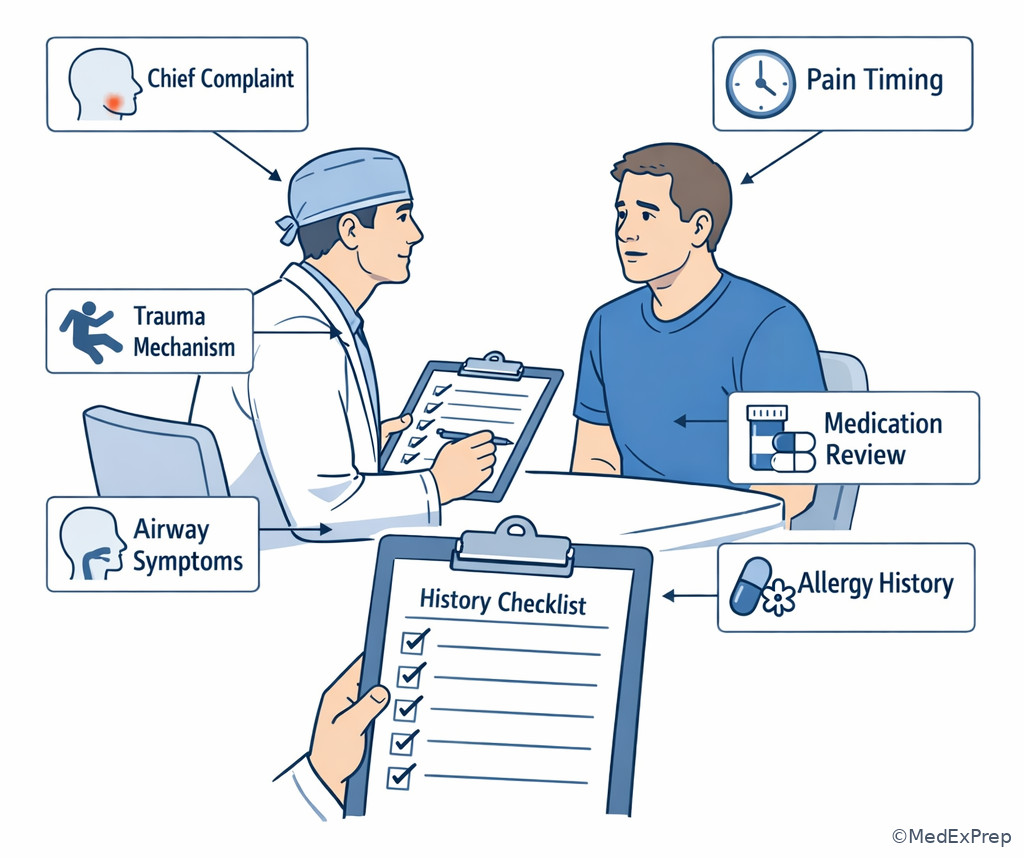
The first decision conflict is whether the complaint is primarily pain only, functional compromise, swelling/infection, trauma, or lesion/pathology. Many candidates collect a long generic history but fail to ask the one question that changes triage: What is the patient unable to do now that they could do before? Trouble breathing, swallowing, opening, seeing, occluding, or controlling bleeding immediately raises the level of concern. In OMFS, a “focused” history means every question is asked because it may change imaging, anesthesia plan, urgency, or setting.
WHY THIS IS TESTED: exam stems often present overlapping symptoms like facial pain, swelling, and limited opening. The tested pattern is recognizing which complaint cluster requires escalation rather than routine office workup. Choose the question that reveals airway threat, active hemorrhage, visual risk, occlusal instability, or rapidly progressive infection. Reject broad but low-yield questions if they do not alter the next action.
Prioritize complaint framing in this order: immediate threats first, then function, then source. For example, “toothache with mild swelling” is lower priority than “jaw swelling with muffled voice and painful swallowing,” even if the latter has less pain. Symptom severity is not always proportional to danger. Also clarify onset and trajectory: sudden onset after trauma, progressive enlargement over hours, recurrence after prior antibiotics, or delayed symptoms after extraction each suggest different pathways.
See Fig 1 for the disposition logic anchored to the chief complaint.
B Worked example
A 42-year-old man presents for “tooth pain” 3 days after a lower molar began hurting. He has obesity, hypertension, and poorly controlled diabetes. He says the pain is 6/10, took leftover amoxicillin from a prior dental visit, and mentions a mild headache after sleeping poorly. He now reports worsening floor-of-mouth discomfort, difficulty swallowing saliva, and his wife says his voice sounds “thick.” The tempting clue is the moderate pain score and prior response to antibiotics in the past.
Reasoning chain: Identify task: determine the most appropriate next step from the history. Extract key facts: progressive symptoms, dysphagia, voice change, floor-of-mouth involvement, diabetes. Apply rule: airway-adjacent symptoms outrank pain score and suggest deep space infection risk. Eliminate distractors: routine office drainage, delayed imaging, or “trial of stronger oral antibiotics” are unsafe because the history already suggests a potentially unstable infection. Verify: this patient needs urgent airway-conscious hospital-level evaluation, not routine office management.
C Exam trap
Common wrong answer: treat as routine odontogenic pain because the patient’s stated chief complaint is “tooth pain.”
WHY IT IS TEMPTING: candidates anchor on the first complaint named and on the fact that dental infections commonly cause pain.
The SINGLE CLUE that eliminates it: difficulty swallowing saliva with voice change converts the case from routine pain to airway-risk history.
D Checkpoint
Question: A 29-year-old woman calls after third-molar pain and facial swelling. She has asthma and recent prednisone use for a flare. Which historical detail most strongly requires same-day escalation rather than routine next-day office evaluation?
- Pain radiating to the ear — tempting because referred otalgia is common in mandibular pathology, but by itself it does not define urgency.
- Difficulty swallowing secretions — correct because inability to manage secretions is an airway-adjacent red flag that changes disposition.
- Bad taste in the mouth — tempting because it suggests drainage or infection, but it does not by itself signal instability.
- Symptoms worse at night — tempting because inflammatory pain often worsens later in the day, but it does not guide triage.
Answer: B. Difficulty swallowing secretions.
1.1.1.4 Build the HPI around timing, progression, and associated symptoms
A Explanation
The second foundational decision is not just what the symptom is, but how it behaved over time. In OMFS, timing and progression often separate benign from dangerous and inflammatory from traumatic or neoplastic. Ask: when did it start, what was happening at onset, has it worsened, is it intermittent or constant, was there a preceding procedure, and what associated symptoms appeared after it began? A patient with intermittent swelling around meals suggests one pathway; one with rapidly enlarging facial fullness over 12 hours suggests another.
WHY THIS IS TESTED: the exam rewards temporal pattern recognition. The resolving clue may be “worsening over hours,” “months of painless growth,” “sudden malocclusion after assault,” or “pain beginning several days after extraction.” Choose the timeline that matches the process. Reject answers based only on location when progression makes the better discriminator.
Associated symptoms should be asked in clusters, not randomly. For infection: fever, chills, malaise, trismus, dysphagia, odynophagia, dyspnea. For trauma: malocclusion, numbness, epistaxis, diplopia, loss of consciousness, vomiting, facial paresthesia. For pathology: ulcer duration, bleeding, numbness, weight loss, rapid growth, tooth mobility, drainage. For perioperative planning: current pain medications, recent antibiotics, fasting status, prior adverse reactions, and transportation/support if sedation is being considered.
B Worked example
A 67-year-old woman is referred for “jaw pain” near a lower denture-bearing area. She has osteoporosis treated with IV zoledronic acid, rheumatoid arthritis on methotrexate, and GERD. She says the area was mildly sore for 2 months, then became more painful after denture rubbing. A distracting detail is that she recently had an upper respiratory infection and asks whether this is “just sinus-related.” She denies fever but reports exposed rough bone for 3 weeks and a bad taste.
Reasoning chain: Identify task: what history features matter most for the next diagnostic step. Extract key facts: chronicity, exposed bone, antiresorptive use, mucosal trauma from denture, absence of acute systemic illness. Apply rule: timeline plus medication history shifts concern toward medication-related osteonecrosis risk rather than routine acute infection. Eliminate distractors: recent URI and bad taste are noise; they do not explain exposed mandibular bone. Verify: the history points toward a medication-associated jaw complication requiring targeted exam, imaging as indicated, and treatment planning around antiresorptive exposure.
C Exam trap
Common wrong answer: overvalue the presence or absence of fever when deciding the likely process.
WHY IT IS TEMPTING: fever feels like a universal marker of seriousness.
The SINGLE CLUE that eliminates it: chronic exposed bone plus antiresorptive history is a more specific discriminator than fever status.
D Checkpoint
Question: A 35-year-old man presents after developing mandibular pain 4 days following extraction of an impacted third molar. He has anxiety, GERD, and smokes one pack per day. Which history detail best distinguishes postoperative inflammatory pain from a higher-risk infectious progression requiring urgent reassessment?
- Persistent foul taste — tempting because it can occur with infection, but it also occurs with postoperative debris and is not the best single discriminator.
- Increasing trismus and odynophagia — correct because progressive functional symptoms suggest spread beyond routine socket pain.
- Pain worsened after the anesthetic wore off — tempting because expected postoperative pain can intensify after local anesthesia resolves.
- He used opioid medication overnight — tempting because medication use suggests severity, but analgesic use does not classify the process.
Answer: B. Increasing trismus and odynophagia.
- The most important timeline question after a procedure is whether symptoms are improving, stable, or progressively worsening.
- True or False: absence of fever reliably excludes significant odontogenic infection. False.
- Name the 3 key functional complaints that often change OMFS urgency: breathing, swallowing, occlusion.
Exam takeaway: Group associated symptoms by pathway so one key answer choice can separate infection, trauma, pathology, and perioperative risk.
flowchart LR
A[History pathway] --> B[Infection]
A --> C[Trauma]
A --> D[Pathology]
A --> E[Perioperative]
B --> B1[Rapid progression]
B --> B2[Dysphagia or odynophagia]
B --> B3[Trismus]
B --> B4[Voice change]
C --> C1[Malocclusion]
C --> C2[Numbness]
C --> C3[Diplopia]
C --> C4[LOC or vomiting]
D --> D1[Ulcer over 2 weeks]
D --> D2[Weight loss]
D --> D3[Paresthesia]
D --> D4[Rapid growth or bleeding]
E --> E1[Anticoagulants]
E --> E2[OSA]
E --> E3[Prior anesthesia issue]
E --> E4[Recent oral intake]
| History element | Why it matters | Board-level next implication |
|---|---|---|
| Onset | Separates traumatic, postoperative, infectious, and chronic processes | Guides urgency and likely differential |
| Rate of progression | Rapid change suggests infection, bleeding, or unstable injury | May require urgent imaging or hospital setting |
| Swallowing difficulty | Signals airway-adjacent involvement | Escalate rather than routine office treatment |
| Voice change | Suggests deeper soft tissue/airway concern | Think airway-first disposition |
| Malocclusion | High-yield trauma symptom | Prompts fracture-focused exam and imaging |
| Numbness | Can indicate nerve injury, fracture, or malignancy | Increases concern beyond routine pain |
| Recent antibiotic use | Can mask but not solve source-control problems | Do not let transient improvement reassure you falsely |
| Recent oral intake | Matters for sedation or urgent OR planning | Changes anesthesia sequencing |
1.1.1.5 Ask the medical, medication, and anesthesia history that changes surgical safety
A Explanation
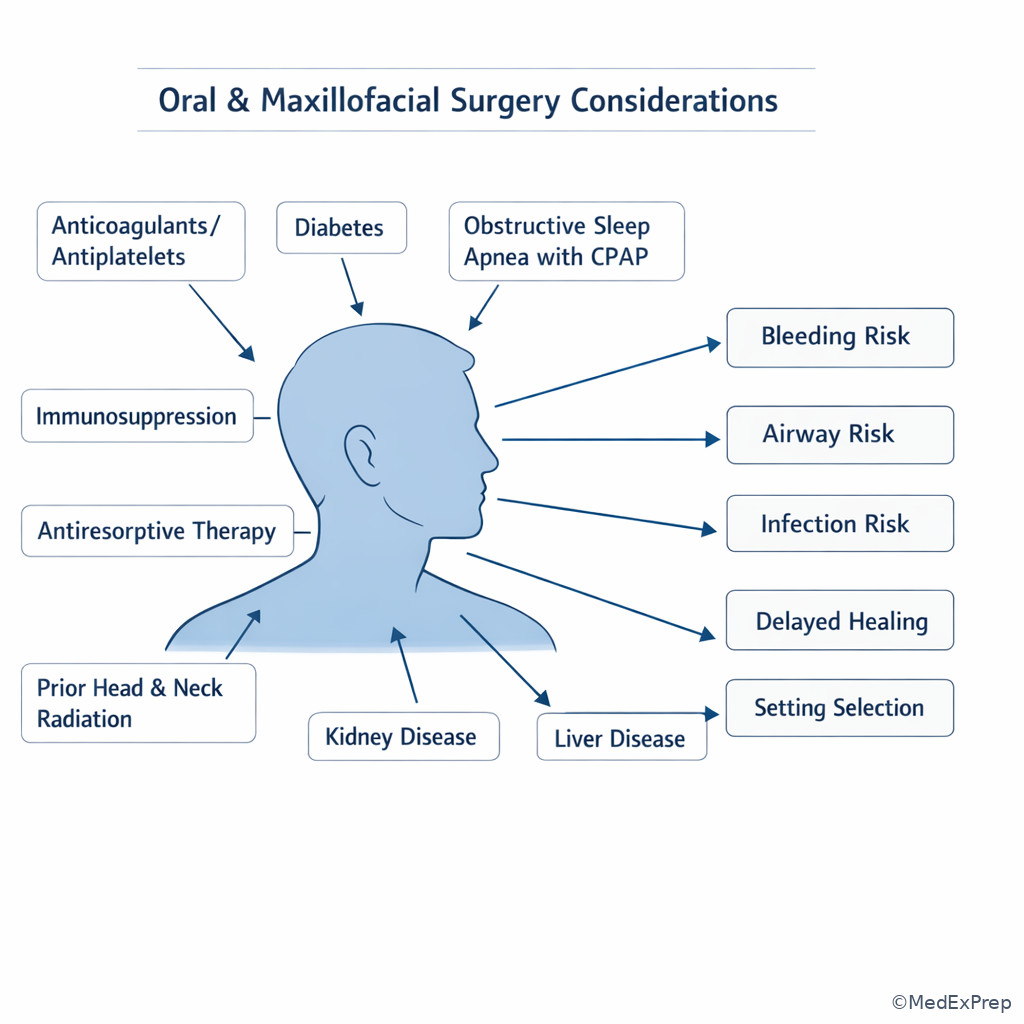
Once you know the complaint and timeline, the next decision conflict is whether the patient is suitable for office-based care, sedation, local anesthesia only, hospital-based management, or deferment pending optimization. A focused OMFS history must identify conditions that change bleeding risk, infection risk, airway management, wound healing, cardiopulmonary stability, and anesthesia planning. Ask specifically about cardiovascular disease, diabetes control, pulmonary disease, renal/hepatic disease, immunosuppression, pregnancy status when relevant, and prior head and neck radiation or antiresorptive therapy.
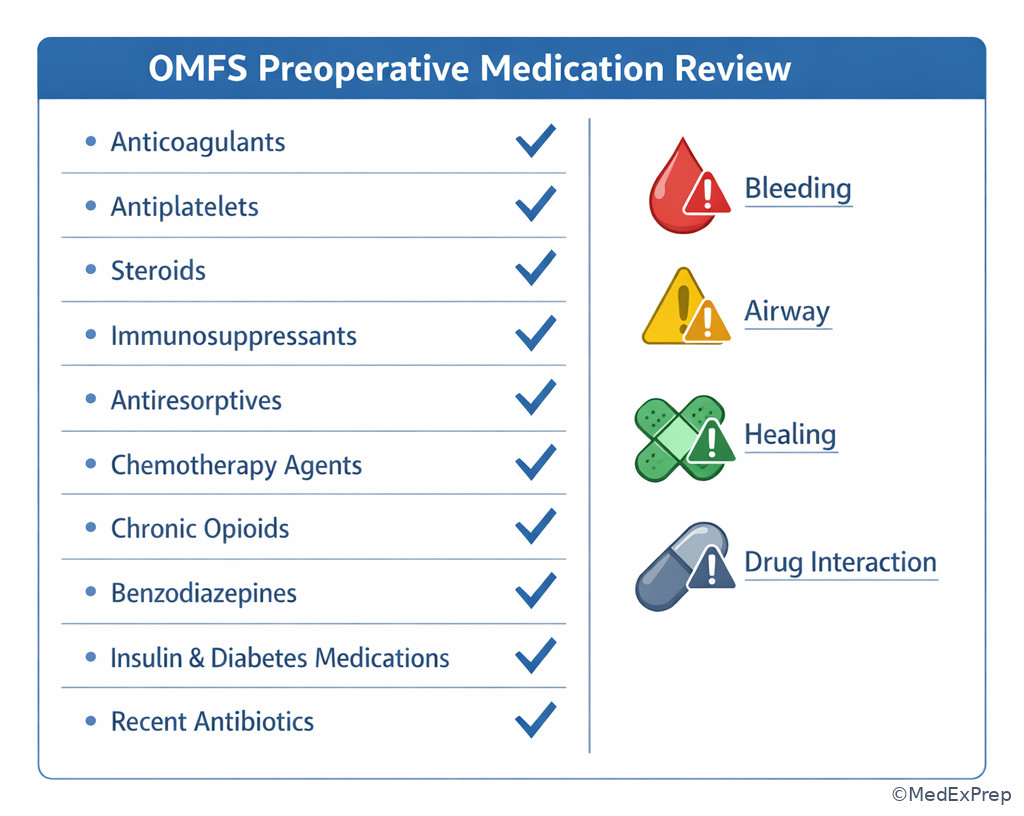
Medication history should be active, not passive. Do not ask only “Are you taking any medicines?” Instead clarify: anticoagulants, antiplatelets, insulin and glucose-lowering agents, steroids, bisphosphonates/denosumab, chemotherapeutics, antiangiogenic drugs, chronic opioids, benzodiazepines, recreational substances, and recent antibiotics. Include allergies with reaction type; “nausea” is not the same as anaphylaxis. Ask about prior anesthesia issues, difficult intubation, severe postoperative nausea/vomiting, malignant hyperthermia history, OSA, CPAP use, and whether the patient can lie flat.
WHY THIS IS TESTED: the best answer is often not a procedure but a clarification of risk. Choose the history item that changes bleeding planning, setting, antibiotic expectations, or sedation candidacy. Reject proceeding routinely when the history suggests unstable systemic disease or airway complexity.
B Worked example
A 73-year-old man is referred for extraction of nonrestorable mandibular molars. He has atrial fibrillation on apixaban, prior MI, stage 3 CKD, and obstructive sleep apnea on CPAP. He says he “does fine at the dentist” and wants IV sedation because he is anxious. He also mentions a penicillin allergy, but when asked, the reaction was nausea 20 years ago. A distracting detail is that he had uncomplicated cataract surgery last month.
Reasoning chain: Identify task: determine which history clarifications are essential before choosing office sedation and extraction planning. Extract key facts: anticoagulation, OSA, renal disease, desire for sedation, unclear allergy quality. Apply rule: medication and anesthesia history may change both perioperative bleeding strategy and sedation setting. Eliminate distractors: prior minor outpatient surgery does not prove current OMFS sedation suitability; vague “penicillin allergy” is less urgent than the antithrombotic and airway history, though still worth clarifying. Verify: the focused history should next establish OSA severity, CPAP adherence, functional cardiopulmonary status, exact anticoagulant timing/indication, and whether the procedural setting remains appropriate.
C Exam trap
Common wrong answer: ask only whether the patient is “ASA II or III” without gathering the specific history details that determine real risk.
WHY IT IS TEMPTING: candidates remember perioperative classifications and try to jump directly to categorization.
The SINGLE CLUE that eliminates it: board questions reward the concrete modifier — for example, active anticoagulation or symptomatic OSA — not the label alone.
D Checkpoint
Question: A 58-year-old woman presents for biopsy of a nonhealing lateral tongue ulcer. She has rheumatoid arthritis on prednisone and methotrexate, type 2 diabetes, and takes clopidogrel after recent coronary stenting. Which history element most urgently requires clarification before deciding office procedure timing?
- Whether she has seasonal allergies — tempting because allergy history matters broadly, but it does not determine timing here.
- The indication and timing of her clopidogrel therapy — correct because recent coronary stenting can make interruption hazardous and affects procedural coordination.
- Whether she prefers local anesthesia — tempting because patient preference affects workflow, but it does not govern safety.
- How long she has worn her dentures — tempting because trauma can contribute to ulcers, but it does not outrank antiplatelet risk management.
Answer: B. The indication and timing of her clopidogrel therapy.
Exam takeaway: Anticoagulation, OSA, immunosuppression, and antiresorptive exposure are high-yield history items because they change management before incision.
Exam takeaway: A medication list is incomplete unless it captures bleeding modifiers, healing modifiers, and sedation-relevant drugs.
| History domain | High-yield questions | What it changes |
|---|---|---|
| Anticoagulants / antiplatelets | Name, indication, last dose, recent stent/embolism history | Bleeding plan, need for coordination, setting |
| Diabetes | Control, recent values if known, hypoglycemia history, insulin use | Infection risk, healing, scheduling |
| OSA / airway | CPAP use, severity, positional symptoms, prior difficult airway | Sedation candidacy, monitoring intensity, setting |
| Immunosuppression | Steroids, biologics, chemotherapy, transplant status | Infection risk and perioperative precautions |
| Antiresorptives / radiation | Drug type, route, duration, indication, head/neck radiation exposure | Healing risk, procedure choice, counseling |
| Allergy history | Specific reaction and severity | Antibiotic and anesthetic selection |
| Substance use | Tobacco, alcohol, cannabis, stimulants, opioids | Healing, sedation response, perioperative safety |
1.1.1.6 Tailor the history to OMFS pathways: infection, trauma, pathology, and pain
A Explanation
After foundational screening, shift into pathway-specific history. The key decision conflict is choosing between broad questioning and targeted questioning that discriminates among OMFS differentials. For infection, focus on source, spread, progression, prior treatment, systemic symptoms, and airway symptoms. For trauma, focus on mechanism, loss of consciousness, visual symptoms, occlusion, numbness, epistaxis, and timing since injury. For pathology, focus on duration, growth rate, ulceration, bleeding, paresthesia, weight loss, prior lesions, tobacco/alcohol exposure, and trauma from dentures or teeth. For pain-focused complaints, determine whether the pain is odontogenic, neuropathic, TMJ-related, sinus-related, postoperative, or referred.
WHY THIS IS TESTED: exam items often present a symptom that could fit multiple domains. The correct answer is the history question that separates the close-call differential. If the patient reports facial numbness with swelling, think beyond routine infection. If there is diplopia after cheek trauma, the next question is not about pain score. If an ulcer has persisted beyond 2 weeks, duration becomes more important than whether the patient tried mouthwash.
Use “choose vs reject” framing. Choose infection questions when the history suggests progression and systemic spread. Reject an infection-first approach when the lesion is chronic, indurated, numb, or spontaneously bleeding. Choose trauma questions when the symptom began after force or fall. Reject routine dentoalveolar assumptions when the patient reports a new bite discrepancy. Choose pathology-focused questions when the history points to persistence, growth, sensory change, or malignancy risk factors.
See Fig 2 for symptom clusters that should be asked as a package rather than one-off questions.
B Worked example
A 54-year-old man presents 6 weeks after noticing a sore on the lateral tongue. He has a 35-pack-year smoking history, daily alcohol use, hypertension, and poor dentition. He says it began after “biting the area” and now intermittently bleeds. A distracting clue is that he recently started a new spicy mouthwash and believes that caused the irritation. He also reports mild ipsilateral ear pain and thinks a sharp molar is the main problem.
Reasoning chain: Identify task: decide which history element matters most next. Extract key facts: duration beyond 2 weeks, bleeding, tobacco/alcohol exposure, referred otalgia, persistent lesion. Apply rule: chronic nonhealing ulcer with risk factors requires pathology-focused history and workup, not simple reassurance about trauma. Eliminate distractors: cheek or tongue trauma from a tooth can coexist, but it does not explain a persistent lesion with bleeding and risk factors. Verify: the next step in history should clarify growth, numbness, weight loss, prior lesions, and nodal symptoms while planning definitive examination and biopsy pathway.
C Exam trap
Common wrong answer: assume a traumatic ulcer because the patient remembers biting the area.
WHY IT IS TEMPTING: the stem gives a plausible local explanation.
The SINGLE CLUE that eliminates it: persistence beyond 2 weeks with bleeding and risk factors outweighs the trauma story.
D Checkpoint
Question: A 24-year-old man presents after an elbow struck his left cheek during basketball. He has ADHD, seasonal allergies, and took ibuprofen this morning. Which historical detail most strongly pushes the case toward urgent orbital/midface concern rather than isolated soft tissue injury?
- He heard a “pop” at impact — tempting because patients often associate sounds with fracture, but it is nonspecific.
- He developed double vision when looking upward — correct because diplopia with gaze provocation strongly suggests orbital involvement requiring focused evaluation.
- His cheek is bruised and tender — tempting because bruising is common in facial trauma, but it does not distinguish soft tissue from orbital injury.
- He ate lunch normally afterward — tempting because preserved eating may reassure, but it does not rule out orbital injury.
Answer: B. He developed double vision when looking upward.
- The most important chronic oral ulcer question is duration beyond 2 weeks.
- True or False: malocclusion after facial trauma is a minor symptom if pain is controlled. False.
- Name the 3 infection-history features that most raise OMFS urgency: progression, swallowing difficulty, voice/breathing change.
Exam takeaway: One red-flag answer in the history can redirect the entire workup toward airway, ocular, hemorrhage, or malignancy priorities.
flowchart TD
A[Focused history] --> B{Primary pathway}
B -->|Infection| C{Dysphagia voice change dyspnea?}
C -->|Yes| D[Airway-conscious escalation]
C -->|No| E[Routine infection workup]
B -->|Trauma| F{Diplopia vision loss malocclusion LOC?}
F -->|Yes| G[Urgent trauma imaging and consult pathway]
F -->|No| H[Localized trauma assessment]
B -->|Pathology| I{Ulcer >2 weeks numbness bleeding weight loss?}
I -->|Yes| J[Urgent biopsy-oriented workup]
I -->|No| K[Routine lesion workup]
B -->|Procedure planning| L{Bleeding or airway modifiers?}
L -->|Yes| M[Modify setting or timing]
L -->|No| N[Standard plan] | Complaint pathway | Ask first | Key red flag | Common wrong focus |
|---|---|---|---|
| Odontogenic infection | How fast is it progressing? | Dysphagia, voice change, dyspnea | Pain score alone |
| Facial trauma | What was the mechanism and direction of force? | Malocclusion, diplopia, numbness, LOC | Only asking about bruising |
| Oral lesion | How long has it been present? | >2 weeks, bleeding, paresthesia, weight loss | Assuming trauma explains persistence |
| Postoperative complaint | Improving or worsening since the procedure? | Increasing trismus, fever pattern, swallowing pain | Normalizing all pain after surgery |
| Sedation planning | Any prior anesthesia or airway problems? | OSA, difficult airway, recent oral intake | Only asking about anxiety |
1.1.1.7 Integrate the history into setting, urgency, and next-step decisions
A Explanation
This final integration step is where many board candidates gain or lose points. The history is not complete until it tells you where the patient should be managed, how urgently, and what to do next. In OMFS, the history may support: routine office evaluation, same-day urgent office assessment, hospital-based evaluation, ED transfer, multidisciplinary consultation, or stabilization before referral. The single finding that resolves the conflict is often not the diagnosis itself but a management modifier such as airway risk, unstable systemic disease, ocular symptoms, neurologic symptoms, uncontrolled bleeding, or inability to tolerate the planned anesthetic setting.
WHY THIS IS TESTED: board stems frequently ask for the “most appropriate next step,” not the final diagnosis. The correct answer depends on whether the history supports immediate intervention, additional clarification, imaging, or transfer. Choose the answer that protects the patient first and stays within OMFS scope. Reject office-based definitive treatment when the case exceeds available resources or requires parallel specialty care.
Examples: rapidly progressing submandibular swelling with odynophagia and voice change suggests hospital-level management. Facial trauma with diplopia or vision change triggers urgent ocular-safe trauma evaluation and appropriate consultation. A nonhealing oral ulcer with risk factors warrants biopsy-oriented planning rather than repeated empiric medications. An anticoagulated patient with recent coronary stenting may require coordination rather than unsupervised medication interruption.
See Fig 3 for medical history modifiers and Fig 4 for red-flag routing logic.
B Worked example
A 31-year-old woman presents to an office OMFS clinic 8 hours after domestic assault. She has facial swelling, anxiety, and reports “my bite feels off.” She also has nausea, brief blurry vision when looking up, and numbness of the left upper lip. Her comorbidities include epilepsy controlled on levetiracetam and obesity; a distracting detail is that she mainly wants relief of a chipped incisor. She last ate 2 hours ago and drove herself.
Reasoning chain: Identify task: determine the most appropriate next step and setting from the history alone. Extract key facts: assault mechanism, malocclusion, diplopia/blurry vision with gaze, infraorbital numbness, recent oral intake, no escort, trauma context. Apply rule: history suggests more than dentoalveolar injury and exceeds simple office repair planning. Eliminate distractors: repairing the chipped tooth, obtaining routine dental films, or scheduling later elective sedation miss the ocular and fracture red flags. Verify: this patient requires focused trauma evaluation with appropriate imaging and consultation pathway in a setting equipped for the injury complexity, not routine office treatment.
C Exam trap
Common wrong answer: fix the patient’s most visible complaint first, such as a fractured tooth or laceration.
WHY IT IS TEMPTING: visible injuries draw attention and feel actionable.
The SINGLE CLUE that eliminates it: malocclusion or diplopia indicates deeper injury that determines sequencing.
D Checkpoint
Question: A 63-year-old man is referred for multiple extractions under IV sedation. He has severe OSA with inconsistent CPAP use, BMI 39, heart failure symptoms climbing one flight of stairs, and recent hospitalization for COPD exacerbation. Which is the most appropriate history-based conclusion before any exam is performed?
- Proceed in office if the patient signs informed consent — tempting because consent matters, but consent does not erase high-risk setting concerns.
- Proceed with lower sedative doses only — tempting because dose adjustment feels safer, but it does not resolve major airway and cardiopulmonary risk.
- Defer routine office sedation planning and reassess setting/medical optimization — correct because the history already suggests that office-based IV sedation may be inappropriate.
- Use oral sedation instead of IV sedation — tempting because it seems less invasive, but it still may be unsafe in a poorly optimized high-risk airway patient.
Answer: C. Defer routine office sedation planning and reassess setting/medical optimization.
Exam takeaway: Recognize the symptom cluster that forces airway, ocular, hemorrhage, trauma, or malignancy escalation before routine office treatment.
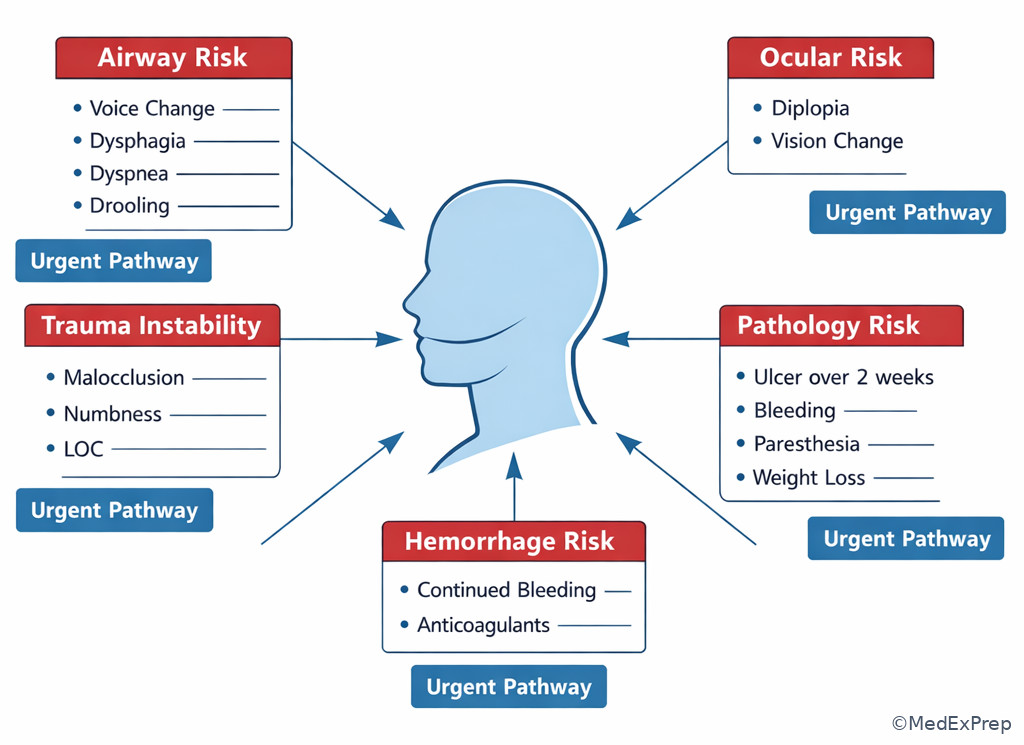
Exam takeaway: Vision symptoms, neurologic symptoms, and unstable occlusion are not routine office-triage findings in facial trauma.
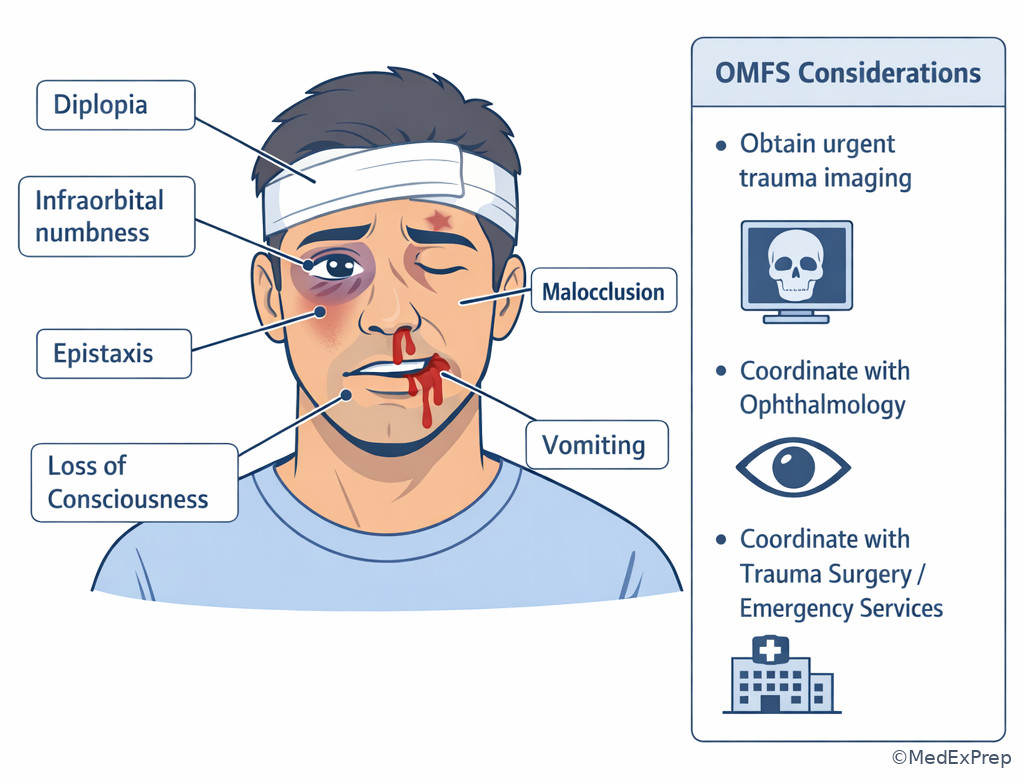
Exam Traps & Differentiators
Common traps & distractors: The most common wrong answer is to keep gathering generic history instead of asking the one detail that changes disposition.
- Most common wrong answer and why: “Ask about pain severity.” Tempting because pain feels central to oral surgery complaints; wrong because airway compromise, malocclusion, vision change, medication risk, or lesion duration usually outrank pain score.
- Looks similar but isn’t: toothache with swelling versus deep space infection risk; traumatic ulcer versus nonhealing potentially malignant lesion; facial bruise versus orbital/midface injury; anxious patient requesting sedation versus patient unsuitable for office sedation.
- If the stem says voice change, drooling, or inability to swallow saliva, think airway-risk infection pathway.
- If the stem says “my bite feels off,” think fracture/displacement until proven otherwise.
- If the stem says ulcer for more than 2 weeks with bleeding or numbness, think biopsy-oriented pathology pathway.
- If the stem says recent stent, active anticoagulant use, or severe OSA, think clarify timing/setting before scheduling routine office surgery.
- If the stem says diplopia, gaze pain, or vision change after facial trauma, think orbital involvement and multidisciplinary-safe evaluation.
| Looks similar | Why it tempts | Single differentiator | Board implication |
|---|---|---|---|
| Routine odontogenic swelling vs deep space infection | Both can cause pain and swelling | Dysphagia, voice change, dyspnea, inability to handle secretions | Escalate setting/urgency |
| Traumatic ulcer vs malignant ulcer | Both may have local irritation | Persistence >2 weeks, bleeding, induration, risk factors, numbness | Biopsy-oriented workup |
| Facial contusion vs fracture/orbital injury | Both cause swelling and tenderness | Malocclusion, diplopia, paresthesia, epistaxis, LOC history | Trauma imaging pathway |
| Anxious sedation request vs safe office sedation candidate | Both may ask for IV sedation | OSA severity, cardiopulmonary reserve, recent oral intake, escort | Modify or reject office plan |
| Post-op pain vs spreading infection | Both may occur after extraction | Progressive trismus/odynophagia rather than expected soreness | Urgent reassessment |
Exam takeaway: The correct board answer often depends on one discriminating history cue rather than the broad complaint category.
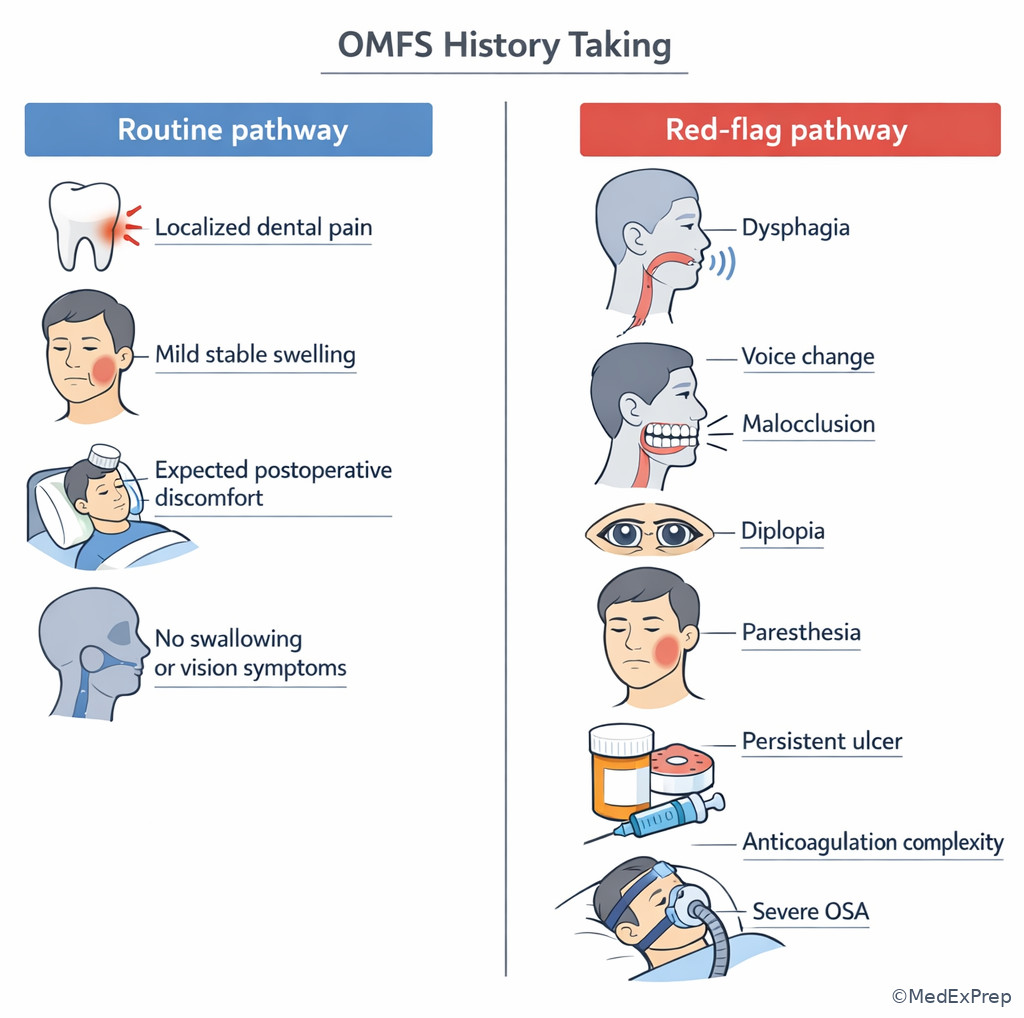
See Fig 5 and Fig 6 for the high-yield red-flag comparisons. Related traps will reappear in the upcoming topics Targeted Head and Neck Exam and Maxillofacial Imaging Selection: the same symptom clusters that should trigger focused questions here will later determine which exam maneuvers and imaging modalities are appropriate.
Algorithm / Approach
Rapid Review
- Chief complaint → the useful version is complaint plus lost function, not complaint alone
- Infection triage → swallowing difficulty beats pain score
- Trauma triage → malocclusion separates significant fracture concern from superficial injury
- Orbital concern → diplopia is more discriminating than bruising
- Pathology history → ulcer duration beyond 2 weeks beats “I bit it” as the key clue
- Medication review → indication and timing matter more than merely naming the drug
- Allergy history → reaction type separates intolerance from true allergy
- Post-op complaint → worsening function over time suggests complication more than persistent soreness does
- Sedation screening → severe OSA and poor cardiopulmonary reserve can rule out routine office sedation before exam
- Antiresorptive history → route, duration, and indication change jaw-risk interpretation
- Prior antibiotics → transient improvement does not exclude unresolved source-control disease
- Scope decision → history alone can make office management inappropriate
Self-check quiz
1. A 27-year-old woman with mild asthma calls for evaluation of mandibular swelling from a painful molar. She reports normal speech, no fever, and can eat soft foods. Which additional history detail most requires immediate clarification because it could change office versus hospital disposition?
- Whether the pain radiates to the temple
- Whether she has difficulty swallowing secretions
- Whether ibuprofen reduced the pain
- Whether the pain wakes her from sleep
2. A 61-year-old man with hypertension and tobacco use presents for evaluation of a lateral tongue sore he attributes to a sharp tooth. Which history element most strongly requires biopsy-oriented concern rather than simple traumatic ulcer reassurance?
- The lesion has been present for 3 days
- The lesion hurts when he eats citrus
- The lesion has persisted for 5 weeks with intermittent bleeding
- He recently changed toothpaste brands
3. A 38-year-old man presents 2 days after lower third-molar extraction. He has obesity and type 2 diabetes. He reports moderate pain, a foul taste, and mild swelling. He also says mouth opening is worsening and swallowing is now painful. Which is the most appropriate next step based on the history?
- Reassure him that postoperative pain commonly peaks on day 2
- Schedule routine follow-up in 1 week and continue oral analgesics
- Urgently reassess for spreading infection rather than treating this as routine postoperative pain
- Recommend saline irrigation only because foul taste suggests food impaction
4. A 70-year-old woman needs extraction of a fractured premolar. She has atrial fibrillation on apixaban, prior stroke, CKD, and anxiety. She asks whether she should stop her medication tonight. Which is the most appropriate focused history clarification before answering?
- Whether she prefers nitrous oxide instead of IV sedation
- The indication for apixaban and timing of the last dose
- Whether she has had dental cleanings regularly
- Whether she took acetaminophen this morning
5. A 22-year-old man presents after being punched in the face. He has cheek swelling, epistaxis, and says “my bite feels strange.” He has ADHD and seasonal allergies. Which history detail most strongly increases concern for significant facial fracture requiring dedicated trauma workup?
- He took ibuprofen after the injury
- He heard a crack at impact
- He reports new malocclusion
- He has tenderness over the cheek
6. A 64-year-old man is scheduled for multiple extractions under office IV sedation. He has BMI 41, severe OSA with poor CPAP adherence, heart failure with dyspnea on minimal exertion, and a recent COPD hospitalization. He wants to proceed because he “did fine” with colonoscopy sedation. Which is the most appropriate history-based conclusion?
- Proceed with office IV sedation using lower drug doses
- Proceed with oral sedation instead of IV sedation
- Defer routine office sedation planning and reassess medical optimization and setting
- Proceed if continuous pulse oximetry is used
7. A 33-year-old woman presents 10 hours after facial assault. She reports left cheek pain, diplopia on upward gaze, upper lip numbness, and mild nausea. She mainly wants treatment for a chipped canine. Her history also includes migraine disorder and anxiety. Which is the most appropriate next step?
- Repair the chipped tooth first, then reassess later if symptoms persist
- Treat as isolated soft tissue trauma because nausea can occur with anxiety
- Prioritize trauma evaluation for possible orbital/midface injury in an appropriate setting
- Provide analgesics and defer workup until swelling improves
8. A 59-year-old woman presents with mandibular discomfort and a rough exposed area where a denture rubs. She has metastatic breast cancer treated with IV zoledronic acid, diabetes, and chronic prednisone use. She denies fever but reports exposed bone for 4 weeks and occasional bad taste. Which history feature most strongly shifts the differential away from routine denture trauma alone?
- Occasional bad taste
- Recent denture irritation
- IV antiresorptive exposure with persistent exposed bone
- Diabetes without fever
Answer key
1.1.1.8 1. Question 1 answer: B
Why B is correct: Difficulty swallowing secretions is an airway-adjacent red flag. In an OMFS history, that finding changes urgency and may move care out of a routine office pathway. This directly tests the principle from 1.1.1.1 that function-loss symptoms outrank pain descriptors. Source support: Hupp, Ellis, and Tucker; Peterson et al.
- A. Tempting because pain radiation can help localize source and referred pain patterns. Incorrect here because temple radiation does not independently determine disposition. Single clue: only swallowing difficulty signals potential airway risk. Source: Hupp, Ellis, and Tucker.
- B. Tempting and correct because many candidates recognize that secretion handling reflects swallowing function and airway adjacency. Single clue: difficulty swallowing secretions. Source: Peterson et al.; Flynn.
- C. Tempting because analgesic response is often used to gauge severity. Incorrect because partial pain relief does not exclude dangerous spread. Single clue: triage hinges on airway function, not response to ibuprofen. Source: Flynn.
- D. Tempting because nocturnal worsening is common in inflammatory dental pain. Incorrect because it does not by itself indicate urgent escalation. Single clue: it lacks a functional red flag. Source: Hupp, Ellis, and Tucker.
1.1.1.9 2. Question 2 answer: C
Why C is correct: Persistence for 5 weeks with intermittent bleeding strongly raises concern beyond a simple traumatic ulcer. Duration beyond 2 weeks is a classic board discriminator for lesions needing biopsy-oriented workup. Source support: Neville, Damm, Allen, and Chi; AAOMS parameters of care.
- A. Tempting because recent onset might still reflect trauma, but 3 days is too short to be the best malignancy discriminator. Single clue: chronicity matters more than soreness in this scenario. Source: Neville et al.
- B. Tempting because irritant sensitivity is common with ulcers. Incorrect because pain with citrus is nonspecific. Single clue: it does not separate traumatic from concerning persistent lesions. Source: Neville et al.
- C. Tempting and correct because persistence plus bleeding is the classic high-yield warning combination. Single clue: 5 weeks with intermittent bleeding. Source: Neville et al.; AAOMS ParCare.
- D. Tempting because oral product changes can irritate mucosa. Incorrect because it is far less important than lesion duration and bleeding. Single clue: toothpaste change does not explain a 5-week persistent lesion reliably. Source: Neville et al.
1.1.1.10 3. Question 3 answer: C
Why C is correct: Worsening trismus and odynophagia after extraction indicate possible infectious spread or deeper involvement, not simple expected postoperative discomfort. The board-level move is urgent reassessment rather than reassurance. Source support: Flynn; Hupp, Ellis, and Tucker.
- A. Tempting because pain often peaks early after surgery. Incorrect because the stem adds worsening trismus and painful swallowing, which are not routine reassurance findings. Single clue: progressive functional compromise. Source: Flynn.
- B. Tempting because many postoperative complaints resolve. Incorrect because a 1-week delay ignores red-flag progression. Single clue: worsening function over time. Source: Peterson et al.
- C. Tempting and correct because it captures the shift from expected pain to concerning spread. Single clue: increasing trismus and odynophagia. Source: Flynn; Hupp, Ellis, and Tucker.
- D. Tempting because foul taste can occur with debris or local breakdown. Incorrect because it underweights the more serious accompanying symptoms. Single clue: foul taste is less specific than worsening opening and swallowing pain. Source: Flynn.
1.1.1.11 4. Question 4 answer: B
Why B is correct: For antithrombotic management, the key history is not merely the drug name but the indication and timing of the last dose. Prior stroke also raises the stakes of interruption. This is exactly the type of clarifying detail boards expect before you recommend any medication change. Source support: AAOMS ParCare; perioperative antithrombotic guidance in oral surgery texts and peer-reviewed reviews.
- A. Tempting because sedation choice matters to procedure planning. Incorrect because it does not answer the more urgent question of anticoagulation strategy. Single clue: apixaban history changes bleeding and thromboembolic planning. Source: AAOMS ParCare.
- B. Tempting and correct because indication and timing determine how risky interruption is and guide coordination. Single clue: prior stroke plus apixaban use. Source: AAOMS ParCare; Hupp, Ellis, and Tucker.
- C. Tempting because oral hygiene affects disease burden. Incorrect because it does not alter immediate perioperative safety. Single clue: procedural timing is governed by anticoagulation context. Source: Hupp, Ellis, and Tucker.
- D. Tempting because medication use that day may affect pain planning. Incorrect because acetaminophen does not drive this decision. Single clue: antithrombotic, not analgesic, history is decisive. Source: AAOMS ParCare.
1.1.1.12 5. Question 5 answer: C
Why C is correct: New malocclusion after facial trauma is one of the highest-yield OMFS history clues for clinically significant fracture or displacement. It should trigger dedicated trauma evaluation rather than superficial injury assumptions. Source support: Fonseca and Walker; Peterson et al.
- A. Tempting because NSAID use can matter later for bleeding or symptom masking. Incorrect because it does not diagnose injury severity. Single clue: malocclusion is structural; ibuprofen use is not. Source: Fonseca.
- B. Tempting because patients associate cracking sounds with fracture. Incorrect because auditory impressions are nonspecific. Single clue: subjective sound is less reliable than functional bite change. Source: Fonseca.
- C. Tempting and correct because altered occlusion directly suggests a skeletal or displacement problem. Single clue: “my bite feels strange.” Source: Fonseca and Walker.
- D. Tempting because tenderness is common in fracture. Incorrect because tenderness alone also occurs in contusion. Single clue: malocclusion better discriminates significant injury. Source: Peterson et al.
1.1.1.13 6. Question 6 answer: C
Why C is correct: Severe OSA with poor adherence, significant obesity, limited cardiopulmonary reserve, and recent COPD hospitalization together make routine office sedation planning unsafe or at least inappropriate without reassessing optimization and setting. The history alone changes the plan. Source support: AAOMS Office-Based Anesthesia evaluation principles; anesthesia and OMFS perioperative texts.
- A. Tempting because lower doses sound conservative. Incorrect because dose reduction does not solve the fundamental airway and cardiopulmonary setting problem. Single clue: severe comorbidity burden with recent exacerbation. Source: AAOMS anesthesia standards/guidance.
- B. Tempting because oral sedation seems lighter. Incorrect because an unsafe airway/medical substrate remains unsafe despite route change. Single clue: the issue is patient selection and setting, not just IV access. Source: AAOMS guidance.
- C. Tempting and correct because the proper board move is to reconsider setting and optimization before routine office sedation. Single clue: severe OSA plus recent COPD hospitalization and heart failure symptoms. Source: AAOMS guidance; Hupp, Ellis, and Tucker.
- D. Tempting because monitoring matters. Incorrect because pulse oximetry alone does not compensate for poor candidacy or resource limitations. Single clue: monitoring cannot substitute for appropriate patient selection. Source: AAOMS guidance.
1.1.1.14 7. Question 7 answer: C
Why C is correct: Diplopia on upward gaze plus upper lip numbness after assault strongly suggests orbital/midface injury. The chipped tooth is a distractor; the correct next step is trauma-focused evaluation in an appropriate setting. Source support: Fonseca; Peterson et al.
- A. Tempting because the chipped tooth is visible and treatable. Incorrect because it ignores ocular and fracture red flags that determine sequencing. Single clue: diplopia on gaze. Source: Fonseca.
- B. Tempting because nausea can be nonspecific and anxiety is common. Incorrect because the combination of ocular symptoms and infraorbital numbness is not explained by anxiety. Single clue: sensory deficit with diplopia. Source: Peterson et al.
- C. Tempting and correct because it prioritizes the deeper injury risk and appropriate setting. Single clue: diplopia plus upper lip numbness after facial trauma. Source: Fonseca and Walker.
- D. Tempting because swelling can obscure exam details. Incorrect because delaying workup risks missed orbital/midface injury. Single clue: concerning symptoms are already present, so delay is inappropriate. Source: Fonseca.
1.1.1.15 8. Question 8 answer: C
Why C is correct: IV zoledronic acid exposure plus persistent exposed bone strongly shifts the differential away from simple denture trauma and toward medication-related osteonecrosis risk. The denture may be a cofactor, but it is not the best single explanation. Source support: AAOMS position paper on medication-related osteonecrosis of the jaw; Hupp, Ellis, and Tucker.
- A. Tempting because bad taste can accompany necrotic or infected areas. Incorrect because it is nonspecific and secondary. Single clue: antiresorptive exposure with exposed bone is the stronger discriminator. Source: AAOMS MRONJ position paper.
- B. Tempting because denture trauma can cause ulceration and soreness. Incorrect because trauma alone does not adequately explain persistent exposed bone in this medication context. Single clue: exposed bone for 4 weeks on IV zoledronic acid. Source: AAOMS MRONJ position paper.
- C. Tempting and correct because this exact combination is highly board-relevant for MRONJ risk assessment. Single clue: IV antiresorptive history plus persistent exposed bone. Source: AAOMS MRONJ position paper.
- D. Tempting because diabetes affects healing and infection risk. Incorrect because diabetes without fever is less specific than the antiresorptive-exposed bone pattern. Single clue: medication exposure is the decisive factor. Source: AAOMS MRONJ position paper; Hupp, Ellis, and Tucker.
Keep going with the full Oral Surgery Board Prep Course (OMFS)
You just studied the way members do, in the same lesson interface. Full access unlocks every lesson, the question bank and flashcards for a full year.
One payment · 1 year of access · No auto-renewal