1.1.1 - Outpatient Task Recognition
Why it matters
- Many wrong answers are not medically absurd; they are the right action for the wrong task—for example, choosing treatment when the stem is asking for the best initial test.
- Family medicine EOR stems often mix prevention, acute complaints, chronic disease follow-up, and triage; task recognition is the first filter before clinical knowledge matters.
- Outpatient questions reward safe sequencing: office evaluation first when stable, immediate escalation when unstable, and guideline use when prevention is being tested.
- Strong task recognition improves speed because it tells you which facts matter and which details are just noise.
Key Terms & Must-Know Facts
1.1.1.1 Key terms
- Most likely diagnosis: identify the condition from pattern recognition.
- Best initial test: first outpatient diagnostic step, not the definitive specialist test.
- Most appropriate next step: action that logically follows from the current information.
- First-line treatment: standard initial therapy for a stable outpatient.
- Screening recommendation: age/risk-based preventive action in an asymptomatic patient.
- Counseling point: patient education, risk reduction, adherence, or safety-net advice.
- Follow-up interval: when reassessment or repeat monitoring should occur.
- Disposition: routine follow-up, same-day urgent evaluation, ED transfer, or referral.
- Red flag: clue that upgrades urgency and can override outpatient management.
- Noise: distracting but non-decisive detail added to mimic real boards.
- Governing rule: the guideline, threshold, or discriminating fact that decides the answer.
- Scope-safe action: what a PA student in supervised family medicine should recognize and initiate, rather than specialist-level definitive management.
1.1.1.2 Must-know facts
- The first question to answer is not “What disease is this?” but “What task is this stem asking me to perform?”
- If instability or a major red flag is present, disposition often becomes the correct answer category.
- “Best initial test” usually means common office-based labs, screening, bedside assessment, or first imaging—not the most definitive downstream test.
- In asymptomatic patients, age and risk factors often matter more than isolated minor symptoms.
- A tempting wrong answer is often the correct action at a different point in the workflow.
- On family medicine exams, prevention and counseling are heavily tested; do not assume every stem is about diagnosis.
- Board stems often include one clue that changes the level of urgency; find that clue before picking management.
- If multiple answers seem medically reasonable, choose the one that matches the asked task and current setting.
| Stem phrase | What it is really testing | Typical answer type |
|---|---|---|
| Most likely diagnosis | Pattern recognition | Diagnosis name |
| Best initial test | First step in evaluation | Office lab, pregnancy test, UA, A1c, TSH, ECG, plain film, screening test |
| Most appropriate next step | Workflow sequencing | Reassess, order test, treat, refer, or escalate |
| Best initial therapy | First-line outpatient management | Lifestyle measure, common medication, counseling, safety-net plan |
| Screening recommendation | Prevention | Age/risk-based screening or vaccine |
| Requires immediate clarification | Safety check | Red flag or contraindication question |
Exam takeaway: Identify the task category before interpreting the details because the wrong answers are often correct actions for a different task.
flowchart TD
A[Read final line first] --> B{What is being asked?}
B -->|Diagnosis| C[Pattern match symptoms signs labs]
B -->|Initial test| D[Choose first office-based evaluation]
B -->|Treatment| E[Pick first-line outpatient therapy]
B -->|Screening| F[Use age and risk factors]
B -->|Disposition| G[Scan for instability and red flags]
C --> H[Eliminate options that answer a different task]
D --> H
E --> H
F --> H
G --> H
See Fig 1 for the fastest way to frame any family medicine vignette before you touch the answer choices.
Core content
1.1.1.3 Foundational move: identify the task before the disease
A Explanation
In many missed questions, the learner recognized the disease but still chose the wrong answer because the task was misread. The decision conflict is usually choose the answer that matches the prompt versus choose the answer that feels medically sophisticated. The single rule that resolves it: the final line controls the answer category. If the stem asks for the best initial test, do not jump to treatment. If it asks for first-line treatment, do not keep workup going unless a missing safety step blocks treatment. If it asks for screening in an asymptomatic patient, symptoms sprinkled into the stem may be noise unless they create a red flag.
WHY THIS IS TESTED: PAEA-style family medicine stems frequently blend chronic disease history, medication lists, mild abnormal labs, and social context to distract from the actual task. Your first read should classify the stem into one of a few buckets: diagnosis, evaluation, management, prevention, counseling, monitoring, or disposition. Once you do that, many answer choices become easy rejections because they belong to the wrong bucket.
Choose-vs-reject framing: choose the option that fits the present stage of care; reject options that are too early, too late, too aggressive, too specialist-level, or not outpatient-appropriate. For example, “most appropriate next step” after a positive office pregnancy test in a stable patient with mild nausea is not ED transfer; after syncope with chest pain, it may be. Same medicine knowledge, different task and safety context.
Key rule: Read the answer task from the last line, then re-read the stem to collect only facts that serve that task.
Clinician Action: Diagnose the task type first. Order the lowest-step appropriate office evaluation when the task is workup. Treat only after the stem supports treatment without a blocking safety issue. Refer/Escalate when red flags or instability shift the question from routine care to urgent disposition.
B Worked example
A 52-year-old woman presents for routine follow-up. She has obesity, well-controlled hypothyroidism, and GERD. She reports mild fatigue for 2 months and wonders if her thyroid dose should change. Vitals are normal. Medications include levothyroxine and omeprazole. A recent employer health fair showed a fasting glucose of 131 mg/dL. The stem asks: What is the most appropriate next step?
Identify task: this is not asking for the most likely diagnosis or treatment. It asks for next step. Extract key facts: asymptomatic enough for outpatient care, fasting glucose in diabetic range but only from a screening event, mild fatigue is a tempting distractor toward thyroid adjustment, vitals stable. Apply rule: a single abnormal screening value usually requires confirmatory testing unless classic hyperglycemic symptoms are present. Eliminate distractors: increasing levothyroxine is tempting because of fatigue, but no TSH is provided; starting metformin immediately is premature if diagnosis is not yet confirmed in this vignette framing; doing nothing ignores a potentially significant result. Verify: the best next step is confirmatory diabetes testing such as repeat fasting plasma glucose or A1c in appropriate outpatient workflow.
C Exam trap
Common wrong answer: Start treatment for the likely disease immediately.
Why it is tempting: Learners reward themselves for recognizing the probable condition and skip over the fact that the stem asked for the next step in workflow.
Single clue that eliminates it: The prompt asks for best initial test or most appropriate next step, not definitive management.
D Checkpoint
Question: A 28-year-old woman with obesity and migraine presents for an annual visit. She has no symptoms, normal vitals, and asks whether she needs any testing because her father developed diabetes at age 45. The stem asks for the most appropriate next step. Which option best matches the task?
- Diagnose type 2 diabetes mellitus
- Order age- and risk-appropriate diabetes screening
- Start metformin for prevention
- Refer to endocrinology
Answer: B
- A: Tempting because family history raises concern, but diagnosis requires data; the stem is preventive, not diagnostic.
- B: Correct because an asymptomatic annual visit with risk factors is a screening task, and the next step is risk-based office screening.
- C: Tempting because obesity and family history suggest future risk, but first-line action in this framing is screening and counseling, not immediate pharmacotherapy.
- D: Tempting if the learner overestimates risk, but there is no endocrine complexity or abnormal result requiring referral.
1.1.1.4 Foundational move: recognize the outpatient action categories
A Explanation
Once you identify the task, the next decision conflict is which outpatient action category fits the stem right now. In family medicine, most answers fall into a small set: diagnose, order an initial office-based test, begin first-line treatment, provide preventive screening/counseling, arrange follow-up/monitoring, or escalate. The single finding that resolves the choice is often the patient’s current stability plus whether the question is acute, chronic, or preventive.
WHY THIS IS TESTED: Outpatient primary care requires sequencing. Stable sore throat? Test selectively or treat supportively. Stable chronic hypertension follow-up? Reassess control, adherence, and lifestyle before medication changes. Asymptomatic patient due for care? Screening and immunization rules dominate. The exam wants you to think like a supervised PA student in clinic: choose what should happen now, not every future step.
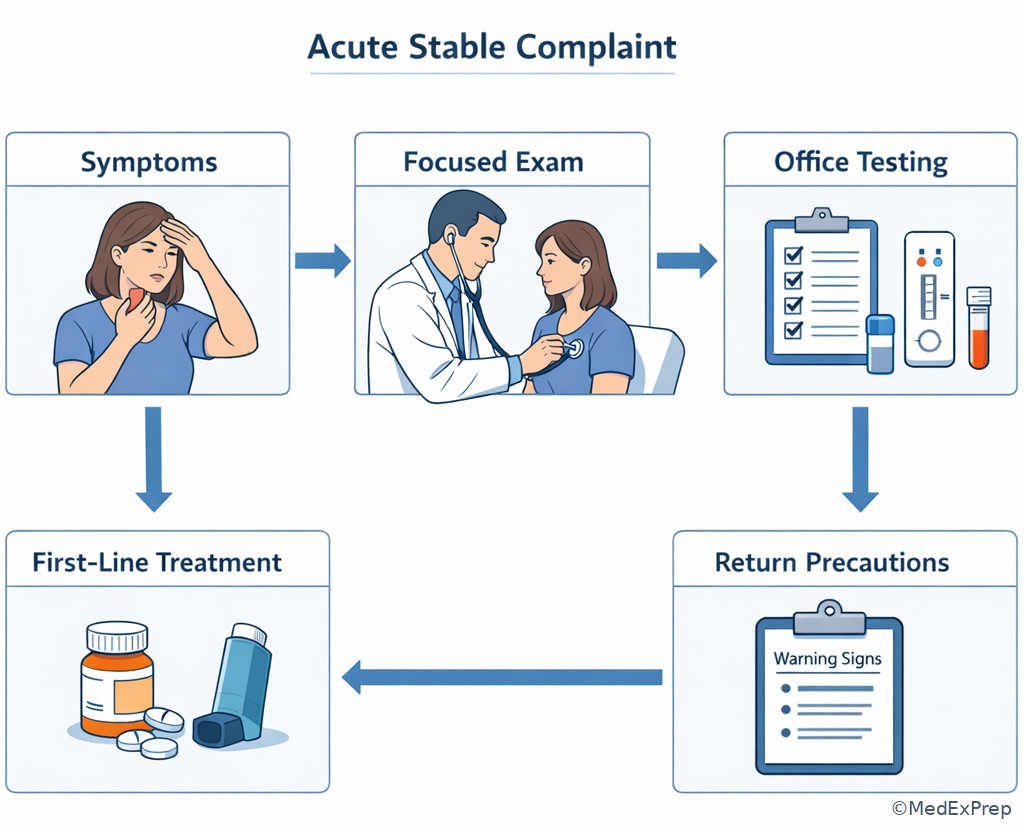
Common categories: diagnosis questions reward pattern recognition; testing questions reward first steps; treatment questions reward first-line outpatient therapy; counseling questions reward risk reduction and return precautions; follow-up questions reward monitoring intervals and targets; escalation questions reward not delaying higher-level care. See Fig 2 for a quick map.
Recall: This is the first topic in the course, so there is no prior lesson content to retrieve yet. The framework you build here becomes the base for the upcoming topics on red flags/disposition and guideline-based answer selection.
Exam takeaway: Stable patients usually need diagnosis, testing, treatment, counseling, or follow-up, whereas red flags shift the task to escalation.
flowchart LR
A[Family medicine vignette] --> B{Current context}
B -->|Asymptomatic annual visit| C[Screening and prevention]
B -->|Stable new complaint| D[Diagnosis or best initial test]
B -->|Known condition follow-up| E[Treatment adjustment or monitoring]
B -->|Medication question| F[Counseling adverse effects contraindications]
B -->|Red flag or instability| G[Urgent escalation disposition]
C --> H[Apply age and risk rules]
D --> H
E --> H
F --> H
G --> H[Choose safest next action]
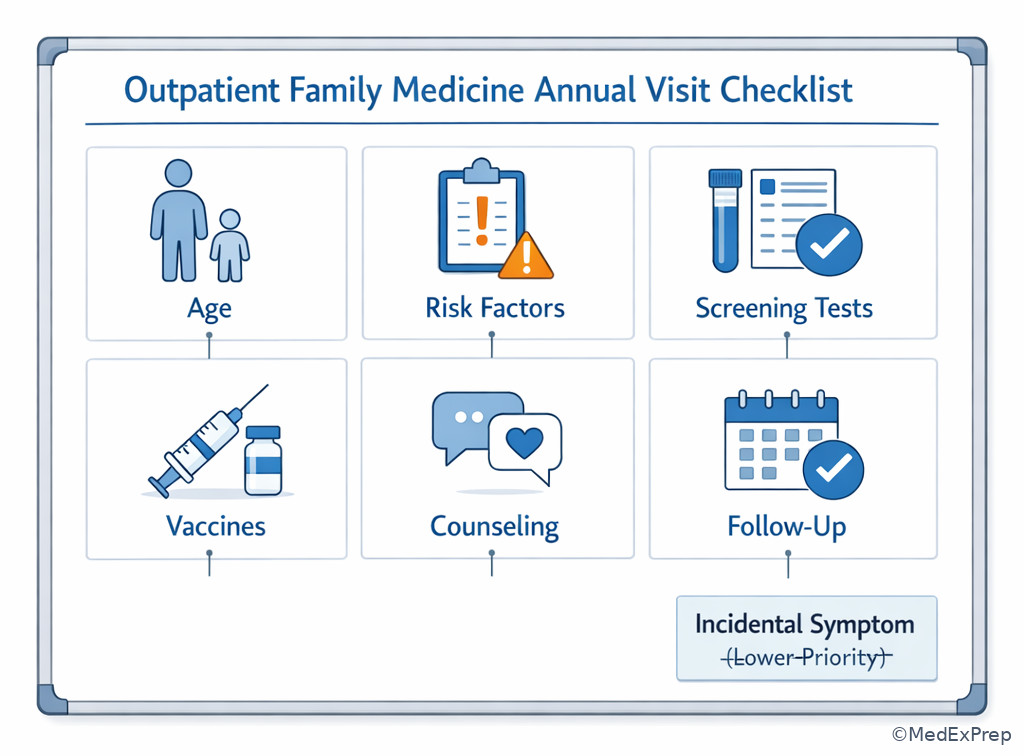
A high-yield shortcut is to label the visit type: annual preventive visit, acute same-day complaint, chronic disease follow-up, medication review, or triage. That label narrows the likely answer set. Annual visit questions often test screening, vaccines, counseling, or risk calculation. Acute stable complaint questions test differential diagnosis, office tests, symptomatic treatment, or safety-netting. Chronic follow-up questions test monitoring, guideline thresholds, adherence, and first-line medication changes. If the stem clearly no longer fits outpatient routine care, you are no longer in the same answer pool.
Memory anchor: “D-T-T-C-F-E” = Diagnose, Test, Treat, Counsel, Follow up, Escalate. Before looking at options, ask which one bucket the stem belongs to.
Clinician Action: Diagnose whether this is preventive, acute, chronic, medication-related, or triage. Order the lowest-step appropriate outpatient test if stable. Treat with first-line ambulatory therapy when the diagnosis/workflow supports it. Refer/Escalate if the answer choices signal a safety threshold beyond routine clinic care.
B Worked example
A 67-year-old man with hypertension, CKD stage 3, and a 40-pack-year smoking history presents for an annual visit. He mentions occasional heartburn after spicy foods and asks whether he needs “any scans.” BP is controlled; exam is benign. The stem asks: Which of the following is the most appropriate next step?
Identify task: annual visit with prevention language. Extract key facts: age, smoking history, chronic conditions, asymptomatic regarding major cardiopulmonary complaints. Heartburn is distracting noise. Apply rule: this is a screening/prevention task, so think age- and risk-based recommendations rather than GERD workup. Eliminate distractors: upper endoscopy for mild intermittent reflux is too issue-focused and not the main task; stress test without ischemic symptoms is not a screening tool in this framing; referral for nephrology may be appropriate in some CKD contexts but is not triggered by the stem. Verify: choose the screening test that fits his age/risk profile, such as lung cancer screening if current guideline criteria are met.
C Exam trap
Common wrong answer: Work up the symptom that was casually mentioned during a preventive visit.
Why it is tempting: Symptoms feel more concrete than prevention rules, so they pull attention away from age and risk factors.
Single clue that eliminates it: The patient is at an annual visit and the final line asks for the most appropriate next step broadly, signaling a preventive framework.
D Checkpoint
Question: A 10-year-old boy presents for a sports physical. He has mild seasonal allergies, no current complaints, and normal vitals. Which task category is most likely being tested?
- Emergency disposition
- Preventive screening and counseling
- Definitive management of acute bacterial illness
- Specialist referral for advanced testing
Answer: B
- A: Tempting because sports questions can include sudden death screening, but no red flags or instability are present.
- B: Correct because well visits and sports physicals primarily test prevention, anticipatory guidance, and screening.
- C: Tempting if learners focus on allergies as a “condition,” but there is no acute infectious presentation.
- D: Tempting if one overreads clearance issues, but normal exam and no concerning history keep this in routine outpatient care.
- The most common first mistake in mixed vignettes is answering the wrong task, not missing the disease.
- True or False: An asymptomatic annual visit usually points first toward prevention or screening. True.
- Name the 3 broad visit labels that narrow answer choice pools fastest: preventive, acute stable complaint, chronic follow-up.
Exam takeaway: In asymptomatic preventive encounters, age and risk factors usually outrank minor incidental symptoms.
Exam takeaway: Stable acute complaints usually require focused history, exam, and a first office-based test rather than immediate advanced intervention.
1.1.1.5 Application: pick the governing clue and ignore noise
A Explanation
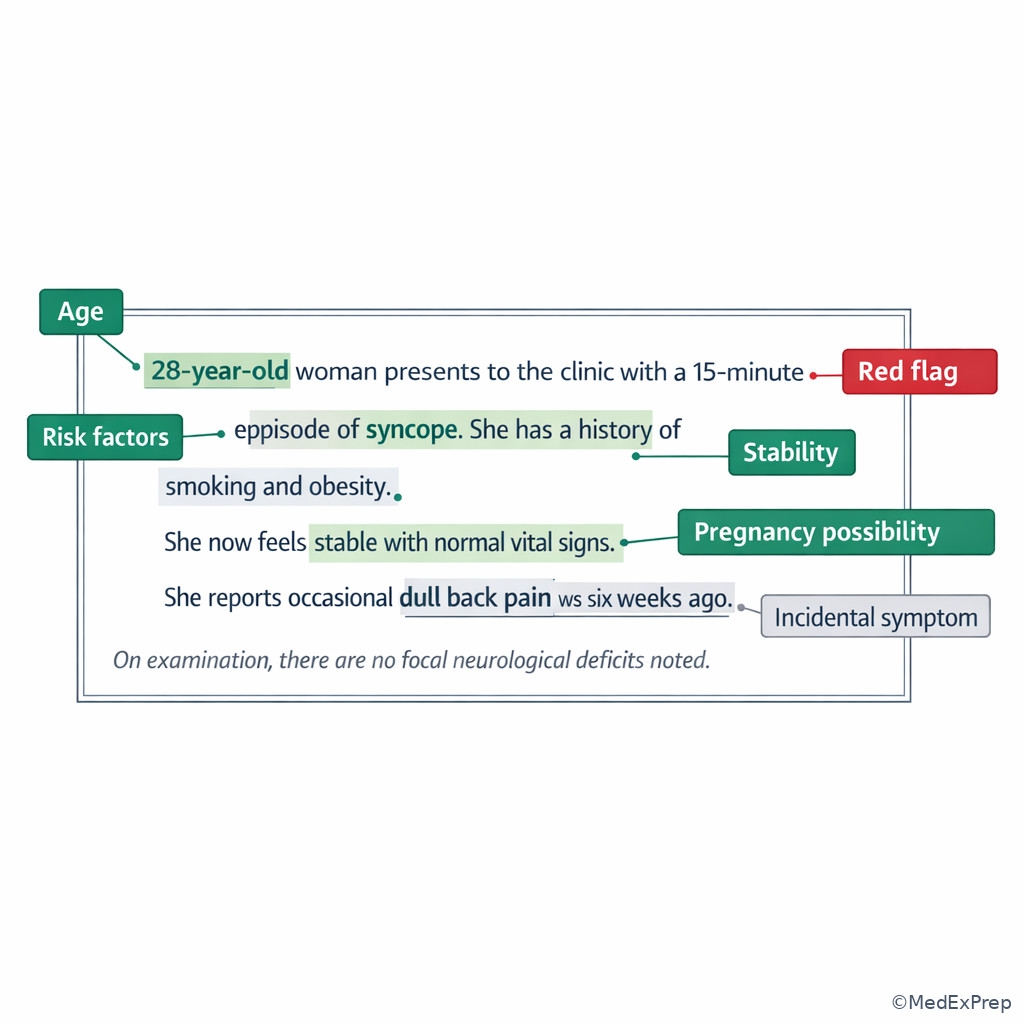
Once the task is clear, the next conflict is which fact in the stem actually decides the answer. Board-style family medicine questions often include age, medications, chronic diseases, a mildly abnormal but irrelevant lab, and one clue that determines the task. The rule is simple: find the governing clue—the age threshold, risk factor, positive screening result, classic symptom, contraindication, pregnancy possibility, or red flag that shifts the answer. Everything else may be background.
WHY THIS IS TESTED: Real outpatient medicine is noisy. The exam simulates this by making several options look partially reasonable. You must choose between answer choices that all belong to the same organ system or management family. The correct answer is separated by a single discriminating detail. For example, dysuria with vaginal discharge changes your differential and test choice; missed menses changes medication safety and testing priorities; unstable vitals change routine office care into urgent transfer. See Fig 3.
The high-yield move is to annotate stems mentally in two columns: decisive versus decorative. Decisive details often include age, pregnancy status, immunocompromise, duration, severity, vital signs, focal neurologic findings, peritoneal signs, suicidal ideation, oxygen saturation, or a threshold value. Decorative details often include old stable diagnoses, non-specific fatigue, mild chronic symptoms not linked to the prompt, or reassuring but irrelevant normal findings.
High-Yield Connection: This concept is tested alongside Office Data Interpretation and Guideline-Based Answer Selection. Know both the decisive clue and the threshold/guideline it points to; those pairs are frequently used to split close answer choices.
Exam takeaway: One discriminating clue usually decides the correct answer, while the rest of the stem is there to create plausible distractors.
flowchart TD
A[Read stem details] --> B{Detail type}
B -->|Age risk factor threshold| C[Signal]
B -->|Vital sign instability| C
B -->|Pregnancy possibility contraindication| C
B -->|Classic localizing symptom finding| C
B -->|Old stable condition mild chronic issue| D[Noise]
B -->|Normal exam unrelated lab| D
C --> E[Use to separate options]
D --> F[Do not let it drive the answer]
A practical exam technique is to ask, “If I removed this fact, would the answer change?” If yes, that detail is likely decisive. If no, it is likely noise. Another useful test: “Does this detail connect to the final line?” A random history of migraine may matter for contraception selection, but not for strep testing. Obesity may matter for diabetes screening, but not for otitis externa treatment unless dosing or risk is being tested.
Memory anchor: “Pivot, not pile”—the correct answer usually turns on one pivot clue, not the entire pile of details.
Clinician Action: Diagnose the one clue that changes your differential or urgency. Order testing that directly addresses that clue. Treat only after ruling out a pivot detail that would change management. Refer/Escalate if the pivot clue is a red flag, even if the rest of the stem sounds routine.
B Worked example
A 23-year-old woman with asthma and irritable bowel syndrome presents with dysuria and urinary frequency for 2 days. She also reports mild vaginal itching after using a scented soap. She is sexually active with one partner and does not always use condoms. Temperature is 98.7°F, HR 84, BP 118/72. The stem asks for the best initial test.
Identify task: best initial test. Extract key facts: urinary symptoms, possible vaginal symptoms, reproductive age, sexually active. The scented soap detail is a tempting but not definitive clue. Apply rule: dysuria alone can suggest cystitis, but vaginal symptoms broaden the differential toward vaginitis or STI/cervicitis; therefore, do not assume empiric UTI treatment without initial office evaluation. Eliminate distractors: urine culture may be too downstream for uncomplicated initial evaluation; empiric antibiotics answer a treatment task, not testing; pelvic ultrasound does not match the initial outpatient step. Verify: a focused office-based test such as urinalysis, often combined with pregnancy testing and targeted genital evaluation depending on the option set, best matches the task.
C Exam trap
Common wrong answer: Treat as uncomplicated cystitis immediately.
Why it is tempting: Dysuria and frequency are classic UTI triggers, and exam-takers often stop reading once they recognize a common pattern.
Single clue that eliminates it: Vaginal symptoms are present, so the stem is warning that the differential is broader and the task is best initial test, not treatment.
D Checkpoint
Question: A 71-year-old man with hypertension, osteoarthritis, and a history of smoking presents with acute cough for 3 days. He also mentions a 5-lb weight gain over the last year and asks about his diet. Vitals are normal and oxygen saturation is 98%. Which detail is most likely the governing clue if the prompt asks for the best initial evaluation of the cough?
- Chronic osteoarthritis
- Normal oxygen saturation and short duration of symptoms
- Weight gain over the last year
- Diet question at the end of the visit
Answer: B
- A: Tempting because chronic comorbidities often matter, but osteoarthritis does not drive acute cough evaluation.
- B: Correct because stability and short symptom duration help frame the complaint as an uncomplicated outpatient respiratory evaluation rather than emergency disposition.
- C: Tempting because unexplained weight loss can be a red flag in pulmonary questions, but this is mild weight gain, not the pivot detail.
- D: Tempting because diet counseling is common in primary care, but it does not govern the acute cough task.
1.1.1.6 Application: choose office-based first steps, not specialist-level end points
A Explanation
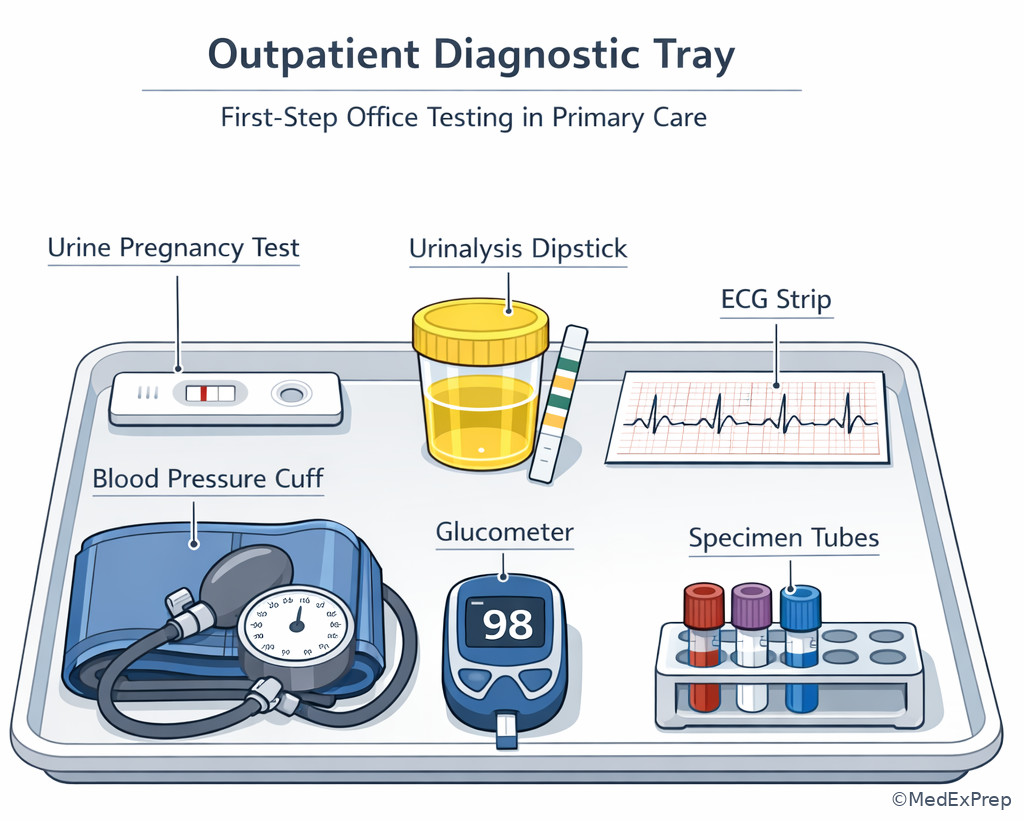
A frequent outpatient error is selecting the most definitive test or the most aggressive treatment instead of the appropriate first step. The decision conflict is common office-based initial action versus downstream definitive action. The single rule is: in a stable patient, the exam usually wants the lowest-step, high-yield outpatient action that safely advances care. This may be a repeat blood pressure, urine pregnancy test, urinalysis, A1c, TSH, lipid panel, rapid strep test when indicated, ECG for palpitations, or plain radiograph for trauma.
WHY THIS IS TESTED: The Family Medicine EOR is grounded in supervised ambulatory reasoning. You are expected to know when a common office tool is enough and when specialty testing is premature. If the patient is stable and the diagnosis is not yet confirmed, ordering advanced imaging, endoscopy, catheterization, or subspecialty studies is often a distractor. Conversely, if a red flag is present, staying in office mode too long is the mistake. See Fig 4.
Choose-vs-reject framing: choose confirmatory or triage-level outpatient tests when appropriate; reject definitive specialist procedures unless the stem specifically places the patient at that point in workup. Choose first-line treatments commonly started in primary care; reject second-line or hospital-level interventions unless outpatient options are contraindicated or the patient is unstable.
Key rule: On stable outpatient stems, the “best” answer is often the one that is safest, simplest, and immediately actionable—not the fanciest test.
Exam takeaway: Stable outpatient questions usually reward simple first steps, while red flags justify skipping routine clinic sequencing.
flowchart TD
A[Stable outpatient complaint] --> B{Need diagnosis confirmed?}
B -->|Yes| C[Office-based initial test]
B -->|No confirmed and mild| D[First-line outpatient treatment]
C --> E{Red flag present?}
D --> E
E -->|No| F[Follow-up and safety net]
E -->|Yes| G[Escalate urgent evaluation or ED]
See Fig 4 for the logic that separates reasonable initial clinic care from care that should move out of the routine outpatient lane. This section also sets up the next topic, Red Flags And Disposition, where the escalation branch is explored in detail.
Forward link: The upcoming lesson on Red Flags And Disposition will show when symptoms such as chest pain, hypoxia, ectopic pregnancy clues, focal neurologic deficits, sepsis findings, or suicidal risk override ordinary office sequencing.
Clinician Action: Diagnose whether the patient is stable enough for outpatient sequencing. Order the initial office test that changes management. Treat with common first-line therapy if appropriate for primary care. Refer/Escalate immediately for red flags rather than delaying with outpatient workup.
B Worked example
A 34-year-old woman with obesity and polycystic ovary syndrome presents with 6 weeks of amenorrhea, nausea, and mild fatigue. She also reports intermittent tension headaches and recent job stress. Vitals are normal, and exam is benign. The stem asks for the best initial test.
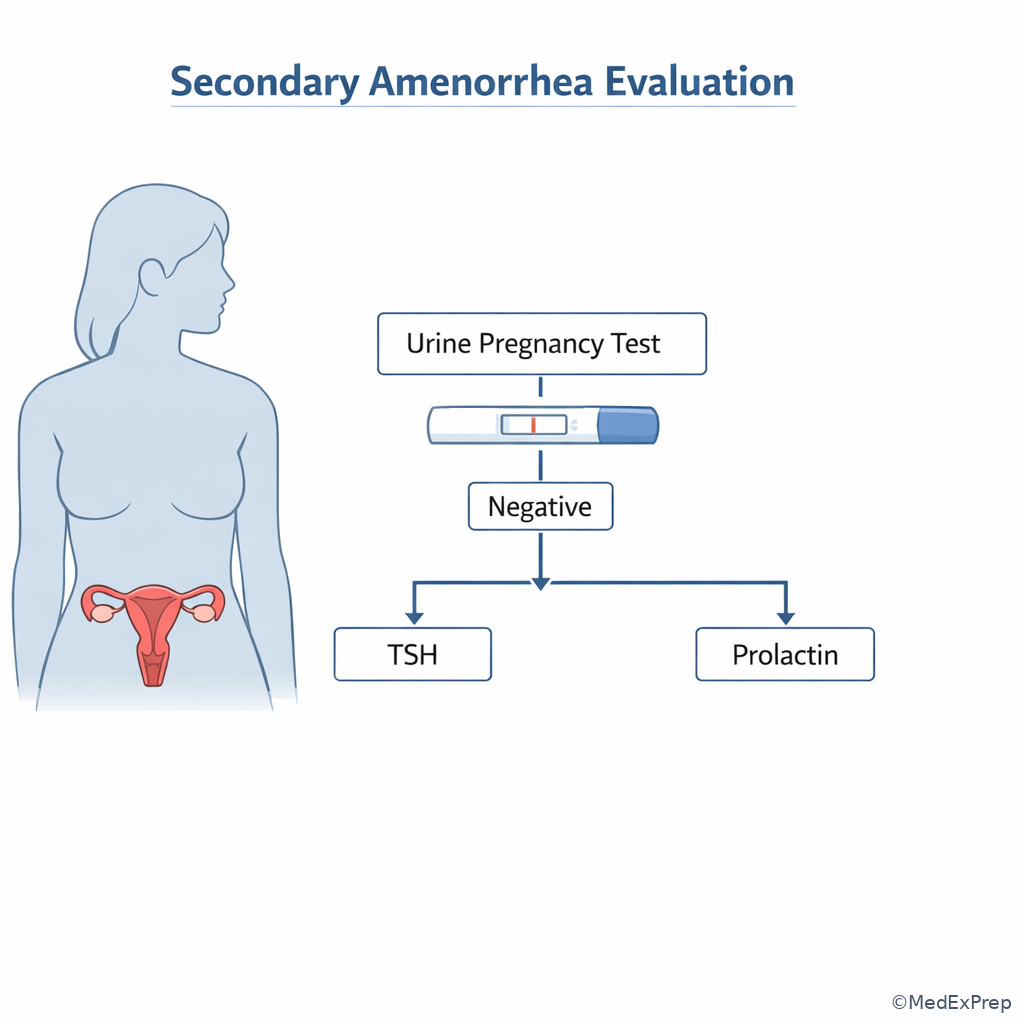
Identify task: best initial test. Extract key facts: reproductive age, amenorrhea, nausea, stable. Headaches and stress are noise because they can tempt endocrine or psychiatric distractors. Apply rule: pregnancy must be considered first in reproductive-age patients with amenorrhea before broader endocrine evaluation. Eliminate distractors: TSH and prolactin may later be appropriate in secondary amenorrhea evaluation, but not before pregnancy testing; MRI is far too advanced for initial outpatient workup. Verify: urine pregnancy testing is the correct first step.
C Exam trap
Common wrong answer: Order the more definitive or comprehensive endocrine workup first.
Why it is tempting: Learners remember the full differential of amenorrhea and want to prove depth of knowledge.
Single clue that eliminates it: Reproductive-age amenorrhea requires pregnancy testing first because it is cheap, fast, common, and management-changing.
D Checkpoint
Question: A 61-year-old man with hypertension and hyperlipidemia presents with intermittent palpitations for 2 weeks. He drinks three cups of coffee daily and takes no illicit drugs. He is asymptomatic during the visit, and vitals are stable. Which is the most appropriate first outpatient step?
- Electrophysiology referral for ablation planning
- Obtain an ECG
- Begin amiodarone therapy
- Send directly for cardiac catheterization
Answer: B
- A: Tempting because recurrent palpitations can eventually involve specialty evaluation, but referral before basic office assessment is premature.
- B: Correct because a stable outpatient with palpitations should first have office-based rhythm evaluation such as ECG.
- C: Tempting if arrhythmia seems likely, but starting antiarrhythmic therapy before defining the rhythm is not the first step.
- D: Tempting if one over-associates palpitations with serious cardiac disease, but the stem provides no ACS pattern or hemodynamic instability.
- The first test for amenorrhea in a reproductive-age patient is pregnancy testing.
- True or False: In a stable outpatient, the most definitive test is usually the best initial test. False.
- Palpitations in a stable clinic patient → first office step often includes ECG.
Exam takeaway: Common clinic tests such as urine pregnancy testing, urinalysis, ECG, and A1c often outperform advanced studies as first steps.
Exam takeaway: Reproductive-age amenorrhea should trigger pregnancy testing before broader endocrine investigation.
1.1.1.7 Integration: disposition can override diagnosis and treatment
A Explanation
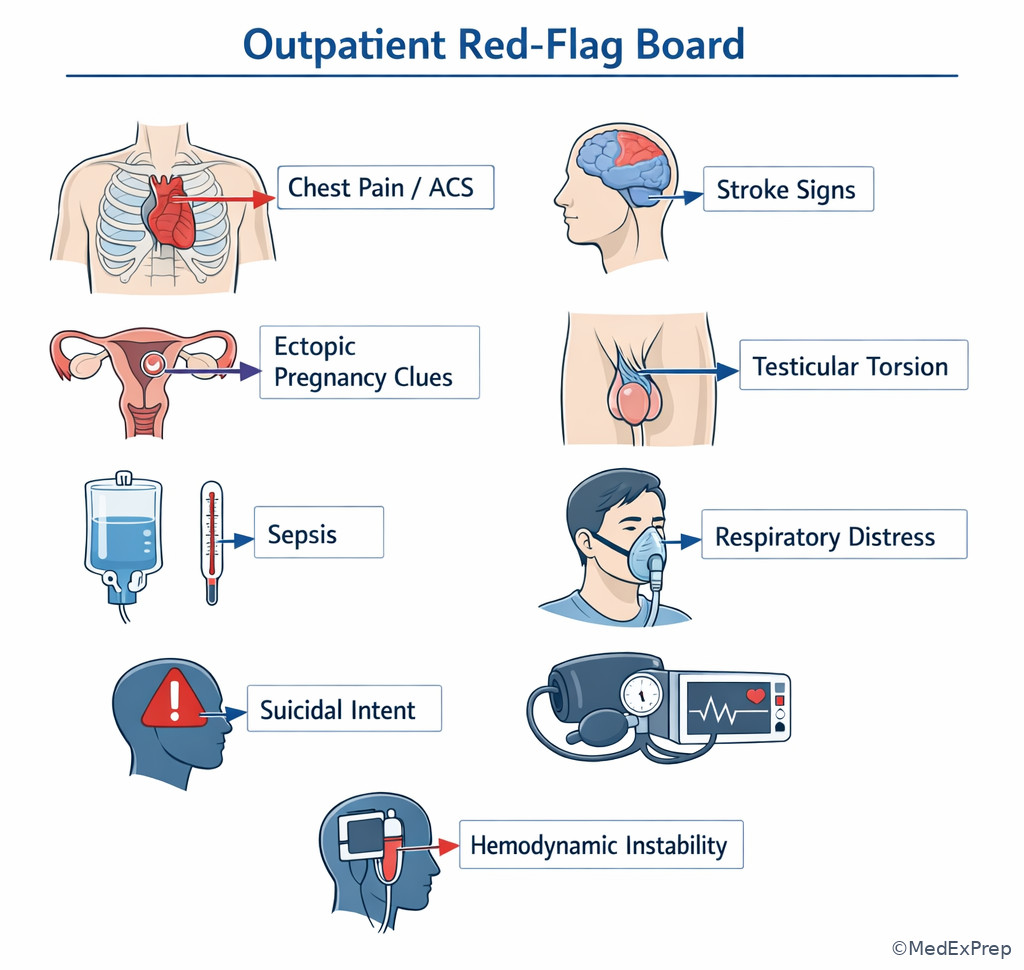
The final foundational integration rule is that some stems stop being diagnosis or treatment questions once a safety threat appears. The conflict is continue routine outpatient reasoning versus escalate immediately. The single clue that resolves it is the presence of instability or a red-flag feature. In family medicine, red flags include chest pain concerning for ACS, focal neurologic deficit, severe respiratory distress, hypoxia, ectopic pregnancy clues, testicular torsion pattern, sepsis features, severe dehydration, surgical abdomen signs, suicidal intent, or hemodynamic instability.
WHY THIS IS TESTED: Family medicine EOR questions are intentionally outpatient in scope, but safe outpatient practice depends on knowing when not to stay outpatient. The correct response may be to notify the preceptor immediately, arrange urgent evaluation, or transfer to the ED. A common trap is to keep thinking through routine algorithms because the disease seems recognizable. On exam day, the presence of a dangerous feature can make the diagnosis secondary to disposition.
Choose-vs-reject framing: choose escalation when immediate risk exists; reject office-based reassurance, routine follow-up, or prolonged workup that delays higher-level care. This is not “overreacting”—it is recognizing scope and safety. The next lesson will deepen this. Here, your job is to notice when the task has shifted.
Key rule: If a red flag changes where the patient belongs, disposition outranks ordinary workup and treatment sequencing.
Exam takeaway: When a red flag is present, the correct answer often shifts from routine outpatient management to urgent escalation.
flowchart TD
A[Outpatient stem] --> B{Any safety override?}
B -->|Hemodynamic instability| C[ED transfer immediate escalation]
B -->|High-risk red flag symptom| C
B -->|No| D[Continue outpatient reasoning]
D --> E[Diagnosis test treatment follow-up]
C --> F[Do not delay with routine office workup]
See Fig 5 whenever you are tempted to pick a reasonable office step in a stem that contains an unsafe feature. A practical strategy is to scan every stem for three things before deciding: unstable vitals, dangerous symptom constellation, and altered mental status or safety risk. If any are present, stop and reassess the answer pool.
High-Yield Connection: This concept is frequently paired with Chest Pain And Dyspnea, Ectopic Pregnancy Red Flags, Scrotal Pain Emergencies, and Suicide Risk And Escalation. Know both the syndrome pattern and the disposition trigger.
Clinician Action: Diagnose the presence of a safety override, not just the disease pattern. Order only immediate office measures that do not delay transfer. Treat supportive essentials within clinic scope if directed by the preceptor. Refer/Escalate urgently for instability, severe red flags, or threats to self/others.
B Worked example
A 29-year-old woman with asthma and prior chlamydia infection presents with lower abdominal pain and light vaginal spotting. She says her period is “a little late.” She also mentions dysuria for 1 day and believes it is probably a UTI. BP is 92/58, HR 118. The stem asks for the most appropriate next step.
Identify task: next step. Extract key facts: reproductive age, late menses, abdominal pain, spotting, hypotension, tachycardia. Dysuria is the tempting wrong-path clue. Apply rule: instability plus possible ectopic pregnancy is a safety override. Eliminate distractors: office urinalysis answers the dysuria but ignores life-threatening risk; empiric cystitis treatment is inappropriate; routine outpatient pelvic ultrasound arranged later delays escalation. Verify: immediate urgent escalation/ED transfer with preceptor involvement is correct.
C Exam trap
Common wrong answer: Treat as urinary tract infection because of dysuria.
Why it is tempting: Dysuria is common, familiar, and easy to anchor on.
Single clue that eliminates it: Hypotension and tachycardia in a patient with pain, spotting, and late menses make this a disposition problem, not a routine office infection problem.
D Checkpoint
Question: A 63-year-old man with diabetes, hypertension, and hyperlipidemia presents to clinic for “indigestion.” He has 30 minutes of chest pressure radiating to the jaw, diaphoresis, and nausea. BP is 86/54. What is the most appropriate next step?
- Trial of a proton pump inhibitor and follow-up in 4 weeks
- Order outpatient H. pylori testing
- Immediate supervising-clinician involvement and ED transfer
- Schedule elective stress testing next week
Answer: C
- A: Tempting because “indigestion” can reflect GERD, but radiation, diaphoresis, and hypotension override that benign interpretation.
- B: Tempting if the learner focuses on epigastric language, but the overall syndrome is not a dyspepsia workup.
- C: Correct because ACS with instability is an emergency disposition question, not a routine outpatient GI evaluation.
- D: Tempting because chest discomfort can lead to outpatient cardiac testing in stable patients, but he is not stable.
1.1.1.8 Integration: a repeatable board-style reasoning framework
A Explanation
Your final goal is to run the same mental sequence on every question. The conflict is reacting to the first familiar clue versus following a structured outpatient reasoning process. The single rule is consistency: use the same five-step framework every time—identify the task, extract age/risk/stability clues, apply the governing rule, eliminate close distractors, and verify safety/disposition. This reduces both overthinking and premature closure.
WHY THIS IS TESTED: The EOR exam covers a wide range of family medicine content across the lifespan. You cannot memorize every stem variation, but you can standardize how you approach them. This framework also keeps your answers aligned with PA student outpatient scope. It helps you avoid specialist-level answers when the exam is testing recognition, initial evaluation, counseling, or referral thresholds.
Verification is the most overlooked step. Before committing, ask: Does my choice answer the actual question? Is the patient stable enough for this plan? Is there a cheaper, earlier, office-based step I skipped? Am I accidentally picking a referral or definitive test when primary care should act first? Have I ignored a red flag? This final check saves many points.
Memory anchor: I-E-A-E-V = Identify task, Extract key facts, Apply rule, Eliminate distractors, Verify safety.
Exam takeaway: A fixed reasoning sequence reduces errors from premature diagnosis, overtesting, and missed safety overrides.
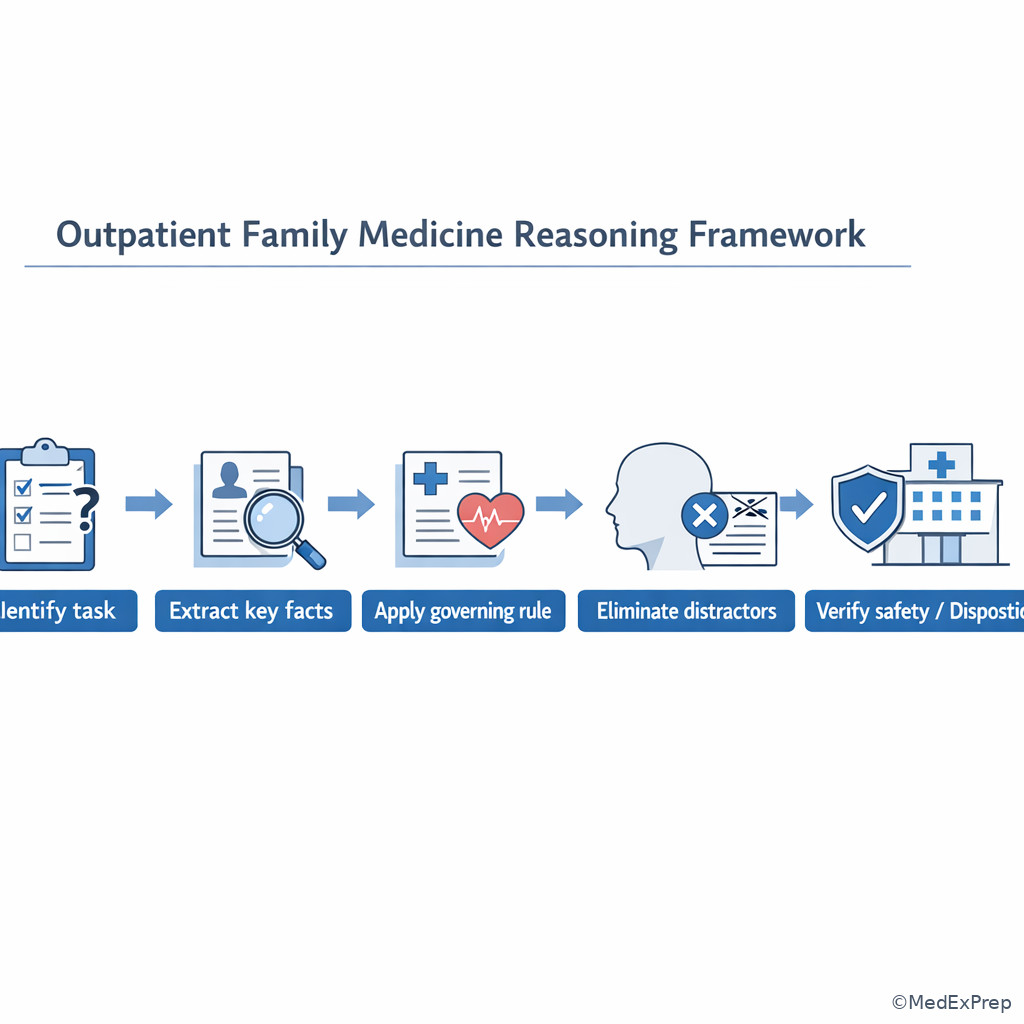
See Fig 6 as the master framework for all later course topics. In the next lesson, you will deepen the “verify safety” step. In the following lesson, you will sharpen the “apply rule” step using guideline-based answer selection.
Clinician Action: Diagnose the question type before the disease label. Order the first outpatient test that changes decisions. Treat with first-line management only when the workflow and setting fit. Refer/Escalate whenever safety, scope, or disposition concerns override routine clinic care.
B Worked example
A 46-year-old man with obesity, tobacco use, and controlled hypertension presents for medication refill. He mentions snoring, daytime fatigue, and falling asleep at traffic lights. He also asks whether he needs a colonoscopy because his brother had colon cancer at 55. BP is 128/78, oxygen saturation 97%, exam otherwise benign. The stem asks for the most appropriate next step.
Identify task: next step in a mixed preventive/chronic follow-up visit. Extract key facts: daytime somnolence at the wheel is the pivot clue because it creates a current safety issue and indicates likely sleep apnea evaluation needs. Family history of colon cancer is important but may be a separate preventive need rather than the most immediate next step depending on options. Apply rule: choose the action best matched to the most urgent management-changing clue in a stable outpatient setting. Eliminate distractors: routine refill alone ignores a safety-relevant symptom; jumping straight to CPAP without evaluation is premature; specialist interventions may be too advanced if basic evaluation is the step being tested. Verify: the correct answer is the one that addresses likely obstructive sleep apnea with appropriate evaluation and safety counseling rather than ignoring the symptom.
C Exam trap
Common wrong answer: Answer the “secondary” preventive issue because it sounds guideline-heavy.
Why it is tempting: Family medicine learners often expect annual-visit questions to be primarily about screening.
Single clue that eliminates it: A symptom that creates current risk—such as falling asleep while driving—can take priority over routine prevention even if the patient is otherwise stable.
D Checkpoint
Question: Which sequence best reflects the recommended exam-day reasoning framework for outpatient family medicine stems?
- Choose the likely diagnosis → read the final line → check for red flags → review options
- Read all answer choices first → pick the most definitive test → verify symptoms afterward → assess risk
- Identify the task → extract key facts → apply the governing rule → eliminate distractors → verify safety
- Focus on medications first → identify comorbidities → select referral → determine the task last
Answer: C
- A: Tempting because diagnosis matters, but this sequence invites anchoring before you know what the stem actually wants.
- B: Tempting for test-takers who rely on answer choice recognition, but it promotes downstream overtesting and ignores task-first logic.
- C: Correct because it mirrors the safest, most generalizable outpatient reasoning process.
- D: Tempting in chronic disease questions, but it reverses the proper order and often leads to wrong-task answers.
- The final line determines the task category.
- True or False: A red flag can convert a diagnosis question into a disposition question. True.
- Name the five framework steps: Identify, Extract, Apply, Eliminate, Verify.
Exam takeaway: Instability, severe pain patterns, hypoxia, pregnancy emergencies, and psychiatric danger signals should trigger escalation rather than routine office care.
Exam takeaway: Marking decisive details such as age, risk, stability, and one pivot symptom helps eliminate distractors quickly.
Exam Traps & Differentiators
Common traps & distractors: The most common wrong answer is the medically reasonable option that answers a different task. On this exam, “reasonable” is not enough; it must match the prompt, the setting, and the urgency.
| Looks right | Why it tempts | Why it is wrong here | What to choose instead |
|---|---|---|---|
| Definitive specialist test | Feels thorough and advanced | Stem asks for best initial outpatient test | Common office-based first step |
| Immediate treatment | You recognized the likely disease | Diagnosis not yet confirmed or prompt asks for testing | Confirmatory initial evaluation |
| Routine follow-up | Most of the stem sounds benign | One red flag changes urgency | Urgent escalation/disposition |
| Screening answer | Age/risk factors are prominent | Current symptom requires action now | Address present clinical problem first |
| Referral | Condition may eventually need specialist care | Primary care initial step has not yet been done | Perform outpatient first-line evaluation/management |
| If the stem says… | Think… |
|---|---|
| “Annual visit,” “health maintenance,” “asks what tests are needed” | Screening/prevention framework |
| “Best initial test” in a stable patient | Simple office-based evaluation before definitive testing |
| “Most appropriate next step” after one abnormal screening value | Confirm, repeat, or clarify before jumping to long-term treatment |
| Late menses in reproductive age | Pregnancy test early in the sequence |
| Hypotension, hypoxia, severe distress, focal deficit, suicidal intent | Disposition override; urgent escalation |
| Mention of a minor chronic issue during a preventive visit | Possible noise unless it changes urgency or contraindications |
Looks similar but isn’t: A preventive visit with a minor symptom is not the same as a same-day acute complaint. A stable acute complaint is not the same as a red-flag triage problem. A likely diagnosis is not the same as a treatment question. These pairs create the most common confusable answer choices.
Cross-topic confusable pair: In the upcoming topic Red Flags And Disposition, many traps will involve the same symptom cluster but a different urgency threshold. In the upcoming topic Guideline-Based Answer Selection, the trap shifts from task recognition to choosing the exact governing threshold or interval. Here, your job is to recognize which kind of question you are answering.
Algorithm / Approach
Rapid Review
- Task recognition → final line outranks the rest of the stem
- Preventive visit → age and risk factors drive the answer
- Best initial test → choose the first office-based study, not the definitive specialist test
- Most appropriate next step → answer the current workflow point, not the entire care plan
- Likely diagnosis but stable uncertainty → confirm when confirmation changes management
- Reproductive-age amenorrhea → pregnancy test first
- Dysuria plus vaginal symptoms → broaden differential before reflex UTI treatment
- Palpitations, stable clinic patient → initial office rhythm assessment before specialty treatment
- Annual visit plus incidental symptom → do not let minor noise derail prevention tasks
- One abnormal screening result → often verify/confirm before long-term treatment
- Hypotension or hypoxia → disposition question until proven otherwise
- Red flag present → escalation can override diagnosis/treatment sequencing
- Tempting wrong answer → often correct for a different task or different urgency level
- Best exam framework → Identify, Extract, Apply, Eliminate, Verify
Self-check quiz
1. A 45-year-old woman with obesity presents for an annual exam. She has no acute complaints, normal vitals, and asks what health tests she should be getting. What task is this stem most likely testing?
- Emergency disposition
- Preventive screening and counseling
- Specialist-level definitive management
- Acute procedural intervention
2. A 31-year-old woman with irregular menses and mild acne presents with 7 weeks of amenorrhea. She also reports work stress and recent travel. Vitals are normal. Which is the best initial test?
- Serum prolactin
- Urine pregnancy test
- Pituitary MRI
- Pelvic CT scan
3. A 58-year-old man with hypertension and obesity presents for follow-up. He feels well. A community screening last week showed BP 162/96, but today in clinic it is 128/78. The stem asks for the most appropriate next step. Which is best?
- Add a second antihypertensive immediately
- Confirm blood pressure control with appropriate repeat/out-of-office assessment before intensifying therapy
- Refer to nephrology today
- Discontinue his current antihypertensive because today’s BP is normal
4. A 24-year-old woman with asthma presents with dysuria and urinary frequency for 2 days. She also reports vaginal itching and a new sexual partner. Temperature is normal, and she appears well. Which is the most appropriate initial outpatient step?
- Empirically treat uncomplicated cystitis without further evaluation
- Focused office evaluation with urinalysis and consideration of pregnancy/STI-related testing based on exam
- CT abdomen/pelvis
- Immediate ED transfer
5. A 66-year-old man with hyperlipidemia, GERD, and a 35-pack-year smoking history presents for an annual visit. He mentions rare heartburn after tomato sauce but otherwise feels well. Which is the best reasoning approach to this stem?
- Center the visit on GERD workup because it is the only symptom mentioned
- Use age and risk factors to identify likely preventive tasks, while treating the mild reflux comment as possible noise
- Choose endoscopy because definitive tests are preferred on annual visits
- Ignore age and smoking history because the patient is asymptomatic
6. A 27-year-old woman with a history of pelvic inflammatory disease presents with lower abdominal pain, light vaginal bleeding, and dizziness. Her last menstrual period was 7 weeks ago. She also reports mild dysuria. BP is 90/56 and HR is 122. What is the most appropriate next step?
- Urinalysis and oral antibiotics for cystitis
- Office urine pregnancy test followed by routine outpatient follow-up if positive
- Immediate supervising-clinician involvement and ED transfer
- Schedule pelvic ultrasound later this week
7. A 62-year-old man with diabetes, hyperlipidemia, and tobacco use presents to clinic for “bad indigestion.” He has chest pressure radiating to the jaw with diaphoresis for 40 minutes. BP is 88/52 and he appears pale. Which answer best reflects correct outpatient task recognition?
- Most likely GERD; begin proton pump inhibitor therapy
- Best initial office test is H. pylori stool antigen
- The question has become an emergency disposition problem rather than routine outpatient GI evaluation
- Arrange elective outpatient stress testing within 1 week
8. A 48-year-old man with obesity, hypertension, and seasonal allergies presents for a medication refill. He reports loud snoring, morning headaches, and falling asleep at stoplights. He also asks whether he is due for colon cancer screening because his brother was diagnosed at 54. Vitals are normal. Which is the most appropriate next step?
- Address probable sleep apnea evaluation and safety counseling first, while planning appropriate preventive screening as a subsequent need
- Focus only on colon cancer screening because preventive tasks always outrank symptomatic issues in refill visits
- Start CPAP without further evaluation
- Provide medication refills only and defer both issues because the visit was not scheduled as an annual exam
Answer key
1. Answer: B
- A: Tempting because some annual visits uncover emergencies, but this patient has no instability or red flags. The discriminating clue is an asymptomatic annual exam. Source support: USPSTF preventive framing and primary care visit structure support screening in asymptomatic adults.
- B: Correct because an annual exam in a stable patient asking about needed tests is a prevention and screening task. The discriminating clue is “annual exam” plus no acute complaint. Source support: USPSTF recommendations guide age- and risk-based screening in primary care.
- C: Tempting because chronic disease often appears in adult medicine exams, but definitive specialist management is outside the immediate ask. The discriminating clue is lack of a diagnosed acute problem requiring specialty care.
- D: Tempting only if one assumes every office visit tests urgent intervention, but nothing in the stem supports a procedure. The discriminating clue is normal vitals and no acute complaint.
2. Answer: B
- A: Tempting because prolactin is part of amenorrhea evaluation, but it is not the first step in a reproductive-age patient. The discriminating clue is 7 weeks of amenorrhea in a woman of childbearing potential. Source support: standard amenorrhea algorithms begin with pregnancy exclusion.
- B: Correct because pregnancy testing is the first outpatient test for amenorrhea in reproductive-age patients. The discriminating clue is missed menses with otherwise stable presentation. Source support: ACOG and primary care references place pregnancy testing first.
- C: Tempting because amenorrhea can involve pituitary pathology, but MRI is for selected cases after initial evaluation suggests central disease. The discriminating clue is no neurologic or galactorrhea pattern and no negative pregnancy test yet.
- D: Tempting because pelvic imaging may eventually be used in some gynecologic workups, but CT is not the best initial test here. The discriminating clue is a simple, higher-yield first step exists.
3. Answer: B
- A: Tempting because the community BP is elevated, suggesting uncontrolled hypertension. It is incorrect because the stem gives conflicting values, so confirmation is needed before intensifying therapy. The discriminating clue is normal in-clinic BP today with only one outside elevated value. Source support: ACC/AHA hypertension guidance supports confirmation with repeated accurate measurements or home/ambulatory readings.
- B: Correct because the outpatient next step is to confirm whether the elevated reading reflects true persistent hypertension rather than immediately adding medication. The discriminating clue is discrepant blood pressure data in an otherwise well patient.
- C: Tempting if one assumes secondary hypertension or CKD complications, but the stem gives no refractory pattern or renal red flag. The discriminating clue is no evidence that referral is needed before confirmation.
- D: Tempting because today’s BP is normal, but one normal reading does not justify stopping therapy in a patient with treated hypertension. The discriminating clue is existing diagnosis and medication context.
4. Answer: B
- A: Tempting because dysuria and frequency suggest uncomplicated cystitis. It is incorrect because vaginal symptoms and a new partner widen the differential to vaginitis or STI-related causes. The discriminating clue is vaginal itching plus sexual risk. Source support: outpatient dysuria evaluation distinguishes isolated cystitis from vaginal or STI-associated symptoms.
- B: Correct because stable dysuria with vaginal symptoms calls for targeted office evaluation rather than reflex empiric UTI treatment. The discriminating clue is mixed urinary and vaginal symptom pattern in a reproductive-age patient.
- C: Tempting if one overestimates diagnostic uncertainty, but CT is not an initial step for uncomplicated lower urinary/genital complaints in a stable patient. The discriminating clue is well appearance and short duration without flank pain or toxicity.
- D: Tempting if one confuses STI risk with emergent pelvic disease, but there is no instability, severe pain, or peritoneal concern. The discriminating clue is normal vitals and well appearance.
5. Answer: B
- A: Tempting because heartburn is the only symptom mentioned and feels actionable. It is incorrect because in an annual visit with a major smoking history, prevention may be the true tested task. The discriminating clue is that the heartburn is rare and incidental. Source support: primary care preventive visits emphasize risk-based screening.
- B: Correct because annual-visit framing plus smoking history should trigger preventive thinking, while mild rare reflux may be noise unless alarm features are present. The discriminating clue is asymptomatic preventive context with a major risk factor profile.
- C: Tempting because definitive tests feel safe, but endoscopy is not an automatic annual-visit response to rare uncomplicated reflux. The discriminating clue is absence of alarm symptoms.
- D: Tempting if one assumes screening only matters when symptoms exist, but preventive care is built around risk even in asymptomatic patients. The discriminating clue is annual preventive visit language.
6. Answer: C
- A: Tempting because dysuria can suggest cystitis and lower abdominal discomfort may coexist. It is incorrect because the patient is hypotensive, tachycardic, late on menses, and bleeding—features concerning for ectopic pregnancy with instability. The discriminating clue is hemodynamic instability with pregnancy-related red flags. Source support: ectopic pregnancy red-flag guidance requires urgent evaluation.
- B: Tempting because pregnancy testing is usually first in reproductive-age amenorrhea or pelvic complaints. It is incorrect here because instability means you should not remain in routine office workflow. The discriminating clue is BP 90/56 with HR 122.
- C: Correct because this stem has become a disposition question. Immediate escalation and ED transfer are required rather than outpatient testing alone. The discriminating clue is unstable vitals plus ectopic pattern.
- D: Tempting because ultrasound is part of ectopic evaluation, but scheduling it later delays necessary urgent care. The discriminating clue is current instability, not merely suspicion of a diagnosis.
7. Answer: C
- A: Tempting because patients often describe ACS as indigestion and GERD is common. It is incorrect because jaw radiation, diaphoresis, prolonged chest pressure, and hypotension strongly indicate a life-threatening cardiac process. The discriminating clue is the high-risk chest pain syndrome with instability. Source support: AHA/ACC acute coronary syndrome guidance prioritizes emergency evaluation.
- B: Tempting if one anchors on dyspepsia language. It is incorrect because GI testing does not address the immediate safety issue. The discriminating clue is the accompanying autonomic symptoms and shock-level blood pressure.
- C: Correct because the proper task recognition is emergency disposition, not outpatient GI evaluation. The discriminating clue is unstable high-risk chest pain.
- D: Tempting because stable chest discomfort can lead to outpatient testing. It is incorrect because outpatient stress testing is for selected stable patients, not hypotensive patients with active ischemic symptoms.
8. Answer: A
- A: Correct because falling asleep at stoplights indicates a current safety issue suggestive of clinically significant sleep apnea risk; this symptomatic problem should be addressed promptly while also planning appropriate preventive care. The discriminating clue is daytime somnolence while driving. Source support: obstructive sleep apnea evaluation emphasizes symptomatic risk and driving safety concerns.
- B: Tempting because family medicine exams heavily test screening, and the family history indeed matters. It is incorrect because the immediate safety-relevant symptom takes priority in a mixed stem. The discriminating clue is functional impairment with driving risk.
- C: Tempting because the symptom pattern strongly suggests sleep apnea. It is incorrect because treatment should follow appropriate evaluation rather than empiric CPAP initiation in a basic outpatient reasoning question. The discriminating clue is that the task is next step, not definitive treatment.
- D: Tempting because learners may compartmentalize visits too rigidly. It is incorrect because clinically important issues raised during the visit should be addressed, especially when safety is involved. The discriminating clue is not the visit label but the symptom severity and risk.
Keep going with the full EOR Family Medicine Prep Course (EOR FM)
You just studied the way members do, in the same lesson interface. Full access unlocks every lesson, the question bank and flashcards for a full year.
One payment · 1 year of access · No auto-renewal