1.1.1 - Acuity Recognition And ESI
1.1.1 Acuity Recognition and ESI
What you’ll learn
- Apply DOMAIN: Emergency Care Processes -> Triage acuity assignment and recognition of instability to distinguish immediate life threat from urgent but stable presentations.
- Use Emergency Severity Index logic to choose between ESI 1, 2, 3, 4, and 5 based on stability, high-risk features, and expected resources.
- Recognize when ABC concerns override reassuring details, normal single vital signs, or low-acuity chief complaints.
- Identify common triage distractors, including pain score anchoring, age bias, resource-count errors, and falsely reassuring initial appearance.
- Match triage category to immediate ENP actions: stabilization, placement, monitoring, protocol activation, reassessment, and escalation.
- DOMAIN: Emergency Care Processes -> Triage acuity assignment and recognition of instability
- DOMAIN: Emergency Care Processes -> Prioritization of immediate stabilization versus delayed evaluation
- DOMAIN: Diagnostics, Procedures, and Therapeutics -> Clinical reasoning using vital signs, chief complaint, and anticipated resources
- DOMAIN: Special Populations and Lifespan Considerations -> Pediatric, geriatric, and medically complex acuity modifiers
Why it matters
- Triage errors are exam-favorite errors because they test whether you prioritize threat, not chronology or chief complaint wording.
- In real ED flow, the wrong acuity category delays monitoring, diagnostics, treatment, consultation, and bed placement.
- Board stems often hide instability behind distracting history, a normal-looking patient, or a seemingly routine complaint.
- ESI is not a pain-score scale; it is a decision system built around immediate intervention, high-risk features, and predicted resource use.
Key rule: If the patient needs immediate life-saving intervention, the question is already answered: ESI 1. If not ESI 1, ask whether this is high risk, confused/lethargic/disoriented, or in severe pain/distress suggesting ESI 2. Only after that do resource estimates matter.
Key Terms & Must-Know Facts
1.1.1.1 Key terms
- ESI: Emergency Severity Index, a 5-level triage algorithm.
- Immediate life-saving intervention: Action needed now to support airway, breathing, circulation, or prevent rapid death.
- High risk: Presentation with meaningful chance of deterioration or time-sensitive pathology despite temporary stability.
- ABCs: Airway, breathing, circulation triage priority framework.
- Disability: Mental status and neurologic function relevant to instability.
- Severe distress: Marked respiratory, hemodynamic, pain, or behavioral distress requiring rapid evaluation.
- Resource: ED service likely needed beyond history/physical and simple bedside care.
- Vital sign danger zone: Abnormal vitals that may up-triage an ESI 3 patient.
- Reassessment: Rechecking patient status after waiting or intervention.
- Triage drift: Assigning acuity based on workload, bed pressure, or superficial appearance instead of risk.
- Undertriage: Assigning too low an acuity to a patient who needs earlier care.
- Overtriage: Assigning unnecessarily high acuity, straining flow but generally safer than undertriage.
1.1.1.2 Must-know facts
- ESI 1 = requires immediate life-saving intervention.
- ESI 2 = high risk, new altered mental status, or severe pain/distress requiring rapid placement.
- ESI 3-5 are differentiated mainly by expected resource use, but abnormal danger-zone vitals can push ESI 3 toward higher urgency.
- Stable vital signs do not rule out ESI 2 if the history suggests stroke, STEMI, sepsis, ectopic pregnancy, GI bleed, or toxic ingestion.
- Pain score alone does not equal ESI 2; the context and distress pattern matter.
- One resource versus multiple resources separates ESI 4 from ESI 3.
- No resources expected = ESI 5.
- Pediatrics require attention to age-appropriate vitals and work of breathing, not appearance alone.
- Geriatric patients may look calm while carrying high-risk disease.
- ESI is a triage decision, not a final diagnosis.
| ESI level | Core decision rule | Typical placement priority | Board-style clue |
|---|---|---|---|
| 1 | Immediate life-saving intervention needed now | Resuscitation/critical bed | Apnea, pulselessness, severe respiratory failure, unresponsive shock |
| 2 | High risk, confused/lethargic/disoriented, or severe distress | Very rapid bed placement | Stroke symptoms, active chest pain with diaphoresis, septic appearance, suicidal violent agitation |
| 3 | Stable but likely needs 2 or more resources | Urgent bed; reassess vitals | Abdominal pain plus labs and CT |
| 4 | Stable, expected 1 resource | Lower-acuity care area | Simple laceration needing repair or isolated ankle x-ray |
| 5 | Stable, expected 0 resources | Fast track/minor care | Medication refill, simple exam, work note |
Exam takeaway: Decide ESI by checking life-saving need first, then high-risk features, then resource count.
flowchart TD
A[Undifferentiated ED patient] --> B{Immediate life-saving intervention needed now?}
B -->|Yes| C[ESI 1]
B -->|No| D{High risk OR confused/lethargic/disoriented OR severe distress?}
D -->|Yes| E[ESI 2]
D -->|No| F{How many resources likely?}
F -->|2 or more| G[ESI 3]
F -->|1| H[ESI 4]
F -->|0| I[ESI 5]
G --> J{Danger-zone vitals?}
J -->|Yes| K[Reconsider urgency / rapid placement]
J -->|No| L[Standard ESI 3 flow]
Use this as your anchor for the whole lesson. See Fig 1.
Core content
1.1.1.3 Foundational triage question: unstable now or not?
A Explanation
The first triage conflict is simple but exam-critical: do you choose immediate resuscitation placement or continue routine sorting? The single rule that resolves it is whether the patient needs an immediate life-saving intervention right now. This is not the same as “very sick” or “likely to be admitted.” It means airway support, emergent oxygenation/ventilation support, immediate hemorrhage control, profound shock intervention, or active resuscitation cannot wait.
WHY THIS IS TESTED: exam stems often hide ESI 1 behind incomplete data, such as a patient with “shortness of breath” who is actually cyanotic with one-word speech, or a trauma patient who is “awake” but rapidly losing airway protection.
Choose ESI 1 when the patient requires action before normal registration-style evaluation. Reject lower ESI levels when there is apnea, agonal breathing, severe hypoxia with impending failure, absent pulse, unresponsiveness with inadequate respirations, or exsanguinating hemorrhage. Do not wait for the full history. Do not anchor on the chief complaint wording. A patient can have a routine-sounding complaint and still be ESI 1 if the current physiology is collapsing.
In ENP practice, this means immediate placement, activating emergency resources, initiating first-line stabilization within scope and protocol, and escalating appropriately. Local protocols vary, but the triage principle does not: unstable physiology outranks diagnosis-building.
Recall: In Primary Survey Priorities, you will formalize airway, breathing, circulation, disability, and exposure. Here, we build on that by deciding who needs that primary survey immediately versus who can safely move through standard intake.
B Worked example
A 67-year-old man arrives by private vehicle for “weakness and cough.” History includes COPD, heart failure, and diabetes. He is sitting upright, pale, answering with one-word responses, and has a temperature of 37.8 C, heart rate 124/min, respiratory rate 34/min, BP 92/58 mm Hg, and SpO2 82% on room air. His daughter reports he “has been like this since this morning.” He also mentions chronic knee pain rated 9/10, which is a tempting but irrelevant clue.
Reasoning chain: Identify the task: choose triage acuity. Extract key facts: hypoxia, tachypnea, hypotension, one-word speech, likely respiratory failure/shock physiology. Apply rule: he needs immediate life-saving intervention, not routine intake. Eliminate distractors: severe pain does not explain the hypoxia; chronic cough history does not make this routine COPD triage. Verify: immediate room placement, oxygen/airway support, full primary survey, and physician/team escalation. This is ESI 1.
C Exam trap
Common wrong answer: ESI 2 for “high-risk dyspnea.” Why it is tempting: many respiratory patients are high risk yet not crashing, so test-takers stop at “very concerning.” Single clue that eliminates it: the patient already needs immediate intervention for oxygenation and circulation, which upgrades to ESI 1.
D Checkpoint
Question: A 24-year-old patient with peanut allergy is brought from the parking lot after eating a cookie. She has hives, audible stridor, hoarse voice, BP 84/50 mm Hg, and is anxious but following commands. Which triage level is most appropriate?
- ESI 1 — Tempting because the patient is still awake, but that does not lower acuity; it is correct because airway compromise and hypotension require immediate life-saving intervention.
- ESI 2 — Tempting because anaphylaxis is high risk; wrong because this stem already shows active airway and circulatory failure, beyond high-risk-only status.
- ESI 3 — Tempting if you focus on likely multiple resources; wrong because resource count is considered only after excluding ESI 1 and 2.
- ESI 4 — Tempting if you mistake treatment as a single medication task; wrong because physiologic instability makes resource counting irrelevant.
If you missed this: Review 1.1.1.1 Foundational triage question: unstable now or not? — focus on the discriminator needs immediate life-saving intervention now.
Nursing Priority: Assess first: airway patency, breathing effort, pulse/perfusion, mental status. Intervene: initiate immediate stabilization within protocol, rapid bed placement, monitoring, oxygen, emergency response activation as indicated. Delegate: transport assistance, monitor setup, supply gathering may be delegated; initial instability recognition and prioritization stay with the licensed clinician. Escalate: notify supervising physician/team immediately when airway compromise, shock, or unresponsiveness is present.
1.1.1.4 ESI 2: the high-risk patient who is not coding yet
A Explanation
The second triage conflict is choosing between “can wait for workup” and “must be seen very rapidly even if not yet crashing.” The single rule: choose ESI 2 when the patient is high risk, has new confusion/lethargy/disorientation, or has severe distress. This is where many exam questions live.
High risk means the next bad event may happen soon, or delay could cost myocardium, brain, perfusion, or maternal/fetal safety. Examples include concerning chest pain suggestive of ACS, focal neurologic deficit suspicious for stroke, GI bleed with active syncope, ectopic concern, toxic ingestion with delayed deterioration, neutropenic fever, severe sepsis concern before shock is obvious, and violent or suicidal behavioral emergencies with safety threat.
Choose ESI 2 when one clue changes the entire frame: diaphoresis with chest pain, unilateral weakness with last-known-well timing, immunocompromise with fever, or a sudden severe headache with neurologic complaint. Reject ESI 3 just because labs and imaging will be needed. Resource use does not outrank time-sensitive risk. Severe pain can support ESI 2 if the patient is in true severe distress, but pain score alone is weaker than objective concern.
WHY THIS IS TESTED: the exam wants to see whether you recognize patients who look stable for 30 seconds but are not safe to leave in the waiting room.
B Worked example
A 73-year-old woman presents for “dizziness and nausea.” She has atrial fibrillation on apixaban, hypertension, and prior TIA. Vitals: BP 158/82 mm Hg, HR 88/min, RR 18/min, SpO2 98%, glucose 126 mg/dL. Her grandson reports she was normal 45 minutes ago; now she has mild right arm drift and trouble naming objects. She also complains of chronic low back pain, which is the tempting but wrong clue.
Reasoning chain: Identify task: triage level. Extract key facts: acute focal deficit, anticoagulated older adult, known last well under 1 hour. Apply rule: this is high-risk and time-sensitive, so ESI 2. Eliminate distractors: normal oxygen saturation and stable BP do not reduce stroke urgency; expected CT and labs do not make her ESI 3. Verify: rapid bed placement and stroke pathway. She is not ESI 1 because she does not currently need immediate life-saving intervention.
C Exam trap
Common wrong answer: ESI 3 because “she needs CT, labs, ECG, and likely admission.” Why it is tempting: resource-counting feels concrete. Single clue that eliminates it: acute focal neurologic deficit with known last-well time is a high-risk, time-dependent emergency, making her ESI 2.
D Checkpoint
Question: A 39-year-old man with lupus on chronic steroids reports fever and chills after chemotherapy for lymphoma. He is alert, BP 112/68 mm Hg, HR 118/min, temp 38.7 C, and appears tired but not toxic. What is the most appropriate triage category?
- ESI 2 — Tempting because fever can be common; correct because immunocompromised fever is high risk even before shock develops.
- ESI 3 — Tempting because he will need multiple resources; wrong because high-risk neutropenic-fever concern outranks resource logic.
- ESI 4 — Tempting if one imagines only labs are needed; wrong because this presentation is not low-acuity and likely needs more than one resource anyway.
- ESI 5 — Tempting only if fever is minimized as a minor complaint; wrong because immunosuppression makes delay unsafe.
If you missed this: Review 1.1.1.2 ESI 2: the high-risk patient who is not coding yet — focus on the discriminator time-sensitive high risk beats resource counting.
Memory anchor: Think “2 = Too risky to wait”. If the stem hints at brain, heart, pregnancy, sepsis, hemorrhage, toxicology, or dangerous behavior, pause before dropping to ESI 3.
Nursing Priority: Assess first: ABCs plus the single time-sensitive clue such as focal deficit, chest pain pattern, immunocompromise, or suicidal/violent risk. Intervene: rapid room placement, monitoring, pathway activation, and focused reassessment. Delegate: basic vital rechecks and room preparation may be delegated; risk recognition and pathway initiation remain clinician priorities. Escalate: notify provider/team immediately when the waiting room is unsafe for the patient or others.
- The most important first branch in ESI is immediate need for ________ intervention.
- True or False: A patient can have normal SpO2 and still be ESI 2.
- Name the 3 ESI 2 triggers: high risk, ________/lethargic/disoriented, or severe distress.
Exam takeaway: ESI 2 is driven by time-sensitive risk, altered mentation, or severe distress rather than by the final diagnosis.
flowchart LR
A[Not ESI 1] --> B{Any ESI 2 trigger?}
B -->|High-risk complaint| C[Chest pain, stroke signs, GI bleed, ectopic concern, neutropenic fever]
B -->|Altered mentation| D[Confused, lethargic, disoriented]
B -->|Severe distress| E[Respiratory distress, extreme agitation, severe pain with objective distress]
C --> F[ESI 2]
D --> F
E --> F
B -->|No trigger| G[Move to resource prediction]
See Fig 2 when the stem feels “stable but dangerous.”
1.1.1.5 ESI 3, 4, and 5: using resources correctly
A Explanation
Once ESI 1 and 2 are excluded, the triage conflict becomes: how many ED resources will this patient likely need? This is where candidates overcall or undercall acuity. The single rule is: 2 or more resources = ESI 3; 1 \(resource = ESI 4\); 0 \(resources = ESI 5\), with vital-sign reevaluation for ESI 3.
Resources include labs, imaging, IV fluids, IV/IM medications, specialty consultation, simple or complex procedures, and prolonged monitoring. Resources generally do not include history, physical exam, point-of-care fingerstick glucose, oral meds, tetanus update, simple wound care supplies, or prescription refill counseling. The exam frequently tests these distinctions.
Choose ESI 3 for the stable patient who will predictably need a workup or multiple therapeutic interventions: abdominal pain needing labs and CT, asthma flare needing repeated nebulizers plus imaging, or dehydration needing labs and IV fluids. Choose ESI 4 for one-resource patients such as isolated extremity x-ray, simple laceration repair, or urinalysis-only dysuria evaluation depending on local workflow. Choose ESI 5 when the visit likely requires only exam and minor guidance, such as suture removal or medication note requests.
WHY THIS IS TESTED: board writers know candidates misuse resource counting by including every action in the ED, rather than only countable ESI resources.
High-Yield Connection: This concept is tested alongside Emergency Testing Strategy and Clinical Decision Rules. Know both which patients need rapid evaluation and which diagnostics actually count as resources.
B Worked example
A 28-year-old woman presents with dysuria and right flank pain. History includes nephrolithiasis and PCOS. She is afebrile, BP 122/76 mm Hg, HR 96/min, RR 18/min, SpO2 100%. She appears uncomfortable but not toxic. The tempting clue is that she rates pain 10/10 and asks for immediate IV pain medication.
Reasoning chain: Identify task: assign ESI. Extract key facts: stable vitals, no high-risk sepsis pattern, likely needs urinalysis, pregnancy test, and imaging or analgesia. Apply rule: likely 2 or more resources, so ESI 3. Eliminate distractors: severe pain score alone does not force ESI 2 without severe distress or high-risk clues; this is not ESI 4 because more than one resource is likely. Verify: urgent evaluation, reassessment for deterioration, and consideration of alternate diagnoses if fever or instability emerges.
C Exam trap
Common wrong answer: ESI 2 because the pain score is 10/10. Why it is tempting: pain feels severe and emotionally urgent. Single clue that eliminates it: the patient is not in objective severe distress and lacks a high-risk feature; resource count therefore drives the decision.
D Checkpoint
Question: A 19-year-old college student presents for sore throat x 2 days. No dyspnea, no drooling, afebrile, HR 82/min, tolerating fluids, and likely needs only focused exam and discharge instructions. Which triage level is most appropriate?
- ESI 2 — Tempting if all throat complaints are viewed as airway threats; wrong because there are no high-risk airway findings.
- ESI 3 — Tempting if one anticipates testing; wrong because the stem says likely exam and instructions only.
- ESI 4 — Tempting if a rapid strep test is assumed; wrong because no resource is clearly required from the stem.
- ESI 5 — Tempting because it sounds minor; correct because no ED resources are likely beyond exam and education.
If you missed this: Review 1.1.1.3 ESI 3, 4, and 5: using resources correctly — focus on the discriminator count only likely ESI resources, not every ED task.
Nursing Priority: Assess first: whether hidden airway, perfusion, or mental-status concerns were missed before using resource count. Intervene: assign appropriate queue and plan reassessment interval. Delegate: basic comfort measures and repeat vitals may be delegated per role and policy. Escalate: if the patient deteriorates while waiting or if predicted resources increase because new red flags appear.
| Counts as an ESI resource | Usually does not count as an ESI resource | Why the distinction matters |
|---|---|---|
| CBC, CMP, troponin, blood cultures | History and physical exam | Tests count; clinician thinking time does not |
| X-ray, CT, ultrasound, formal imaging | Simple pulse oximetry | Diagnostics count; basic observation does not |
| IV fluids | Oral fluids trial | Parenteral treatment counts; simple supportive intake generally does not |
| IV/IM medications | Oral medications | Route intensity affects resource classification |
| Laceration repair | Simple dressing change | Procedure counts; minor bedside care may not |
| Specialty consult | Discharge instructions | Consultation reflects higher complexity |
Exam takeaway: Visual grouping of likely resources helps separate ESI 3 from ESI 4 and ESI 5 without overcounting routine tasks.
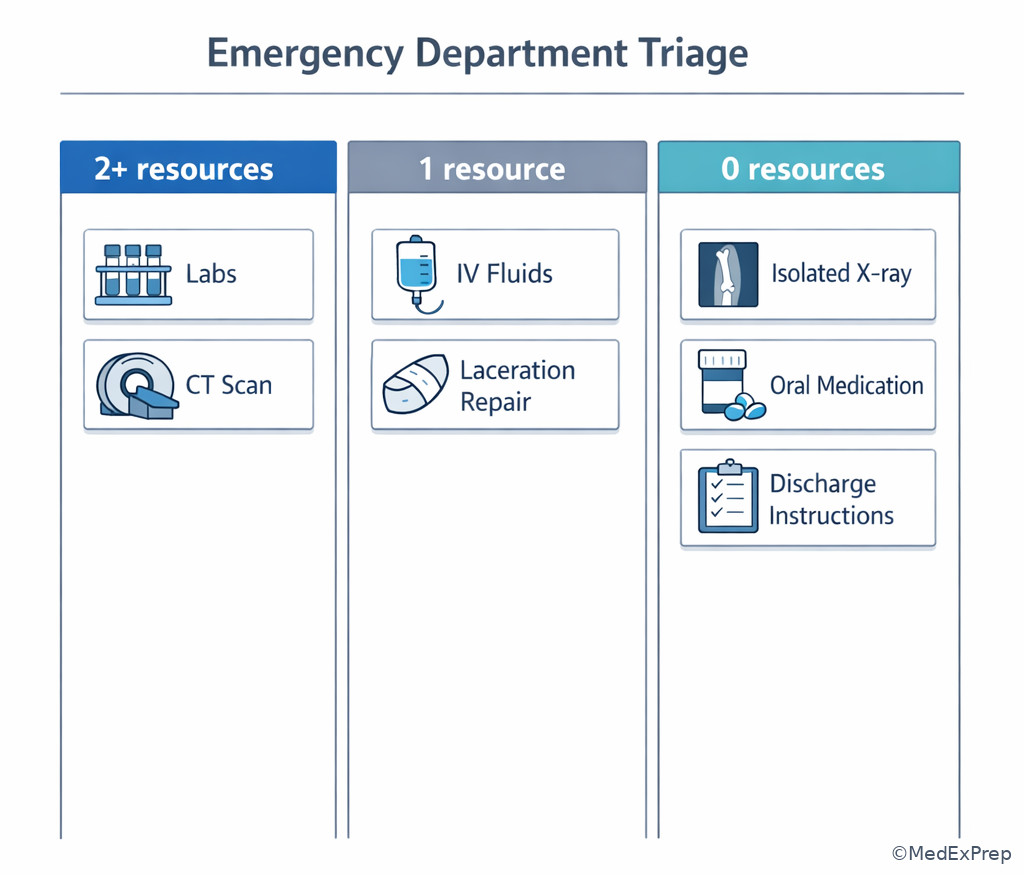
See Fig 3 to rehearse which actions actually count.
1.1.1.6 Danger-zone vitals and population-specific modifiers
A Explanation
Another common triage conflict is choosing whether a patient who seems like ESI 3 should stay there or be treated with higher urgency because the vitals or patient context suggest hidden instability. The single rule: abnormal vital signs are not the whole triage decision, but danger-zone vitals should trigger reconsideration and more urgent placement, especially in vulnerable populations.
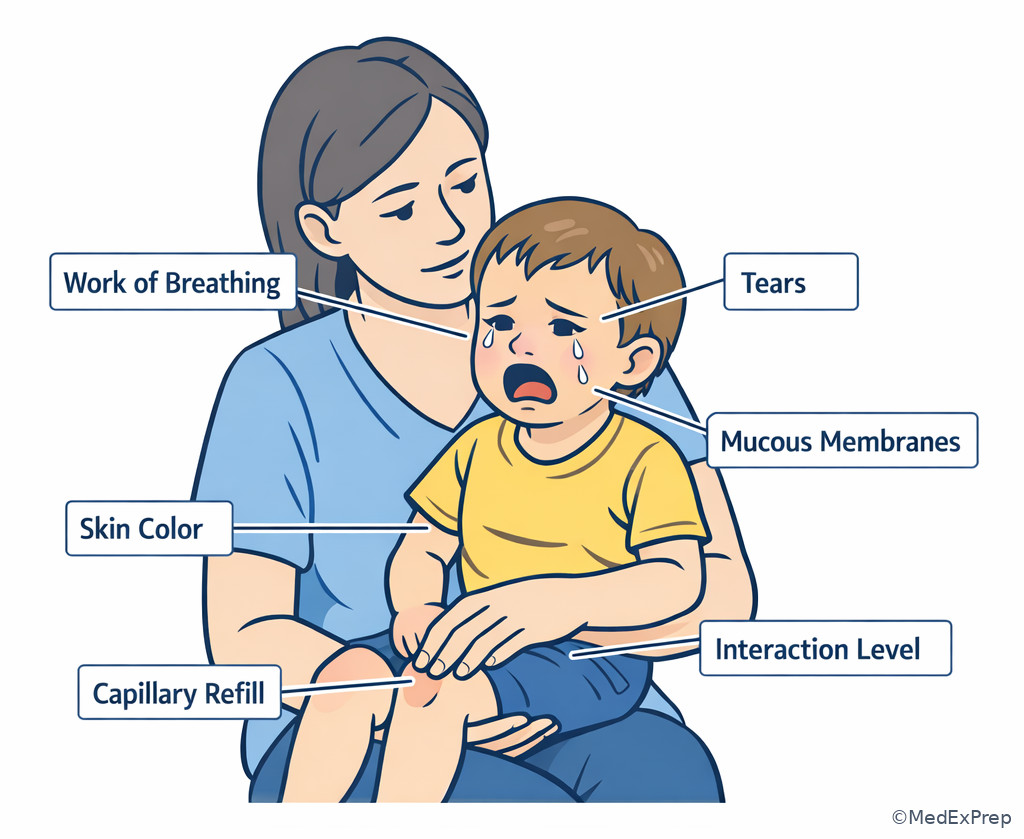
Classic danger-zone examples include marked tachycardia, tachypnea, hypoxia, or fever with concerning appearance. In pediatrics, work of breathing, hydration, interaction, and age-adjusted vitals matter more than one absolute number. In older adults, a relatively “normal” blood pressure may still mask shock if the patient is on beta-blockers or chronically hypertensive. In pregnancy, abdominal pain, syncope, bleeding, or hypertension carry lower tolerance for delay. In immunocompromised patients, fever may be the only early clue before obvious decompensation.
Choose a higher urgency pathway when the vital signs fit the story of deterioration. Reject false reassurance from a single normal value, such as normal oxygen saturation in early sepsis or stroke. Conversely, do not overtriage every isolated mildly abnormal vital sign without context; pain, anxiety, and fever can alter vitals, but the whole picture must be coherent.
WHY THIS IS TESTED: exam items often insert one subtle danger-zone sign that should outweigh an otherwise benign complaint.
High-Yield Connection: This concept overlaps with Pediatric Assessment Fundamentals and Falls Anticoagulation and Delirium. Know how age changes the meaning of the same vital sign abnormality.
B Worked example
A 14-month-old boy presents with vomiting and poor intake for one day. History includes prematurity and repaired congenital heart disease. He is sleepy but arousable, mucous membranes are dry, capillary refill is 3 to 4 seconds, HR 176/min, RR 34/min, temp 38.1 C, and SpO2 97%. A parent says he “just gets cranky in clinics,” which is the tempting minimizer.
Reasoning chain: Identify task: triage urgency. Extract key facts: infant/toddler, tachycardia, dry mucosa, delayed capillary refill, altered interaction from baseline concern, cardiac history. Apply rule: likely needs more urgent placement than a routine ESI 3 dehydration workup because danger-zone vitals and appearance suggest possible significant dehydration or early shock. Eliminate distractors: normal oxygen saturation does not address perfusion; fever does not fully explain the exam. Verify: early bed placement, close reassessment, and escalation if perfusion worsens.
C Exam trap
Common wrong answer: Keep ESI 3 because dehydration often needs labs and fluids. Why it is tempting: the resource pattern fits. Single clue that eliminates it: delayed capillary refill and marked tachycardia in a young child suggest more urgent risk than routine resource-based sorting alone.
D Checkpoint
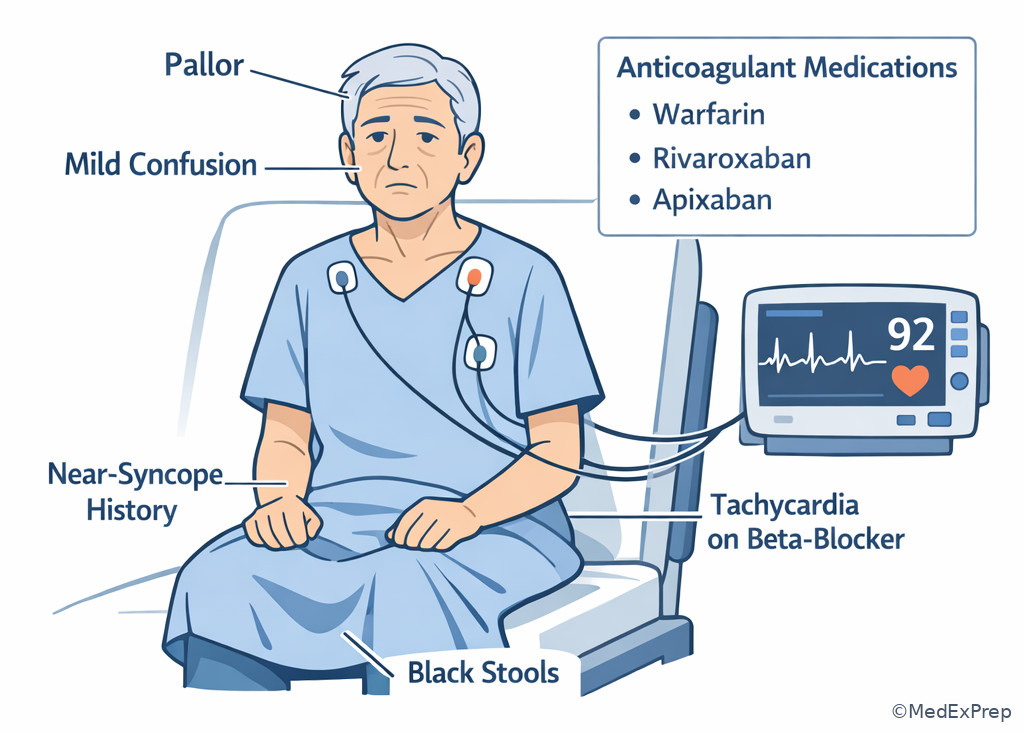
Question: A 79-year-old woman presents after near-syncope with black stools. She is alert, BP 104/62 mm Hg, HR 116/min, RR 20/min, pale, and takes metoprolol and rivaroxaban. Which feature most strongly argues against routine ESI 3 placement?
- Age over 75 years — Tempting because age raises risk; wrong because age alone does not most strongly determine the triage upgrade.
- Use of rivaroxaban — Tempting because anticoagulation increases severity concern; incomplete because it is not the strongest single clue by itself.
- Tachycardia with melena and near-syncope — Tempting because it bundles several concerns; correct because it suggests active high-risk GI bleed physiology, not routine stable workup.
- History of hypertension — Tempting because chronic disease complicates presentations; wrong because it does not drive the triage decision here.
If you missed this: Review 1.1.1.4 Danger-zone vitals and population-specific modifiers — focus on the discriminator abnormal perfusion-sign vitals can up-triage a patient beyond resource count.
Nursing Priority: Assess first: trend-sensitive signs of airway, breathing, and perfusion, especially age-adjusted appearance and mental status. Intervene: move higher-risk patients out of routine waiting, repeat vitals, and begin closer monitoring. Delegate: repeat vital collection may be delegated as allowed; interpretation and acuity reassignment remain clinician responsibilities. Escalate: immediately for worsening perfusion, altered mental status, or population-specific red flags such as anticoagulation, pregnancy, infancy, or immunocompromise.
- True or False: Normal oxygen saturation excludes early shock.
- The pediatric clue that often matters more than a single number is __________ and interaction.
- In older adults on beta-blockers, a “less dramatic” heart rate may still hide ________.
Memory anchor: For hidden instability, remember “VIPS” = Vitals, Interaction, Perfusion, Special population. If any one is off, reconsider waiting-room safety.
Exam takeaway: Appearance, perfusion, work of breathing, and interaction can outweigh a seemingly modest chief complaint.
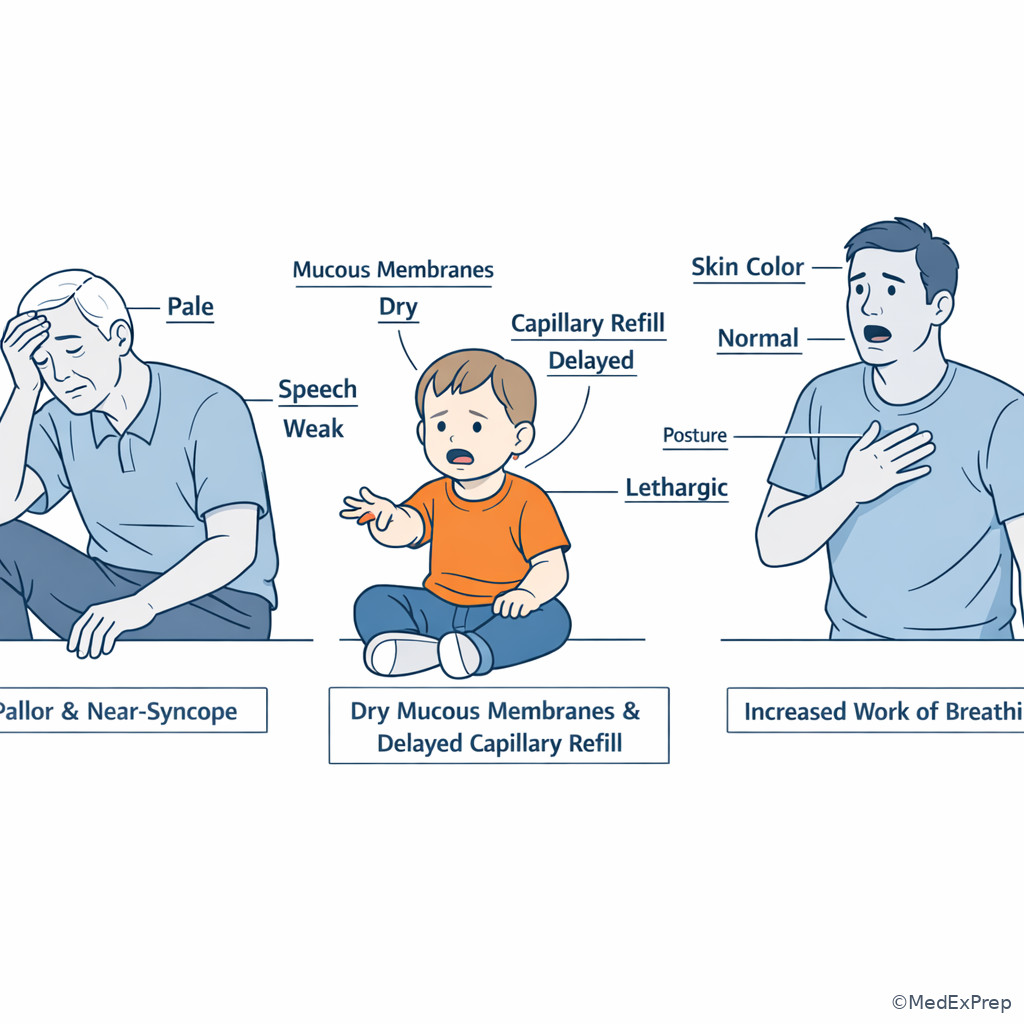
See Fig 4 for the nonverbal clues that often separate safe waiting from unsafe waiting.
1.1.1.7 Operational use in the ED: reassessment, flow, and safe escalation
A Explanation
The final triage conflict is not just choosing a number; it is choosing the right next operational action. The single rule: triage category must trigger an action plan for bed priority, monitoring, reassessment frequency, protocols, and escalation. ESI is useless if it does not change what happens next.
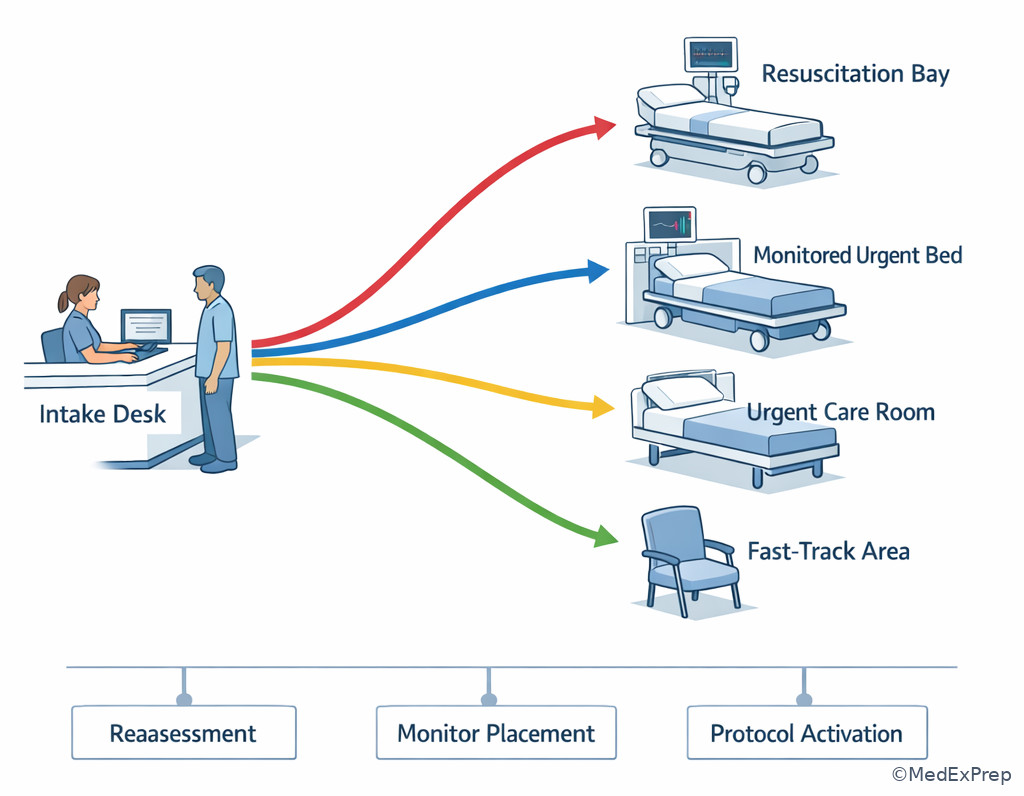
ESI 1 requires immediate resuscitation resources. ESI 2 requires very rapid placement, monitoring, and time-sensitive pathway activation. ESI 3 can wait only if reassessment is reliable and the waiting environment is safe. ESI 4 and 5 are appropriate for low-acuity pathways only when hidden risk has been excluded. In ENP practice, reassessment is part of triage safety. Patients waiting with abdominal pain, dyspnea, fever, behavioral risk, or pregnancy complaints can deteriorate while awaiting workup.
Choose escalation when the complaint exceeds routine low-acuity handling, when mental status changes, when family reports a significant baseline change, or when staff safety is threatened. Reject the unsafe impulse to complete a full history before acting. The triage outcome should specify not only level, but disposition within the department: resuscitation area, monitored bed, urgent bed, fast track, or direct protocol activation.
WHY THIS IS TESTED: board questions increasingly assess not just recognition, but the immediate action tied to that recognition.
Recall: In Focused History and Red Flags, you will learn how a brief targeted history changes urgency. In this lesson, the emphasis is earlier: do not delay urgent placement while fishing for nonessential details.
B Worked example
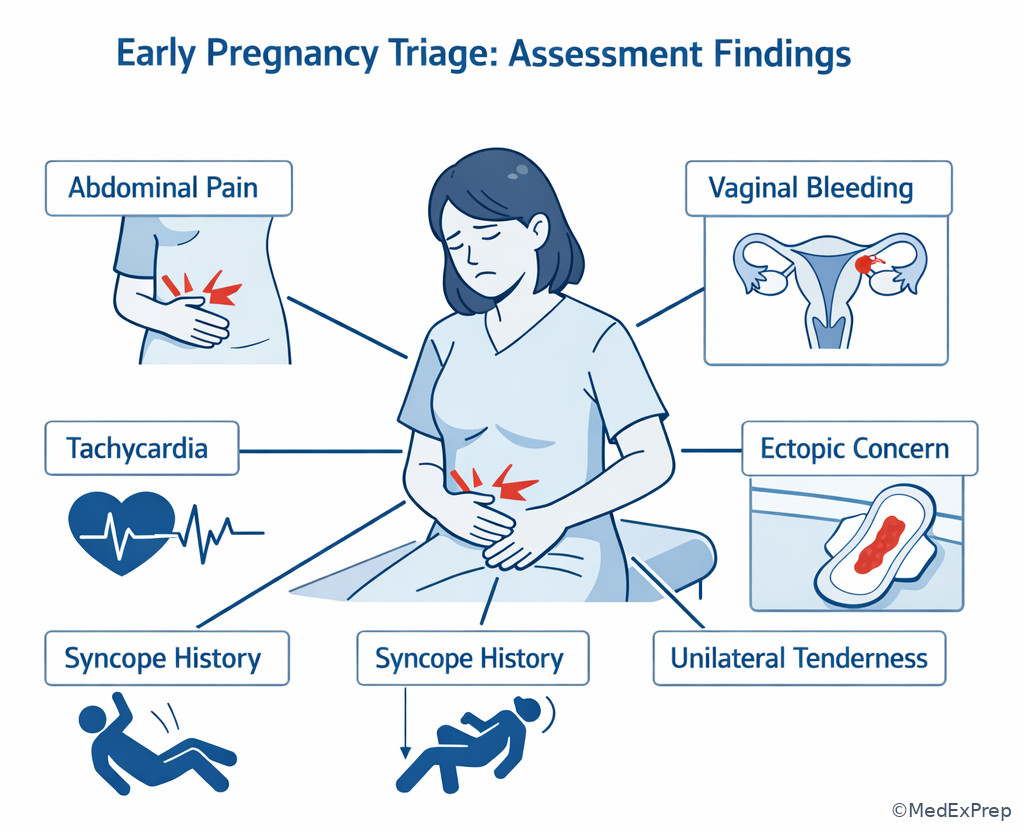
A 31-year-old pregnant woman at approximately 8 weeks by dates presents with lower abdominal pain and light vaginal bleeding. She has asthma and prior miscarriage. BP 108/66 mm Hg, HR 102/min, RR 18/min, SpO2 99%. She is tearful but conversant. A triage novice wants to place her in a lower-acuity gynecologic queue because the bleeding is “not heavy.” The tempting distractor is that her hemoglobin from urgent care yesterday was normal.
Reasoning chain: Identify task: triage action, not final diagnosis. Extract key facts: early pregnancy, abdominal pain plus bleeding, mild tachycardia, ectopic remains possible, time-sensitive risk. Apply rule: this is at least high risk, supporting ESI 2 in many exam settings because delay could miss ectopic decompensation. Eliminate distractors: normal prior hemoglobin does not exclude acute ectopic; “light” bleeding does not make the complaint low acuity. Verify: urgent placement, monitoring, pregnancy-focused workup, and escalation as needed.
C Exam trap
Common wrong answer: ESI 3 with routine labs and ultrasound. Why it is tempting: the patient is talking, ambulatory, and may need multiple resources. Single clue that eliminates it: first-trimester abdominal pain with bleeding carries ectopic risk, making waiting-room delay unsafe.
D Checkpoint
Question: After assigning ESI 3 to a patient with abdominal pain and stable initial vitals, which next action is most appropriate from a safety standpoint?
- Delay further checks until a bed opens — Tempting in crowded departments; wrong because ESI 3 still requires reassessment for deterioration.
- Reassess symptoms and vital signs while waiting — Tempting because it seems basic; correct because reassessment is the key safety action for non-immediate patients.
- Downgrade to ESI 4 if the patient stops complaining — Tempting because symptoms may ebb; wrong because silent deterioration can occur without improved physiology.
- Discharge from triage if pain improves after oral medication — Tempting because symptom relief may reassure; wrong because triage symptom change does not replace diagnostic reasoning or reassessment.
If you missed this: Review 1.1.1.5 Operational use in the ED: reassessment, flow, and safe escalation — focus on the discriminator triage level must trigger a reassessment plan.
Nursing Priority: Assess first: whether the assigned level matches current physiologic risk and waiting-room safety. Intervene: place, monitor, and reassess according to urgency. Delegate: repeat routine vitals may be delegated within role; reassessment interpretation, reprioritization, and escalation stay with the clinician. Escalate: for any interval change, unsafe behavior, worsening pain with instability, new neurologic change, or pregnancy/bleeding deterioration.
Exam takeaway: The correct ESI level must immediately determine bed priority, monitoring, reassessment, and protocol activation.
flowchart TD
A[Assign ESI] --> B{ESI 1?}
B -->|Yes| C[Resuscitation room now]
B -->|No| D{ESI 2?}
D -->|Yes| E[Rapid monitored bed + time-sensitive pathway]
D -->|No| F{ESI 3?}
F -->|Yes| G[Urgent bed + repeat vitals/reassessment]
F -->|No| H[Fast track / minor care path]
G --> I{Condition worsens?}
I -->|Yes| J[Upgrade acuity and escalate]
I -->|No| K[Continue workup flow]
See Fig 5 when the question asks for the next step after triage assignment.
Exam takeaway: Matching acuity to placement, monitoring, and reassessment prevents unsafe waiting-room deterioration.
Exam takeaway: In children, interaction, hydration, and work of breathing are often more informative than a single complaint label.
Exam takeaway: Older adults may show high-risk illness with muted symptoms and deceptively modest vital sign changes.
Exam takeaway: Early pregnancy pain plus bleeding should trigger ectopic-risk thinking even when the patient appears conversational and stable.
Exam Traps & Differentiators
Common traps & distractors: The exam rewards the candidate who asks “Is this unsafe to wait?” before asking “How many tests will they need?”
1.1.1.8 Most common wrong answer and why
The most common wrong answer is ESI 3 instead of ESI 2. This happens because candidates jump too early to resource counting. The stem then hides one high-risk clue: diaphoresis with chest pain, acute neuro deficit, pregnancy bleeding, immunocompromised fever, toxic ingestion, or escalating agitation. If one clue makes delay unsafe, think ESI 2.
1.1.1.9 Looks similar but isn’t
| Looks similar | Actually means | Discriminator | Likely ESI implication |
|---|---|---|---|
| Severe pain score | Not automatically ESI 2 | Objective severe distress or high-risk cause must be present | Often ESI 3 if stable and resource-driven |
| Normal single vital sign | Not reassuring by itself | History may still signal stroke, ACS, sepsis, ectopic, or bleed | Can still be ESI 2 |
| Many resources needed | Does not override high risk | Risk comes before resource count | Still ESI 2 if unsafe to wait |
| Ambulatory, talking patient | Not necessarily stable | One-word speech, pallor, diaphoresis, confusion, near-syncope, ectopic risk | May be ESI 1 or 2 |
| Mild complaint wording | Can hide major pathology | “Dizziness,” “weakness,” “nausea” with red flags | Upgrade if danger clue present |
| Older adult with “just weak” | May be occult serious illness | Melena, anticoagulation, infection, confusion, poor perfusion | Often higher urgency than appearance suggests |
1.1.1.10 If the stem says ___, think ___
- If the stem says “one-word sentences”, think breathing failure until proven otherwise.
- If the stem says “last known well 45 minutes ago”, think time-sensitive neurologic emergency and ESI 2.
- If the stem says “fever on chemotherapy”, think high-risk immunocompromised infection.
- If the stem says “pregnant with pain and bleeding”, think ectopic risk; do not let stable conversation reassure you.
- If the stem says “melena with near-syncope”, think active GI blood loss until proven otherwise.
- If the stem says “asking for pain medicine”, think pain score is not the whole triage rule.
High-Yield Connection: These traps pair naturally with Focused History and Red Flags and Primary Survey Priorities. On exam day, combine triage category with the first stabilization step; many stems test both at once.
Review connection: The traps above test prioritization before diagnosis completion. If any felt unfamiliar, revisit 1.1.1.2 ESI 2: the high-risk patient who is not coding yet before attempting the Self-check quiz.
Exam takeaway: Most triage errors come from overvaluing pain scores, chief complaint labels, or resource counts while missing the single high-risk clue.
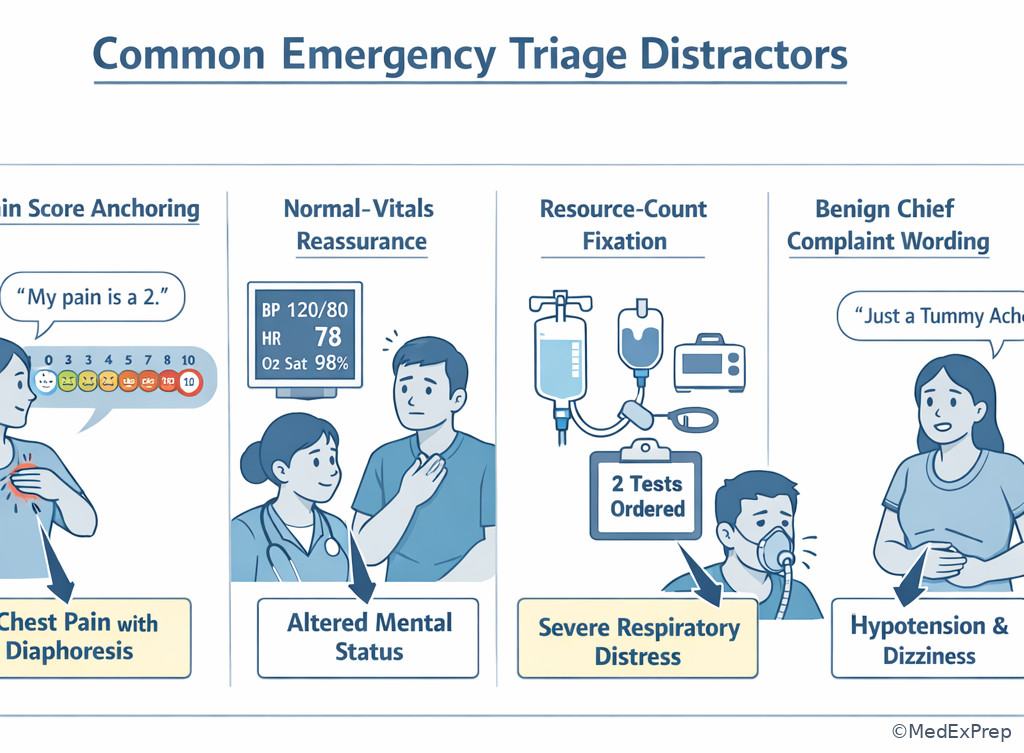
See Fig 6 for the distractor patterns most often used in certification-style stems.
Algorithm / Approach
Rapid Review
- ESI 1 -> immediate life-saving intervention needed now
- ESI 2 -> unsafe to wait despite no current resuscitation intervention
- ESI 3 -> stable enough for workup but likely needs 2+ resources
- ESI 4 -> one likely resource, no hidden high-risk clue
- ESI 5 -> no expected resources beyond exam/education
- Stroke clue -> last-known-well time upgrades urgency more than normal vitals reassure
- Chest pain clue -> diaphoresis or ischemic concern beats resource counting
- Pregnancy bleeding -> ectopic risk outweighs calm appearance
- Neutropenic fever -> high-risk infection before overt shock
- Pediatric acuity -> work of breathing and interaction beat complaint label
- Geriatric acuity -> muted symptoms do not equal low risk
- Pain score -> supports urgency only when paired with objective distress or dangerous cause
- Resource error -> oral meds and routine exam do not count as ESI resources
- Reassessment -> every waiting urgent patient needs a safety net, not just a queue number
Memory anchor: Use “1 saves, 2 scares, 3 explores, 4 fixes, 5 advises”. It is simplified, but it helps separate immediate intervention, high risk, multi-resource workup, single-resource care, and no-resource visits.
Self-check quiz
1.1.1.11 Question 1
A 56-year-old patient arrives with severe respiratory distress, cyanosis, and inability to speak more than one word at a time. Which triage action is most appropriate?
- Assign ESI 1 and move immediately to resuscitation care
- Assign ESI 2 and obtain a focused history before room placement
- Assign ESI 3 because multiple resources will be needed
- Assign ESI 4 and begin with pulse oximetry
1.1.1.12 Question 2
A 21-year-old patient presents for suture removal from a forearm laceration repaired 8 days ago. No fever, redness, drainage, or pain. Which triage category is most appropriate?
- ESI 2
- ESI 3
- ESI 4
- ESI 5
1.1.1.13 Question 3
A 68-year-old man with diabetes and prior MI presents with epigastric discomfort, nausea, and diaphoresis for 30 minutes. BP 138/84 mm Hg, HR 96/min, RR 20/min, SpO2 98%. He says he thinks it is “just reflux” because spicy food triggered it before. Which triage assignment is most appropriate?
- ESI 2
- ESI 3
- ESI 4
- ESI 5
1.1.1.14 Question 4
A 7-year-old child with asthma has cough and wheeze after a viral illness. He is speaking in full sentences, has mild retractions, SpO2 95%, RR mildly elevated, and likely needs repeated nebulizer therapy and possibly a chest radiograph. Which triage level is the best initial choice?
- ESI 1
- ESI 2
- ESI 3
- ESI 5
1.1.1.15 Question 5
A 33-year-old woman presents with dysuria, urinary frequency, and no flank pain, fever, or vomiting. She is well appearing and likely needs only a urinalysis. Which triage category is most appropriate?
- ESI 2
- ESI 3
- ESI 4
- ESI 5
1.1.1.16 Question 6
A 76-year-old woman on warfarin presents after a brief syncopal episode with weakness and one episode of black stool. BP 110/64 mm Hg, HR 112/min, RR 18/min, SpO2 99%. She is alert and says she feels better now. Which is the most appropriate triage assignment?
- ESI 2
- ESI 3
- ESI 4
- ESI 5
1.1.1.17 Question 7
A 26-year-old pregnant patient at about 9 weeks by dates presents with lower abdominal pain and light vaginal bleeding. She has a history of infertility treatment and prior ectopic pregnancy. BP 114/70 mm Hg, HR 104/min, RR 18/min, and she is speaking comfortably. Which action best reflects the appropriate triage priority?
- Assign ESI 2 because early pregnancy pain and bleeding create unsafe-to-wait ectopic risk
- Assign ESI 3 because she will need laboratory testing and ultrasound
- Assign ESI 4 because bleeding is light and vitals are acceptable
- Assign ESI 5 because symptoms may represent expected early pregnancy changes
1.1.1.18 Question 8
A 15-month-old boy with one day of vomiting is carried into triage by his father. He has congenital heart disease history, dry mucous membranes, delayed capillary refill, HR 180/min, and is less interactive than usual. His oxygen saturation is 98% and his father says he always hates clinics. Which is the most appropriate next step?
- Keep him ESI 3 because dehydration usually requires labs and fluids
- Increase urgency because perfusion findings and decreased interaction suggest hidden instability
- Downgrade concern because oxygen saturation is normal
- Place in fast track because vomiting is a common pediatric complaint
Answer key
1.1.1.19 Question 1: A
A. Assign ESI 1 and move immediately to resuscitation care — Tempting because the patient clearly looks sick; correct because ABC compromise with cyanosis and inability to speak indicates immediate life-saving intervention priority. The single stem clue is cyanosis with one-word speech, which signals impending respiratory failure.
B. Assign ESI 2 and obtain a focused history before room placement — Tempting because severe dyspnea often feels like high-risk ESI 2; incorrect because the patient already needs immediate intervention, so history must not delay care. The discriminating clue is current severe physiologic compromise, not just risk.
C. Assign ESI 3 because multiple resources will be needed — Tempting because respiratory distress usually triggers many orders and treatments; incorrect because resource counting comes only after excluding ESI 1 and 2. The discriminating clue is needs intervention now.
D. Assign ESI 4 and begin with pulse oximetry — Tempting only if one focuses on a single assessment task; incorrect because low-acuity logic is unsafe in a crashing patient. The discriminating clue is visible respiratory failure.
If you missed this: Review 1.1.1.1 Foundational triage question: unstable now or not? — focus on immediate life-saving intervention outranks all later ESI branches.
1.1.1.20 Question 2: D
A. ESI 2 — Tempting if one assumes all procedure-related visits need priority; incorrect because there is no high-risk feature, altered mentation, or severe distress. The discriminating clue is simple follow-up without complications.
B. ESI 3 — Tempting if one overestimates hidden resources; incorrect because no multiple-resource workup is expected. The discriminating clue is no diagnostic or treatment complexity.
C. ESI 4 — Tempting because minor procedures can count as one resource; incorrect here because straightforward suture removal usually does not require a countable resource-intensive workup. The discriminating clue is routine uncomplicated removal visit.
D. ESI 5 — Tempting because the visit sounds minor; correct because it is an exam-based, no-resource follow-up complaint. The discriminating clue is no expected ED resources.
If you missed this: Review 1.1.1.3 ESI 3, 4, and 5: using resources correctly — focus on which actions do and do not count as ESI resources.
1.1.1.21 Question 3: A
A. ESI 2 — Tempting because atypical ACS can present as epigastric discomfort; correct because diabetes, prior MI, diaphoresis, and current symptoms create a high-risk chest pain equivalent unsafe to leave waiting. The discriminating clue is diaphoresis with ACS-risk context.
B. ESI 3 — Tempting because he will need ECG, labs, and perhaps imaging; incorrect because high-risk ischemic concern outranks resource count. The discriminating clue is time-sensitive cardiac risk.
C. ESI 4 — Tempting if the complaint is mislabeled as simple indigestion; incorrect because the patient has major cardiac red flags. The discriminating clue is prior MI plus diaphoresis.
D. ESI 5 — Tempting if one accepts the patient’s reflux interpretation; incorrect because patient self-diagnosis does not lower objective risk. The discriminating clue is high-risk symptom cluster.
If you missed this: Review 1.1.1.2 ESI 2: the high-risk patient who is not coding yet — focus on diaphoresis and ischemic risk features as ESI 2 triggers.
1.1.1.22 Question 4: C
A. ESI 1 — Tempting because asthma can deteriorate quickly; incorrect because the child is still speaking in full sentences and does not currently need immediate life-saving intervention. The discriminating clue is no present respiratory failure.
B. ESI 2 — Tempting because wheezing with retractions can be high risk; incorrect as the best initial choice because distress is mild, oxygenation is preserved, and resource needs primarily drive the case as written. The discriminating clue is mild rather than severe distress.
C. ESI 3 — Tempting because repeated nebulizers and possible imaging mean 2 or more resources; correct because he is stable enough for urgent workup with reassessment. The discriminating clue is stable but multi-resource asthma care.
D. ESI 5 — Tempting if viral cough is minimized; incorrect because treatment resources are clearly likely. The discriminating clue is nebulizer therapy needs.
If you missed this: Review 1.1.1.3 ESI 3, 4, and 5: using resources correctly — focus on stable multi-resource patients belong in ESI 3 unless high-risk or severe distress pushes them higher.
1.1.1.23 Question 5: C
A. ESI 2 — Tempting if all GU complaints are treated as potentially serious; incorrect because there are no sepsis, obstruction, or pregnancy red flags in the stem. The discriminating clue is well appearing with isolated lower urinary symptoms.
B. ESI 3 — Tempting because many dysuria patients receive more than one test; incorrect because the stem suggests only one likely resource. The discriminating clue is urinalysis-only expectation.
C. ESI 4 — Tempting because one resource fits; correct because a single expected diagnostic resource best matches the case. The discriminating clue is one likely resource and no high-risk features.
D. ESI 5 — Tempting if cystitis is seen as simple counseling only; incorrect because urinalysis is a countable likely resource. The discriminating clue is testing still expected.
If you missed this: Review 1.1.1.3 ESI 3, 4, and 5: using resources correctly — focus on one resource = ESI 4.
1.1.1.24 Question 6: A
A. ESI 2 — Tempting because the patient looks temporarily stable; correct because melena, syncope, tachycardia, and anticoagulation create high-risk GI bleed concern unsafe for routine waiting. The discriminating clue is near-syncope with melena on anticoagulation.
B. ESI 3 — Tempting because labs, type and screen, and imaging may be needed; incorrect because resource needs do not outrank active high-risk bleed features. The discriminating clue is high-risk physiology.
C. ESI 4 — Tempting if one underestimates the significance of one black stool; incorrect because the total pattern signals possible significant blood loss. The discriminating clue is tachycardia and syncope.
D. ESI 5 — Tempting only if the brief improvement misleads you; incorrect because transient improvement does not negate ongoing risk. The discriminating clue is dangerous cause still in play.
If you missed this: Review 1.1.1.4 Danger-zone vitals and population-specific modifiers — focus on tachycardia and perfusion clues in older anticoagulated patients.
1.1.1.25 Question 7: A
A. Assign ESI 2 because early pregnancy pain and bleeding create unsafe-to-wait ectopic risk — Tempting because the patient is still talking comfortably; correct because ectopic pregnancy is a high-risk, time-sensitive diagnosis even before overt hypotension appears. The discriminating clue is pain + bleeding + prior ectopic risk.
B. Assign ESI 3 because she will need laboratory testing and ultrasound — Tempting because the resource count is accurate; incorrect because high-risk obstetric complaint outranks resource counting. The discriminating clue is unsafe-to-wait pregnancy red flag.
C. Assign ESI 4 because bleeding is light and vitals are acceptable — Tempting because the bleeding description sounds mild; incorrect because amount of visible bleeding does not exclude ectopic rupture risk. The discriminating clue is clinical context, not blood volume wording.
D. Assign ESI 5 because symptoms may represent expected early pregnancy changes — Tempting if nausea and cramping are overgeneralized; incorrect because vaginal bleeding with pain in early pregnancy is never a no-resource reassurance scenario. The discriminating clue is red-flag symptom combination.
If you missed this: Review 1.1.1.5 Operational use in the ED: reassessment, flow, and safe escalation — focus on triage must change placement when waiting-room delay is unsafe.
1.1.1.26 Question 8: B
A. Keep him ESI 3 because dehydration usually requires labs and fluids — Tempting because that resource pattern is common; incorrect because perfusion findings and decreased interaction suggest higher urgency than routine dehydration workup. The discriminating clue is delayed capillary refill with less interaction.
B. Increase urgency because perfusion findings and decreased interaction suggest hidden instability — Tempting because pediatric triage relies on appearance; correct because this is the safety-first response to danger-zone perfusion and behavior changes in a medically complex toddler. The discriminating clue is perfusion compromise.
C. Downgrade concern because oxygen saturation is normal — Tempting because normal SpO2 feels reassuring; incorrect because oxygenation does not rule out dehydration-related shock or other perfusion problems. The discriminating clue is circulation, not oxygenation, is the issue.
D. Place in fast track because vomiting is a common pediatric complaint — Tempting if the chief complaint is used instead of the exam; incorrect because common complaints can still hide high-acuity illness. The discriminating clue is appearance and perfusion outrank complaint frequency.
If you missed this: Review 1.1.1.4 Danger-zone vitals and population-specific modifiers — focus on pediatric interaction and perfusion findings as up-triage signals.
Keep going with the full ENP-BC / ENP-C Prep Course (ENP)
You just studied the way members do, in the same lesson interface. Full access unlocks every lesson, the question bank and flashcards for a full year.
One payment · 1 year of access · No auto-renewal