1.1.1 - Cardiovascular History Elements
Why it matters
- A patient’s history often reveals instability before the physical exam or telemetry confirms it.
- Board questions frequently hide the priority clue in symptom timing, associated symptoms, or medication history rather than in the obvious complaint.
- For the RN, the safest next step depends on recognizing when history suggests ischemia, decompensated heart failure, dysrhythmia risk, bleeding, or limb threat.
- Strong cardiovascular history-taking improves escalation, handoff quality, patient teaching, and complication prevention across acute care, ambulatory, rehab, and discharge settings.
Exam takeaway: Sort the complaint by urgency first, then gather details that change immediate nursing action.
flowchart TD
A[Patient reports cardiovascular symptom] --> B{Immediate threat cues?}
B -->|Chest pain + diaphoresis or dyspnea| C[Urgent escalation]
B -->|Syncope, neuro deficit, limb pain/pallor| C
B -->|No immediate threat| D[Characterize symptom]
D --> E[Onset timing triggers severity]
D --> F[Associated symptoms]
D --> G[Cardiac history medications procedures]
E --> H[RN summarizes risk and notifies as needed]
F --> H
G --> H
Use a simple exam rule: history first for stability, second for pattern, third for context. See Fig 1.
Key Terms & Must-Know Facts
1.1.1.1 Key terms
- OPQRST: Onset, Provocation/Palliation, Quality, Region/Radiation, Severity, Time
- Orthopnea: dyspnea when lying flat
- Paroxysmal nocturnal dyspnea (PND): sudden nighttime dyspnea after lying down
- Exertional symptoms: symptoms triggered by activity, often higher risk for cardiac limitation
- Palpitations: patient awareness of heartbeat; may reflect benign or significant dysrhythmia
- Syncope: transient loss of consciousness from decreased cerebral perfusion
- Presyncope: near-fainting without complete loss of consciousness
- Claudication: exertional limb pain relieved by rest, suggesting arterial insufficiency
- Edema pattern: dependent, asymmetric, rapid-onset, or progressive swelling that changes the differential
- Risk factor clustering: multiple factors together raising pretest concern
- Medication reconciliation: identifying prescribed, OTC, and herbal agents that affect symptoms and safety
- Functional capacity: what activity level provokes symptoms
- Red-flag associated symptoms: diaphoresis, nausea, dyspnea, hypotension, neurologic change, cool limb
1.1.1.2 Must-know facts
- Chest discomfort history is incomplete without onset, triggers, radiation, and associated symptoms.
- Orthopnea and PND strongly raise concern for heart failure congestion.
- Syncope with exertion, palpitations, or chest pain is higher risk than isolated vasovagal-like lightheadedness.
- Medication history can explain symptoms and create immediate safety issues: beta blockers, diuretics, anticoagulants, nitrates, digoxin.
- Prior MI, PCI, CABG, HF, PAD, stroke/TIA, and atrial fibrillation materially change risk interpretation.
- New unilateral leg pain, pallor, paresthesia, or pulselessness is more urgent than chronic aching edema.
- Family history of premature cardiovascular disease matters more than vague family “heart problems.”
- Smoking status, diabetes, hypertension, and hyperlipidemia are common exam-tested cardiovascular risk anchors.
- In RN scope, the correct action is often focused assessment plus escalation, not making the medical diagnosis.
| History element | Ask specifically | Why it matters for nursing priority |
|---|---|---|
| Chief symptom | What is happening now, and what changed today? | Clarifies current instability versus chronic baseline |
| Onset | Sudden or gradual? Exact time? | Sudden onset raises acute ischemic, embolic, or dysrhythmic concern |
| Triggers | Exertion, rest, position, meals, stress? | Exertional pattern suggests demand-related compromise; positional dyspnea suggests congestion |
| Associated symptoms | Dyspnea, diaphoresis, nausea, syncope, neuro change? | These are major escalation cues |
| Cardiac history | MI, HF, arrhythmia, procedures, devices? | Changes risk and likely complications |
| Medication history | Anticoagulants, diuretics, beta blockers, nitrates, digoxin? | Identifies adverse effects, interactions, and bleeding/bradycardia risks |
| Functional baseline | Usual activity tolerance and recent decline? | Detects decompensation trend |
Core content
1.1.1.3 Foundational history structure: what to ask first
A Explanation
The decision conflict is complete history versus immediate prioritization. On the exam, you do not begin by collecting every cardiovascular detail. You first choose between urgent symptom framing and routine data gathering. The single rule that resolves this: if the complaint suggests compromised circulation, oxygenation, or perfusion, collect only the history needed to trigger rapid nursing action and escalation. For chest pain, dyspnea, palpitations, syncope, edema, or limb symptoms, start with what is happening now, when it started, what triggered it, and what dangerous symptoms came with it.
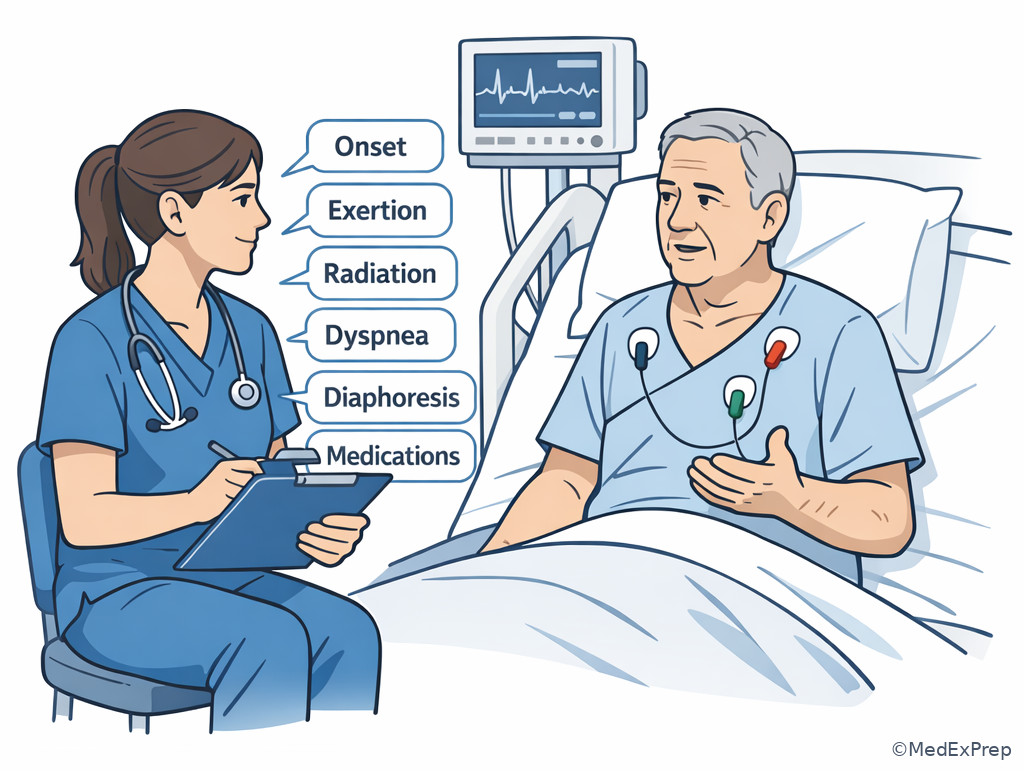
WHY THIS IS TESTED: The testable pattern is that the best answer is usually the history question that changes urgency. “Has this happened before?” may be useful, but “Did it start suddenly, and are you short of breath or diaphoretic?” changes priority now. A focused cardiovascular history starts with symptom characterization, then baseline function, then relevant cardiovascular background. Use OPQRST for pain or discomfort, but do not apply it mechanically. For dyspnea, ask exertional versus rest, orthopnea, PND, cough, weight gain, and edema. For palpitations or syncope, ask onset, duration, precipitant, associated chest pain or dizziness, and whether there was loss of consciousness or injury.
Another decision conflict is useful detail versus attractive noise. Age, smoking, diabetes, hypertension, hyperlipidemia, known coronary disease, heart failure, valve disease, atrial fibrillation, and vascular history are high-value. A remote minor surgery or unrelated musculoskeletal complaint is often noise. In cardiovascular history-taking, the board exam rewards the information that helps the nurse recognize instability, monitor correctly, and communicate succinctly.
B Worked example
A 64-year-old man on a telemetry unit reports “indigestion” after walking to the bathroom. History includes type 2 diabetes, hyperlipidemia, and prior PCI 4 years ago. He also mentions chronic knee osteoarthritis and says he skipped breakfast. His blood pressure is pending, and he looks mildly anxious. The tempting wrong clue is “indigestion,” which could push a learner toward antacid-focused thinking.
Reasoning chain: Identify task: determine the most appropriate nursing history focus. Extract key facts: exertional symptom, diabetes, prior PCI, current discomfort, possible atypical ischemia. Apply rule: ask the question that changes urgency now. Best focused history includes onset with exertion, radiation, associated dyspnea/diaphoresis/nausea, and whether the discomfort is ongoing. Eliminate distractors: chronic knee pain and missed breakfast are relevant background noise but not the priority discriminator. Verify: this remains within RN scope because the nurse is assessing, recognizing a possible ischemic pattern, initiating protocol as applicable, and escalating.
C Exam trap
D Checkpoint
Question: A 59-year-old woman in an outpatient cardiology clinic calls stating she has “pressure in the chest” after climbing one flight of stairs. She has hypertension, obesity, and chronic GERD. Which nursing question is the most appropriate first priority?
- “Do you have a family history of early heart disease?”
- “Did the pressure begin with exertion, and do you have shortness of breath, sweating, or nausea?”
- “Have you had similar symptoms in the past year?”
- “What over-the-counter medications do you use for reflux?”
Answer: B
- A: Tempting because family history matters for risk stratification; wrong because it does not determine current urgency.
- B: Tempting because it is more narrow; right because exertional onset plus associated symptoms immediately screens for possible ischemia and need for escalation.
- C: Tempting because prior episodes can help pattern recognition; wrong priority because current red-flag characterization comes first.
- D: Tempting because GERD is a common confounder; wrong because reflux history should not delay urgent ischemia screening.
1.1.1.4 Symptom characterization: chest pain, dyspnea, palpitations, syncope, edema
A Explanation
The decision conflict here is similar symptom labels with different levels of risk. The single finding that resolves many exam questions is the associated pattern. Chest discomfort with exertion and diaphoresis is not approached the same way as brief reproducible soreness after movement. Dyspnea with orthopnea and recent weight gain points in a different direction than isolated anxiety. Palpitations with presyncope are higher priority than occasional awareness of skipped beats without other symptoms.
WHY THIS IS TESTED: Students often memorize symptom lists but miss the cue that changes action. For chest pain, characterize location, quality, radiation, onset, duration, provoking factors, relief, and associated symptoms. Atypical descriptors do not rule out ischemia, especially in older adults, women, and patients with diabetes. For dyspnea, the high-yield distinction is rest versus exertional, positional, and progressive versus sudden. Ask about orthopnea, PND, cough, edema, and recent weight gain because those support congestion history. For palpitations, ask if onset was abrupt, if the rhythm felt fast or irregular, whether there was dizziness or syncope, and whether stimulants or medication changes occurred. For syncope, clarify what the patient was doing, prodromal symptoms, duration, injuries, associated palpitations or chest pain, and whether recovery was immediate.
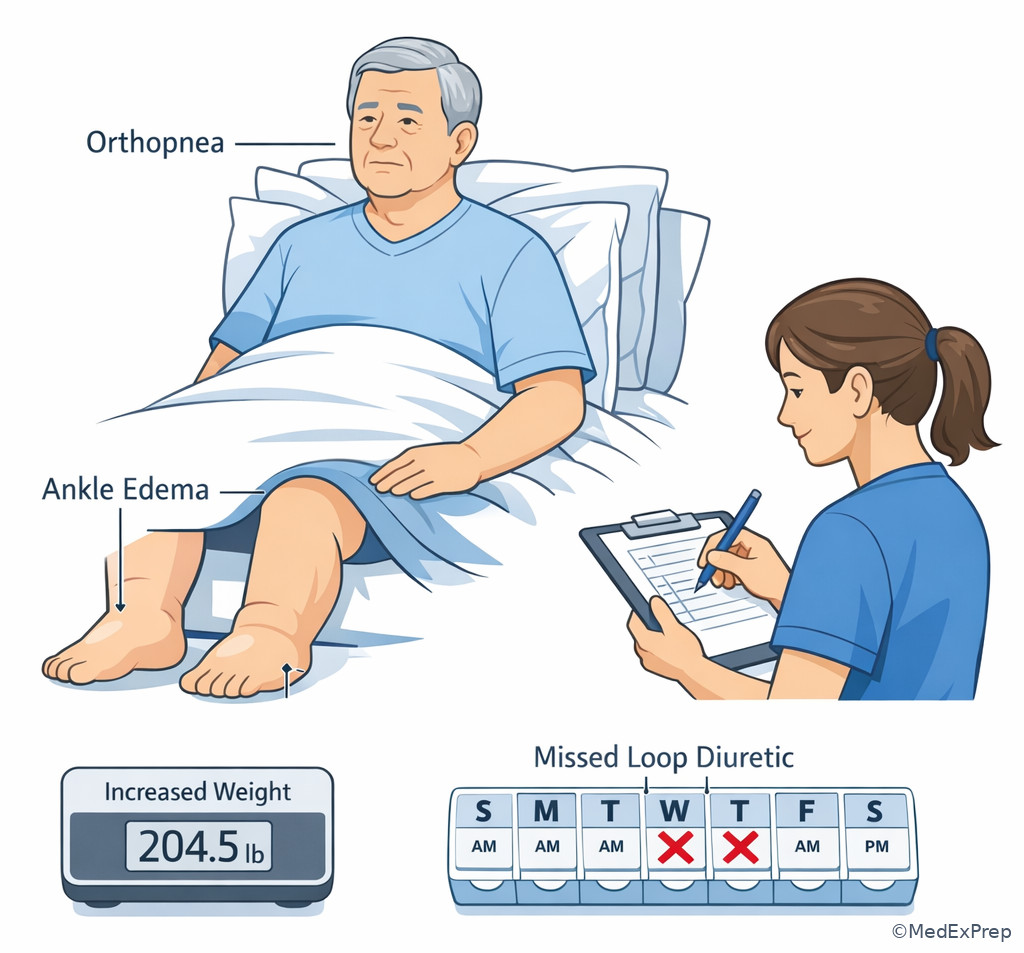
Edema history is also a classic distractor zone. Bilateral gradual ankle swelling with weight gain and dyspnea suggests systemic volume overload; sudden unilateral swelling or pain raises thrombotic concern; cool painful pale limb symptoms shift the concern toward acute arterial compromise rather than routine edema. The board exam frequently asks which additional history is most important, and the answer is usually the one that separates common-but-stable from dangerous-now.
Exam takeaway: The associated symptom cluster, not the symptom label alone, determines the nursing priority.
flowchart LR
A[Chest discomfort] --> B{Pattern}
B -->|Exertional + diaphoresis or dyspnea| C[Possible ischemia: escalate]
B -->|Reproducible with movement only| D[Less ischemic pattern]
E[Dyspnea] --> F{Pattern}
F -->|Orthopnea PND weight gain| G[Possible congestion]
F -->|Sudden + chest pain or syncope| H[Urgent cardiopulmonary concern]
I[Palpitations] --> J{Pattern}
J -->|With presyncope syncope chest pain| K[High-risk dysrhythmia cue]
J -->|Brief isolated awareness only| L[Lower immediate risk]
M[Edema/limb symptoms] --> N{Pattern}
N -->|Bilateral gradual swelling| O[Volume overload/venous pattern]
N -->|Pain pallor paresthesia cool limb| P[Acute limb threat]
See Fig 2 for the symptom sorter you should be able to run mentally during questions.
Exam takeaway: A calm, focused symptom interview highlights onset, triggers, and associated findings that determine urgency.
B Worked example
A 72-year-old woman in cardiac rehab reports “tiredness and upper back pressure” during treadmill activity. She has diabetes, chronic kidney disease, and hypertension. She also notes long-standing reflux and says she slept poorly. The distracting data are reflux history and poor sleep. Identify task: determine whether this history suggests routine fatigue or possible ischemic concern. Extract key facts: exertional onset, pressure-type symptom, diabetes, older age. Apply rule: atypical wording does not lower concern when the pattern is exertional and risk is high. Eliminate distractors: reflux and poor sleep can mimic discomfort, but neither explains the exercise-linked pattern as well as ischemia risk does. Verify: the RN should stop activity, further assess associated symptoms, monitor, and escalate per protocol.
C Exam trap
D Checkpoint
Question: A 68-year-old patient with heart failure, obesity, and atrial fibrillation reports increasing shortness of breath over 1 week. Which additional history finding most strongly supports worsening congestion rather than isolated anxiety?
- Brief palpitations after drinking coffee
- Needing three pillows to sleep and waking up suddenly short of breath at night
- Chest tenderness when turning in bed
- Fear about an upcoming stress test
Answer: B
- A: Tempting because stimulants can worsen symptoms; wrong because palpitations alone do not specifically point to volume overload.
- B: Tempting because it sounds almost too obvious; right because orthopnea and PND are classic high-yield congestion history cues.
- C: Tempting because chest discomfort can feel alarming; wrong because positional chest wall tenderness is less supportive of congestion.
- D: Tempting because anxiety can worsen dyspnea; wrong because it does not explain the progressive nighttime positional pattern.
- The most concerning partner symptom for palpitations is syncope or presyncope.
- True or False: “Indigestion-like” discomfort can still represent ischemia. True.
- Name the 3 key history features of congestion: orthopnea, PND, recent weight gain/edema.
1.1.1.5 Risk factors, past cardiovascular history, and procedure history
A Explanation
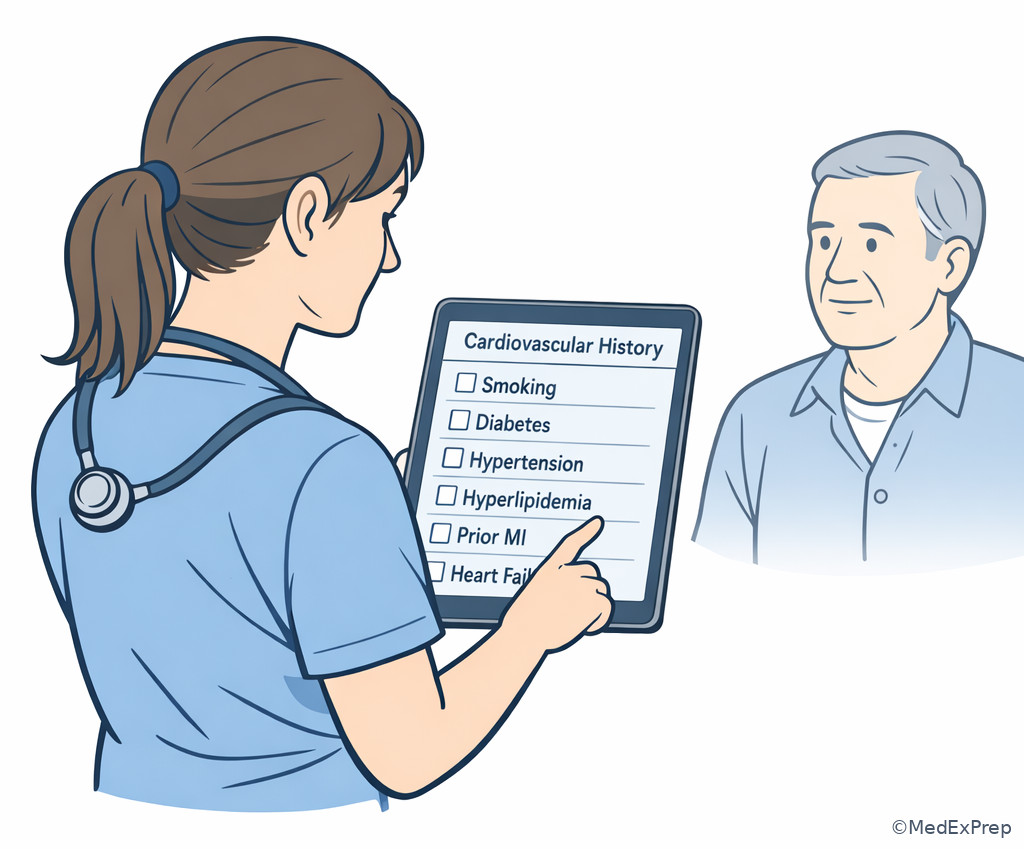
The decision conflict is which background history truly changes risk today. The single rule: prioritize history elements that alter the probability of acute cardiac or vascular deterioration, medication risk, or monitoring needs. High-yield risk factors include smoking, hypertension, diabetes, hyperlipidemia, obesity, sedentary lifestyle, CKD, and family history of premature cardiovascular disease. Past medical history that matters most includes known coronary artery disease, prior MI, heart failure, cardiomyopathy, valve disease, atrial fibrillation or other dysrhythmias, stroke/TIA, PAD, venous thromboembolism, hypertension, and sleep apnea.
WHY THIS IS TESTED: Exam writers often pack the stem with multiple comorbidities. Only some actually sharpen the cardiovascular concern. For example, diabetes plus prior PCI in a patient with exertional discomfort is much more meaningful than chronic osteoarthritis. A prior CABG, PCI, valve replacement, pacemaker/ICD, ablation, or vascular surgery can explain complications, guide monitoring, and affect escalation. Procedure history is particularly important when patients present with symptoms near a recent intervention: chest pain after PCI, bleeding after catheterization, or palpitations after an ablation require a different threshold for concern.
Family history is useful when it is specific. “Father had a heart attack at 49” is high-yield; “heart problems run in the family” is weaker. Social history also becomes testable when it affects current risk or education planning: smoking, alcohol excess, stimulant use, medication adherence, diet, and exercise tolerance. The RN does not use this data to independently diagnose; the RN uses it to frame risk, patient teaching, and urgency of communication.
Exam takeaway: Prior cardiovascular disease, procedures, and major risk factors outweigh unrelated chronic conditions when prioritizing history.
flowchart TD
A[Background history] --> B[Major cardiac history]
A --> C[Major vascular history]
A --> D[Medication and adherence]
A --> E[Lifestyle and family risk]
B --> F[Prior MI PCI CABG HF arrhythmia valve disease]
C --> G[Stroke TIA PAD DVT PE]
D --> H[Anticoagulants diuretics beta blockers nitrates digoxin]
E --> I[Smoking diabetes HTN lipids premature family history]
F --> J[Higher-priority interpretation]
G --> J
H --> J
I --> J
See Fig 3 when deciding which historical details should dominate your nursing summary.
Exam takeaway: A structured history checklist prevents omission of diabetes, smoking, prior procedures, and other major risk modifiers.
B Worked example
A 58-year-old man presents to same-day clinic with fatigue and mild shortness of breath. History includes hypertension, diabetes, chronic low back pain, and a CABG 8 months ago. He also says he recently started caring for a new puppy and has been sleeping less. The stem asks which history detail should most influence the nurse’s level of concern. Identify task: choose the risk-enhancing background factor. Extract key facts: dyspnea, fatigue, prior CABG, diabetes. Apply rule: prior major coronary disease and revascularization outweigh benign lifestyle noise. Eliminate distractors: sleep disruption and back pain can contribute to fatigue but do not define cardiovascular risk as strongly. Verify: the RN uses this history to sharpen assessment and communication, not to independently diagnose graft disease.
C Exam trap
D Checkpoint
Question: A nurse is obtaining history from a 61-year-old patient reporting new fatigue and reduced exercise tolerance. Which background history detail most increases concern that the current symptoms may represent a cardiovascular problem requiring close follow-up?
- Seasonal allergies treated with antihistamines
- Parent with “heart issues” in older age
- Prior hospitalization for heart failure with a recent increase in pillow use at home
- Remote appendectomy in adolescence
Answer: C
- A: Tempting because medications can affect symptoms; wrong because this detail is low-yield for current cardiovascular prioritization.
- B: Tempting because family history matters; wrong because it is vague and less immediately relevant than the patient’s own prior HF.
- C: Tempting because it combines past and present clues; right because known HF plus a congestion trend strongly elevates concern.
- D: Tempting because past surgeries may affect care; wrong because it does not alter present cardiovascular risk interpretation.
1.1.1.6 Medication history and treatment adherence as history clues
A Explanation
The decision conflict is symptom caused by disease progression versus symptom influenced by medication effect, omission, or interaction. The single rule: when collecting cardiovascular history, always ask what the patient takes, what changed, what was missed, and what side effects or safety issues may follow. Medication history is not a separate task from symptom history; it is often the missing link.
WHY THIS IS TESTED: Medication details can explain bradycardia, dizziness, hypotension, bleeding, weight gain, edema, dyspnea, or recurrent angina. High-yield classes include beta blockers, calcium channel blockers, ACE inhibitors/ARBs, diuretics, nitrates, anticoagulants, antiplatelets, statins, and digoxin. The board exam frequently makes one choice attractive because it sounds “more medical,” but the safer RN action is often to recognize a medication-related risk and escalate. Examples: a patient with dizziness and fatigue may have taken extra beta blocker doses; a patient with swelling and worsening dyspnea may have stopped a diuretic; a patient with bruising and black stools on anticoagulation has a bleeding history clue that changes urgency; a patient using sildenafil cannot safely receive nitrates without clarification and provider involvement.
Adherence questions should be neutral and specific: “How often do you miss doses?” “Did any prescription change recently?” “Do you take OTC cold medicine, NSAIDs, supplements, or energy products?” The exam rewards the nurse who identifies safety risk from the history before complications become obvious. For discharge and ambulatory settings, medication history also drives education needs, especially around symptom monitoring, orthostatic precautions, bleeding precautions, and when to call the provider.
Exam takeaway: A missed dose, duplicate dose, or interacting drug can be the key historical clue behind the patient’s presentation.
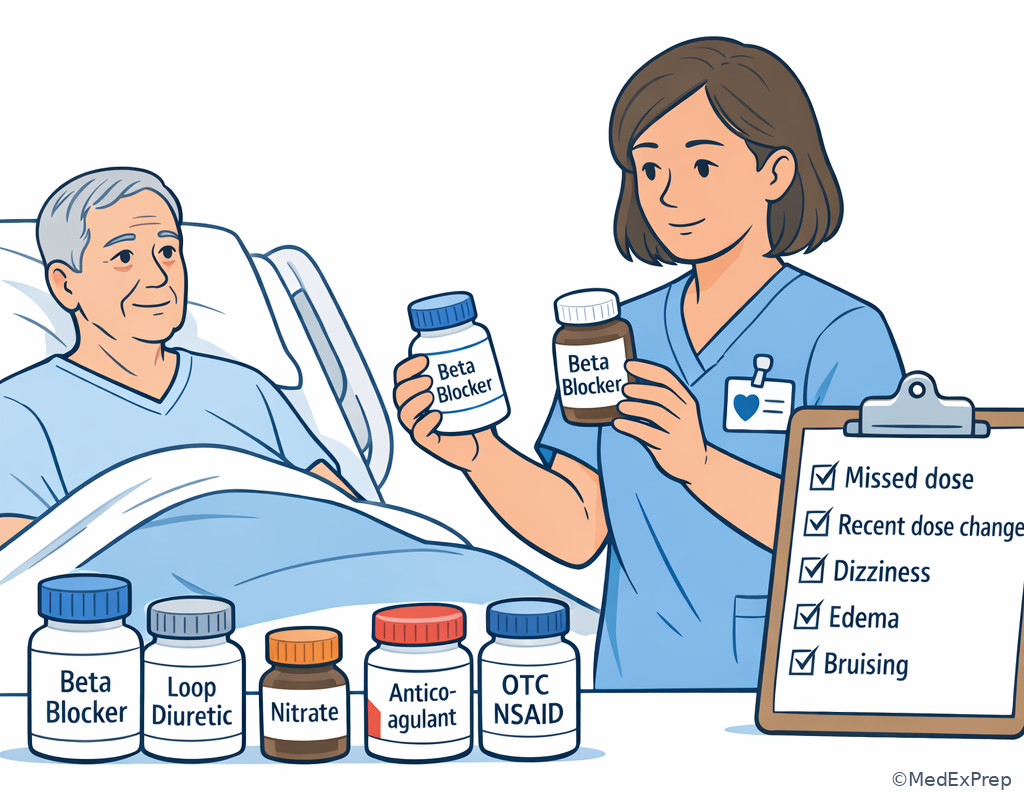
See Fig 4. On many exam items, the decisive clue is hidden in the medication list, not the chief complaint.
Exam takeaway: Linking medication nonadherence with weight gain, edema, and orthopnea helps identify worsening congestion early.
- The medication class most likely to turn black stools into a high-priority history clue is anticoagulants/antithrombotics.
- True or False: Medication history should include OTC and supplements. True.
- Name 3 medication-history questions: What do you take? What changed? What did you miss?
B Worked example
A 77-year-old man presents to a vascular clinic with dizziness and near-falls. History includes heart failure, atrial fibrillation, and CKD. He says he started “taking an extra heart pill” because his blood pressure seemed high at home; he also uses ibuprofen for arthritis and notes dark stools for 2 days. The attractive-but-wrong clue is home blood pressure concern, which may tempt a learner to focus on hypertension management. Identify task: determine the most urgent medication-history concern. Extract key facts: anticoagulation risk likely present with AF, extra medication dose, CKD, dark stools, dizziness. Apply rule: bleeding history and medication misadventure change urgency immediately. Eliminate distractors: arthritis pain and home BP concerns do not outrank possible GI bleeding or overmedication. Verify: the RN should assess current stability, reconcile medications, and escalate promptly.
C Exam trap
D Checkpoint
Question: A 70-year-old patient with chronic stable angina, hypertension, and erectile dysfunction reports recurrent chest pressure. Which medication-history question requires immediate clarification because it could create a dangerous treatment interaction?
- “Have you been taking your statin with food?”
- “Have you used medication for erectile dysfunction in the past 24-48 hours?”
- “Did you switch from one brand of aspirin to another?”
- “Do you prefer taking your beta blocker in the morning?”
Answer: B
- A: Tempting because statin administration questions are common; wrong because it is not the priority interaction affecting urgent symptom management.
- B: Tempting because it seems very specific; right because phosphodiesterase-5 inhibitor use is a key safety clarification before nitrate use.
- C: Tempting because aspirin history matters; wrong because formulation preference is less immediately dangerous than a nitrate interaction.
- D: Tempting because timing can affect adherence; wrong because it does not present the same immediate safety risk.
1.1.1.7 Integrating the history into nursing prioritization, documentation, and escalation
A Explanation
The final decision conflict is gathering more history versus acting on the history already obtained. The single rule: once the history reveals an unstable pattern, the nurse transitions from broad questioning to targeted monitoring, intervention within orders/protocols, and rapid communication. A strong nursing summary is concise and action-oriented: current symptom, time course, associated red flags, major cardiovascular history, relevant medications, and any recent change from baseline.
WHY THIS IS TESTED: CV-BC questions often ask for the most appropriate nursing action after the history is obtained. The correct choice is usually the action best aligned with ABCs, circulation, and RN scope. Examples: a patient reporting chest pressure, diaphoresis, and dyspnea during ambulation should not wait for a complete lifestyle inventory; a patient with sudden unilateral leg pain and numbness needs urgent perfusion assessment and escalation; a patient with worsening edema, orthopnea, and missed diuretics needs prompt assessment of respiratory status and congestion trend. Document clearly using relevant qualifiers rather than vague labels: “reports pressure-like substernal discomfort beginning 10 minutes ago with ambulation, 6/10, radiates to jaw, associated with diaphoresis” is more useful than “complains of chest pain.”
This is also where RN scope matters. The nurse may recognize that a history is concerning for ischemia, dysrhythmia, decompensated heart failure, or vascular compromise, but the nursing action is to assess, monitor, implement ordered/protocol-guided care, and escalate. The RN does not independently choose a revascularization strategy or make a final medical diagnosis. On exam items, when two answers seem plausible, choose the one that reflects safe nursing priority and escalation rather than unsupported independent treatment selection.
Exam takeaway: Once history reveals instability, stop collecting low-yield details and move to focused assessment, monitoring, and escalation.
flowchart TD
A[Focused history obtained] --> B{Unstable pattern?}
B -->|Yes| C[Assess ABCs and perfusion now]
C --> D[Implement protocol or ordered monitoring]
D --> E[Notify provider or activate response]
E --> F[Document concise escalation summary]
B -->|No| G[Complete targeted history]
G --> H[Teach monitor and plan follow-up]
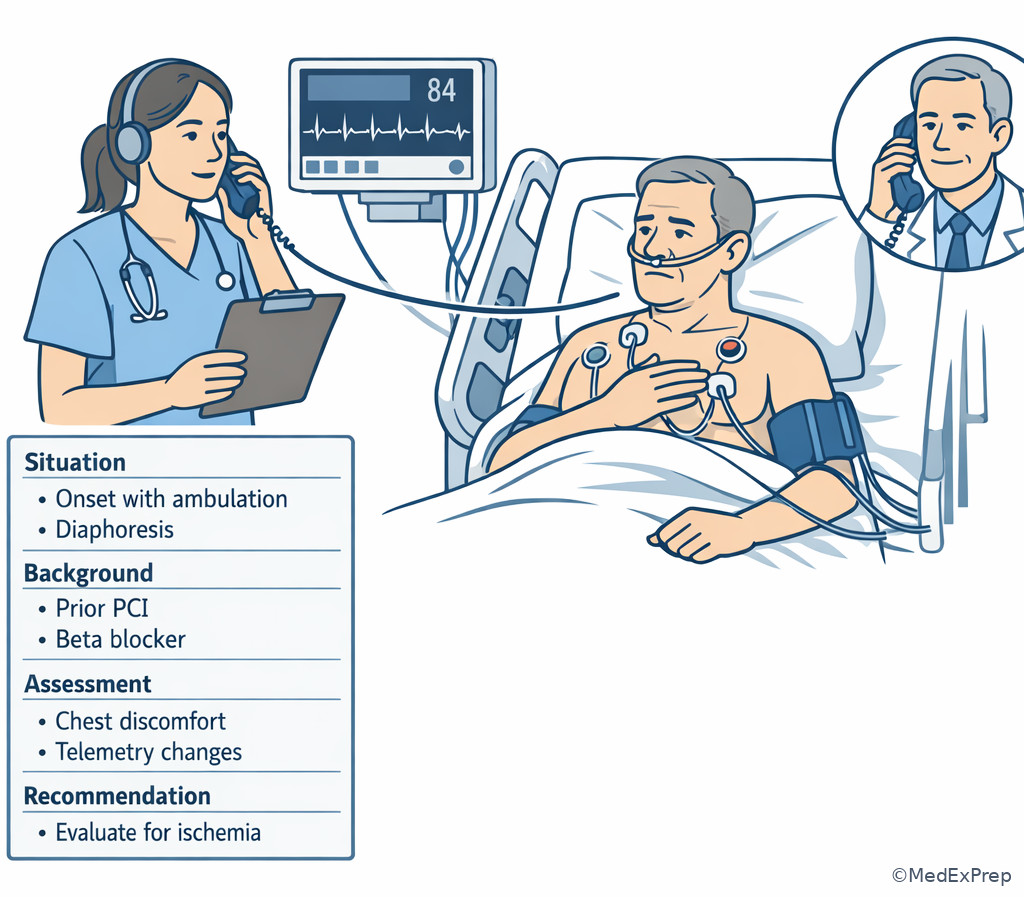
See Fig 5 for the transition from history-taking to action.
Exam takeaway: A concise SBAR-style handoff should highlight the symptom pattern, timing, major history, and why the patient is high risk now.
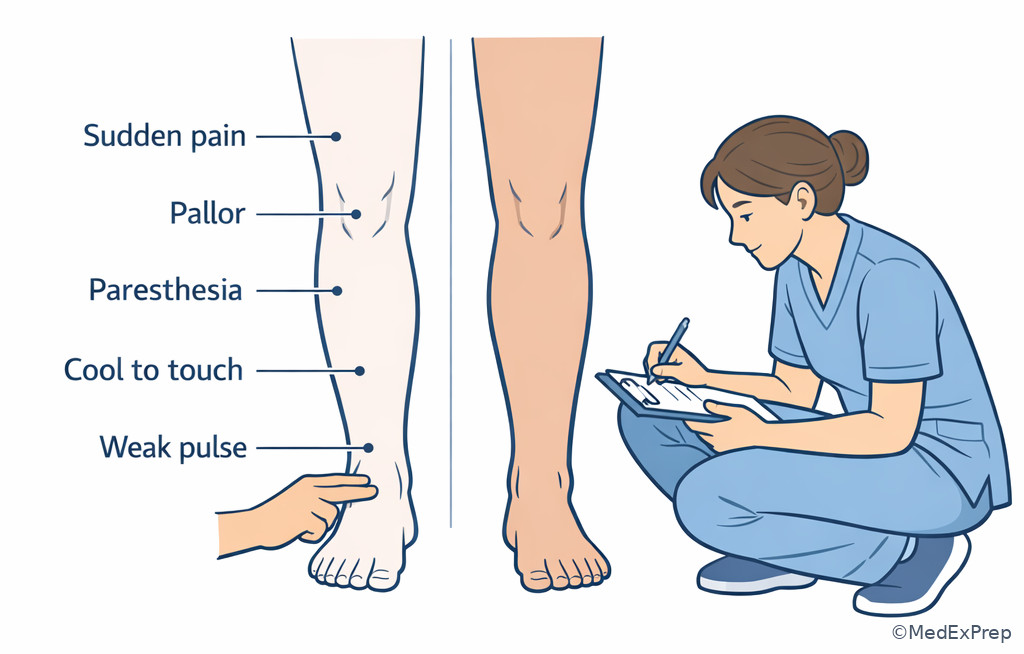
Exam takeaway: Sudden leg pain with pallor, numbness, and coolness is a history pattern that requires immediate perfusion-focused escalation.
B Worked example
A 66-year-old woman in an ambulatory vascular clinic reports sudden left calf and foot pain beginning 45 minutes ago while resting. History includes atrial fibrillation, inconsistent anticoagulant use, hypertension, and chronic venous varicosities. She also mentions a long car ride last week, which is the tempting wrong clue pushing toward a venous-only frame. Identify task: choose the safest immediate nursing response based on history. Extract key facts: sudden onset, severe limb pain at rest, AF with inconsistent anticoagulation, arterial embolic risk. Apply rule: history suggesting acute perfusion threat warrants rapid assessment and escalation, not routine teaching. Eliminate distractors: varicosities and recent travel suggest venous risk, but they do not explain sudden painful rest ischemia as well as embolic arterial compromise. Verify: the RN should rapidly assess perfusion findings and escalate immediately.
C Exam trap
D Checkpoint
Question: Which patient history requires the nurse to stop routine questioning and escalate most urgently?
- A patient with chronic stable edema who reports ankle swelling is unchanged from usual by evening
- A patient with hypertension who reports mild fatigue after poor sleep and no dyspnea
- A patient with atrial fibrillation who reports sudden right foot pain, numbness, and coldness beginning 30 minutes ago
- A patient with GERD who reports brief burning after a spicy meal that resolved with sitting upright
Answer: C
- A: Tempting because edema is a cardiovascular topic; wrong because unchanged dependent edema is lower priority than an acute perfusion threat.
- B: Tempting because fatigue can signal cardiac decline; wrong because the stem lacks red-flag cardiovascular features.
- C: Tempting because AF and limb symptoms may seem like separate issues; right because sudden pain, numbness, and coldness suggest acute limb ischemia requiring immediate escalation.
- D: Tempting because chest burning raises concern; wrong because the resolved postprandial positional pattern is less urgent than acute limb-threat history.
Exam Traps & Differentiators
Most common wrong answer and why: Choosing a broad risk-factor question before clarifying current symptom severity. This is tempting because cardiovascular nursing emphasizes risk reduction, but on priority questions the immediate symptom pattern outranks long-term prevention details.
| Looks similar | History clue that tempts you | Single differentiator | Nursing direction |
|---|---|---|---|
| GERD vs ischemic discomfort | “Indigestion” or burning quality | Exertional onset, diaphoresis, dyspnea, jaw/arm radiation favor ischemic concern | Prioritize cardiac screening history and escalation |
| Anxiety dyspnea vs congestion | Patient feels worried or restless | Orthopnea, PND, weight gain, edema favor heart failure congestion | Assess respiratory/perfusion status and notify appropriately |
| Benign palpitations vs high-risk rhythm cue | Caffeine or stress exposure | Presyncope, syncope, chest pain, or sustained rapid onset raises concern | Monitor and escalate if unstable features present |
| Chronic venous symptoms vs acute limb ischemia | History of varicose veins or long travel | Sudden pain, pallor, paresthesia, coolness, weakness are arterial red flags | Urgent perfusion-focused action |
| Medication teaching issue vs urgent adverse effect | Known nonadherence | Dark stools, severe dizziness, syncope, or marked symptom worsening make it urgent now | Assess stability and escalate |
If the stem says..., think...
- “Pressure after climbing stairs” -> exertional ischemic pattern until proven otherwise
- “Needs more pillows” -> orthopnea/congestion history
- “Skipped diuretic for several days” -> medication-related worsening volume status
- “Palpitations and nearly passed out” -> higher-risk dysrhythmia cue
- “Sudden cold painful foot” -> acute perfusion threat, not routine edema
- “Dark stools on anticoagulant” -> bleeding risk requiring prompt attention
Related trap from upcoming topics: in Heart And Vascular Exam, learners may anchor on one reassuring finding, such as a normal blood pressure, while missing cool extremities or pulse asymmetry. In Priority Symptom Clusters, the same history traps recur when diaphoresis, hypotension, or neurologic change is embedded in the stem.
Exam takeaway: The fastest way to the right answer is to separate stable pattern questions from immediate escalation cues.
flowchart TD
A[History cue] --> B{Current red flags present?}
B -->|Yes| C[Chest pain with dyspnea/diaphoresis]
B -->|Yes| D[Syncope or presyncope with palpitations]
B -->|Yes| E[Sudden neuro or limb symptoms]
C --> F[Urgent nursing assessment and escalation]
D --> F
E --> F
B -->|No| G{Pattern suggests progression?}
G -->|Orthopnea PND weight gain| H[Focused congestion follow-up]
G -->|Missed meds recent changes| I[Medication-linked reassessment]
G -->|Stable chronic symptoms| J[Routine targeted history and teaching]
See Fig 6 for the lesson’s main decision tree.
Tables
| Symptom | High-yield questions | Red-flag answer | Why it matters |
|---|---|---|---|
| Chest discomfort | Exertional? radiation? associated dyspnea/diaphoresis/nausea? | Started with activity and persists with autonomic symptoms | Raises concern for ischemia |
| Dyspnea | Rest or exertion? orthopnea? PND? weight gain? | Orthopnea plus nighttime episodes and edema | Supports congestion/decompensation |
| Palpitations | Sudden? fast or irregular? dizziness/syncope? | Palpitations with presyncope or chest pain | Higher-risk dysrhythmia pattern |
| Syncope | During exertion? prodrome? injury? palpitations? | Exertional or with chest pain/palpitations | Suggests more dangerous etiology |
| Edema/limb pain | Bilateral or unilateral? sudden? painful? cool/numb? | Sudden painful cool numb limb | Possible acute limb ischemia |
| History category | Choose this first when... | Reject as first priority when... |
|---|---|---|
| Current symptom timing and associated symptoms | There is an active complaint or recent change | Never reject if the patient is currently symptomatic |
| Past cardiovascular diagnoses/procedures | Needed to sharpen risk or complication concern | Reject only if it delays urgent current assessment |
| Medication/adherence history | Symptoms could reflect side effect, omission, bleeding, or interaction | Reject as first step only if ABC instability is present and immediate action is required |
| Family history | Risk profiling in stable evaluation | Reject as first question during active high-risk symptoms |
| Social/lifestyle history | Teaching, prevention, rehab, and stable follow-up | Reject as first priority in urgent symptom scenarios |
| Presentation pattern | Most likely tested concern | Closest confounder | Discriminator from history |
|---|---|---|---|
| Exertional chest pressure with diaphoresis | Ischemic symptom cluster | GERD | Exertional trigger plus autonomic symptoms |
| Dyspnea with orthopnea and PND | Worsening heart failure congestion | Anxiety | Positional nighttime pattern and fluid clues |
| Palpitations with near-syncope | Higher-risk dysrhythmic instability | Caffeine-related palpitations | Perfusion symptoms accompany the rhythm complaint |
| Sudden painful cold foot in AF patient | Acute limb ischemia | Chronic venous insufficiency | Sudden onset and ischemic sensory change |
| Dark stools on anticoagulant with dizziness | Bleeding complication | Minor medication intolerance | Evidence of active blood loss symptoms |
Algorithm / Approach
Practical summary: Urgency first, pattern second, context third, action last. This algorithm is the safest way to answer foundational CV-BC history questions.
Rapid Review
- Exertional chest pressure -> higher concern than vague discomfort at rest after meals
- Orthopnea + PND -> congestion discriminator, not simple anxiety
- Palpitations + presyncope -> rhythm concern rises because perfusion is affected
- Sudden limb pain + coldness -> arterial threat, not routine edema history
- Dark stools on anticoagulant -> bleeding clue, not routine medication intolerance
- Prior MI/PCI/CABG -> stronger current risk modifier than vague family history
- Medication omission + weight gain -> think therapy-related decompensation
- “Indigestion” with exertion -> do not let wording distract from ischemic pattern
- Chronic unchanged evening edema -> lower urgency than sudden asymmetric symptoms
- History question that changes urgency -> better first choice than a complete review
- Specific family history before age 55 men / 65 women -> more useful than “heart problems run in the family”
- Current symptom + relevant background + red flag -> ideal escalation summary
Self-check quiz
1. A 62-year-old man in a cardiology office reports chest “tightness” while carrying groceries upstairs. He has diabetes and hypertension and says he also has chronic reflux. Which nursing question is the most appropriate first priority?
- Ask whether his father had heart disease
- Ask whether the discomfort began with exertion and whether he has dyspnea or diaphoresis
- Ask what antacid he usually takes
- Ask how often he exercises each week
2. A 74-year-old woman with chronic heart failure calls the clinic reporting shortness of breath. She also has obesity and osteoarthritis. Which additional history finding most strongly supports worsening congestion?
- She feels nervous before appointments
- She has chest soreness when reaching overhead
- She sleeps on three pillows and wakes up gasping at night
- She drank coffee this morning
3. A 69-year-old patient on telemetry reports palpitations after walking to the bathroom. He has coronary artery disease, CKD, and anemia. He says he also had two cups of coffee earlier. Which nursing action is most appropriate first?
- Ask whether he felt dizzy, nearly fainted, or had chest pain during the palpitations
- Provide teaching to avoid caffeine
- Document the symptom and reassess in 30 minutes
- Ask whether he has a family history of arrhythmias
4. A 71-year-old man with atrial fibrillation, hypertension, and PAD reports sudden left foot pain and numbness that began while sitting. He also mentions a long car ride last week. Which is the most appropriate nursing response?
- Continue the routine history because venous symptoms are common after travel
- Focus on shoe fit and activity habits before escalating
- Recognize a possible acute perfusion threat, perform focused assessment, and escalate promptly
- Advise leg elevation and schedule follow-up teaching
5. A 76-year-old patient with chronic stable angina, erectile dysfunction, and hypertension reports current chest pressure during a phone triage call. Which medication-history question requires immediate clarification?
- Whether the patient took a statin with dinner
- Whether the patient used erectile dysfunction medication recently
- Whether the patient changed aspirin brands
- Whether the patient prefers morning or evening beta blocker dosing
6. A 65-year-old woman in outpatient rehab develops upper back pressure and unusual fatigue on the treadmill. She has diabetes, CKD, and prior PCI. She says she also slept poorly and has chronic reflux. Which nursing action is the best initial response?
- Stop activity, assess associated ischemic symptoms, and escalate per protocol
- Encourage the patient to finish the session to determine exercise tolerance
- Offer water and reassess after rest because reflux is common
- Document fatigue as likely due to poor sleep and continue monitoring only
7. A 78-year-old man with heart failure, atrial fibrillation, CKD, and chronic pain reports dizziness and dark stools. He says he may have taken an extra “heart pill” and uses ibuprofen most days. Which nursing priority is most appropriate?
- Provide routine medication teaching about long-term adherence
- Assess current stability, reconcile medications, and escalate for possible medication-related bleeding or overmedication
- Advise the patient to stop all home medications until the next appointment
- Focus on diet teaching because CKD can worsen fatigue
8. A 63-year-old hospitalized patient reports chest pressure beginning 15 minutes ago while ambulating to the bathroom. History includes prior MI, beta blocker therapy, diabetes, and chronic shoulder arthritis. A UAP is available on the unit. Which action best reflects appropriate RN prioritization and delegation?
- Delegate the symptom interview to the UAP while the RN reviews old records
- Ask the UAP to obtain a snack because the patient might be hypoglycemic, then reassess later
- Perform the focused cardiovascular history and assessment now, direct the UAP to bring needed equipment, and escalate per protocol
- Tell the patient to remain in bed and wait until the provider rounds because prior MI explains recurrent discomfort
Answer key
1.1.1.8 1. Answer: B
- A: Tempting because family history is a recognized cardiovascular risk factor. Incorrect for this scenario because ABCs/circulation priority requires clarifying the active symptom first. The single stem clue is current exertional chest tightness. Source support: NCSBN prioritization framework and Lewis emphasize immediate assessment of current concerning symptoms.
- B: Tempting because it is narrower than a full history. Correct because it addresses exertional onset and associated ischemic symptoms, which most directly determine urgency. The single stem clue is chest tightness while carrying groceries upstairs. Source support: Lewis Medical-Surgical Nursing; Saunders Comprehensive Review for prioritizing ischemic symptom assessment.
- C: Tempting because reflux is a common confounder. Incorrect because anchoring on GERD before screening for ischemia violates circulation-first priority. The discriminating clue is exertional onset in a diabetic patient.
- D: Tempting because exercise history matters for long-term risk reduction. Incorrect because prevention data do not outrank assessment of an active potentially unstable complaint. The clue is current symptom now.
1.1.1.9 2. Answer: C
- A: Tempting because anxiety can worsen dyspnea. Incorrect because it does not specifically support congestion. The clue is the question asking what most strongly supports worsening congestion.
- B: Tempting because chest symptoms can be cardiac. Incorrect because reproducible soreness with movement is not the best congestion clue. The discriminator is musculoskeletal pattern.
- C: Tempting because it seems classic. Correct because orthopnea and PND are high-yield heart failure history features that indicate worsening volume overload. The clue is sleeps on three pillows and wakes up gasping. Source support: Lewis; Saunders on HF assessment.
- D: Tempting because caffeine can trigger symptoms such as palpitations. Incorrect because it does not explain the positional nocturnal dyspnea pattern of congestion.
1.1.1.10 3. Answer: A
- A: Tempting because it adds more assessment instead of immediate intervention. Correct because nursing-process priority starts with determining whether the palpitations affected perfusion or were associated with chest pain, which changes urgency. The clue is palpitations on telemetry after activity. NCSBN and ANA standards support focused assessment before lower-priority teaching.
- B: Tempting because caffeine is a plausible trigger. Incorrect because teaching is appropriate later, but first the RN must assess for instability. The clue eliminating it is current symptomatic episode.
- C: Tempting because symptoms may resolve. Incorrect because delaying reassessment ignores potential dysrhythmic risk. The single clue is active complaint now.
- D: Tempting because family history can matter. Incorrect because it does not determine immediate perfusion threat. The clue is need for priority first action.
1.1.1.11 4. Answer: C
- A: Tempting because long travel can suggest venous pathology. Incorrect because the symptom pattern is sudden pain and numbness, which is more concerning for arterial compromise. The clue is sudden onset while sitting with numbness. Lewis supports urgent attention to acute limb perfusion compromise.
- B: Tempting because footwear and activity can affect chronic foot pain. Incorrect because it misprioritizes lifestyle assessment over possible limb-threatening ischemia.
- C: Correct because the RN should recognize acute perfusion threat, perform focused assessment, and escalate within scope. The single discriminating clue is sudden foot pain plus numbness in a patient with AF. NCSBN prioritization: circulation threat first.
- D: Tempting because elevation is used in some lower-extremity discomfort. Incorrect because routine conservative advice is unsafe when acute arterial compromise is possible.
1.1.1.12 5. Answer: B
- A: Tempting because medication timing is a reasonable history question. Incorrect because it does not create the immediate safety interaction at issue in chest pain care.
- B: Correct because recent erectile dysfunction medication use is a critical nitrate-safety clarification. The discriminating clue is current chest pressure with known ED history. Lewis and Saunders emphasize this interaction.
- C: Tempting because aspirin details may matter in cardiovascular care. Incorrect because brand change is less urgent than a contraindicating interaction.
- D: Tempting because adherence timing affects control. Incorrect because it is not the highest-priority safety clarification during current symptoms.
1.1.1.13 6. Answer: A
- A: Correct because the patient has exertional pressure with high-risk history, so the RN should stop activity, assess associated symptoms, and escalate per protocol. The single stem clue is symptoms occurred on the treadmill in a patient with diabetes and prior PCI. Priority follows circulation/ischemia concerns. Supported by Lewis and NCSBN prioritization.
- B: Tempting because exercise tolerance data can be informative in rehab. Incorrect because continuing exertion during possible ischemic symptoms is unsafe.
- C: Tempting because reflux is a plausible confounder and rest may help symptoms. Incorrect because the history pattern is too concerning to anchor on reflux first.
- D: Tempting because poor sleep can cause fatigue. Incorrect because fatigue plus upper back pressure with exertion in a high-risk patient should not be minimized.
1.1.1.14 7. Answer: B
- A: Tempting because adherence teaching is needed. Incorrect because safety and possible active harm come before education. The key clue is dark stools with dizziness. NCSBN prioritization favors assessment of current instability first.
- B: Correct because the RN must assess current stability, reconcile medications, and escalate for potential bleeding or overmedication. The discriminating clues are dark stools, extra heart pill, and ibuprofen use. Lewis and Saunders support urgent evaluation of bleeding risk and medication-related complications.
- C: Tempting because unsafe medications may be involved. Incorrect because the RN should not independently stop all medications without appropriate authority; escalation and assessment are safer within scope.
- D: Tempting because CKD and diet can affect fatigue. Incorrect because it ignores a possible acute bleeding event and medication error.
1.1.1.15 8. Answer: C
- A: Tempting because delegation can improve efficiency. Incorrect because focused cardiovascular assessment of active chest symptoms is an RN responsibility and cannot be delegated to the UAP. The clue is current chest pressure in a hospitalized patient. ANA standards and NCSBN delegation principles support this.
- B: Tempting because diabetes raises concern for hypoglycemia. Incorrect because the stem gives a more concerning ischemic pattern, and snack retrieval is not the priority.
- C: Correct because the RN must personally assess the patient now, while appropriately directing the UAP to assist with equipment or other supportive tasks. The discriminator is need for immediate RN assessment with safe delegation of nonassessment tasks.
- D: Tempting because prior MI increases the likelihood of recurrent symptoms and provider follow-up will be needed. Incorrect because waiting for rounds delays urgent nursing response to possible ischemia.
Keep going with the full Cardiac-Vascular Nursing Prep Course (CV-BC)
You just studied the way members do, in the same lesson interface. Full access unlocks every lesson, the question bank and flashcards for a full year.
One payment · 1 year of access · No auto-renewal