1.1.1 - Problem Representation Patterns
Problem Representation Patterns
What you’ll learn
- IM DOMAIN: General Internal Medicine/Multisystem → Clinical reasoning framework — Build a one-line problem representation from a noisy vignette.
- IM DOMAIN: General Internal Medicine/Multisystem → Illness script selection — Identify which patient features are pivot features versus distractors.
- IM DOMAIN: General Internal Medicine/Multisystem → Differential diagnosis strategy — Organize symptoms by tempo, syndrome, organ system, and instability.
- IM DOMAIN: General Internal Medicine/Multisystem → Next best step reasoning — Use the problem representation to select the most useful immediate diagnostic or therapeutic action.
- IM DOMAIN: General Internal Medicine/Multisystem → Test-taking error reduction — Avoid classic COMAT traps caused by overvaluing one attractive but non-discriminating clue.
- General Internal Medicine/Multisystem → Recognition/presentation
- General Internal Medicine/Multisystem → Prioritized differential construction
- General Internal Medicine/Multisystem → Initial workup and most appropriate next step
- General Internal Medicine/Multisystem → Complication and urgent pitfall recognition
Why it matters
- Most COMAT misses are not due to obscure knowledge; they happen because the stem was framed incorrectly before the answer choices were read.
- A strong problem representation lets you separate the governing rule from the background noise, especially when several options sound partially right.
- Internal medicine stems often contain age, comorbidities, medications, and one seductive clue that points to a wrong diagnosis unless you identify the dominant syndrome first.
- This topic is foundational for every later unit: chest pain, dyspnea, AKI, electrolyte disorders, anemia, infection, and altered mental status all depend on the same compression skill.
Key Terms & Must-Know Facts
1.1.1.1 Key terms
- Problem representation — a concise summary of the case using abstract, discriminating language.
- Illness script — a stored pattern linking risk factors, mechanism, presentation, and typical findings.
- Pivotal feature — one finding that changes the diagnosis or next step.
- Noise — details included in the stem that are real but not decision-driving.
- Syndrome — a recognizable cluster such as nephritic syndrome, cholestatic pattern, or acute coronary syndrome.
- Semantic qualifier — paired descriptors such as acute/chronic, unilateral/bilateral, stable/unstable, pleuritic/pressure-like.
- Pretest probability — how likely a disease is before testing, based on the clinical picture.
- Discriminating clue — the single feature that separates close differentials.
- Anchor bias — locking onto the first plausible diagnosis.
- Premature closure — stopping diagnostic reasoning too early.
- Framing — the task the stem is really asking: diagnosis, next test, treatment, or escalation.
- Representativeness trap — choosing the diagnosis that superficially resembles the stem while ignoring the decisive mismatch.
1.1.1.2 Must-know facts
- The best problem representation is usually one sentence.
- Age, tempo, acuity, organ system, and instability often matter more than isolated lab values.
- If the patient is unstable, the representation must start with that instability.
- Symptoms should be translated into medical language: “chest tightness with exertion relieved by rest” is more useful than repeating the patient’s words.
- Do not copy the stem; compress it.
- One abnormal lab rarely makes the diagnosis without context.
- Distractors on COMAT are usually attractive because they match some features; the correct answer matches the governing pattern.
- Before selecting an answer, verify that your choice explains the key feature that others do not.
| Element to extract | High-yield question to ask | How it changes reasoning |
|---|---|---|
| Age/sex | Who usually gets this disease? | Changes pretest probability for common diagnoses |
| Tempo | Acute, subacute, or chronic? | Separates emergencies from indolent disease |
| Syndrome | What organ-system cluster is present? | Narrows the differential fast |
| Instability | Hypotension, hypoxemia, altered mentation? | May override diagnostic curiosity and force stabilization |
| Pivot feature | Which finding changes the answer? | Eliminates close distractors |
| Noise | Which detail is true but not decision-driving? | Prevents anchoring on distractors |
Exam takeaway: Compress the stem into age, tempo, syndrome, and pivot feature before reading answer choices.
flowchart LR
A[Read the stem] --> B[Identify the task]
B --> C[Extract age and tempo]
C --> D[Name the syndrome]
D --> E[Find the pivot feature]
E --> F[State one-line representation]
F --> G[Test answer choices against it]
See Fig 1 for the core compression sequence that should happen almost automatically on exam day.
Exam takeaway: Visually tagging age, tempo, syndrome, and red-flag findings helps separate noise from decision-driving data.
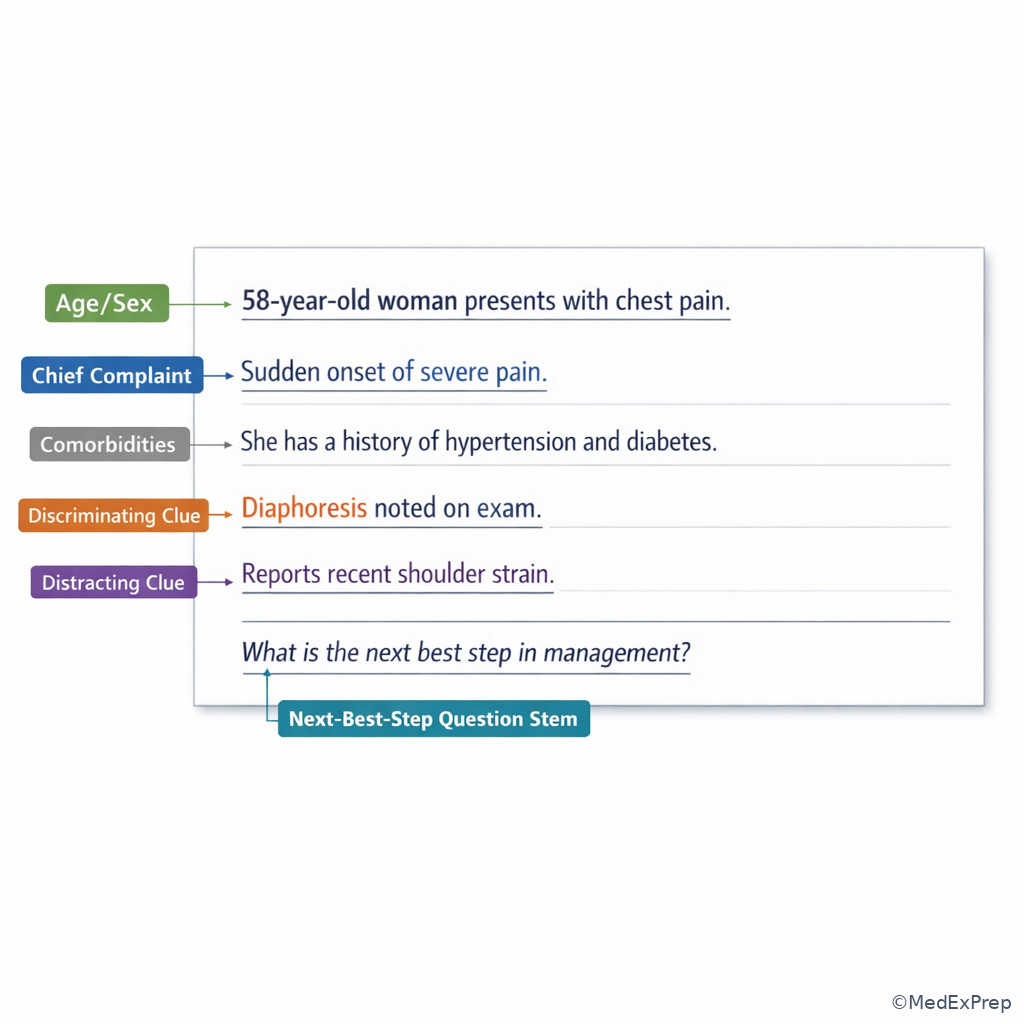
Core content
1.1.1.3 Foundational pattern: what a problem representation must contain
A Explanation
The first choice in any vignette is not between diagnoses; it is between copying the stem and abstracting the stem. Choose abstraction. A strong problem representation usually includes five parts: patient frame, tempo, dominant syndrome, key context, and pivot feature. For example, instead of repeating “64-year-old man with diabetes, hypertension, and smoking who has chest pain walking uphill,” say: older man with vascular risk factors and exertional substernal pressure relieved by rest, consistent with stable ischemic chest pain. That sentence is shorter, more predictive, and tied to action.
WHY THIS IS TESTED: COMAT stems deliberately bury the dominant pattern under realistic details. The student who identifies the governing pattern can answer diagnosis, workup, and management questions from the same stem. The student who memorizes isolated facts but never compresses the case often picks the most familiar-looking distractor.
Use semantic qualifiers. They do not sound fancy on the exam, but they are how experts think: sudden vs gradual, unilateral vs bilateral, productive vs dry, focal vs diffuse, pleuritic vs pressure-like, oliguric vs nonoliguric, inflammatory vs mechanical. These paired terms prevent vague representations like “shortness of breath and cough.” A better frame is acute febrile productive cough with focal pleuritic findings versus progressive exertional dyspnea with volume overload signs.
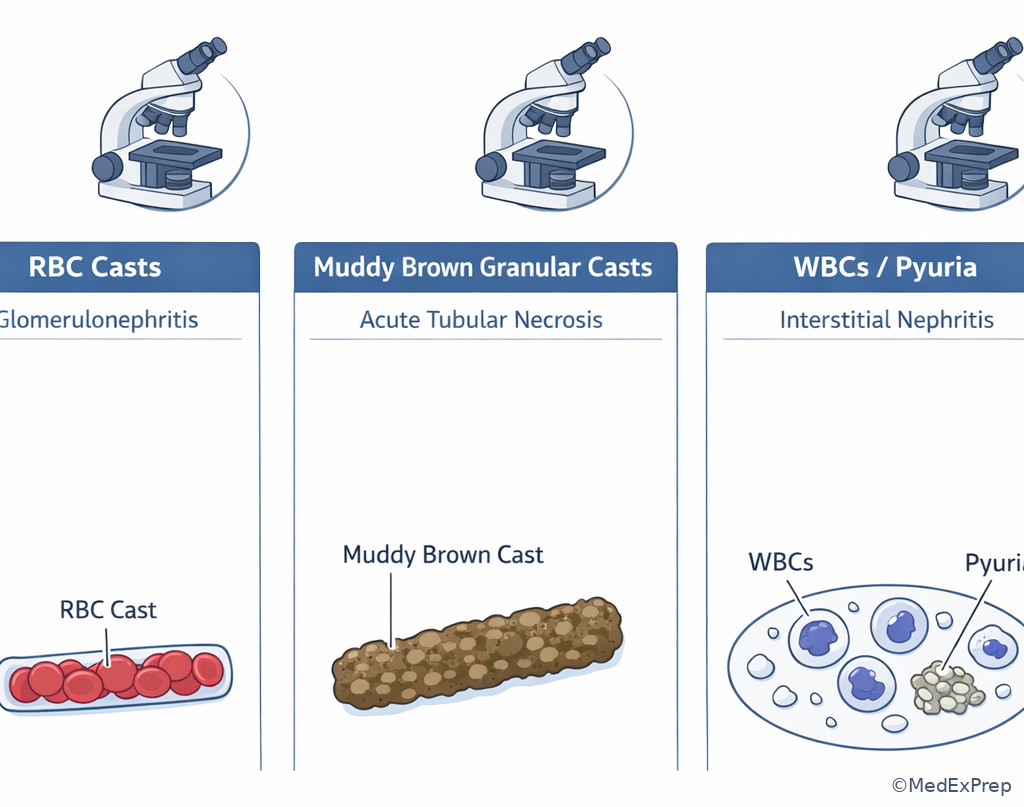
The single finding that resolves many conflicts is the pivot feature. In chest pain, the pivot may be exertional reproducibility versus positional pleuritic pain. In AKI, it may be muddy brown casts versus eosinophils or RBC casts. In infection, it may be hypotension or lactate elevation signaling urgency. Your representation should place that pivot feature near the end of the sentence.
B Worked example
A 67-year-old man comes to clinic for “indigestion” when he climbs stairs. He has type 2 diabetes, CKD stage 3, and hyperlipidemia. He says spicy food sometimes bothers him at night, and he started ibuprofen last week for knee pain. Vitals are normal. The discomfort is a dull substernal pressure that appears after two blocks of walking and resolves within five minutes of rest. ECG in clinic is unchanged from prior tracing.
Identify task: most likely syndrome, not yet definitive treatment. Extract key facts: older patient, multiple atherosclerotic risks, exertional reproducible substernal pressure relieved by rest. Apply rule: the representation should prioritize ischemic pattern over GI noise. Eliminate distractors: ibuprofen and spicy food make reflux or ulcer disease tempting, but they do not explain the exertional pattern. Verify: the case is best framed as stable exertional angina pattern until proven otherwise.
C Exam trap
D Checkpoint
Question: A 59-year-old woman with obesity, hypertension, and tobacco use presents with 3 months of chest discomfort. It occurs while carrying groceries upstairs, lasts 4 minutes, and resolves after she stops. She also reports occasional sour taste after late meals. Which problem representation is most useful?
- A. Middle-aged woman with reflux symptoms and episodic chest pain after meals.
- B. Woman with vascular risk factors and chronic exertional substernal pressure relieved by rest.
- C. Woman with atypical chest discomfort and obesity-related deconditioning.
- D. Woman with possible panic symptoms because episodes are brief and self-limited.
Answer: B
- A: Tempting because the sour taste is real; wrong because it ignores the reproducible exertional trigger.
- B: Correct because it captures age/risk, tempo, ischemic pattern, and the pivot feature of exertional relief with rest.
- C: Tempting because deconditioning can cause exertional symptoms; wrong because chest pressure with this pattern should not be minimized.
- D: Tempting because brief episodes can be mislabeled anxiety; wrong because the episodes are predictably effort-related rather than situational.
1.1.1.4 Foundational pattern: separating signal from noise
A Explanation
COMAT writers make stems realistic by adding comorbidities, medications, incidental abnormal labs, and lifestyle details. Some matter; some are noise. The decision conflict is whether to honor every abnormality equally or rank features by discriminatory value. Choose ranking. A clue is high signal if removing it would change the answer. A clue is low signal if it adds realism but does not change the governing rule.
Examples: a mild chronic creatinine elevation may be background noise in a COPD exacerbation stem; it matters later for medication dosing, but it is not why the patient is short of breath. A smoking history may be a broad risk factor but not the pivot feature if the stem includes unilateral leg swelling and sudden pleuritic chest pain. Likewise, a low-grade fever can occur in several conditions; fever alone is not decisive without localization or instability.
WHY THIS IS TESTED: close distractors often differ by one high-signal feature. Students miss questions when they overweight emotionally salient clues such as a dramatic family history, one medication, or one outlier lab while underweighting the timing or pattern of symptoms. Signal ranking is what turns pattern recognition into reliable board performance.
A fast way to test for signal: ask, “If I erased this detail, would the best answer change?” If no, it is likely noise. Also ask, “Is this clue common to several answer choices?” If yes, it is not the discriminator. High-signal data often come from three buckets: instability, localization, and temporality.
B Worked example
A 72-year-old woman presents with acute shortness of breath. She has COPD, heart failure with preserved ejection fraction, and chronic anemia from iron deficiency. She had a long car ride 2 days ago. She reports right-sided pleuritic chest pain and one episode of scant hemoptysis. Temperature is 37.8°C, oxygen saturation is 88% on room air, and the right calf is larger than the left. Hemoglobin is 9.8 g/dL, similar to baseline.
Identify task: build the dominant representation. Extract key facts: sudden dyspnea, pleuritic pain, hypoxemia, recent immobility, unilateral calf swelling. Apply rule: the acute thromboembolic pattern outranks chronic COPD/HFpEF/anemia background. Eliminate distractors: chronic anemia is noisy because it is baseline; mild fever is non-specific; COPD history is tempting but does not explain unilateral calf findings. Verify: representation is acute hypoxemic pleuritic syndrome with DVT clue, concerning for pulmonary embolism.
C Exam trap
D Checkpoint
Question: Which detail in the case above is highest signal for the leading diagnosis?
- A. Chronic iron-deficiency anemia
- B. Mild low-grade fever
- C. Recent long car ride with unilateral calf swelling
- D. History of heart failure with preserved ejection fraction
Answer: C
- A: Tempting because anemia contributes to dyspnea; wrong because it is chronic and near baseline.
- B: Tempting because fever suggests infection; wrong because low-grade fever is nonspecific and does not localize the cause.
- C: Correct because it supplies the strongest thromboembolic pivot clue in the context of acute pleuritic hypoxemia.
- D: Tempting because HF can cause dyspnea; wrong because the pattern is sudden and pleuritic rather than congestive.
- The most useful first compression elements are age/risk, tempo, syndrome, and pivot feature.
- True or False: The most dramatic clue in the stem is always the most discriminating clue. False.
- Name 3 high-signal buckets: instability, localization, temporality.
Exam takeaway: Promote instability, tempo, and localization over background comorbidities when several clues compete.
flowchart TD
A[Stem details] --> B{Does it change the answer if removed?}
B -->|Yes| C[High signal]
B -->|No| D[Likely noise]
C --> E{Is it instability, localization, or temporality?}
E --> F[Use in representation]
D --> G[Keep as context only]
See Fig 2 when you need a fast rule for ranking clues under time pressure.
Exam takeaway: Comparing focal VTE clues with background cardiopulmonary comorbidities prevents anchoring on chronic disease.
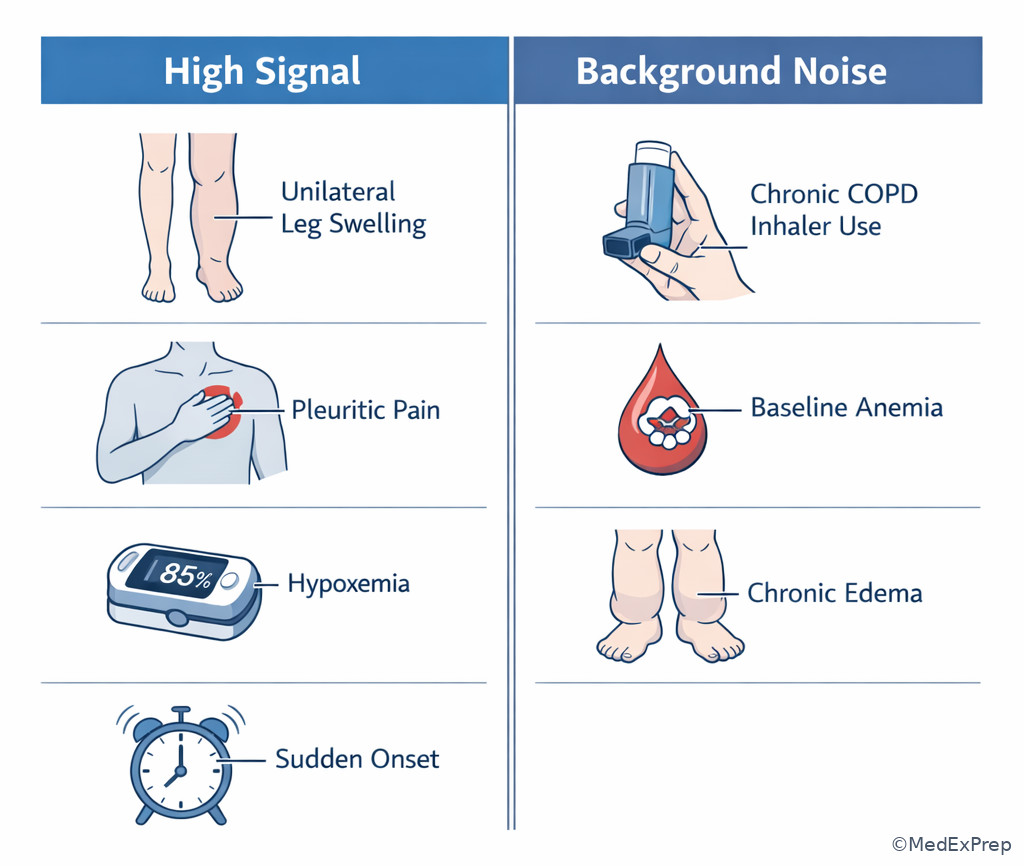
1.1.1.5 Application pattern: converting complaints into syndrome language
A Explanation
Board questions rarely reward staying at the symptom level. The decision conflict is whether to think in patient language (“my stomach hurts,” “I feel weak”) or syndrome language (upper GI bleed, inflammatory polyarthritis, obstructive jaundice, volume-overload dyspnea). Choose syndrome language. This step is what lets one rule apply across different surface presentations.
For example, “fatigue” alone is almost useless. But fatigue with exertional dyspnea, pallor, low MCV, and pica becomes a microcytic anemia pattern. “Abdominal pain” becomes meaningful when translated into biliary colic, pancreatitis, peritonitis, or mesenteric ischemia. The same is true for dizziness: is it vertigo, presyncope, disequilibrium, or nonspecific lightheadedness? The exam wants the translated version.
WHY THIS IS TESTED: when answer choices all belong to the same organ system, the winner is usually the option that matches the syndrome category, not merely the presence of one symptom. Students who fail to translate symptoms overcall vague diagnoses such as viral illness, anxiety, or deconditioning.
To translate well, combine symptom quality, associated findings, and context. Chest pain plus diaphoresis and exertional trigger suggests ischemia; chest pain plus positional improvement and pleuritic quality points toward pericardial or pleural processes; chest pain plus reproducible palpation tenderness may suggest chest wall source. The representation should say the syndrome, not just list the complaints.
See Fig 3 for a complaint-to-syndrome conversion map you can mentally reuse across many organ systems.
B Worked example
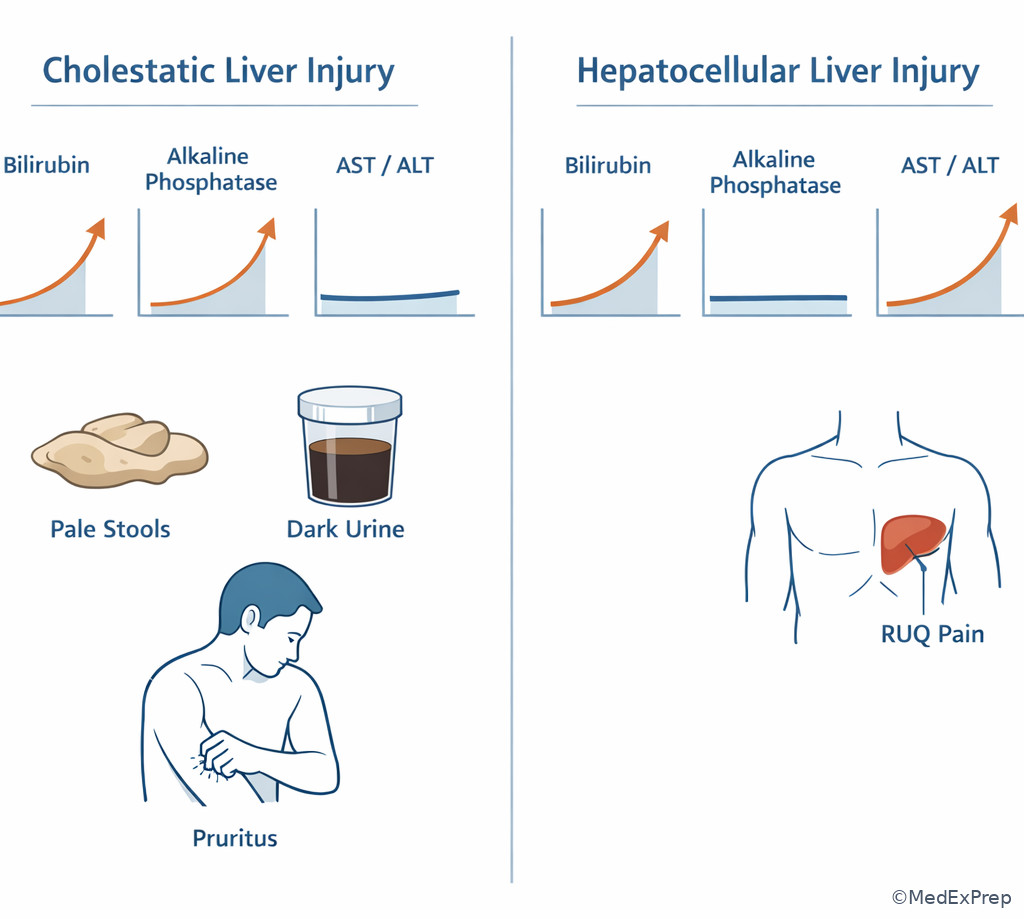
A 61-year-old woman presents with “dark urine and belly discomfort.” She has obesity, type 2 diabetes, and osteoarthritis. She takes metformin and occasional acetaminophen. She notes pruritus, pale stools, and right upper quadrant discomfort after meals. She denies heavy alcohol use. AST and ALT are mildly elevated, alkaline phosphatase is markedly elevated, and total bilirubin is 4.1 mg/dL.
Identify task: convert the complaint into a syndrome. Extract key facts: pruritus, pale stools, dark urine, postprandial RUQ discomfort, cholestatic lab pattern. Apply rule: this is not just “abdominal pain”; it is obstructive/cholestatic jaundice syndrome. Eliminate distractors: acetaminophen use tempts toxic hepatitis, but the lab pattern is not predominantly hepatocellular. Verify: the syndrome points toward biliary obstruction workup, not broad liver testing alone.
C Exam trap
D Checkpoint
Question: Which syndrome label best converts this complaint into exam-usable language?
- A. Nonspecific dyspepsia syndrome
- B. Cholestatic/obstructive jaundice syndrome
- C. Acute gastroenteritis syndrome
- D. Functional abdominal pain syndrome
Answer: B
- A: Tempting because symptoms occur after meals; wrong because stool and urine color changes plus lab pattern indicate biliary disease.
- B: Correct because the symptom cluster and labs point to impaired bile flow.
- C: Tempting because abdominal discomfort is common; wrong because there is no diarrheal or infectious pattern.
- D: Tempting when structural disease is not yet proven; wrong because objective cholestatic findings are already present.
1.1.1.6 Application pattern: choosing the pivot feature among close differentials
A Explanation
Once you have a syndrome, the next decision is between several plausible members of the same family. This is where the pivot feature matters most. The pivot feature is the one detail that makes one answer correct and the near-neighbor answers wrong. It may be historical, physical, or laboratory. Without it, the options remain tied.
Examples across internal medicine: nephritic syndrome with RBC casts points to glomerular inflammation, whereas eosinophils after new antibiotics suggest interstitial nephritis. Dyspnea with orthopnea and elevated JVP supports heart failure, while dyspnea with wheeze and prolonged expiratory phase supports obstructive airway disease. Hyperthyroidism with painful thyroid and recent viral illness suggests subacute thyroiditis rather than Graves disease. The test writers want to know whether you can distinguish near-matches, not just recognize a broad category.
WHY THIS IS TESTED: most incorrect options on COMAT are not absurd; they are the right answer for a slightly different patient. The student who asks, “What one detail would need to change for option C to become correct?” is using the right strategy. That single discriminating detail is often the pivot feature already present in the stem.
See Fig 4 for a differential-sorting structure that emphasizes the pivot clue rather than a laundry list of overlapping findings.
B Worked example
A 48-year-old woman presents with fatigue and edema. She has rheumatoid arthritis, hypertension, and recent use of trimethoprim-sulfamethoxazole for cellulitis. Creatinine has risen from 0.8 to 2.1 mg/dL. Urinalysis shows hematuria and proteinuria. She also has a faint rash and eosinophilia. A student wants to diagnose acute interstitial nephritis immediately.
Identify task: choose the most important discriminating feature. Extract key facts: AKI, hematuria, proteinuria, eosinophilia, rash, recent antibiotic. Apply rule: the antibiotic and eosinophilia make interstitial nephritis tempting, but the nephritic urinary pattern may redirect. Eliminate distractors: if RBC casts are present, glomerulonephritis becomes far more likely; if sterile pyuria and WBC casts predominate, AIN rises. Verify: the pivot clue is not simply recent drug exposure; it is the urine sediment pattern.
C Exam trap
D Checkpoint
Question: In a stem comparing glomerulonephritis with acute interstitial nephritis, which finding is the strongest pivot toward glomerulonephritis?
- A. Recent antibiotic exposure
- B. Peripheral eosinophilia
- C. RBC casts on urinalysis
- D. Low-grade rash
Answer: C
- A: Tempting because AIN often follows medication exposure; wrong because this favors the competing diagnosis.
- B: Tempting because it fits AIN; wrong because eosinophilia is not the key discriminator toward glomerulonephritis.
- C: Correct because RBC casts are a high-yield marker of glomerular inflammation in the right clinical setting.
- D: Tempting because rash accompanies drug reactions; wrong because it does not outweigh a nephritic urine sediment.
- True or False: A classic risk factor always outweighs a contradictory pivot feature. False.
- The most useful tie-breaker between close options is the pivot feature.
- Name one urine clue that strongly suggests glomerular disease: RBC casts.
Exam takeaway: Translate vague complaints into a syndrome category before comparing diagnoses or choosing tests.
flowchart TD
A[Patient complaint] --> B{What is the dominant pattern?}
B --> C[Ischemic/vascular]
B --> D[Infectious/inflammatory]
B --> E[Obstructive/cholestatic]
B --> F[Volume/renal]
C --> G[Use ECG troponin or vascular logic]
D --> H[Use fever source and inflammation clues]
E --> I[Use bilirubin and alk phos pattern]
F --> J[Use urine findings edema and creatinine trend] Exam takeaway: When options are close, find the one detail that would make the other near-match become correct instead.
flowchart LR
A[Shared syndrome] --> B[Option 1]
A --> C[Option 2]
A --> D[Option 3]
B --> E[Pivot clue for 1]
C --> F[Pivot clue for 2]
D --> G[Pivot clue for 3]
E --> H[Match stem]
F --> H
G --> H
Exam takeaway: Reframing common symptoms into syndrome categories improves diagnostic efficiency and answer choice elimination.
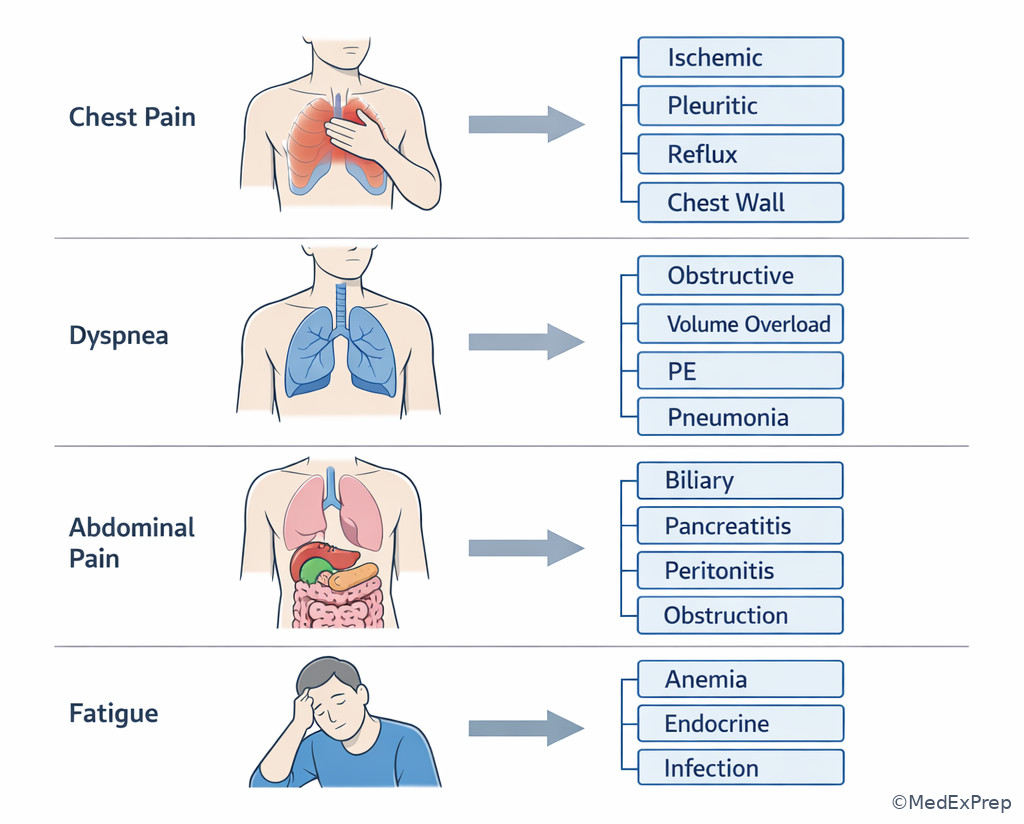
1.1.1.7 Integration pattern: from problem representation to next best step
A Explanation
The final decision conflict is whether the representation should stop at diagnosis or proceed directly to action. On shelf-style exams, the representation exists to drive the next best step. If the syndrome is unstable, you move toward stabilization and escalation. If stable, you choose the most useful immediate diagnostic test or first-line therapy. The representation is therefore a bridge, not an endpoint.
For example, a patient with acute unilateral pleuritic dyspnea and hypotension should not be framed simply as “possible PE”; the representation should highlight instability because that changes the next step. A stable patient with probable stable angina may need outpatient ischemic evaluation, while a patient with crushing ongoing chest pain and diaphoresis needs immediate ACS-oriented workup and escalation. The same symptom family can lead to different actions depending on acuity and risk.
WHY THIS IS TESTED: many students identify the right diagnosis but still choose the wrong answer because they pick a test that is too late, too broad, or skips stabilization. The exam repeatedly asks: what should be done now for this version of the illness script?
In practice, ask three action questions after stating the representation: Is the patient stable? What single study most increases certainty or safety? Is there a first-line treatment that should not wait? This is also where pretest probability matters. High probability plus instability may justify urgent treatment/escalation before exhaustive confirmation; low probability may favor an alternative workup.
See Fig 5 for a core action algorithm that links representation to immediate step selection.
B Worked example
A 58-year-old man with obesity, hypertension, and prior DVT presents to the ED with sudden dyspnea and pleuritic chest pain. He returned from a transatlantic flight yesterday. He also mentions chronic heartburn. Blood pressure is 84/52 mm Hg, pulse 122/min, oxygen saturation 86% on room air. ECG shows sinus tachycardia. Troponin is minimally elevated.
Identify task: best immediate action. Extract key facts: sudden pleuritic dyspnea, DVT history, recent travel, hypoxemia, hypotension. Apply rule: unstable obstructive/vascular syndrome; stabilization and urgent escalation outrank routine confirmatory sequencing. Eliminate distractors: troponin elevation may tempt ACS, but a small bump can occur with right heart strain; chronic heartburn is noise. Verify: the representation is high-risk hemodynamically unstable PE pattern requiring immediate escalation and urgent management pathway, not low-priority GERD workup or outpatient imaging.
C Exam trap
D Checkpoint
Question: Which element of the problem representation most directly changes the next best step in the case above?
- A. History of chronic heartburn
- B. Mild troponin elevation
- C. Hemodynamic instability with hypoxemia
- D. Recent air travel alone
Answer: C
- A: Tempting because chest symptoms can trigger GI thinking; wrong because this does not control the immediate action.
- B: Tempting because troponin suggests cardiac injury; wrong because it may be secondary and is not the primary action-driving clue.
- C: Correct because instability dictates urgent stabilization and escalation before routine diagnostic sequencing.
- D: Tempting because it raises PE probability; wrong because probability alone does not change the next step as strongly as hypotension does.
1.1.1.8 Integration pattern: common cognitive errors and how to self-correct under exam pressure
A Explanation
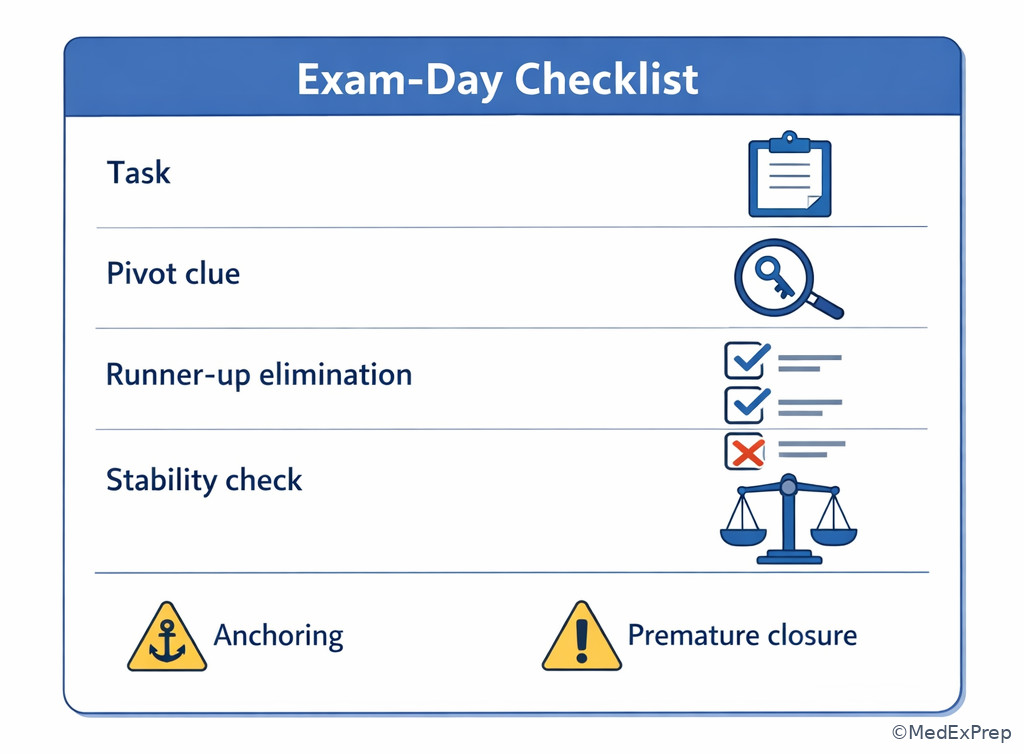
The last step is metacognitive: when your first answer feels obvious, should you trust it or check it? On COMAT, you should check it against a short error screen. The main traps are anchoring, premature closure, and answer-choice seduction. Anchoring means you locked onto one clue too early. Premature closure means you stopped after finding a plausible answer rather than the best one. Answer-choice seduction means a familiar term in the options pulled you away from the actual representation.
WHY THIS IS TESTED: the exam frequently presents a common disease and a dangerous mimic, or two disorders that share many findings but diverge on one detail. Students under time pressure often choose the first option that fits part of the stem. A self-correction routine catches these misses.
Use a three-question check: (1) What is the exact task? diagnosis, next test, treatment, or urgent escalation? (2) What is the single clue my answer explains best? (3) What clue would have to change for the runner-up option to become correct? If you cannot answer these, your reasoning is too vague. This does not require extra time once practiced; it saves time by preventing second-guessing loops.
Also notice common emotional triggers: a dramatic medication exposure, a striking family history, one scary lab, or an option you studied yesterday. These can produce false familiarity. The remedy is mechanical: return to age, tempo, syndrome, pivot feature, stability.
B Worked example
A 54-year-old man with alcohol use disorder, chronic GERD, and hypertension presents with hematemesis after repeated retching. He is tachycardic but normotensive. A learner immediately chooses esophageal varices because the stem includes alcohol use. However, he has no cirrhosis history, no ascites, and the bleeding began after forceful vomiting. Hemoglobin is mildly decreased.
Identify task: most likely diagnosis. Extract key facts: retching followed by hematemesis, tachycardia without profound instability, GERD and alcohol history. Apply rule: alcohol use is seductive but not decisive; the pivot feature is post-retching onset. Eliminate distractors: variceal bleeding becomes more likely with cirrhosis/portal hypertension markers; Boerhaave syndrome would add severe chest pain and toxicity. Verify: Mallory-Weiss tear is the better representation.
C Exam trap
D Checkpoint
Question: Which self-correction question is most useful when two answer choices both seem plausible?
- A. Which option did I review most recently?
- B. Which option contains the most familiar buzzword?
- C. What single clue would need to change for the runner-up to become correct?
- D. Which option sounds most severe?
Answer: C
- A: Tempting because recency influences confidence; wrong because familiarity is not a diagnostic criterion.
- B: Tempting because board clues are real; wrong because superficial buzzwords often create traps.
- C: Correct because it forces discrimination between near-neighbor choices using the decisive stem feature.
- D: Tempting because serious disease feels safer to choose; wrong because severity does not override pattern mismatch.
- Premature closure = stopping after a plausible answer instead of the best one.
- True or False: The most severe option is often safest to pick if uncertain. False.
- Before committing, ask: What is the task? What is the pivot clue? What makes the runner-up wrong?
Exam takeaway: A correct one-line representation should directly determine whether to stabilize, test, treat, or escalate next.
flowchart TD
A[One-line representation] --> B{Unstable?}
B -->|Yes| C[Stabilize and escalate]
B -->|No| D{High-probability syndrome?}
D -->|Yes| E[Choose targeted first test or first-line treatment]
D -->|No| F[Refine differential with highest-yield study]
E --> G[Verify against pivot clue]
F --> G Exam takeaway: Comparing ischemic, pleuritic, and reflux features visually reinforces the pivot-feature approach to chest pain stems.
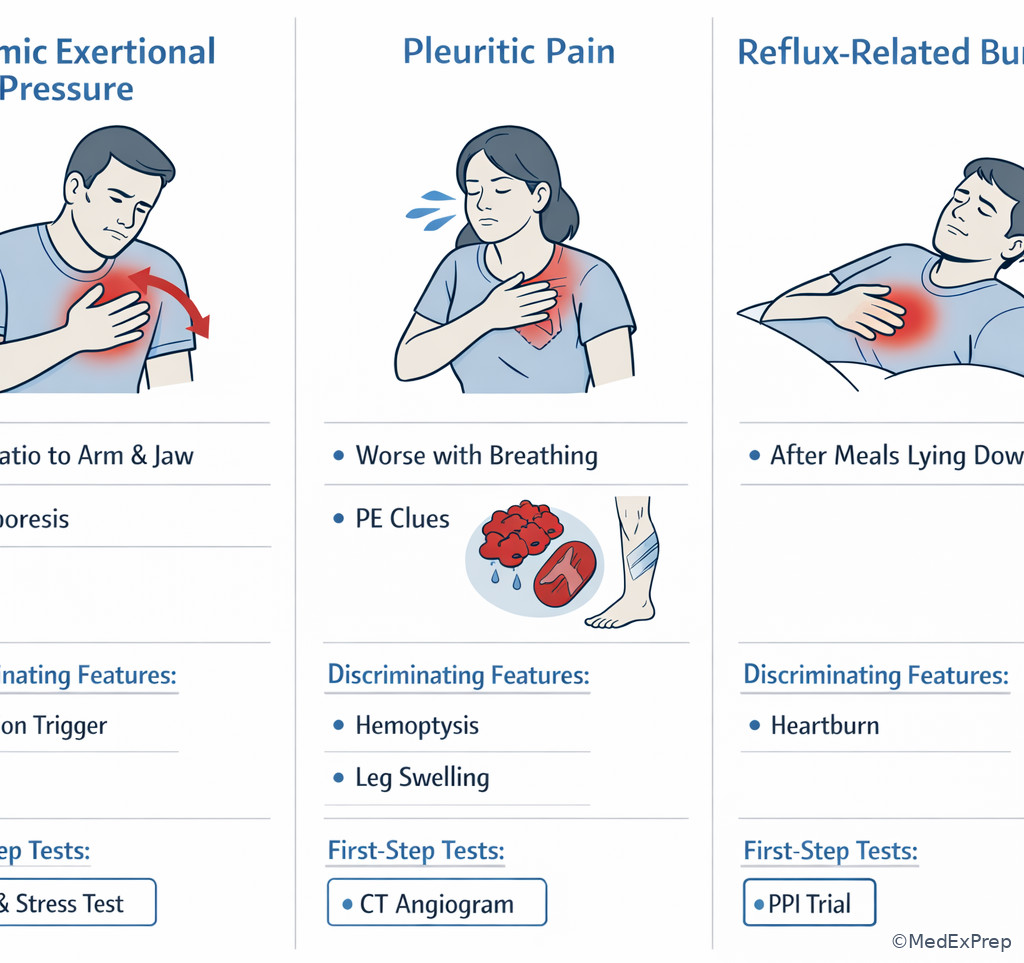
Exam takeaway: Visual comparison of RBC casts, muddy brown casts, and pyuria patterns helps identify the urine pivot feature in AKI stems.
Exam takeaway: Recognizing whether alkaline phosphatase or transaminases dominate helps convert symptoms into the correct liver syndrome.
Exam takeaway: A brief self-check for anchoring, premature closure, and runner-up elimination prevents avoidable misses on close-call stems.
Exam Traps & Differentiators
Most common wrong answer and why: choosing the diagnosis linked to the most memorable clue instead of the dominant pattern. Example: selecting GERD because the stem mentions heartburn, even though exertional relief-with-rest defines stable angina.
| Looks similar | Why it tempts you | Single differentiator | Think instead |
|---|---|---|---|
| GERD vs stable angina | Both can be described as chest discomfort | Exertional reproducibility relieved by rest | Stable ischemic chest pain |
| COPD flare vs PE | Both can cause dyspnea and hypoxemia | Pleuritic pain with DVT clue or sudden onset | Pulmonary embolism pattern |
| Drug hepatitis vs biliary obstruction | Both may have dark urine and abnormal LFTs | Marked alkaline phosphatase with pale stools/pruritus | Cholestatic obstruction |
| AIN vs glomerulonephritis | Both can present with AKI after medication exposure | RBC casts/nephritic sediment | Glomerular process |
| Variceal bleed vs Mallory-Weiss tear | Both can cause hematemesis in alcohol use | Bleeding after repetitive retching | Mallory-Weiss tear |
If the stem says ___, think ___
- If the stem says exertional, reproducible, relieved by rest, think ischemic pattern first.
- If the stem says sudden pleuritic dyspnea with unilateral leg findings, think venous thromboembolism pattern.
- If the stem says dark urine + pale stools + pruritus, think cholestatic obstruction.
- If the stem says AKI + RBC casts, think glomerular disease.
- If the stem says hematemesis after retching, think Mallory-Weiss tear.
- If the stem says hypotension or hypoxemia, think urgency and escalation before routine diagnostic sequencing.
Related traps from upcoming topics matter here. In Urgency And Escalation Cues, you will learn when instability overrides normal outpatient logic. In Next Best Step Logic, you will refine which specific action follows a correct representation. Problem representation is the step that prevents you from applying the right rule to the wrong patient.
Tables
| High-yield reference trigger | What to compress it into | Typical mistake |
|---|---|---|
| Older patient + vascular risks + exertional chest pressure | Stable ischemic chest pain pattern | Overcalling reflux because of meal-related noise |
| Sudden dyspnea + pleuritic pain + travel/leg swelling | PE syndrome | Anchoring on COPD or pneumonia history |
| Pruritus + dark urine + pale stools + high alk phos | Cholestatic obstruction pattern | Calling it generic hepatitis |
| AKI + hematuria + RBC casts | Nephritic/glomerular syndrome | Choosing AIN from medication exposure alone |
| Hematemesis after retching | Mallory-Weiss pattern | Choosing varices from alcohol history alone |
| Hypotension/hypoxemia with suspected serious disease | Unstable syndrome requiring escalation | Jumping straight to routine confirmatory testing |
| Comparison point | Weak representation | Strong representation |
|---|---|---|
| Specificity | Repeats patient words | Uses abstract syndrome language |
| Tempo | Omitted | Acute/subacute/chronic stated clearly |
| Risk framing | Lists all comorbidities equally | Highlights the ones that change pretest probability |
| Decision value | Cannot guide next step | Points toward one test or action |
| Differential power | Allows many choices to fit | Includes a pivot feature that excludes close mimics |
| Exam utility | Feels descriptive only | Functions as an answer-choice filter |
| Cognitive error | How it appears in a stem | Why it is tempting | Correction |
|---|---|---|---|
| Anchoring | One classic clue appears early | You recognize a familiar disease fast | Rebuild with A-T-S-P |
| Premature closure | First plausible diagnosis seems good enough | Time pressure rewards speed | Ask what pivot feature justifies it |
| Buzzword seduction | An option contains a memorized keyword | Recognition feels like understanding | Match the syndrome, not the buzzword |
| Severity bias | One option sounds more dangerous | Choosing serious disease feels safer | Use the discriminating clue, not fear |
| Lab hijacking | One abnormal value stands out | Numbers feel objective and decisive | Ask whether it changes the answer if removed |
Algorithm / Approach
Exam takeaway: Use a fixed sequence to turn noisy stems into a syndrome-based, action-ready one-liner.
See Fig 6 for the exact exam-day sequence. This is the simplest reusable framework in the course and will be repeatedly referenced in later chapters.
Rapid Review
- Problem representation → one-line abstraction, not copied prose
- Age/risk → shifts pretest probability before tests are ordered
- Tempo → often separates emergency from chronic mimic
- Syndrome language → beats symptom language for answer choice elimination
- Pivot feature → single best discriminator between near-neighbor options
- Noise → true detail that does not change the best answer
- Instability → belongs inside the representation because it changes next step
- Exertional pressure relieved by rest → ischemic pattern over reflux noise
- Pleuritic dyspnea + DVT clue → PE over chronic COPD background
- Dark urine + pale stools + pruritus → cholestatic pattern over generic hepatitis
- RBC casts → glomerular process over drug-reaction temptation
- Hematemesis after retching → Mallory-Weiss over variceal shortcut
- Runner-up elimination → best final check against premature closure
Self-check quiz
1.1.1.9 Question 1
A 63-year-old man with diabetes, hypertension, and hyperlipidemia reports chest pressure when walking uphill that resolves after several minutes of rest. He also has occasional belching after late meals. Which problem representation is most appropriate?
- A. Older man with reflux symptoms causing intermittent chest discomfort
- B. Older man with vascular risk factors and stable exertional substernal pressure relieved by rest
- C. Older man with anxiety-related chest pain because episodes are self-limited
- D. Older man with musculoskeletal chest pain because exertion triggers symptoms
1.1.1.10 Question 2
A 70-year-old woman with COPD, chronic kidney disease, and baseline anemia develops sudden dyspnea after a long car trip. She has pleuritic chest pain, oxygen saturation of 89%, and unilateral calf swelling. Which stem detail is most important to prioritize as high signal?
- A. Baseline anemia
- B. COPD history
- C. Recent travel with unilateral calf swelling
- D. Chronic kidney disease
1.1.1.11 Question 3
A 56-year-old woman with obesity, type 2 diabetes, and osteoarthritis presents with pruritus, dark urine, pale stools, and right upper quadrant discomfort after meals. AST and ALT are mildly elevated, alkaline phosphatase is markedly elevated, and total bilirubin is 3.9 mg/dL. What is the most useful problem representation?
- A. Middle-aged woman with viral hepatitis syndrome
- B. Middle-aged woman with cholestatic/obstructive jaundice syndrome
- C. Middle-aged woman with functional abdominal pain syndrome
- D. Middle-aged woman with nonspecific dyspepsia syndrome
1.1.1.12 Question 4
A 49-year-old woman with rheumatoid arthritis and recent trimethoprim-sulfamethoxazole exposure develops AKI, edema, hematuria, and proteinuria. She has eosinophilia and a faint rash. Which additional finding would most strongly shift the representation toward glomerulonephritis rather than acute interstitial nephritis?
- A. RBC casts on urinalysis
- B. Sterile pyuria
- C. Fever after medication exposure
- D. Peripheral eosinophilia
1.1.1.13 Question 5
A 60-year-old man with prior DVT, obesity, and hypertension presents with sudden dyspnea and pleuritic chest pain after a long flight. He is hypotensive and hypoxemic. Troponin is mildly elevated, and he also reports chronic heartburn. Which factor most directly changes the best immediate next step?
- A. Mild troponin elevation
- B. Chronic heartburn history
- C. Hemodynamic instability
- D. Long-distance travel
1.1.1.14 Question 6
A 52-year-old man with alcohol use disorder, GERD, and hypertension presents with hematemesis after repeated retching. He is tachycardic but normotensive. He has no jaundice, ascites, or known cirrhosis. Which diagnosis is most consistent with the best problem representation?
- A. Mallory-Weiss tear
- B. Esophageal varices
- C. Boerhaave syndrome
- D. Peptic ulcer disease
1.1.1.15 Question 7
A 68-year-old woman with heart failure, chronic venous insufficiency, and atrial fibrillation presents with leg swelling and shortness of breath. She also has pleuritic chest pain that began suddenly this morning and new unilateral calf tenderness. Bibasilar crackles are mild and unchanged from baseline. What is the best reasoning move before choosing an answer?
- A. Prioritize the chronic heart failure history because it best explains dyspnea
- B. Treat all comorbidities as equally weighted to avoid missing anything
- C. Promote sudden pleuritic symptoms with unilateral calf findings as the pivot feature
- D. Ignore the acute symptoms because chronic edema can account for the entire picture
1.1.1.16 Question 8
A 65-year-old man with hypertension, tobacco use, chronic dyspepsia, and osteoarthritis presents with chest discomfort. It occurs while climbing stairs, improves within minutes of stopping, and is not reproducible to palpation. He started NSAIDs last week and reports one episode of burning discomfort after spicy food. Which answer choice error is he most likely designed to provoke?
- A. Choosing GERD by overweighting a true but low-signal clue
- B. Choosing costochondritis because pain is not reproduced by palpation
- C. Choosing panic disorder because the episodes are brief
- D. Choosing pneumonia because NSAID use can mask fever
Answer key
1.1.1.17 Question 1 Answer: B
Why B is correct: The mechanism-to-diagnosis logic is stable myocardial oxygen supply-demand mismatch with exertion in a high-risk patient, producing predictable substernal pressure relieved by rest. The single discriminating clue is reproducible exertional onset with relief after stopping. That one-line representation is action-ready for ischemic evaluation. Sources: Jameson et al.; Gulati et al.
- A: Tempting because belching and meal-related symptoms are common GERD clues. Incorrect for this scenario because the dominant pattern is effort-related chest pressure, not postprandial burning. Discriminating clue: occurs with walking uphill and resolves with rest.
- B: Tempting because it may feel too obvious. Correct because it integrates age, risk factors, tempo, and the ischemic pivot feature. Discriminating clue: exertional reproducibility.
- C: Tempting because self-limited episodes are often mislabeled anxiety. Incorrect because panic does not typically present as reliably exercise-triggered pressure in a high-risk patient. Discriminating clue: predictable physical exertion trigger.
- D: Tempting because exertion can aggravate chest wall pain. Incorrect because musculoskeletal pain is usually reproducible to palpation or movement rather than relieved by simple rest after cardiac-type exertion. Discriminating clue: classic anginal timing.
1.1.1.18 Question 2 Answer: C
Why C is correct: Recent travel plus unilateral calf swelling sharply increases the probability of venous thromboembolism and explains sudden pleuritic dyspnea better than baseline comorbidities. The underlying mechanism is thrombus formation with embolic obstruction of the pulmonary vasculature. Sources: Jameson et al.; Konstantinides et al.
- A: Tempting because anemia can worsen dyspnea. Incorrect because it is baseline and does not explain the acute pleuritic presentation. Discriminating clue: sudden onset rather than chronic fatigue pattern.
- B: Tempting because COPD commonly causes dyspnea and hypoxemia. Incorrect because COPD history is background risk, whereas the stem provides a more specific thromboembolic clue. Discriminating clue: unilateral calf swelling.
- C: Tempting and correct because it is both mechanistically linked and highly discriminating for PE. Discriminating clue: recent immobility with unilateral leg findings.
- D: Tempting because CKD can complicate management. Incorrect because it does not drive the leading diagnosis in this stem. Discriminating clue: CKD is not a localization clue for sudden pleuritic dyspnea.
1.1.1.19 Question 3 Answer: B
Why B is correct: The syndrome is cholestatic/obstructive jaundice, driven by impaired bile flow causing conjugated hyperbilirubinemia, dark urine, pale stools, pruritus, and a dominant alkaline phosphatase elevation. This representation points toward biliary obstruction evaluation rather than broad hepatitis framing. Sources: Jameson et al.; Friedman, Martin, and Munoz.
- A: Tempting because dark urine and transaminase elevation occur in hepatitis. Incorrect here because the lab pattern is cholestatic rather than hepatocellular. Discriminating clue: markedly elevated alkaline phosphatase with pale stools.
- B: Tempting and correct because it captures both symptom cluster and lab mechanism. Discriminating clue: pruritus plus pale stools plus cholestatic labs.
- C: Tempting because functional abdominal complaints are common. Incorrect because objective jaundice-pattern findings are present. Discriminating clue: abnormal bilirubin and alkaline phosphatase.
- D: Tempting because discomfort occurs after meals. Incorrect because dyspepsia does not explain conjugated hyperbilirubinemia and stool/urine color changes. Discriminating clue: pale stools.
1.1.1.20 Question 4 Answer: A
Why A is correct: RBC casts indicate glomerular bleeding and inflammation, making glomerulonephritis the better mechanistic fit than interstitial inflammation. Drug exposure, fever, rash, and eosinophilia can suggest AIN, but urine sediment is the superior pivot feature in this close differential. Sources: Jameson et al.; KDIGO concepts in standard nephrology references.
- A: Tempting and correct because RBC casts directly localize pathology to the glomerulus. Discriminating clue: cast morphology.
- B: Tempting because pyuria may accompany renal inflammation. Incorrect because sterile pyuria fits AIN better than glomerulonephritis. Discriminating clue: WBC-predominant rather than RBC-cast sediment.
- C: Tempting because fever follows drug reactions. Incorrect because it supports the competing AIN diagnosis, not GN. Discriminating clue: medication reaction pattern.
- D: Tempting because eosinophilia is classic board language. Incorrect because eosinophilia again points more toward AIN than GN. Discriminating clue: peripheral eosinophilia is not the GN pivot.
1.1.1.21 Question 5 Answer: C
Why C is correct: Hemodynamic instability changes the question from routine diagnosis to immediate stabilization and escalation. In suspected PE, hypotension and hypoxemia imply obstructive shock physiology and urgency. The correct reasoning is mechanism-to-action: unstable vascular obstruction demands urgent management pathway, not leisurely confirmation. Sources: Konstantinides et al.; Jameson et al.
- A: Tempting because troponin elevation suggests cardiac injury. Incorrect because small troponin elevations can occur with right heart strain and do not outrank hypotension in determining immediate action. Discriminating clue: shock physiology.
- B: Tempting because chest symptoms can trigger reflux anchoring. Incorrect because heartburn is background noise here. Discriminating clue: severe acute cardiopulmonary instability.
- C: Correct because instability is the clue that changes the next best step first. Discriminating clue: blood pressure 84/52 mm Hg with hypoxemia.
- D: Tempting because travel increases PE probability. Incorrect because probability alone does not supersede the action-driving effect of instability. Discriminating clue: travel increases suspicion, but hypotension changes management urgency.
1.1.1.22 Question 6 Answer: A
Why A is correct: Mallory-Weiss tear results from mucosal laceration at the gastroesophageal junction after forceful retching, producing hematemesis in a patient who may otherwise be relatively hemodynamically preserved. The pivot feature is vomiting/retching immediately preceding bleeding. Sources: Jameson et al.; ACG-aligned GI references.
- A: Tempting and correct because the mechanism is directly encoded in the stem. Discriminating clue: repeated retching before hematemesis.
- B: Tempting because alcohol use primes you to think portal hypertension. Incorrect here because there are no cirrhosis or portal hypertension clues. Discriminating clue: lack of known liver disease plus post-retching onset.
- C: Tempting because vomiting can cause esophageal injury. Incorrect because Boerhaave syndrome classically causes severe chest pain, systemic toxicity, and perforation signs rather than isolated hematemesis. Discriminating clue: no perforation syndrome.
- D: Tempting because PUD commonly causes upper GI bleeding. Incorrect because the temporal link to retching is more specific for Mallory-Weiss tear. Discriminating clue: immediate post-emesis bleeding.
1.1.1.23 Question 7 Answer: C
Why C is correct: The reasoning task is to rank acute, discriminating features over chronic baseline disease. Sudden pleuritic chest pain with unilateral calf tenderness is a much stronger PE pattern than stable baseline edema and chronic HF history. Mechanistically, new thromboembolism explains the acute change. Sources: Jameson et al.; Konstantinides et al.
- A: Tempting because HF is common and explains dyspnea/edema. Incorrect because the stem specifically adds sudden pleuritic pain and unilateral calf findings that HF does not explain well. Discriminating clue: sudden pleuritic onset.
- B: Tempting because comprehensive thinking feels safer. Incorrect because equal weighting of all data destroys prioritization and misses the high-signal clue. Discriminating clue: not all findings change the answer equally.
- C: Correct because it identifies the pivot feature that should dominate the representation. Discriminating clue: unilateral calf tenderness with sudden pleuritic symptoms.
- D: Tempting because chronic edema can distract from acute disease. Incorrect because it dismisses the new high-risk features. Discriminating clue: acute change from baseline.
1.1.1.24 Question 8 Answer: A
Why A is correct: The stem is designed to provoke anchoring on a true but low-signal GI clue despite a stronger ischemic exertional pattern. The mechanism of the testing trap is answer-choice seduction: one authentic clue is present, but it does not control the case. Sources: Gulati et al.; Jameson et al.
- A: Correct because the spicy-food burning episode and NSAID use are real but low-signal relative to exertional relief-with-rest chest pressure. Discriminating clue: reproducible exertional onset.
- B: Tempting because chest wall pain is common. Incorrect because absence of tenderness does not positively support costochondritis; it argues against it. Discriminating clue: not reproducible to palpation.
- C: Tempting because episodes are brief. Incorrect because panic disorder does not usually have a consistent exertional threshold in a patient with multiple coronary risk factors. Discriminating clue: stair-climbing trigger.
- D: Tempting only if one overinterprets NSAID use and masked fever. Incorrect because the stem has no infectious syndrome. Discriminating clue: absence of fever, cough, or focal pulmonary pattern.
Keep going with the full COMAT Internal Medicine Prep Course (COMAT IM)
You just studied the way members do, in the same lesson interface. Full access unlocks every lesson, the question bank and flashcards for a full year.
One payment · 1 year of access · No auto-renewal