1.1.1 - Innate And Adaptive Immunity
Innate And Adaptive Immunity
What you’ll learn
- Map innate versus adaptive immunity to adult rheumatology board-style stems.
- Choose the immune cell, mediator, or response pattern that best explains a clinical vignette.
- Connect antigen presentation, B-cell/T-cell function, cytokines, and complement to common rheumatologic disease mechanisms.
- Recognize when a stem is testing host defense timing, specificity, or memory rather than a named disease.
- Use immune-mechanism reasoning to prepare for upcoming serology topics, including ANA and RF/anti-CCP interpretation.
- DOMAIN: Immunology and diagnostic interpretation → Core immune mechanisms → innate versus adaptive pattern recognition
- DOMAIN: Connective tissue disease → Autoimmunity foundations → autoantibody generation and loss of tolerance
- DOMAIN: Rheumatologic therapeutics → Mechanism-based treatment logic → cytokine and lymphocyte targeting
- DOMAIN: Mimics/overlap syndromes/diagnostic pitfalls → Serology caution → mechanism before label
Why it matters
- Many ABIM Rheumatology questions look like “serology” questions but are actually testing whether you know which arm of the immune system acts first, acts specifically, or generates memory.
- Mechanism-first reasoning helps prevent unsafe choices, such as escalating immunosuppression before excluding infection or overcalling autoimmune disease from a nonspecific lab.
- Modern rheumatology therapeutics map directly onto immune pathways: TNF, IL-6, IL-1, B cells, T-cell costimulation, and JAK signaling.
- This foundation supports upcoming lessons on ANA and autoantibody patterns and RF/anti-CCP interpretation, where board questions often exploit misunderstanding of immune specificity.
Key Terms & Must-Know Facts
1.1.1.1 Key terms
- Innate immunity: rapid, nonspecific host defense using preformed or germline-encoded recognition.
- Adaptive immunity: antigen-specific response mediated by B and T lymphocytes with memory.
- Pattern recognition receptor (PRR): receptor that detects conserved microbial or danger motifs.
- Toll-like receptor (TLR): major PRR family that triggers cytokine signaling.
- Antigen-presenting cell (APC): dendritic cell, macrophage, or B cell presenting antigen to T cells.
- MHC class I: presents endogenous peptides to CD8 T cells.
- MHC class II: presents exogenous peptides to CD4 T cells.
- Neutrophil: dominant early cellular responder in acute inflammation and many synovial fluid inflammatory patterns.
- Macrophage: phagocyte linking innate sensing to cytokine production and tissue injury.
- B cell: lymphocyte responsible for antibody production and antigen presentation.
- CD4 T cell: helper T cell directing immune responses through cytokines.
- CD8 T cell: cytotoxic T cell targeting infected or abnormal host cells.
- Complement: plasma protein cascade involved in opsonization, inflammation, and lysis.
- Cytokine: soluble signaling protein regulating inflammation and immune differentiation.
- Tolerance: failure to mount pathologic self-reactivity.
1.1.1.2 Must-know facts
- Innate immunity is faster; adaptive immunity is more specific.
- Immunologic memory is a defining feature of adaptive immunity.
- Dendritic cells are the key bridge from innate sensing to adaptive activation.
- B cells make autoantibodies, but T-cell help often drives class switching and sustained autoimmunity.
- Neutrophil-rich synovial inflammation suggests acute inflammatory or infectious processes, not necessarily adaptive autoimmunity alone.
- Low complement often signals consumption in immune-complex disease rather than “strong immunity.”
- Type I interferon signaling is a major lupus-associated immune pathway.
- TNF, IL-6, IL-1, and JAK-mediated signaling are major therapeutic targets because they amplify inflammatory cascades.
- Board stems often test the single finding that distinguishes a nonspecific inflammatory response from an antigen-specific autoimmune response.
| Feature | Innate immunity | Adaptive immunity |
|---|---|---|
| Speed | Minutes to hours | Days on first exposure |
| Specificity | Broad pattern recognition | Antigen-specific receptors |
| Memory | Limited classical memory | Robust memory response |
| Main cells | Neutrophils, macrophages, NK cells, dendritic cells | B cells, T cells, plasma cells |
| Recognition | PRRs, TLRs, complement receptors | BCR, TCR |
| Board clue | Early, nonspecific inflammation | Specific autoantibody or memory pattern |
Core content
1.1.1.3 Foundational split: innate versus adaptive immunity
A Explanation
The core board conflict is usually: Is this stem testing a rapid nonspecific inflammatory response, or a delayed antigen-specific response with memory? The resolving rule is simple: if the key clue is speed and broad first-line defense, choose innate immunity; if the clue is specific antigen recognition, class-switched antibody, or memory after re-exposure, choose adaptive immunity. WHY THIS IS TESTED: exam writers want to know whether you can translate a disease stem into the immune layer driving it rather than just memorizing cytokine names.
Innate immunity includes epithelial barriers, complement, neutrophils, macrophages, dendritic cells, and NK cells. These cells do not need prior sensitization to act. They recognize conserved molecular patterns and rapidly produce inflammatory mediators such as TNF, IL-1, IL-6, chemokines, and interferons. Adaptive immunity requires lymphocyte receptor recognition of specific antigen. B cells produce antibody; T cells coordinate or execute cellular immunity; both generate memory.
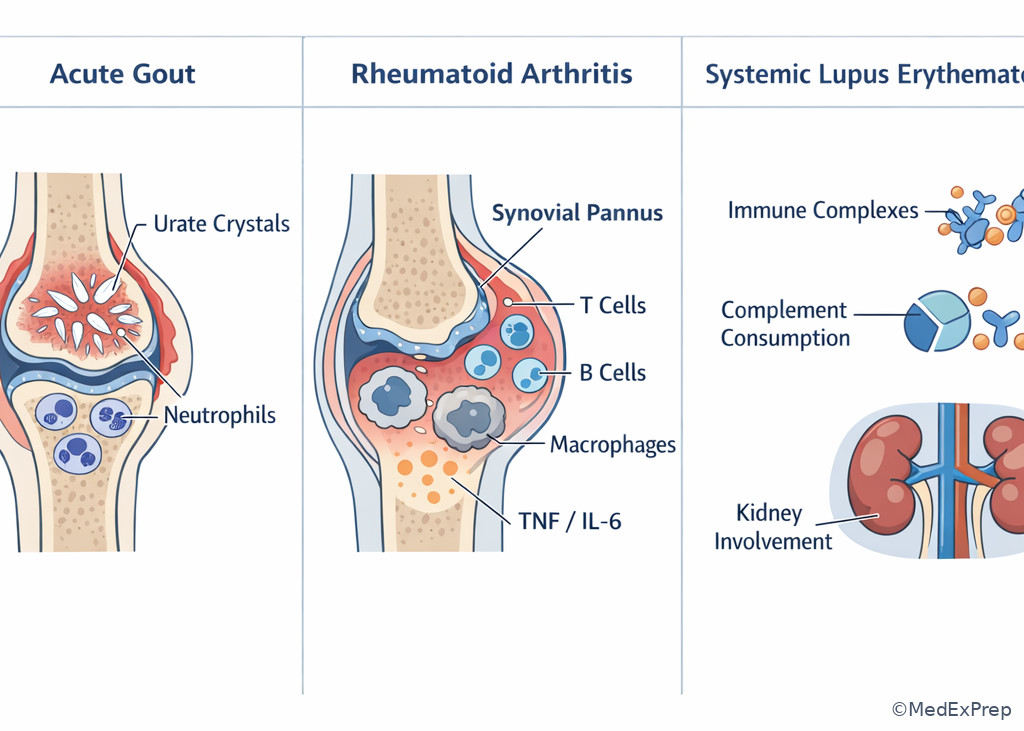
In rheumatology, both arms matter. Acute gout or septic arthritis often showcases robust innate inflammation dominated by neutrophils and cytokines. By contrast, SLE, RA, Sjögren syndrome, and systemic sclerosis reflect adaptive autoimmunity with loss of tolerance, autoantibody production, and T-cell/B-cell interplay. The exam often places a patient with autoimmune disease into a question that is really asking which arm explains a specific manifestation or therapeutic target. See Fig 1.
Exam takeaway: Distinguish early nonspecific defense from antigen-specific memory before chasing disease labels.
flowchart TD
A[Immune response in stem] --> B{Main clue?}
B -->|Rapid, broad, first exposure| C[Innate immunity]
B -->|Specific antigen, delayed primary response, memory| D[Adaptive immunity]
C --> E[Neutrophils macrophages NK cells complement]
C --> F[TNF IL-1 IL-6 acute inflammation]
D --> G[B cells antibodies]
D --> H[T cells helper or cytotoxic]
D --> I[Memory response] B Worked example
A 62-year-old man with type 2 diabetes, stage 3 chronic kidney disease, and hypertension develops abrupt onset of a swollen painful first metatarsophalangeal joint overnight after a large meal. He has a temperature of 37.8°C, WBC count 13,200/mm3, ESR 48 mm/hr, and a serum uric acid of 6.2 mg/dL. A stem asks which immune arm is primarily responsible for the earliest inflammatory response in this flare.
Reasoning chain: Identify task: not diagnosis, but immune mechanism. Extract key facts: abrupt hours-long onset, neutrophil-rich acute inflammation, misleading “normal” uric acid. Apply rule: first-line rapid inflammatory response is innate immunity. Eliminate distractors: antibody formation and immunologic memory are adaptive and not needed for the earliest flare physiology. Verify: crystal-induced activation of innate pathways drives acute gout inflammation.
C Exam trap
D Checkpoint
Question: A patient develops fever and acute synovitis within several hours of exposure to a strong inflammatory stimulus. Which feature most strongly supports innate rather than adaptive immunity?
- A. Rapid activation without prior sensitization
- B. Generation of long-lived plasma cells
- C. Clonal antigen-specific receptor rearrangement
- D. Enhanced response after repeat antigen exposure due to memory cells
- A: Tempting because it is the classic first-line defense feature; right because innate responses occur rapidly and do not require prior exposure.
- B: Tempting because antibodies are common in rheumatology stems; wrong because plasma cell generation is adaptive.
- C: Tempting because specificity sounds powerful; wrong because receptor rearrangement is a hallmark of adaptive lymphocytes.
- D: Tempting because secondary responses are high-yield immunology; wrong because memory is adaptive, not innate.
1.1.1.4 Cells and receptors: who recognizes what?
A Explanation
The decision conflict here is: Which cell or receptor best explains recognition and activation in the stem? The single rule is to match the type of signal with the recognizer. PRRs such as TLRs detect conserved microbial or danger patterns. Dendritic cells are professional sentinels that capture antigen and activate naive T cells. Macrophages phagocytose, produce cytokines, and participate in tissue injury. Neutrophils are immediate inflammatory effectors. B-cell receptors and T-cell receptors are antigen-specific and define adaptive immunity.
In exam language, “bacterial product,” “danger-associated molecular pattern,” or “rapid cytokine burst” points toward PRR-driven innate sensing. “Presentation to naive T cells,” “costimulation,” or “class switching” points toward dendritic-cell/T-cell/B-cell interactions. MHC also matters: class I presents endogenous antigen to CD8 T cells; class II presents exogenous antigen to CD4 T cells. In rheumatology, CD4 T-cell help is especially important because it supports B-cell activation, cytokine production, macrophage recruitment, and chronic autoimmunity.
Do not overread receptor names. The exam usually wants a principle: broad germline-coded recognition versus antigen-specific rearranged receptors. Dendritic cells are the classic bridge between the two systems. See Fig 2. This bridge concept later matters when you interpret ANA, RF, and anti-CCP: antibodies are downstream products of adaptive activation, not isolated laboratory magic.
Exam takeaway: Dendritic cells connect innate sensing to adaptive activation, a favorite mechanism tested before serology lessons.
flowchart LR
A[Microbe or self antigen] --> B[Innate sensing via PRRs]
B --> C[Dendritic cell activation]
C --> D[MHC II to CD4 T cell]
C --> E[MHC I to CD8 T cell]
D --> F[B-cell help and cytokines]
F --> G[Autoantibody production]
B --> H[Macrophage and neutrophil inflammation]
Exam takeaway: Recognize dendritic cell antigen presentation as the step that converts broad danger sensing into specific autoimmune responses.
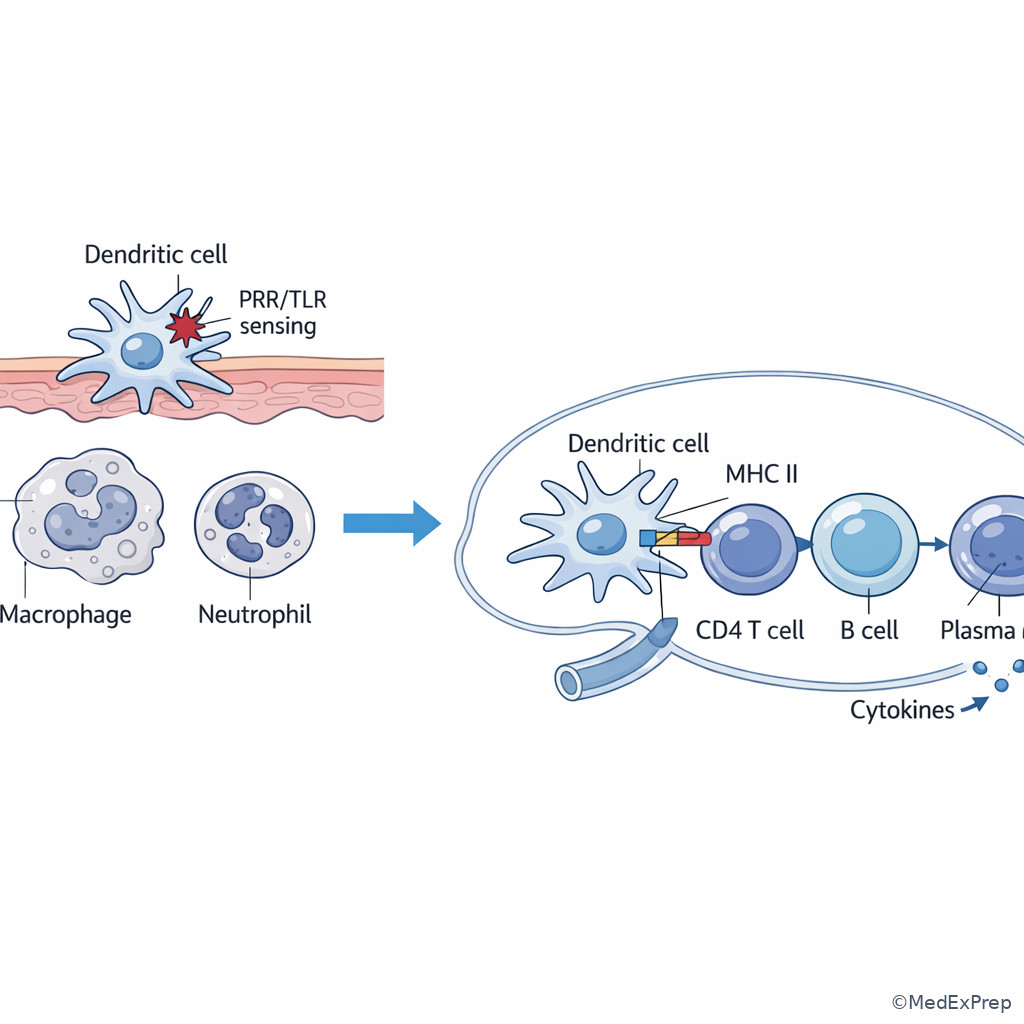
B Worked example
A 35-year-old woman with asthma and autoimmune thyroid disease asks why her rheumatologist says a future autoantibody result would reflect adaptive rather than innate immunity. She recently had a viral upper respiratory infection, and the stem mentions mildly elevated CRP as distracting noise. The question asks which cell most directly links an innate danger signal to activation of a naive T cell.
Reasoning chain: Identify task: bridging cell, not inflammatory marker interpretation. Extract key facts: “links innate signal” plus “activates naive T cell.” Apply rule: dendritic cells capture antigen, process it, and present via MHC with costimulation to naive T cells. Eliminate macrophages and neutrophils because they are major innate effectors but not the classic naive T-cell priming cell. Verify: dendritic cell is the best answer.
C Exam trap
D Checkpoint
Question: Which immune element most strongly supports adaptive specificity in a rheumatology stem?
- A. Toll-like receptor recognition of a conserved microbial motif
- B. Neutrophil chemotaxis into an inflamed joint
- C. Rearranged T-cell receptor recognizing a specific peptide-MHC complex
- D. Complement-mediated opsonization
- A: Tempting because receptors sound specific; wrong because TLRs are innate PRRs with broad pattern recognition.
- B: Tempting because neutrophils dominate many inflammatory effusions; wrong because chemotaxis is innate effector biology.
- C: Tempting because peptide-MHC language is detailed; right because TCR specificity depends on somatic receptor rearrangement and adaptive recognition.
- D: Tempting because complement is common in immune disease; wrong because complement is part of innate humoral defense.
- The classic bridge from innate to adaptive immunity is the dendritic cell.
- True or False: Immunologic memory is a defining feature of innate immunity. False.
- Name the 3 key discriminators between innate and adaptive immunity: timing, specificity, memory.
1.1.1.5 Cytokines, complement, and inflammatory amplification
A Explanation
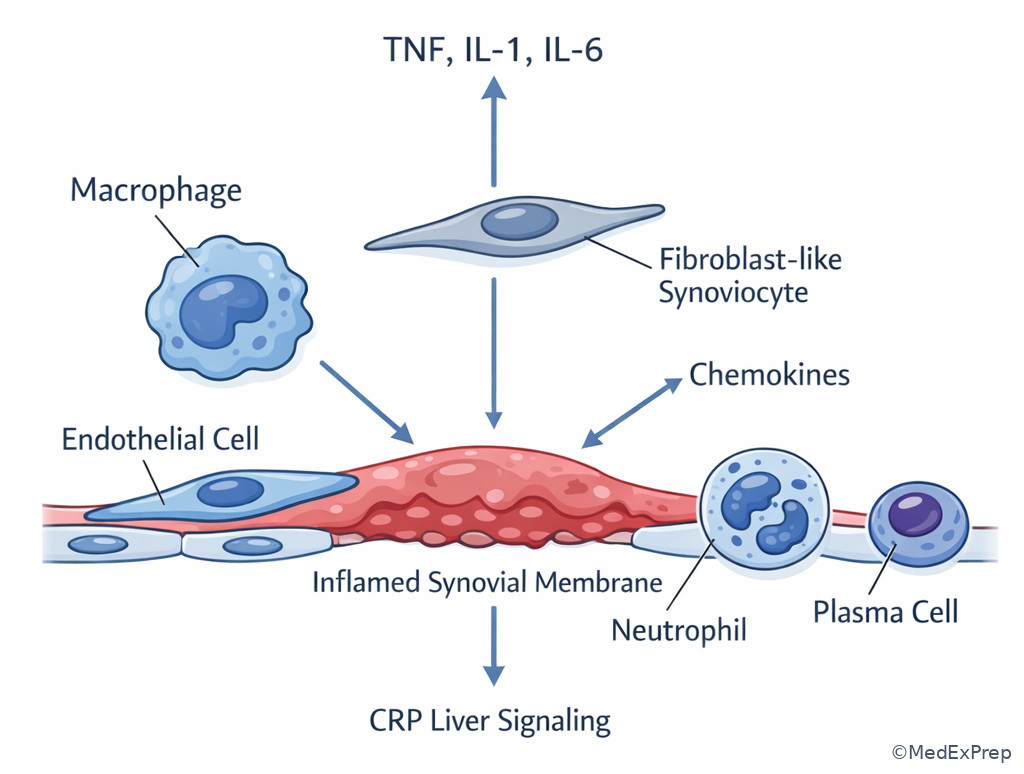
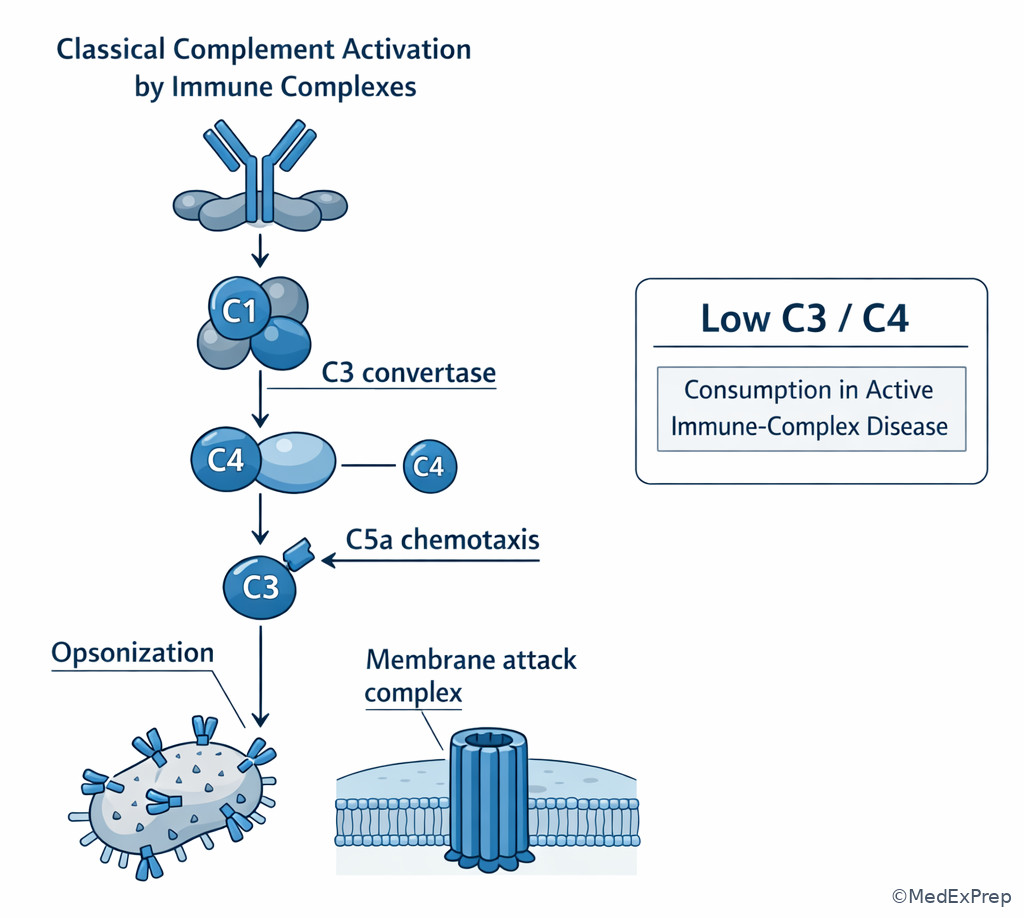
The decision conflict is: Which mediator explains the inflammatory phenotype, and what does its presence or depletion mean? The single rule is to separate proinflammatory amplification from immune-complex consumption. TNF, IL-1, and IL-6 are prototypical inflammatory cytokines that drive fever, acute-phase response, endothelial activation, leukocyte recruitment, and synovitis. Type I interferons are especially associated with lupus biology. Complement helps with opsonization, chemotaxis, and membrane attack complex formation, but low complement on the exam often means it is being used up in immune-complex disease.
That distinction matters. A stem with fever, serositis, nephritic features, rash, and low C3/C4 is not demonstrating “weak immunity”; it is signaling complement consumption in a disease such as active immune-complex lupus. Conversely, an inflammatory arthritis stem that asks why a patient responded to TNF inhibition is testing cytokine-dependent amplification, not antibody neutralization. The exam may also ask which cytokine explains elevated CRP; IL-6 is the best link to hepatic acute-phase reactant production.
In rheumatology therapeutics, cytokine targeting works because cytokines sit upstream of symptom amplification. TNF inhibitors, IL-6 blockade, IL-1 inhibition, B-cell depletion, T-cell costimulation blockade, and JAK inhibition all reflect immune pathway logic. See Fig 3 for a high-yield comparison of inflammatory mediators.
Exam takeaway: Separate cytokine-driven amplification from complement consumption to avoid common rheumatology interpretation errors.
flowchart TD
A[Inflammatory mediator in stem] --> B{Pattern}
B -->|Fever CRP synovitis| C[TNF IL-1 IL-6]
B -->|Lupus interferon signature| D[Type I interferons]
B -->|Low C3 C4 immune complexes| E[Complement consumption]
C --> F[Targeted anti-cytokine therapies]
E --> G[Think immune-complex disease activity] Exam takeaway: TNF, IL-1, and IL-6 are not interchangeable buzzwords; they are the amplifiers behind many board-tested inflammatory phenotypes.
Exam takeaway: Low complement in an autoimmune stem usually means active consumption, especially in immune-complex disease.
B Worked example
A 28-year-old woman with photosensitivity, hypertension, and prior immune thrombocytopenia presents with edema and new proteinuria. She also reports a recent viral illness and mild sore throat, which is distracting noise. Laboratory studies show positive ANA, elevated anti-dsDNA, low C3, and low C4. The stem asks what explains the low complement levels.
Reasoning chain: Identify task: interpret the meaning of a lab abnormality. Extract key facts: immune-complex phenotype with active lupus clues, not isolated infection. Apply rule: low complement reflects consumption in immune-complex activation. Eliminate “decreased hepatic synthesis” because there is no liver failure clue; eliminate “primary complement deficiency” because the stem signals active disease rather than lifelong infection susceptibility. Verify: complement is being consumed by immune-complex mediated inflammation.
C Exam trap
D Checkpoint
Question: In a patient with active inflammatory arthritis and markedly elevated CRP, which cytokine is most closely linked to hepatic acute-phase reactant production?
- A. IL-6
- B. IL-2
- C. IL-4
- D. IL-17
- A: Tempting because IL-6 is often associated with systemic inflammation; right because it strongly drives hepatic acute-phase reactant synthesis including CRP.
- B: Tempting because it is a classic T-cell cytokine; wrong because IL-2 mainly supports T-cell proliferation rather than acute-phase liver response.
- C: Tempting because cytokines can blend together under pressure; wrong because IL-4 is more associated with Th2 differentiation and antibody class effects.
- D: Tempting because IL-17 participates in inflammatory disease; wrong because the stem asks specifically for the strongest acute-phase reactant signal to the liver.
1.1.1.6 Loss of tolerance, autoantibodies, and immune memory
A Explanation
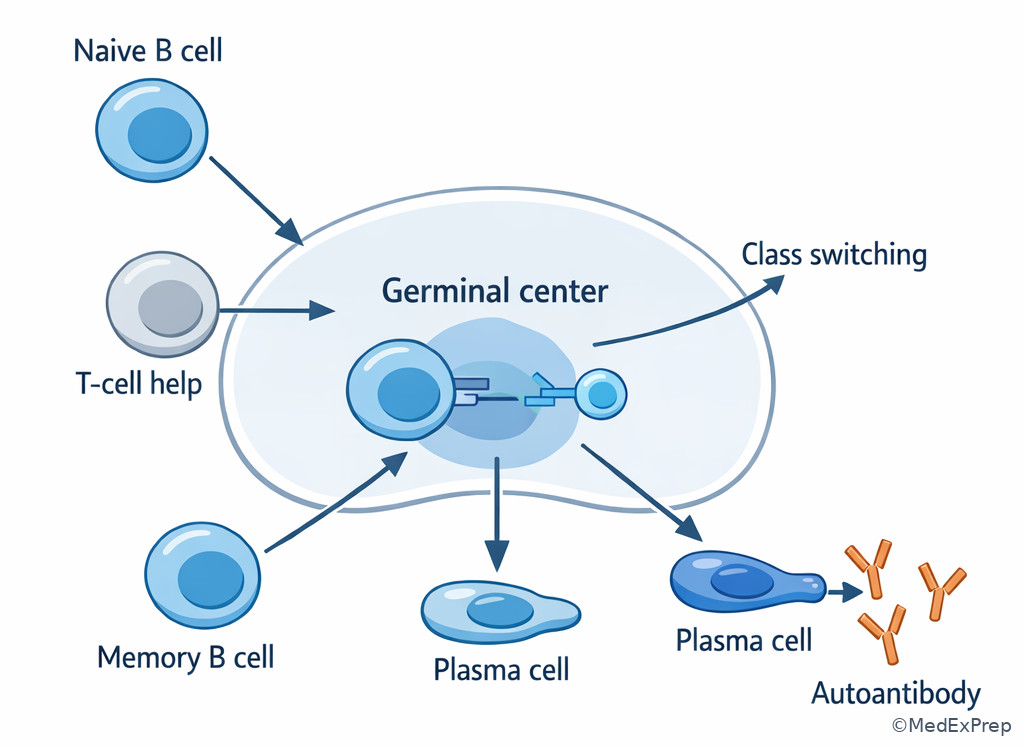
The decision conflict is: When does inflammation become autoimmunity, and what clue proves adaptive loss of tolerance? The single rule is that true autoimmune disease requires a failure of self-tolerance leading to sustained, antigen-specific self-reactivity. Central and peripheral tolerance mechanisms normally delete, edit, or suppress autoreactive lymphocytes. When these fail, autoreactive T cells and B cells persist. B cells then produce autoantibodies; T cells provide help, cytokines, and tissue-directed injury.
Autoantibodies are therefore best understood as products of adaptive dysregulation. They can be pathogenic, associated, or incidental depending on context. That is why a positive ANA alone does not equal lupus: specificity and clinical context matter. Upcoming lessons will formalize this. For now, the exam principle is that antibody production, class switching, affinity maturation, and memory responses all belong to adaptive immunity. Repeated exposure or persistent self-antigen can generate a stronger, more durable response over time. See Fig 4.
Loss of tolerance is especially high-yield in rheumatology because it explains chronicity. Unlike a transient innate burst, adaptive autoimmunity can sustain disease through memory B cells, long-lived plasma cells, autoreactive T cells, and feedback loops involving cytokines and antigen presentation. This is why therapies that deplete B cells or interrupt costimulation can be effective even if the stem centers on symptoms rather than antibodies.
Exam takeaway: Autoantibodies reflect adaptive immune dysregulation and must be interpreted in clinical context.
flowchart LR
A[Self antigen exposure] --> B{Tolerance intact?}
B -->|Yes| C[No pathologic autoimmunity]
B -->|No| D[Autoreactive T and B cells persist]
D --> E[T-cell help]
E --> F[B-cell class switching and plasma cells]
F --> G[Autoantibodies]
G --> H[Immune complexes or tissue targeting]
H --> I[Chronic autoimmune disease] Exam takeaway: Class switching and affinity maturation are adaptive processes that explain why autoantibodies are specific but not always diagnostic alone.
B Worked example
A 44-year-old woman with autoimmune thyroid disease and remote smoking history has several months of symmetric MCP and PIP stiffness lasting 90 minutes, but she also has chronic dry eyes from contact lens use, which is a distracting clue. A board-style question asks which immune feature best explains the development of class-switched autoantibodies. The answer requires mechanism, not diagnosis.
Reasoning chain: Identify task: feature of antibody generation. Extract key facts: class-switched autoantibodies imply sustained specific lymphocyte activation. Apply rule: adaptive immunity with T-cell help and B-cell maturation generates class-switched antibodies. Eliminate neutrophils, complement, and NK cells because they can amplify injury but do not create antigen-specific class-switched antibody repertoires. Verify: adaptive loss of tolerance is the tested concept.
C Exam trap
D Checkpoint
Question: Which finding most strongly indicates adaptive immune memory in a patient with recurrent autoimmune flares?
- A. Repeat exposure produces a faster, more specific response
- B. Neutrophils migrate rapidly into tissue
- C. Complement opsonizes circulating particles
- D. Macrophages release IL-1 after danger sensing
- A: Tempting because it directly addresses recurrence; right because faster secondary responses reflect adaptive memory.
- B: Tempting because it is a common inflammatory event; wrong because neutrophil migration is innate and not memory-based.
- C: Tempting because complement can intensify inflammation; wrong because opsonization is not the defining memory mechanism.
- D: Tempting because cytokine release is central to inflammation; wrong because IL-1 release is innate amplification rather than antigen-specific memory.
- The most specific clue for adaptive immunity is antigen-specific memory.
- True or False: A positive autoantibody alone establishes autoimmune disease. False.
- Name the 3 key steps from tolerance loss to chronic autoimmunity: autoreactive lymphocyte survival, T/B-cell activation, memory/autoantibody persistence.
1.1.1.7 Applying immune mechanisms to rheumatology stems and therapeutics
A Explanation
The final integration conflict is: When the stem gives a disease, which immune mechanism should drive your answer choice or treatment choice? The single rule is to identify the dominant tested layer: innate effector inflammation, adaptive autoimmunity, immune-complex injury, or cytokine signaling. In acute crystal disease, innate inflammasome-related and neutrophil-mediated inflammation dominates. In RA, T cells, B cells, macrophages, synovial fibroblasts, and cytokines form a chronic inflammatory circuit. In SLE, adaptive autoimmunity plus immune-complex deposition and complement consumption are central. In biologic questions, choose the treatment class that interrupts the tested pathway rather than the one simply associated with the disease name.
Board stems also test safety logic. Before intensifying immunosuppression, reject infection mimics. A patient with fever, one hot joint, bacteremia risk factors, and dramatic synovial leukocytosis should trigger joint aspiration and cultures before mechanism-based immunosuppression. Likewise, positive serology does not rescue a poor syndrome fit. Mechanism guides diagnosis, but context governs action.
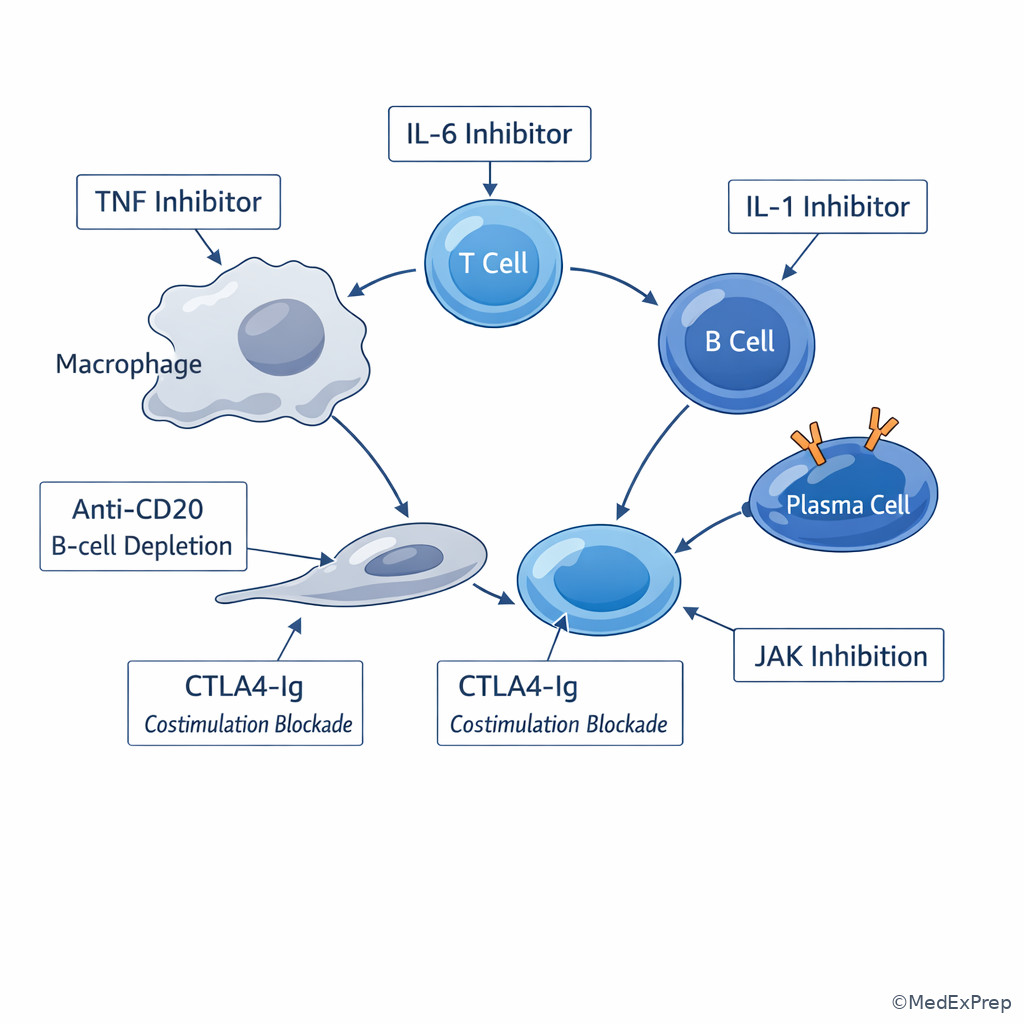
Therapeutic mapping is especially high yield: TNF inhibitors interrupt a cytokine amplifier; rituximab depletes CD20-positive B cells; abatacept blocks T-cell costimulation; JAK inhibitors blunt intracellular cytokine signaling; IL-6 inhibitors lower systemic inflammatory signaling; IL-1 blockade is relevant in specific autoinflammatory/crystal settings. See Fig 5 and Fig 6.
Exam takeaway: Match the dominant immune pathway in the stem to the targeted therapy rather than choosing by disease name alone.
flowchart TD
A[Rheumatology stem] --> B{Dominant mechanism?}
B -->|Acute neutrophil or inflammasome pattern| C[Innate inflammatory process]
B -->|Autoantibody and lymphocyte pattern| D[Adaptive autoimmunity]
B -->|Low complement immune complexes| E[Immune-complex injury]
B -->|Marked cytokine amplification| F[TNF IL-6 IL-1 JAK pathway]
D --> G[B-cell or T-cell directed therapy may fit]
F --> H[Choose targeted cytokine or signaling inhibitor]
C --> I[Do not confuse with antibody-driven disease]
A --> J[Exclude infection before immunosuppression] Exam takeaway: On board stems, identify pattern first, exclude infection second, then map to the most likely immune pathway or treatment.
flowchart TD
A[Patient with rheumatic inflammation] --> B{Urgent infection clues?}
B -->|Yes| C[Aspiration cultures admission or urgent workup]
B -->|No| D{Key mechanism clue?}
D -->|Rapid nonspecific acute response| E[Innate]
D -->|Autoantibody memory specificity| F[Adaptive]
D -->|Low complements immune complexes| G[Immune-complex process]
D -->|Cytokine-targeted treatment response| H[Inflammatory signaling pathway] Exam takeaway: Biologics and targeted synthetics are easiest to remember when anchored to the cell or cytokine they interrupt.
Exam takeaway: Compare disease patterns visually so you can distinguish innate crystal inflammation, adaptive autoimmunity, and immune-complex injury under time pressure.
B Worked example
A 57-year-old woman with longstanding seropositive inflammatory polyarthritis, latent tuberculosis treatment completed years ago, and hyperlipidemia presents with persistent synovitis despite methotrexate. She has morning stiffness for 2 hours, elevated CRP, no fever, and no focal infection symptoms. A stem asks which therapy most directly blocks a key cytokine amplifier of synovial inflammation. A mildly positive urinalysis for leukocyte esterase without symptoms is included as distracting noise.
Reasoning chain: Identify task: choose mechanism, not just any RA drug. Extract key facts: chronic inflammatory synovitis, cytokine amplifier language, no convincing infection. Apply rule: TNF and IL-6 are major inflammatory amplifiers; if the option specifically targets TNF, that is a direct cytokine blockade. Eliminate rituximab if the stem emphasizes cytokine rather than B-cell depletion, and eliminate abatacept if the clue centers on costimulation instead of direct cytokine neutralization. Verify by matching mechanism wording to drug class.
C Exam trap
D Checkpoint
Question: A board-style stem describes active lupus nephritis with low complements and rising anti-dsDNA. Which immune process best explains the complement abnormality?
- A. Neutrophil extracellular trapping as the sole mechanism
- B. Immune-complex activation with complement consumption
- C. Purely innate barrier dysfunction
- D. Isolated NK-cell deficiency
- A: Tempting because neutrophils contribute to lupus biology; wrong because the question asks specifically about low complement, best explained by immune-complex consumption.
- B: Tempting because it fits classic lupus immune pathology; right because immune complexes activate complement and lower serum levels during active disease.
- C: Tempting because innate defects can contribute to disease susceptibility; wrong because barrier dysfunction does not explain low C3/C4 in this scenario.
- D: Tempting because innate cell deficiencies sound immunologic; wrong because NK-cell deficiency is not the mechanism behind the complement pattern described.
Exam Traps & Differentiators
- Most common wrong answer and why: choosing “adaptive immunity” for every rheumatology stem because many diseases are autoimmune. Fix: if the clue is earliest response, neutrophils, PRRs, or nonspecific inflammation, choose innate.
- Looks similar but isn’t: low complement versus complement deficiency. Fix: active flare with immune-complex features suggests consumption, not inherited deficiency.
- Looks similar but isn’t: macrophage versus dendritic cell. Fix: naive T-cell priming is the single clue favoring dendritic cells.
- Looks similar but isn’t: positive autoantibody versus autoimmune diagnosis. Fix: serologies support but do not replace syndrome recognition.
- Looks similar but isn’t: any biologic used in RA versus the biologic matching the asked mechanism. Fix: read for “cytokine blockade,” “B-cell depletion,” “costimulation blockade,” or “JAK signaling.”
| If the stem says... | Think... | Reject... |
|---|---|---|
| Hours after exposure; first-line defense; neutrophils | Innate immunity | Adaptive memory response |
| Class-switched autoantibody; antigen specificity | Adaptive B-cell response | Complement as the primary generator of specificity |
| Naive T-cell activation | Dendritic cell antigen presentation | Macrophage as best single answer |
| Low C3 and C4 during autoimmune flare | Complement consumption | “Strong immune system” or isolated liver failure |
| Drug blocking inflammatory amplifier cytokine | TNF or IL-6 pathway targeting | Mechanistically unrelated biologic class |
| Positive ANA without syndrome fit | Nonspecific serologic support only | Automatic lupus diagnosis |
| Commonly confused pair | Shared features | Single best discriminator |
|---|---|---|
| Innate inflammation vs adaptive autoimmunity | Both can produce swelling, fever, elevated CRP | Specificity and memory belong to adaptive immunity |
| Dendritic cell vs macrophage | Both phagocytic; both can present antigen | Dendritic cell is best at naive T-cell priming |
| Complement consumption vs inherited deficiency | Both involve low complement biology | Dynamic flare pattern with immune complexes favors consumption |
| Positive autoantibody vs autoimmune disease | Both may coexist in the same patient | Clinical syndrome determines diagnosis |
Cross-topic confusion to watch: Upcoming ANA And Autoantibody Patterns and RF And Anti-CCP Interpretation will test the same pitfall in a different form: the wrong answer will often be “make the diagnosis from the serology alone.” Here, the trap is making the immune mechanism call from the disease label alone.
Algorithm / Approach
Rapid Review
- Innate immunity → rapid, broad, no classic antigen-specific memory
- Adaptive immunity → delayed primary response, specificity, memory
- Dendritic cell → best bridge from innate sensing to naive T-cell activation
- Neutrophil → earliest dominant cell in many acute inflammatory synovial states
- Macrophage → cytokine producer and tissue-injury amplifier, not the best naive T-cell primer
- PRR/TLR → recognizes conserved patterns, not rearranged specific antigen
- BCR/TCR → somatically rearranged antigen-specific receptors
- Class switching → adaptive B-cell process requiring helper T-cell input
- Complement low in flare → think consumption in immune-complex disease
- IL-6 → strongest board-tested link to CRP production
- TNF → major inflammatory amplifier and classic biologic target
- Autoantibody positive → supports pattern; never replaces syndrome fit
- Memory response → the quickest way to separate adaptive from innate
- Rheumatology biologic question → read the asked mechanism before choosing the drug
Self-check quiz
1.1.1.8 Question 1
A 29-year-old woman with allergic rhinitis and no prior autoimmune history develops local inflammation within hours after a tissue insult. Which immune feature most strongly supports an innate response as the best answer?
- A. Antigen-specific memory after repeat exposure
- B. Somatic rearrangement of lymphocyte receptors
- C. Rapid response without prior sensitization
- D. Class-switched autoantibody production
1.1.1.9 Question 2
A 41-year-old man with obesity and hypertension is asked in a board review session which cell is the best single answer for activation of naive T cells after antigen capture. Which is most appropriate?
- A. Neutrophil
- B. Dendritic cell
- C. NK cell
- D. Mast cell
1.1.1.10 Question 3
A 33-year-old woman with photosensitive rash, hypertension, and prior miscarriage presents with edema and hematuria. She has low C3, low C4, elevated anti-dsDNA, and a recent sore throat that makes postinfectious disease tempting. Which mechanism best explains the complement abnormality?
- A. Immune-complex activation with complement consumption
- B. Isolated NK-cell deficiency
- C. Pure neutrophil chemotaxis without humoral involvement
- D. Hepatic underproduction from cytokine suppression
1.1.1.11 Question 4
A 56-year-old woman with seropositive inflammatory polyarthritis, type 2 diabetes, and remote treated latent tuberculosis has persistent synovitis despite methotrexate. She has elevated CRP but no fever, dysuria, or focal infectious symptoms. Which therapy most directly targets a cytokine amplifier of synovial inflammation?
- A. TNF inhibitor
- B. Hydroxychloroquine
- C. Abatacept
- D. Rituximab
1.1.1.12 Question 5
A 48-year-old woman with autoimmune thyroid disease and chronic dry eyes has positive ANA on outside testing. She asks whether that alone proves systemic lupus erythematosus. Which is the most appropriate interpretation?
- A. Positive ANA alone establishes autoimmune disease because autoantibodies are highly specific
- B. Positive ANA reflects adaptive immune activity but must be interpreted in clinical context
- C. Positive ANA indicates isolated innate immune activation only
- D. Positive ANA excludes infection or malignancy mimics
1.1.1.13 Question 6
A 67-year-old man with CKD, coronary artery disease, and heavy alcohol use presents with a red swollen knee that became painful over 8 hours. He has fever to 38.2°C, WBC count 15,000/mm3, and serum uric acid 5.8 mg/dL. Which immune mechanism most likely dominates the earliest inflammatory phase if this is an acute crystal flare?
- A. Memory B-cell activation with class-switched autoantibody production
- B. Innate neutrophil-driven inflammation after danger-signal activation
- C. CD8 T-cell cytotoxic killing through MHC class I recognition
- D. Delayed hypersensitivity requiring prior antigen sensitization
1.1.1.14 Question 7
A 38-year-old woman with autoimmune thyroid disease, intermittent arthralgias, and a family history of rheumatoid arthritis has a newly positive autoantibody assay on screening but no synovitis, nephritis, cytopenias, or inflammatory rash. Which conclusion is most appropriate?
- A. She has definitive systemic autoimmune disease because adaptive immunity is present
- B. She has complement deficiency as the cause of the positive autoantibody
- C. The result may reflect adaptive loss-of-tolerance biology but does not establish a diagnosis without the right clinical syndrome
- D. The result proves an innate immune disorder rather than an adaptive one
1.1.1.15 Question 8
A 50-year-old woman with inflammatory arthritis, obesity, and recurrent sinus infections presents with worsening joint pain, elevated ESR, and a new low-grade fever. Her clinician is considering escalation of biologic therapy. Which step requires immediate clarification before mechanism-based immunosuppression is increased?
- A. Whether the inflammatory pathway is more consistent with TNF or IL-6 signaling
- B. Whether infection has been adequately excluded as a mimic of inflammatory flare
- C. Whether autoantibody production implies adaptive memory
- D. Whether dendritic cells or macrophages are the dominant antigen-presenting cells
Answer key
1.1.1.16 Answer 1: C. Rapid response without prior sensitization
Mechanism: Innate immunity acts immediately through preexisting pattern-recognition and effector systems. The key discriminator is speed without prior antigen-specific priming. This is the classic first-line host defense pattern. Sources: Harrison’s Principles of Internal Medicine; Abbas, Lichtman, and Pillai, Cellular and Molecular Immunology.
- A: Tempting because recurrence and stronger re-response sound immunologic; incorrect here because memory after repeat exposure is adaptive. Single clue: “within hours” and no prior sensitization.
- B: Tempting because receptor biology is a common exam topic; incorrect because somatic receptor rearrangement is specific to adaptive lymphocytes. Single clue: the stem asks about innate defense.
- C: Tempting and correct because immediate action without previous exposure is the defining rule for innate immunity. Single clue: rapid onset after insult.
- D: Tempting because antibodies are highly testable in rheumatology; incorrect because class switching is an adaptive B-cell process. Single clue: no mention of antigen-specific or memory-driven response.
1.1.1.17 Answer 2: B. Dendritic cell
Mechanism: Dendritic cells are the best professional antigen-presenting cells for priming naive T cells, linking innate antigen capture to adaptive activation. This is a classic board-tested bridge concept. Sources: Abbas, Lichtman, and Pillai; Harrison’s Principles of Internal Medicine.
- A: Tempting because neutrophils are common first responders; incorrect because they are innate effectors, not the best naive T-cell primers. Single clue: “naive T cells.”
- B: Tempting and correct because dendritic cells process antigen and provide costimulation to activate naive T cells. Single clue: the question asks for the best single answer.
- C: Tempting because NK cells are lymphocyte-like innate cells; incorrect because they do not classically prime naive T cells. Single clue: antigen presentation requirement.
- D: Tempting because mast cells are tissue sentinels; incorrect because they mediate immediate inflammatory responses, not naive T-cell priming. Single clue: adaptive activation is being tested.
1.1.1.18 Answer 3: A. Immune-complex activation with complement consumption
Mechanism: In lupus-like immune-complex disease, circulating and tissue immune complexes activate complement, lowering serum C3 and C4 through consumption. Rising anti-dsDNA plus nephritic findings strongly support this mechanism. Sources: Harrison’s Principles of Internal Medicine; UpToDate; EULAR lupus guidance.
- A: Tempting and correct because the combination of low complement, anti-dsDNA elevation, and nephritic syndrome points to immune-complex mediated consumption. Single clue: low C3/C4 with active renal disease.
- B: Tempting because innate cell defects can appear in immunology questions; incorrect because NK-cell deficiency does not explain the complement pattern. Single clue: complement levels are specifically low.
- C: Tempting because neutrophils contribute to tissue injury; incorrect because neutrophil chemotaxis alone cannot explain depressed complement levels. Single clue: humoral complement abnormality.
- D: Tempting because liver synthesizes complement proteins; incorrect because the stem lacks liver failure and instead provides autoimmune flare markers. Single clue: anti-dsDNA rise and nephritic clues favor consumption.
1.1.1.19 Answer 4: A. TNF inhibitor
Mechanism: TNF is a central cytokine amplifier in inflammatory synovitis. If the question asks for the therapy that most directly targets a cytokine amplifier, TNF inhibition is the most direct match among the options. Sources: ACR rheumatoid arthritis treatment guidance; Harrison’s Principles of Internal Medicine; UpToDate.
- A: Tempting and correct because TNF inhibitors directly neutralize a major inflammatory cytokine driving synovitis. Single clue: “most directly targets a cytokine amplifier.”
- B: Tempting because hydroxychloroquine is used in rheumatology and seems safer; incorrect because it is not the most direct cytokine-blocking option. Single clue: mechanism-based wording.
- C: Tempting because abatacept is effective in inflammatory arthritis; incorrect because it blocks T-cell costimulation rather than directly neutralizing a cytokine. Single clue: direct cytokine target requested.
- D: Tempting because rituximab is a powerful biologic; incorrect because it depletes B cells instead of directly inhibiting TNF. Single clue: cytokine amplifier emphasis.
1.1.1.20 Answer 5: B. Positive ANA reflects adaptive immune activity but must be interpreted in clinical context
Mechanism: Autoantibodies arise from adaptive immune dysregulation, but serologic positivity alone does not establish a rheumatic disease diagnosis. Clinical syndrome remains the discriminator. This is a foundational principle for upcoming serology lessons. Sources: EULAR/ACR classification guidance context; UpToDate; Harrison’s Principles of Internal Medicine.
- A: Tempting because ANA is strongly associated with some autoimmune diseases; incorrect because ANA is sensitive but nonspecific and does not diagnose disease alone. Single clue: no clear lupus syndrome is provided.
- B: Tempting and correct because it preserves both truths: ANA reflects adaptive biology and still requires clinical interpretation. Single clue: isolated test result without syndrome fit.
- C: Tempting because learners may confuse inflammation with innate signaling only; incorrect because antibodies are products of adaptive immunity. Single clue: ANA is an autoantibody.
- D: Tempting because positive serologies can anchor prematurely; incorrect because infection and malignancy mimics still require consideration. Single clue: serology never excludes mimics by itself.
1.1.1.21 Answer 6: B. Innate neutrophil-driven inflammation after danger-signal activation
Mechanism: Acute crystal inflammation is driven early by innate immune activation, including danger-signal sensing, inflammasome-related cytokine release, and neutrophil recruitment. The distractor is the normal uric acid, which does not exclude gout. Sources: Harrison’s Principles of Internal Medicine; UpToDate; ACR gout guidance.
- A: Tempting because chronic rheumatology often involves autoantibodies; incorrect because the stem asks about the earliest phase of an acute crystal flare. Single clue: onset over 8 hours.
- B: Tempting and correct because acute crystal arthritis begins with innate inflammatory activation and neutrophil influx. Single clue: sudden, intense inflammatory monoarthritis.
- C: Tempting because T-cell mechanisms are common board topics; incorrect because CD8 cytotoxicity is not the primary acute crystal pathway. Single clue: sterile acute crystal-type inflammation.
- D: Tempting because delayed hypersensitivity is a familiar immune concept; incorrect because this flare does not require prior antigen sensitization in the tested way. Single clue: crystal-driven innate trigger.
1.1.1.22 Answer 7: C. The result may reflect adaptive loss-of-tolerance biology but does not establish a diagnosis without the right clinical syndrome
Mechanism: Autoantibody positivity can reflect adaptive immune dysregulation or low-level autoreactivity, but diagnosis in rheumatology still depends on the clinical pattern. This is a classic board trap. Sources: UpToDate; Harrison’s Principles of Internal Medicine; EULAR/ACR disease criteria discussions.
- A: Tempting because adaptive autoimmunity is indeed involved in many rheumatic diseases; incorrect because presence of adaptive activity alone does not establish a definitive syndrome. Single clue: no synovitis, nephritis, cytopenias, or inflammatory rash.
- B: Tempting because complement abnormalities relate to autoimmunity; incorrect because nothing in the stem suggests complement deficiency. Single clue: isolated screening autoantibody.
- C: Tempting and correct because it appropriately links biology to interpretation without overdiagnosing. Single clue: positive test without syndrome-defining manifestations.
- D: Tempting because innate immunity participates in autoimmune disease; incorrect because an autoantibody is a product of adaptive immunity, not proof of an innate disorder. Single clue: antibody-based result.
1.1.1.23 Answer 8: B. Whether infection has been adequately excluded as a mimic of inflammatory flare
Mechanism: The safest rheumatology board action is to exclude infection before escalating immunosuppression in a patient with inflammatory symptoms plus fever. Mechanism-based therapy selection matters, but patient safety and mimic exclusion come first. Sources: Harrison’s Principles of Internal Medicine; UpToDate; ACR safety principles for immunosuppression.
- A: Tempting because TNF and IL-6 distinctions are mechanistically important; incorrect as the immediate next step because fever and recurrent infection history require infection clarification first. Single clue: new low-grade fever and sinus infection history.
- B: Tempting and correct because escalating biologic therapy without excluding infection is unsafe and a classic ABIM rheumatology trap. Single clue: possible infectious mimic.
- C: Tempting because adaptive memory is core immunology; incorrect because it does not answer the immediate safety question. Single clue: management urgency.
- D: Tempting because cell biology is foundational; incorrect because the clinically decisive issue is not APC subtype but infection exclusion before treatment escalation. Single clue: decision is about next step, not mechanistic trivia.
Keep going with the full ABIM Rheumatology Prep Course (Rheum)
You just studied the way members do, in the same lesson interface. Full access unlocks every lesson, the question bank and flashcards for a full year.
One payment · 1 year of access · No auto-renewal