1.1.1 - Normal Aging Physiology
Normal Aging Physiology
What you'll learn
- DOMAIN: Physiology of aging → Subskill: Identify normal age-related cardiovascular, renal, pulmonary, and body-composition changes.
- DOMAIN: Clinical reasoning in older adults → Subskill: Separate normal aging from pathologic decline when interpreting common symptoms and signs.
- DOMAIN: Medication safety → Subskill: Anticipate how age-related pharmacokinetic and pharmacodynamic changes alter prescribing risk.
- DOMAIN: Functional assessment → Subskill: Connect physiologic reserve loss to exercise tolerance, orthostasis, thermoregulation, and recovery.
- DOMAIN: Prevention and safety → Subskill: Recognize when “just aging” is a dangerous distractor and when evaluation is mandatory.
- Geriatric Principles → Aging physiology and heterogeneity
- Clinical decision-making in older adults → Normal aging vs pathology discrimination
- Polypharmacy and deprescribing → PK/PD implications of aging
- Risk stratification and prognosis → Reserve, recovery, and vulnerability under stress
Why it matters
- Board questions often hide disease behind a tempting phrase such as “expected for age”; the task is to know which findings are compatible with aging and which require workup.
- Older adults have lower physiologic reserve, so a mild stressor can produce outsized functional decline even before frank organ failure appears.
- Medication harm is amplified by age-related renal, hepatic, and body-composition changes; normal dosing in younger adults may be unsafe here.
- Correct answers in geriatrics rarely depend on age alone; they depend on reserve, function, symptoms, trajectory, and goals.
Key Terms & Must-Know Facts
1.1.1.1 Key terms
- Physiologic aging: Predictable biologic change with advancing age, not itself a disease.
- Homeostenosis: Narrowing of physiologic reserve.
- Reserve: Capacity to respond to stress beyond baseline needs.
- Sarcopenia: Age-related loss of skeletal muscle mass and strength.
- Presbycusis: Age-related high-frequency sensorineural hearing loss.
- Presbyopia: Decreased near focusing from lens stiffening.
- Immunosenescence: Age-related decline and dysregulation of immune function.
- Orthostatic hypotension: Fall in blood pressure with standing, often magnified in older adults by autonomic and medication effects.
- Reduced GFR with aging: Lower filtration reserve despite sometimes “normal” serum creatinine.
- Diastolic dysfunction tendency: Stiffer ventricle with impaired filling.
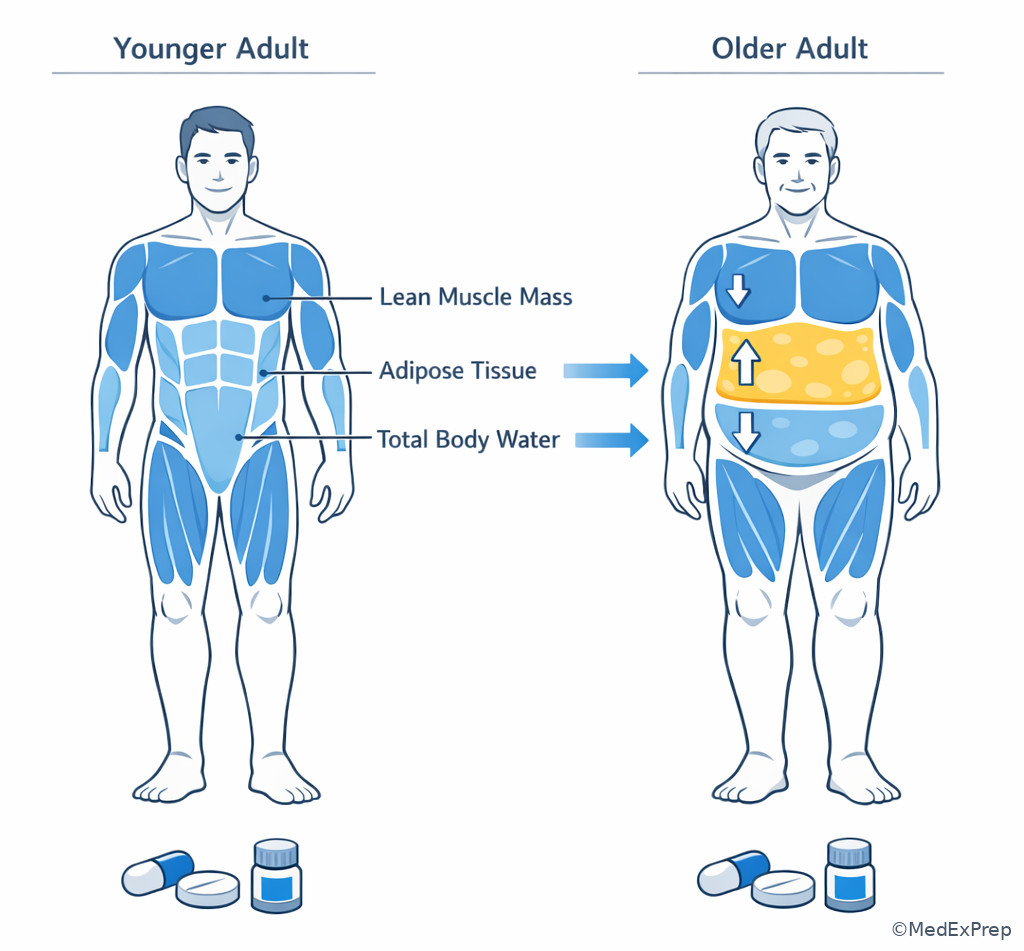
- Altered body composition: Less total body water and lean mass, more body fat.
- Pharmacodynamic sensitivity: Increased response to some drugs at the same concentration.
1.1.1.2 Must-know facts
- Normal aging does not explain delirium, weight loss, syncope, anemia, GI bleeding, new incontinence, or rapid functional decline.
- Serum creatinine can look reassuring despite reduced kidney function because muscle mass falls with age.
- Maximum heart rate and beta-adrenergic responsiveness decline, reducing exercise reserve.
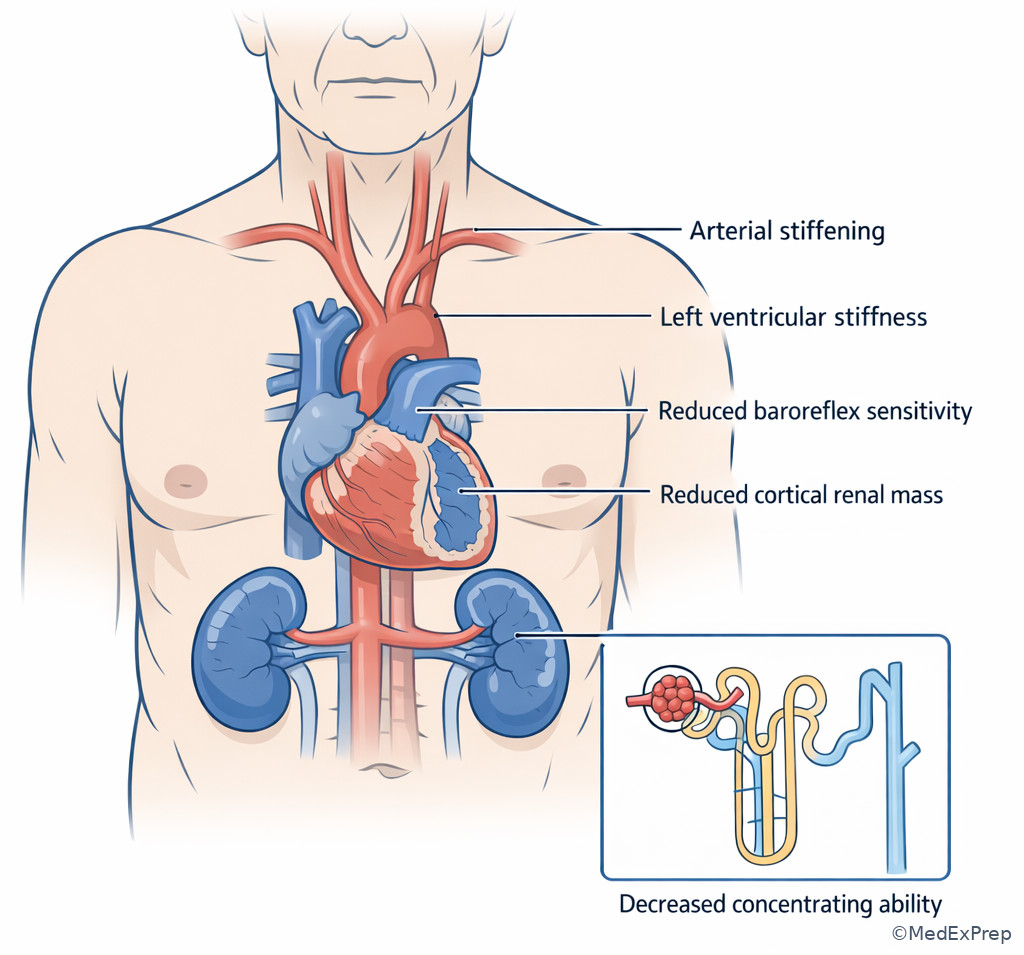
- Arterial and myocardial stiffness increase systolic blood pressure and impair diastolic filling.
- Reduced thirst and impaired urinary concentrating ability increase dehydration risk.
- Vital signs and fever responses may be blunted during infection.
- Lung elastic recoil decreases and chest wall stiffness increases, reducing reserve during illness.
- Increased body fat prolongs effects of lipophilic drugs; reduced body water raises concentration of hydrophilic drugs.
Exam takeaway: Separate expected reserve loss from red-flag symptoms that still require a pathologic workup.
flowchart TD
A[Normal aging] --> B[Lower physiologic reserve]
B --> C[Smaller safety margin under stress]
C --> D[Medication sensitivity]
C --> E[Atypical illness presentation]
C --> F[Functional decline after minor insult]
A --> G[Expected changes]
G --> H[Stiffer vessels and ventricle]
G --> I[Lower GFR and thirst]
G --> J[Less lung recoil]
G --> K[More fat less lean mass]
A --> L[Not normal aging]
L --> M[Delirium]
L --> N[Weight loss]
L --> O[Syncope]
L --> P[Rapid ADL decline]
Exam takeaway: Labeled anatomy helps link vessel stiffness and lower kidney reserve to common geriatric syndromes.
Exam takeaway: Visualize less lean mass and total body water with more adipose tissue to predict altered drug handling.
Core content
1.1.1.3 Foundational organ-system changes: what is expected, what is not
A Explanation
The core board conflict is simple: should you reassure that a finding reflects normal aging, or should you reject that explanation and evaluate for disease? The single rule that resolves many stems is this: normal aging lowers reserve and changes baseline physiology, but it does not cause abrupt symptoms, progressive constitutional decline, or organ-specific alarm features. Cardiovascular aging brings arterial stiffening, higher systolic pressure, widened pulse pressure, and reduced maximal heart-rate response. Renal aging brings lower GFR, impaired sodium and water handling, and reduced urinary concentration. Pulmonary aging brings stiffer chest wall, lower elastic recoil, and lower reserve during illness or sedation. Body-composition aging brings less muscle and water, more fat, and altered drug distribution.
WHY THIS IS TESTED: Exam stems tempt you to over-attribute dyspnea, fatigue, dizziness, falls, or nocturia to age alone. The safer choice is to ask whether the symptom is a predictable reserve change or a pathologic syndrome needing evaluation.
Key rule: Aging changes baseline physiology; disease changes trajectory. New, progressive, or function-limiting symptoms are not dismissed as “normal aging.” See Fig 1.
Exam takeaway: Use trajectory, red flags, and functional impact to avoid falsely reassuring a pathologic presentation.
Memory anchor: AGE = Abrupt? Going downhill? Extra red flags? If yes, do not call it normal aging.
Recall: This is the first topic in the course, so build a baseline here. In the next lesson, Homeostenosis And Vulnerability, we will extend this from “what changes” to “why minor stressors cause major decline.”
B Worked example
An 82-year-old woman who lives alone presents with 3 months of reduced walking distance and new fatigue. She has hypertension, osteoarthritis, and chronic insomnia. Medications are hydrochlorothiazide, acetaminophen, and diphenhydramine most nights. She says, “I guess this is just old age.” Blood pressure is 152/68 mm Hg, pulse 62/min, oxygen saturation 97% on room air. She reports one episode of black stool last week but denies chest pain. The tempting wrong clue is her age plus osteoarthritis, which makes deconditioning sound plausible.
Reasoning chain: Identify task: normal aging vs pathology. Extract key facts: subacute decline, functional impact, and melena. Apply rule: aging lowers exercise reserve, but melena and progressive fatigue are red flags. Eliminate distractors: osteoarthritis alone does not explain black stool; age-related slower gait does not explain new exertional intolerance over 3 months. Verify: the best next step is evaluation for pathologic causes such as anemia or GI bleeding, not reassurance.
C Exam trap
Common wrong answer: “Provide reassurance that reduced stamina is expected with age.”
Why it is tempting: Older adults do lose peak aerobic capacity and maximal heart-rate response, so decreased exertional tolerance sounds plausible.
Single clue that eliminates it: Progressive functional decline plus melena is a red-flag trajectory, not baseline physiologic aging.
D Checkpoint
Question: A 79-year-old man with well-controlled hypertension reports that he now needs brighter light to read menus and takes longer to adapt when entering a dark movie theater. He has no eye pain, no visual field defect, and no acute change. Which is the most appropriate interpretation?
- Expected age-related visual change due to lens and retinal changes
- Normal aging causing homonymous hemianopia
- Expected aging causing sudden monocular vision loss
- Age-related change that explains acute painful red eye
- A: Tempting because many ocular complaints become common with age; correct because presbyopia, reduced contrast sensitivity, and slower dark adaptation can be expected.
- B: Tempting because visual complaints are common in older adults; wrong because hemianopia localizes to neurologic pathology, not normal aging.
- C: Tempting because retinal disease prevalence rises with age; wrong because sudden monocular vision loss is always pathologic until proven otherwise.
- D: Tempting because eye discomfort may coexist with age-related disease; wrong because acute painful red eye is not physiologic aging.
Clinician Action: Diagnose expected physiologic change only after checking trajectory and red flags. Order targeted evaluation when symptoms are new, progressive, focal, or function-limiting. Treat by counseling on compensation strategies for expected changes and by addressing disease when present. Refer/Escalate for alarm features such as syncope, GI bleeding, acute visual loss, delirium, or rapid functional decline.
1.1.1.4 Cardiovascular, autonomic, and thermoregulatory aging
A Explanation
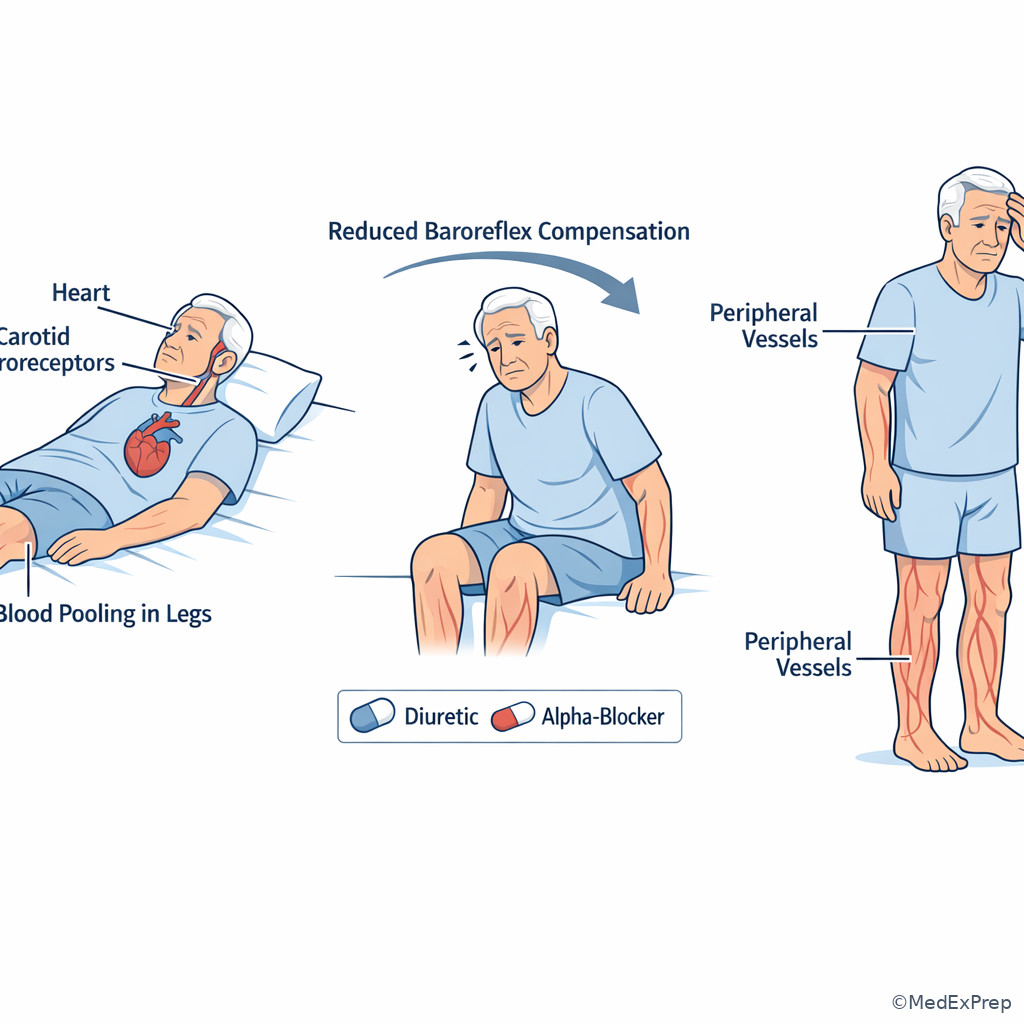
Board questions frequently ask you to choose between age-related hemodynamic change and disease requiring action. With aging, arteries stiffen, systolic blood pressure rises, and baroreflex sensitivity declines. The ventricle becomes less compliant, so older adults are more dependent on atrial contraction for filling and are more vulnerable to volume shifts, atrial fibrillation, and diastolic heart failure. Beta-adrenergic responsiveness declines, so maximal heart rate and exercise reserve fall. Thermoregulation also becomes less reliable because of lower sweat response, impaired vasomotor responses, and altered thirst.
WHY THIS IS TESTED: The exam wants you to reject simplistic reasoning such as “low exercise tolerance is only age,” “standing dizziness is benign,” or “a modest fever excludes infection.” The decisive clue is mismatch between reduced reserve and symptom severity, especially when medications or illness amplify autonomic weakness.
Choose aging physiology when the stem describes widened pulse pressure or slower heart-rate response during exertion without alarming features. Reject it when there is syncope, chest pain, pulmonary edema, or medication-provoked orthostasis. See Fig 3.
Exam takeaway: Vessel stiffness and weaker reflex compensation make orthostasis, isolated systolic hypertension, and exertional limitation common board pivots.
flowchart LR
A[Arterial stiffness] --> B[Higher systolic BP]
B --> C[Wider pulse pressure]
D[LV stiffness] --> E[Impaired diastolic filling]
E --> F[Sensitive to AF and volume shifts]
G[Reduced baroreflex] --> H[Orthostasis risk]
I[Reduced beta response] --> J[Lower max HR]
J --> K[Lower exercise reserve]
Exam takeaway: Orthostasis in an older adult should trigger medication and volume review before assuming primary neurologic disease.
High-Yield Connection: This concept is tested alongside Falls Risk Factors and Age Related PD Changes. Know both impaired baroreflex physiology and the medications that convert vulnerability into actual falls.
B Worked example
A 76-year-old man in assisted living reports lightheadedness when rising from breakfast. He has benign prostatic hyperplasia, heart failure with preserved ejection fraction, and type 2 diabetes. Medications are tamsulosin, furosemide, metformin, and lisinopril. He recently started “eating healthier” and has lost 2 kg. Blood pressure is 138/72 mm Hg supine and 112/60 mm Hg standing, pulse rises from 64 to 70/min. He denies vertigo. A distracting clue is diabetes, which may make autonomic neuropathy sound like the only answer.
Reasoning chain: Identify task: choose the main mechanism and next step. Extract key facts: standing symptoms after meals, diuretic plus alpha-blocker, modest pulse increase, older age with reduced baroreflex reserve. Apply rule: aging plus medications commonly causes orthostasis. Eliminate distractors: vestibular disease does not fit position-to-standing pattern; isolated HFpEF does not explain the orthostatic drop. Verify: medication and volume review is the most appropriate next step.
C Exam trap
Common wrong answer: “Refer immediately for extensive neurologic workup of chronic dizziness.”
Why it is tempting: Diabetes and age suggest autonomic neuropathy or central disease, and dizziness is a broad symptom.
Single clue that eliminates it: The symptom occurs on standing with an orthostatic blood pressure drop and clear medication triggers.
D Checkpoint
Question: Which age-related cardiovascular change most directly lowers peak exercise capacity in otherwise healthy older adults?
- Reduced beta-adrenergic responsiveness with lower maximal heart-rate response
- Increased resting ejection fraction
- Marked increase in resting stroke volume reserve
- Enhanced arterial compliance during exertion
- A: Tempting because it directly addresses exercise physiology; correct because blunted chronotropic response is a classic age-related limiter of peak exertion.
- B: Tempting because contractility metrics are familiar exam language; wrong because resting ejection fraction is not the usual age-related explanation for reduced peak capacity.
- C: Tempting because stroke volume can compensate in younger adults; wrong because reserve generally falls rather than rises with aging.
- D: Tempting because vascular adaptation affects exercise; wrong because arterial compliance decreases with aging.
- The most common blood pressure pattern promoted by vascular stiffening is isolated systolic hypertension.
- True or False: Normal aging explains syncope without further evaluation. False.
- Name 3 orthostasis amplifiers in older adults: diuretics, alpha-blockers, dehydration.
Clinician Action: Diagnose age-amplified orthostasis by symptom timing, orthostatic vitals, and medication review. Order orthostatic blood pressures, ECG when indicated, and basic labs if volume depletion or anemia is suspected. Treat with hydration, medication adjustment, and positional counseling. Refer/Escalate if syncope, arrhythmia concern, heart failure decompensation, or injury occurs.
1.1.1.5 Renal, water-balance, and pharmacokinetic aging
A Explanation
This is one of the highest-yield testable sections because it changes prescribing. Aging reduces renal mass, renal blood flow, and GFR. Tubular function also declines, limiting the ability to conserve sodium and water or concentrate urine. Thirst perception often falls, so older adults dehydrate more easily during illness, heat exposure, diuretic therapy, or poor access to fluids. The decision conflict in questions is usually whether a “normal” creatinine justifies usual dosing. It does not. The single resolving rule: interpret kidney function in context of age and muscle mass, not serum creatinine alone.
Body composition also shifts: less total body water and lean mass, more fat. Hydrophilic drugs can reach higher serum concentrations, while lipophilic drugs may have larger volume of distribution and longer half-lives. Hepatic oxidative metabolism may be reduced in some older adults, though variability is large. Pharmacodynamically, the brain often becomes more sensitive to sedatives and anticholinergics.
WHY THIS IS TESTED: Many board answers hinge on recognizing that the older adult is overexposed to medication despite “standard” labs. Choose dose reduction, medication avoidance, or closer monitoring when reserve is low and adverse effects can cascade into falls, delirium, or acute kidney injury.
Exam takeaway: In older adults, reduced renal reserve and lower muscle mass make serum creatinine alone a poor safety screen for drug dosing.
Exam takeaway: Declining cortical mass and concentrating ability explain dehydration and medication toxicity risk in older adults.
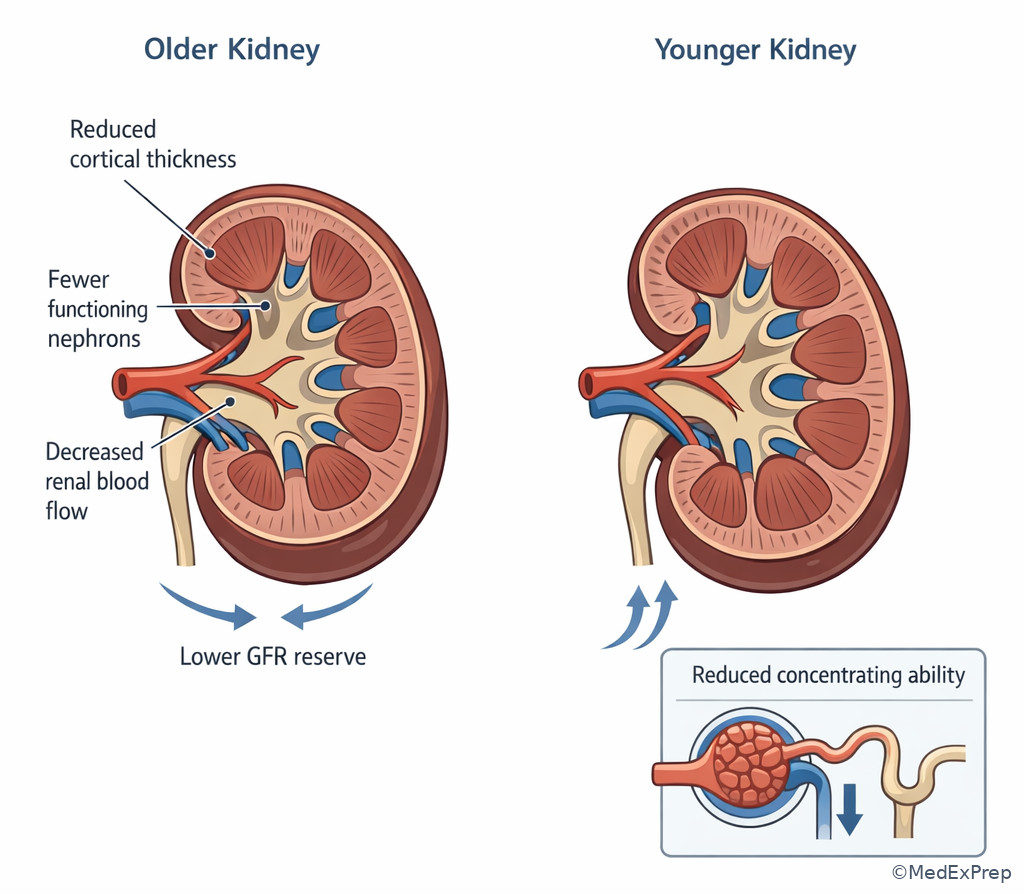
Key rule: A low or normal serum creatinine in a thin older adult can coexist with clinically important renal impairment.
Memory anchor: DRY KIDNEY = Decreased thirst, Reduced reserve, You cannot trust creatinine alone.
B Worked example
An 88-year-old woman in a skilled nursing facility has dysuria and is prescribed a renally cleared antibiotic at a standard adult dose. She has chronic kidney disease, sarcopenia, heart failure, and mild cognitive impairment. Her serum creatinine is 0.8 mg/dL, which seems reassuring. She weighs 44 kg and recently had poor oral intake after a viral illness. A tempting wrong clue is the “normal” creatinine.
Reasoning chain: Identify task: safest dosing interpretation. Extract key facts: advanced age, low muscle mass, dehydration risk, low body weight, and renal reserve loss. Apply rule: creatinine is falsely reassuring in sarcopenia. Eliminate distractors: full-dose therapy based on creatinine alone ignores low muscle mass; postponing treatment is wrong if infection is likely. Verify: estimate kidney function using age, weight, and clinical context, then adjust dose and hydration plan.
C Exam trap
Common wrong answer: “Use standard dosing because serum creatinine is normal.”
Why it is tempting: Many clinicians are trained to respond quickly to the creatinine value itself.
Single clue that eliminates it: Marked sarcopenia and low body weight mean creatinine production is reduced, so the number overestimates kidney function.
D Checkpoint
Question: Which physiologic change most increases half-life of many lipophilic medications in older adults?
- Increased adipose tissue and larger volume of distribution
- Increased total body water and faster distribution clearance
- Increased lean body mass with higher protein binding
- Enhanced renal tubular secretion of drug metabolites
- A: Tempting because body-composition change is central in aging pharmacology; correct because increased fat stores prolong distribution and elimination of lipophilic drugs.
- B: Tempting because fluid shifts affect drugs; wrong because total body water usually decreases rather than increases.
- C: Tempting because protein binding and muscle matter in PK; wrong because lean body mass generally declines with age.
- D: Tempting because kidney handling changes clearance; wrong because tubular reserve falls, not rises.
Clinician Action: Diagnose PK risk by looking for low weight, sarcopenia, CKD, dehydration, and polypharmacy. Order renal function estimation, medication reconciliation, and electrolytes when illness or diuretics are present. Treat with dose reduction, slower titration, and avoidance of high-risk sedatives or anticholinergics when possible. Refer/Escalate to pharmacy or specialty care if toxicity, severe AKI, or complex multidrug interactions arise.
1.1.1.6 Sensory, neurologic, musculoskeletal, and immune aging
A Explanation
The exam often tests a distinction between common age-related sensory decline and pathologic neurologic disease. Presbycusis causes progressive bilateral high-frequency hearing loss and difficulty understanding speech in noisy environments. Presbyopia causes trouble with near vision. Contrast sensitivity, dark adaptation, and vibration sense may decline. Sarcopenia reduces strength and power, contributing to slower gait and difficulty rising from a chair. Reaction time slows, sleep becomes lighter and more fragmented, and immune responses become less robust and less well regulated.
The board conflict is whether these changes justify passive reassurance. The resolving rule: expected sensory or musculoskeletal aging can explain gradual compensation needs, but asymmetric deficits, acute focal deficits, weight loss, fever, sudden gait collapse, or delirium require a disease search. Immunosenescence also means infections may present with less fever and more functional or cognitive decline.
WHY THIS IS TESTED: Because board questions often replace classic disease presentations with subtle geriatric ones. An older adult with infection may present with falls or confusion instead of high fever. An older adult with hearing loss may appear cognitively impaired unless hearing is corrected first.
Exam takeaway: Gradual bilateral sensory loss may be expected, but asymmetry, acuity, and functional collapse point to pathology.
flowchart TD
A[Sensory or mobility complaint] --> B{Pattern?}
B -->|Gradual bilateral high-frequency hearing loss| C[Presbycusis likely]
B -->|Needs brighter light / near vision issue| D[Presbyopia likely]
B -->|Asymmetric, sudden, focal| E[Pathology workup]
A --> F[Slower gait or chair rise]
F --> G[Sarcopenia or reserve loss possible]
G --> H{Red flags?}
H -->|Falls, weight loss, focal weakness| E
H -->|No red flags| I[Assess function and intervene] Exam takeaway: Correct reversible sensory deficits before mislabeling the patient as cognitively or functionally impaired.
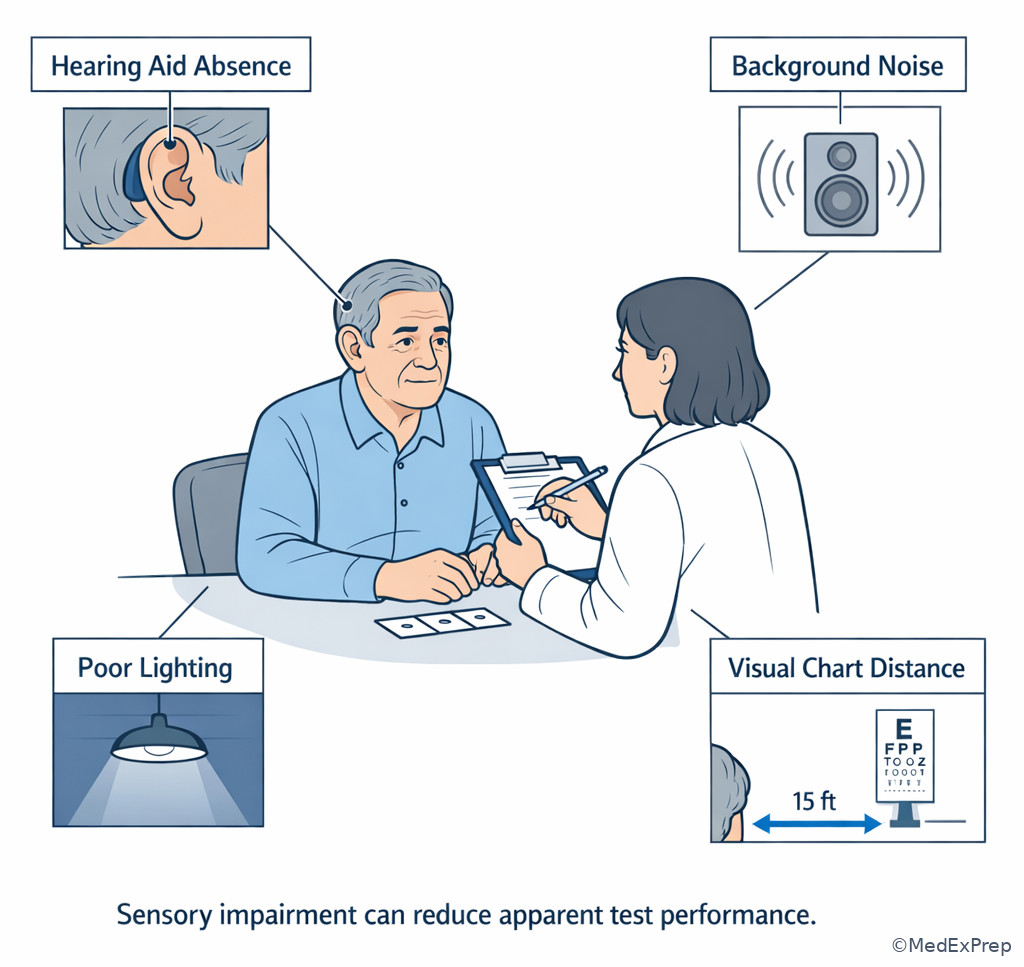
High-Yield Connection: This concept is tested alongside Hearing And Vision Impairment and Cognitive Testing Tools. On exam day, correct sensory barriers before interpreting poor performance on cognitive screening.
Recall: In upcoming Frailty And Prognostic Meaning, sarcopenia and reduced reserve become prognostic tools rather than just background physiology. Here, the goal is to recognize the baseline mechanism.
B Worked example
An 84-year-old retired teacher is brought by her daughter for “memory problems.” She has osteoarthritis, hypertension, and hearing loss but refuses hearing aids. She answers some questions incorrectly during the visit and asks for repetition several times. She also reports difficulty hearing grandchildren in restaurants. Mini-Cog performance is poor. A distracting clue is her age and failed screening, which makes dementia seem immediately correct.
Reasoning chain: Identify task: most appropriate interpretation of poor cognitive performance. Extract key facts: known hearing loss, difficulty in noisy environments, repeated requests, and no clear progressive loss of instrumental function in the stem. Apply rule: sensory deficits can impair test performance and mimic cognitive impairment. Eliminate distractors: immediate dementia labeling ignores a reversible confounder; delirium is not supported without acute change or inattention. Verify: address hearing impairment and retest cognition under optimized conditions.
C Exam trap
Common wrong answer: “Diagnose probable dementia based on the screening score alone.”
Why it is tempting: Older age, family concern, and an abnormal cognitive screen strongly pull toward dementia.
Single clue that eliminates it: Untreated hearing loss can produce apparently poor attention and recall during testing.
D Checkpoint
Question: Which presentation is most compatible with presbycusis rather than pathologic focal auditory disease?
- Gradual bilateral difficulty understanding speech in noisy settings
- Sudden unilateral hearing loss after waking
- Pulsatile unilateral tinnitus with neurologic deficits
- Acute ear pain with fever and otorrhea
- A: Tempting because it is common and subtle; correct because high-frequency bilateral loss with trouble in background noise is classic presbycusis.
- B: Tempting because older adults can have hearing loss; wrong because sudden unilateral loss is a red flag requiring urgent evaluation.
- C: Tempting because tinnitus occurs with sensory changes; wrong because pulsatile asymmetry and neurologic findings suggest vascular or focal pathology.
- D: Tempting because ear complaints increase with age; wrong because infectious painful otorrhea is not normal aging.
- The most common age-related hearing pattern is bilateral high-frequency loss.
- True or False: Delirium is a normal result of aging neurons. False.
- Name 3 clues that a sensory complaint is not benign aging: sudden onset, asymmetry, pain.
Clinician Action: Diagnose expected sensory aging by gradual bilateral patterns and preserved neurologic localization. Order hearing, vision, gait, or focal neurologic evaluation when symptoms are asymmetric, abrupt, or functionally severe. Treat with corrective aids, exercise, protein/strength strategies when appropriate, and environmental support. Refer/Escalate for sudden sensory loss, focal deficits, or unexplained rapid mobility decline.
1.1.1.7 Normal aging vs disease: board-style differential thinking
A Explanation
This integration section is where many exam points are won. The conflict is not “what changes with age?” but “what findings should never be explained by age alone?” The single rule: aging causes gradual reserve loss; pathology causes disproportion, acceleration, or specific organ-warning signs. Normal aging can contribute to slower gait, lower exercise capacity, nocturia from reduced concentrating ability, constipation tendency from reduced activity and medications, and sleep fragmentation. It does not cause delirium, unexplained anemia, persistent depression, acute dyspnea, chest pain, unintentional weight loss, new fecal incontinence, or recurrent falls without evaluation.
When a stem says “family says this is just old age,” read that as a warning. Board writers use that phrase to test whether you can identify a pathologic syndrome hiding behind an ageist explanation. See Fig 6.
Exam takeaway: Acute change, constitutional signs, focal deficits, and rapid functional decline should trigger evaluation rather than reassurance.
flowchart TD
A["Family says 'just aging'"] --> B{Any red flag?}
B -->|Acute change| C[Evaluate urgently]
B -->|Progressive weight loss or anemia| D[Search for disease]
B -->|Delirium or falls| E[Find precipitants]
B -->|Focal neurologic sign| F[Localize and work up]
B -->|None and pattern fits reserve loss| G[Counsel and monitor]
G --> H[Support function and prevention] Exam takeaway: The best next step is to test the trajectory and red flags before deciding whether reassurance is safe.
B Worked example
An 81-year-old man with hypertension, chronic kidney disease, and benign prostatic hyperplasia is seen after two falls in one month. His daughter says he is “slowing down because he’s 81.” He also has new urinary urgency and constipation. Medications include amlodipine, tamsulosin, oxybutynin started 6 weeks ago, and ibuprofen as needed. He has no focal weakness. A tempting wrong clue is his age plus urinary symptoms, which can make age-related bladder change seem sufficient.
Reasoning chain: Identify task: normal aging vs treatable syndrome. Extract key facts: recurrent falls after a medication change, anticholinergic burden, constipation, urinary urgency, and recent time linkage. Apply rule: aging increases susceptibility, but medication toxicity is the precipitating pathology. Eliminate distractors: “just age-related slowing” does not explain clustered falls after a new drug; Parkinson disease is not suggested without characteristic motor findings. Verify: the best next step is medication review and deprescribing of the likely offending agent.
C Exam trap
Common wrong answer: “Recommend general exercise only because falls are a normal part of aging.”
Why it is tempting: Sarcopenia and slower gait are real age-related changes, so exercise sounds broadly reasonable.
Single clue that eliminates it: The onset after oxybutynin with constipation and urgency points to medication-related anticholinergic toxicity, not benign aging alone.
D Checkpoint
Question: Which finding should most strongly prompt evaluation for disease rather than reassurance about normal aging?
- Unintentional 6-kg weight loss over 4 months
- Need for brighter light when reading
- Reduced maximal exercise tolerance over years
- Gradual bilateral high-frequency hearing difficulty
- A: Tempting because weight change can accompany reduced appetite in older age; correct because significant unintentional weight loss is pathologic until proven otherwise.
- B: Tempting because visual complaints are common; wrong because brighter light needs often reflect expected ocular aging.
- C: Tempting because reduced fitness can feel serious; wrong because gradual loss of peak exercise capacity may reflect physiologic reserve decline.
- D: Tempting because hearing trouble affects function; wrong because this is compatible with presbycusis if gradual and bilateral.
Clinician Action: Diagnose pathologic decline when the time course is accelerated or the finding is constitutional, focal, or functionally severe. Order focused workup based on syndrome pattern rather than broad age-based reassurance. Treat the precipitating cause while also addressing reserve and rehabilitation needs. Refer/Escalate when falls, delirium, weight loss, or major functional loss threaten safety.
Exam Traps & Differentiators
Common traps & distractors: The most common wrong answer is reassurance based on age alone. It is tempting because many real physiologic changes are common and chronic. The single step that avoids the trap is checking whether the presentation is acute, progressive, asymmetric, constitutional, or linked to a medication change.
- Most common wrong answer and why: “This is expected in older adults.” Tempting when the stem includes age, mild chronic decline, or familiar age-related complaints. Wrong when there is new functional loss, weight loss, focal deficit, delirium, or a new medication.
- Looks similar but isn’t: Presbycusis vs sudden unilateral hearing loss; age-related decreased exercise reserve vs symptomatic anemia/heart failure; normal lower GFR reserve vs AKI masked by low muscle mass.
- If the stem says “she just isn’t herself” think delirium, infection, dehydration, medication effect, or metabolic disturbance rather than normal aging.
- If the stem says “normal creatinine” in a frail thin elder think hidden renal impairment and dose adjustment.
- If the stem says “new falls after a medication change” think adverse drug effect before primary neurologic disease.
- If the stem says “gradual bilateral trouble hearing in crowds” think presbycusis, but still assess functional consequences.
- If the stem says “abrupt confusion or incontinence” think pathology, not normal aging.
| Finding | Compatible with normal aging? | Exam interpretation |
|---|---|---|
| Need for brighter light to read | Yes | Expected visual aging if gradual and nonacute |
| Gradual bilateral high-frequency hearing loss | Yes | Presbycusis pattern |
| Reduced peak exercise capacity over years | Yes | Lower cardiovascular reserve |
| Delirium | No | Search for precipitant urgently |
| Unintentional weight loss | No | Pathology until proven otherwise |
| Sudden unilateral hearing loss | No | Urgent pathologic evaluation |
| Recurrent falls after medication initiation | No | Adverse drug effect likely |
| Confusable pair | Shared features | Single discriminator | Best exam move |
|---|---|---|---|
| Presbycusis vs focal auditory disease | Hearing complaint in older adult | Gradual bilateral high-frequency loss vs sudden/asymmetric deficit | Urgent evaluation if sudden or asymmetric |
| Age-related reduced GFR vs overt AKI | Older adult with renal vulnerability | Baseline reserve loss vs acute creatinine rise/illness/toxicity | Adjust meds and assess volume/precipitants |
| Slower gait from sarcopenia vs neurologic disease | Mobility decline | Gradual deconditioning vs focal weakness, asymmetry, or abrupt change | Neurologic workup when red flags present |
| Age-related orthostasis vulnerability vs isolated vertigo | Dizziness complaint | Triggered by standing with BP drop vs spinning sensation without orthostatic change | Check orthostatics and meds first |
| System | Expected aging change | Common related trap | Neighbor-topic connection |
|---|---|---|---|
| Cardiovascular | Arterial stiffness, lower max HR | Calling syncope “benign aging” | Later linked to Homeostenosis And Vulnerability |
| Renal | Lower GFR reserve, poor concentration | Trusting creatinine alone | Later linked to Pharmacology In Aging |
| Sensory | Presbycusis, presbyopia | Mislabeling sensory impairment as dementia | Later linked to Cognitive Screening Tools |
| Muscle | Sarcopenia, slower gait | Missing frailty or falls risk | Later linked to Frailty And Prognostic Meaning |
Algorithm / Approach
Exam takeaway: Visualize standing blood pressure regulation failure to understand why diuretics and alpha-blockers trigger falls.
Exam takeaway: Hearing and vision impairment can mimic poor cognition if the testing environment is not optimized.
Rapid Review
- Serum creatinine in sarcopenia → may underestimate renal impairment
- Isolated systolic hypertension → think arterial stiffness, not increased arterial compliance
- Exercise limitation in aging → blunted maximal heart-rate response
- Orthostatic symptoms after medication change → think amplified physiologic vulnerability
- Gradual bilateral high-frequency hearing loss → presbycusis
- Sudden sensory loss → pathology, not physiologic aging
- Need for brighter light → expected ocular aging if gradual and otherwise uncomplicated
- Unintentional weight loss → disease until proven otherwise
- Delirium in an older adult → precipitant search, never “normal aging”
- Increased body fat → prolonged lipophilic drug effect
- Decreased total body water → higher concentration of hydrophilic drugs
- Reduced thirst and concentrating ability → dehydration risk during illness
- Sarcopenia → slower chair rise and gait before overt neurologic findings
- Infection in older adults → may present with functional decline rather than high fever
Memory anchor: OLD ≠ NORMAL = Out-of-proportion symptoms, Loss of function, Decline over short time → search for disease.
Self-check quiz
1. A 78-year-old woman with hypertension and osteoarthritis says she needs brighter light to read and has more trouble with small print, but she has no acute vision loss, eye pain, or visual field symptoms. Which is the most likely explanation?
- Presbyopia and age-related visual adaptation changes
- Acute angle-closure glaucoma
- Occipital stroke
- Retinal detachment
2. An 83-year-old thin man with hypertension, chronic kidney disease, and sarcopenia has serum creatinine 0.9 mg/dL before a renally cleared medication is prescribed. Which interpretation is most appropriate?
- Kidney function may still be significantly reduced despite the creatinine value
- Normal creatinine excludes clinically important renal impairment
- Creatinine is always more reliable than estimated GFR in frail older adults
- Age-related renal changes affect only tubular function, not filtration reserve
3. A 79-year-old man in independent living reports dizziness when standing after breakfast. He has benign prostatic hyperplasia, hypertension, and diabetes. Medications are tamsulosin, chlorthalidone, metformin, and lisinopril. Orthostatic vital signs show a symptomatic blood pressure drop. What is the most appropriate next step?
- Review medications and volume status, then reduce orthostasis-provoking factors
- Reassure that this is normal aging and no evaluation is needed
- Start meclizine for presumed vestibular dysfunction
- Order brain MRI as the best initial step
4. An 84-year-old woman with hearing loss, cataracts, and well-controlled diabetes is brought for “memory decline.” She misses questions on cognitive screening, asks for repeated instructions, and says restaurants are hard to follow because of background noise. Which is the most appropriate next step?
- Optimize hearing and visual input, then reassess cognition
- Diagnose dementia immediately based on the screening score
- Start antipsychotic therapy for behavioral symptoms
- Assume delirium and hospitalize her urgently
5. A 77-year-old woman with heart failure with preserved ejection fraction, chronic kidney disease, and insomnia develops prolonged daytime sedation after starting a lipophilic sedative. Which age-related physiologic change best explains the prolonged effect?
- Increased body fat causing larger volume of distribution
- Increased total body water causing dilution of the medication
- Increased lean muscle mass improving redistribution
- Enhanced baroreflex sensitivity reducing sedative accumulation
6. An 86-year-old man with hypertension, osteoarthritis, and mild chronic kidney disease is brought for 2 weeks of fatigue and reduced walking distance. His daughter says he is “just getting old.” He also reports one black stool and early satiety. Blood pressure is 146/64 mm Hg, pulse 72/min. What is the most appropriate interpretation?
- The presentation requires evaluation for pathology rather than reassurance about aging
- The reduced stamina is best explained by normal decline in maximal heart rate alone
- The black stool is a common age-related bowel change and does not affect management
- The widened pulse pressure confirms that symptoms are entirely physiologic
7. An 82-year-old woman in assisted living has two falls over 3 weeks after oxybutynin was added for urgency. She has constipation, dry mouth, and slower thinking. History includes hypertension and osteoarthritis. Which is the most appropriate next step?
- Stop or reduce the offending anticholinergic and reassess falls risk
- Attribute the falls to normal sarcopenia and recommend exercise alone
- Diagnose Parkinson disease because gait has slowed
- Continue the medication because urinary urgency is common with aging
8. An 80-year-old man with coronary disease, chronic obstructive pulmonary disease, and weight loss from poor dentition is prescribed a standard dose of a renally cleared antibiotic for presumed UTI. He weighs 50 kg, has low muscle mass, and serum creatinine 0.8 mg/dL. Which detail most strongly supports dose adjustment rather than standard dosing?
- Low muscle mass can mask reduced kidney function despite a normal creatinine
- Older age alone always requires empiric half-dosing of all antibiotics
- Coronary disease increases hepatic first-pass metabolism
- COPD reliably increases renal clearance of antimicrobials
Answer key
1.1.1.8 1. Answer: A
Why A is correct: Presbyopia and related age-associated visual adaptation changes cause difficulty with near tasks and need for brighter light. The mechanism is lens stiffening and reduced accommodative ability, often with reduced dark adaptation. The discriminating clue is gradual difficulty with small print without acute pain, field loss, or sudden monocular symptoms. Source: Harrison’s Principles of Internal Medicine; UpToDate topics on vision changes in older adults.
- A: Tempting because it matches a common aging complaint; correct because the gradual, nonpainful near-vision problem fits presbyopia.
- B: Tempting because older age increases glaucoma risk; incorrect because acute angle-closure causes painful red eye and urgent symptoms, not isolated gradual small-print difficulty.
- C: Tempting because strokes can affect vision; incorrect because occipital stroke causes field deficits or acute neurologic changes, not a chronic reading-light complaint.
- D: Tempting because retinal disease increases with age; incorrect because retinal detachment presents with flashes, floaters, or curtain-like vision loss.
1.1.1.9 2. Answer: A
Why A is correct: Older adults with low muscle mass may generate little creatinine, so serum creatinine can appear normal despite substantially reduced GFR. The mechanism is reduced creatinine production rather than preserved filtration. The discriminating clue is frailty/sarcopenia plus a “normal” creatinine before renally cleared medication dosing. Source: UpToDate on drug prescribing in older adults; Harrison’s.
- A: Tempting because it challenges overreliance on a single lab; correct because sarcopenia masks kidney impairment.
- B: Tempting because laboratory normal ranges are reassuring; incorrect because creatinine alone is a poor safety screen in thin frail elders.
- C: Tempting because direct lab values feel concrete; incorrect because estimated renal function and clinical context are more informative than raw creatinine in frailty.
- D: Tempting because tubular dysfunction is common with aging; incorrect because filtration reserve also declines.
1.1.1.10 3. Answer: A
Why A is correct: Orthostatic symptoms in older adults are commonly amplified by diuretics, alpha-blockers, and dehydration on a background of reduced baroreflex sensitivity. The mechanism is impaired compensatory vasoconstriction plus medication-induced volume or vascular effects. The discriminating clue is symptomatic orthostatic BP drop with tamsulosin and chlorthalidone. Source: AHA guidance on orthostatic hypotension; UpToDate.
- A: Tempting because medication review is often overlooked; correct because it directly addresses the likely mechanism and is the best initial management.
- B: Tempting because orthostasis is common in aging; incorrect because symptomatic orthostatic hypotension deserves causal evaluation and intervention.
- C: Tempting because dizziness often triggers vestibular treatment; incorrect because the symptom is linked to standing, not vertigo.
- D: Tempting because dizziness can have central causes; incorrect because the orthostatic physiology and medication triggers already explain the syndrome more parsimoniously.
1.1.1.11 4. Answer: A
Why A is correct: Untreated hearing and vision deficits can degrade cognitive test performance and simulate impairment. The mechanism is reduced sensory input, not necessarily impaired memory encoding or executive function. The discriminating clue is repeated need for instructions and trouble hearing in noisy settings. Source: UpToDate on cognitive assessment in older adults; geriatrics texts on sensory confounding of screening.
- A: Tempting because it seems slower than diagnosing dementia; correct because sensory optimization is necessary before interpreting screening fairly.
- B: Tempting because the test is abnormal and family is concerned; incorrect because reversible sensory confounders remain unaddressed.
- C: Tempting because behavioral symptoms are often discussed in dementia care; incorrect because no indication for antipsychotic treatment is given and diagnosis is unconfirmed.
- D: Tempting because acute cognitive syndromes are dangerous; incorrect because the stem lacks acute onset, fluctuating attention, or illness features suggesting delirium.
1.1.1.12 5. Answer: A
Why A is correct: Increased adipose tissue with aging enlarges the volume of distribution for lipophilic drugs, prolonging drug effect and elimination. The discriminating clue is prolonged sedation after a lipophilic sedative. Source: Harrison’s; UpToDate on pharmacokinetic changes with aging.
- A: Tempting because body-composition changes are central to geriatric prescribing; correct because more fat prolongs lipophilic medication effects.
- B: Tempting because water compartments affect concentration; incorrect because total body water decreases rather than increases with age.
- C: Tempting because lean mass affects drug handling; incorrect because lean mass declines, and the option describes the opposite physiology.
- D: Tempting because autonomic changes are relevant in older adults; incorrect because baroreflex sensitivity declines and does not explain prolonged sedative half-life.
1.1.1.13 6. Answer: A
Why A is correct: Although aging reduces exercise reserve, melena and early satiety indicate possible GI pathology or anemia and invalidate simple reassurance. The mechanism-to-treatment logic is that constitutional or bleeding clues shift the task from normal physiology recognition to disease evaluation. The discriminating clue is black stool, not age or widened pulse pressure. Source: Harrison’s; UpToDate on evaluation of fatigue and GI bleeding in older adults.
- A: Tempting because it resists ageist framing; correct because melena and subacute decline require diagnostic workup.
- B: Tempting because reduced maximal heart-rate response is a true aging change; incorrect because it does not explain black stool and early satiety.
- C: Tempting because bowel habits change with age; incorrect because melena is a bleeding clue, not a benign age-related change.
- D: Tempting because widened pulse pressure often reflects vascular aging; incorrect because it does not explain the symptomatic decline and alarm features.
1.1.1.14 7. Answer: A
Why A is correct: Oxybutynin has anticholinergic effects that can cause dry mouth, constipation, slowed thinking, and falls in older adults whose pharmacodynamic sensitivity is increased. The discriminating clue is tight temporal linkage between the new medication and anticholinergic symptoms. Source: Beers Criteria; UpToDate on anticholinergic burden in older adults.
- A: Tempting because medication review is highly testable in geriatrics; correct because it treats the likely mechanism causing falls and cognitive slowing.
- B: Tempting because sarcopenia contributes to falls; incorrect because it ignores the new drug and clustered anticholinergic signs.
- C: Tempting because slowed gait suggests movement disorder; incorrect because the stem lacks tremor, rigidity, or progressive parkinsonian pattern.
- D: Tempting because urgency is common in aging; incorrect because symptom prevalence does not justify continuing a harmful medication.
1.1.1.15 8. Answer: A
Why A is correct: Low muscle mass lowers creatinine generation, so serum creatinine may not reflect true renal clearance in a frail underweight older adult. The mechanism is hidden reduction in kidney function with risk of overdosing renally cleared drugs. The discriminating clue is low weight and sarcopenia with a reassuring creatinine. Source: UpToDate; Harrison’s.
- A: Tempting because it integrates physiology and prescribing; correct because it is the exact reason standard dosing may be unsafe.
- B: Tempting because many clinicians equate age with mandatory dose reduction; incorrect because age alone is not the rule—physiology and clearance are.
- C: Tempting because comorbidity can alter pharmacology; incorrect because coronary disease does not specifically increase hepatic first-pass metabolism in this way.
- D: Tempting because chronic disease may affect drug handling; incorrect because COPD does not reliably increase renal antimicrobial clearance.
Keep going with the full ABIM Geriatric Medicine Prep Course (Geriatrics)
You just studied the way members do, in the same lesson interface. Full access unlocks every lesson, the question bank and flashcards for a full year.
One payment · 1 year of access · No auto-renewal