1.1.1 - Diabetes Diagnostic Criteria
Why it matters
- ABIM-style diabetes questions often hinge on one threshold or one confirmation rule, not on broad management.
- Misreading asymptomatic versus symptomatic status leads to the wrong next step even when you know the numeric cutoff.
- Discordant A1c and plasma glucose values are common in real practice and heavily tested because they force you to choose which result to trust.
- Correct diagnosis is the gateway to everything else in diabetes care: classification, complication screening, drug selection, and secondary-cause evaluation.
Exam takeaway: Use symptoms and test modality first, then decide whether one abnormal result is diagnostic or requires repeat confirmation.
flowchart TD
A[Suspected dysglycemia] --> B{Classic hyperglycemic symptoms or crisis?}
B -->|Yes| C[Random plasma glucose 200 mg/dL or higher]
C --> D[Diagnose diabetes]
B -->|No| E[Use screening test]
E --> F[Fasting plasma glucose]
E --> G[A1c]
E --> H[75-g OGTT 2-hour glucose]
F --> I{Abnormal?}
G --> I
H --> I
I -->|Yes| J[Repeat same test or obtain second abnormal test]
J --> K[Confirmed diabetes]
I -->|No| L[Normal or prediabetes range]
See Fig 1 for the highest-yield framing: the exam first asks whether the patient is symptomatic, then whether the test is plasma glucose based or A1c based, and then whether confirmation is needed.
Key Terms & Must-Know Facts
1.1.1.1 Key terms
- Fasting plasma glucose (FPG): plasma glucose after at least 8 hours without caloric intake
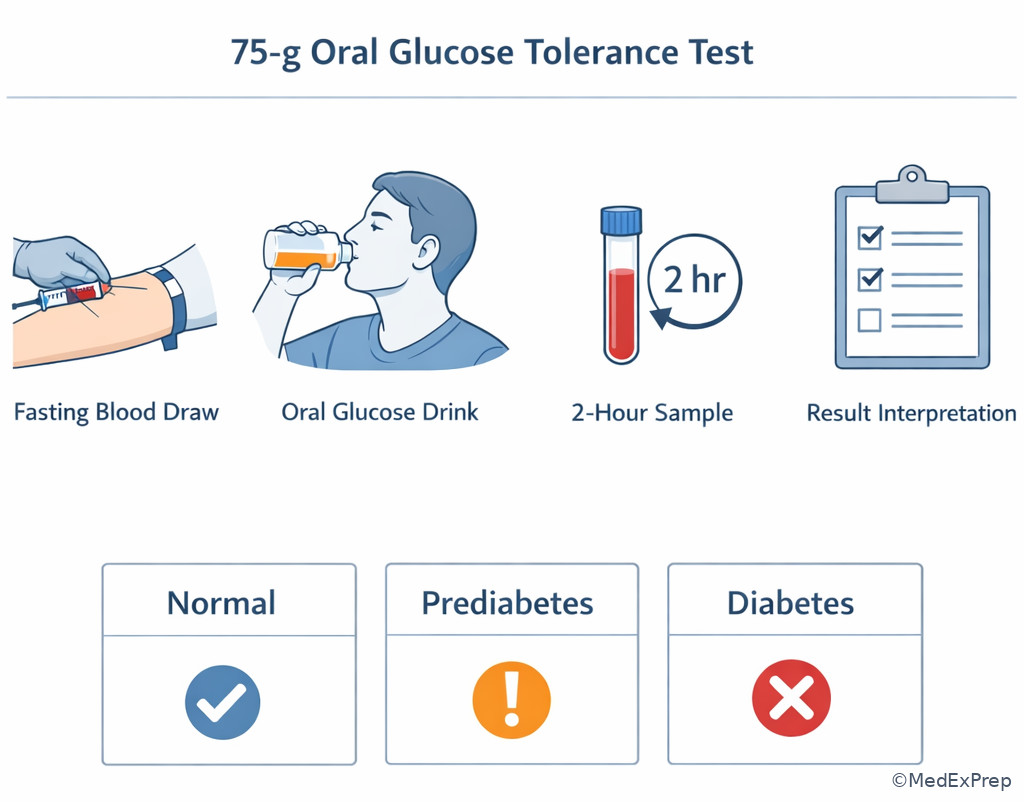
- OGTT: 75-g oral glucose tolerance test with 2-hour plasma glucose measurement
- A1c: glycated hemoglobin reflecting average glycemia over roughly 3 months
- Random plasma glucose: glucose measured without regard to fasting state
- Prediabetes: intermediate hyperglycemia below the diabetes threshold
- Impaired fasting glucose: fasting glucose in the prediabetes range
- Impaired glucose tolerance: 2-hour OGTT glucose in the prediabetes range
- Classic symptoms: polyuria, polydipsia, weight loss, blurred vision
- Hyperglycemic crisis: DKA or HHS
- Discordant tests: different diagnostic tests giving different categories
- Assay interference: a factor causing A1c or glucose results to misrepresent true glycemia
- Hemoglobinopathy: variant hemoglobin that may alter some A1c assays
- Altered red-cell turnover: shortened or prolonged RBC survival affecting A1c accuracy
1.1.1.2 Must-know facts
- Diabetes can be diagnosed by FPG ≥ 126 mg/dL.
- Diabetes can be diagnosed by 2-hour OGTT glucose ≥ 200 mg/dL.
- Diabetes can be diagnosed by A1c ≥ 6.5% using a standardized assay.
- Diabetes can be diagnosed by random plasma glucose ≥ 200 mg/dL only when classic symptoms or hyperglycemic crisis are present.
- In an asymptomatic patient, diagnosis generally requires repeat confirmation unless two tests are abnormal from the same sample or different samples.
- If two different tests are discordant, repeat the test that is above the diagnostic threshold.
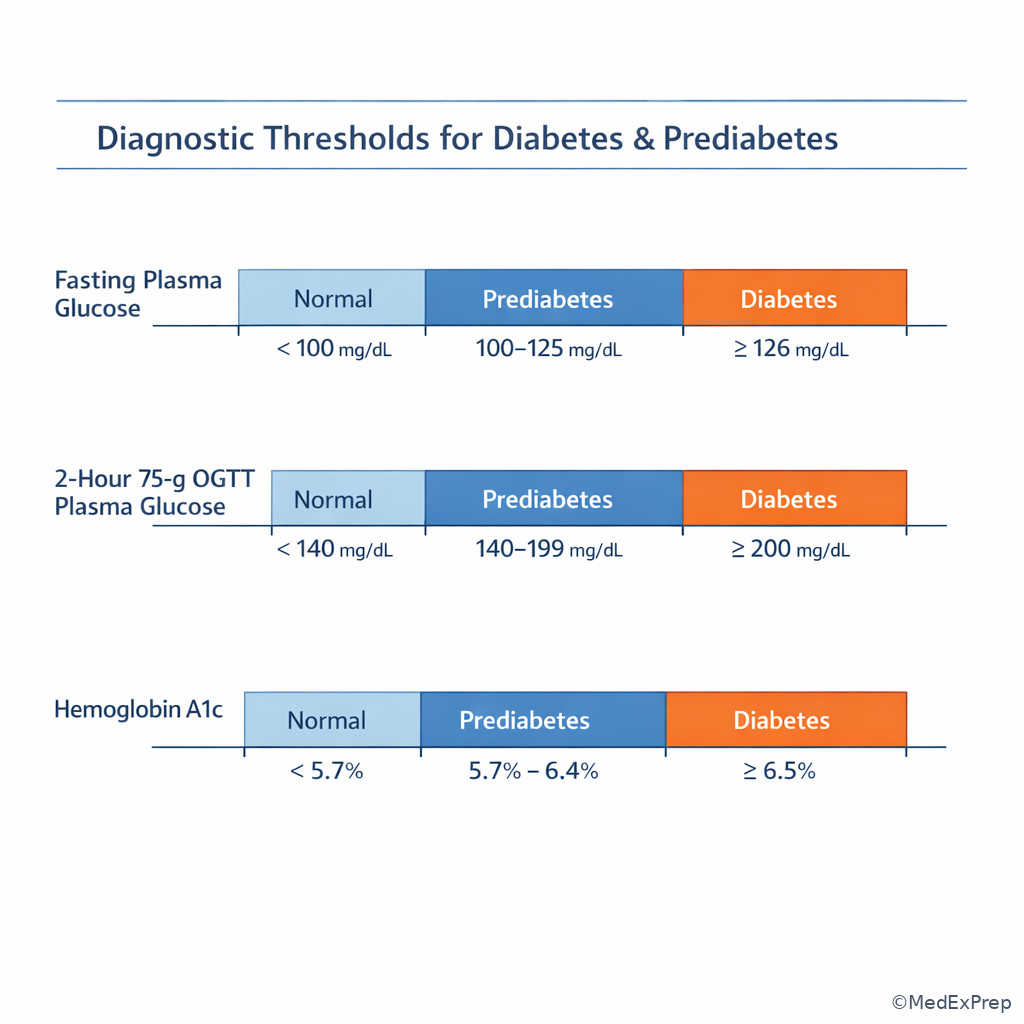
- Prediabetes thresholds: FPG 100–125 mg/dL, 2-hour OGTT 140–199 mg/dL, A1c 5.7%–6.4%.
- A1c is less reliable in conditions with altered RBC turnover, some hemoglobin variants, recent transfusion, major blood loss, erythropoietin use, CKD-related anemia, and pregnancy-related settings.
- Plasma glucose criteria outrank a suspicious A1c when the A1c is likely invalid.
- Do not diagnose diabetes from capillary fingerstick values alone on board-style questions unless the stem explicitly converts them into accepted diagnostic plasma criteria.
| Category | Fasting plasma glucose | 2-hour glucose after 75-g OGTT | A1c |
|---|---|---|---|
| Normal | < 100 mg/dL | < 140 mg/dL | < 5.7% |
| Prediabetes | 100–125 mg/dL | 140–199 mg/dL | 5.7%–6.4% |
| Diabetes | ≥ 126 mg/dL | ≥ 200 mg/dL | ≥ 6.5% |
Exam takeaway: Memorize the three-number progression 126, 200, and 6.5 because many stems test only one cutoff.
Core content
1.1.1.3 Foundational diagnostic thresholds: know exactly which number makes the diagnosis
A Explanation
The first decision conflict is simple but highly tested: does this value cross the diabetes threshold, or is it only prediabetes? The single rule that resolves the conflict is the numeric cutoff tied to the specific test modality. Choose diabetes when the patient has FPG ≥ 126 mg/dL, 2-hour plasma glucose after a 75-g OGTT ≥ 200 mg/dL, or A1c ≥ 6.5%. Reject diabetes when the value remains in the intermediate range even if the patient has obesity, hypertension, or family history.
WHY THIS IS TESTED: exam writers often provide risk factors that make diabetes feel likely, then hide the fact that the number given is still only prediabetes. The board question is not asking whether the patient is high risk; it is asking whether the threshold is met.
The fastest way to avoid error is to anchor to one table in your mind. FPG 100–125 mg/dL is prediabetes; ≥ 126 mg/dL is diabetes. 2-hour OGTT 140–199 mg/dL is prediabetes; ≥ 200 mg/dL is diabetes. A1c 5.7%–6.4% is prediabetes; ≥ 6.5% is diabetes. These cutoffs are not interchangeable in meaning. A patient can meet diabetes criteria by one test while another test remains below threshold, which becomes a confirmation problem rather than a threshold problem.
B Worked example
A 52-year-old man with obesity, hypertension, obstructive sleep apnea, and a brother with type 2 diabetes is seen for routine follow-up. He reports no polyuria, polydipsia, or weight loss. His medications include hydrochlorothiazide and atorvastatin. Fasting plasma glucose is 124 mg/dL, A1c is 6.3%, triglycerides are 310 mg/dL, and ALT is mildly elevated. The stem asks for the most likely glycemic classification.
Reasoning chain: identify task → classify glycemia, not etiology. Extract key facts → asymptomatic; FPG 124 and A1c 6.3. Apply rule → FPG 100–125 and A1c 5.7%–6.4 both indicate prediabetes. Eliminate distractors → obesity and family history make diabetes tempting, but neither value reaches the diabetes threshold. Verify → the distracting hypertriglyceridemia and ALT elevation suggest insulin resistance but do not change the diagnostic category.
C Exam trap
D Checkpoint
Question: A 46-year-old woman with obesity and polycystic ovary syndrome has fasting plasma glucose of 127 mg/dL at an employer screening visit. She feels well and has no hyperglycemic symptoms. Which interpretation is most appropriate?
- A. Diabetes is established immediately because fasting glucose is above 125 mg/dL.
- B. Prediabetes is most likely because the patient is asymptomatic.
- C. The result is in the diabetes range and requires confirmation in the absence of symptoms.
- D. OGTT must be performed because fasting glucose cannot diagnose diabetes.
Answer: C
- A: Tempting because 127 mg/dL exceeds the diabetes threshold; wrong because an asymptomatic patient generally needs repeat confirmation.
- B: Tempting because many screening-detected cases are prediabetes; wrong because 127 mg/dL is above the diabetes cutoff, not just intermediate.
- C: Correct because FPG ≥ 126 mg/dL is diagnostic-range, but without symptoms it should be confirmed.
- D: Tempting because OGTT is sensitive; wrong because fasting plasma glucose is an accepted diagnostic test.
1.1.1.4 Single abnormal result versus repeat confirmation: when one test is enough
A Explanation
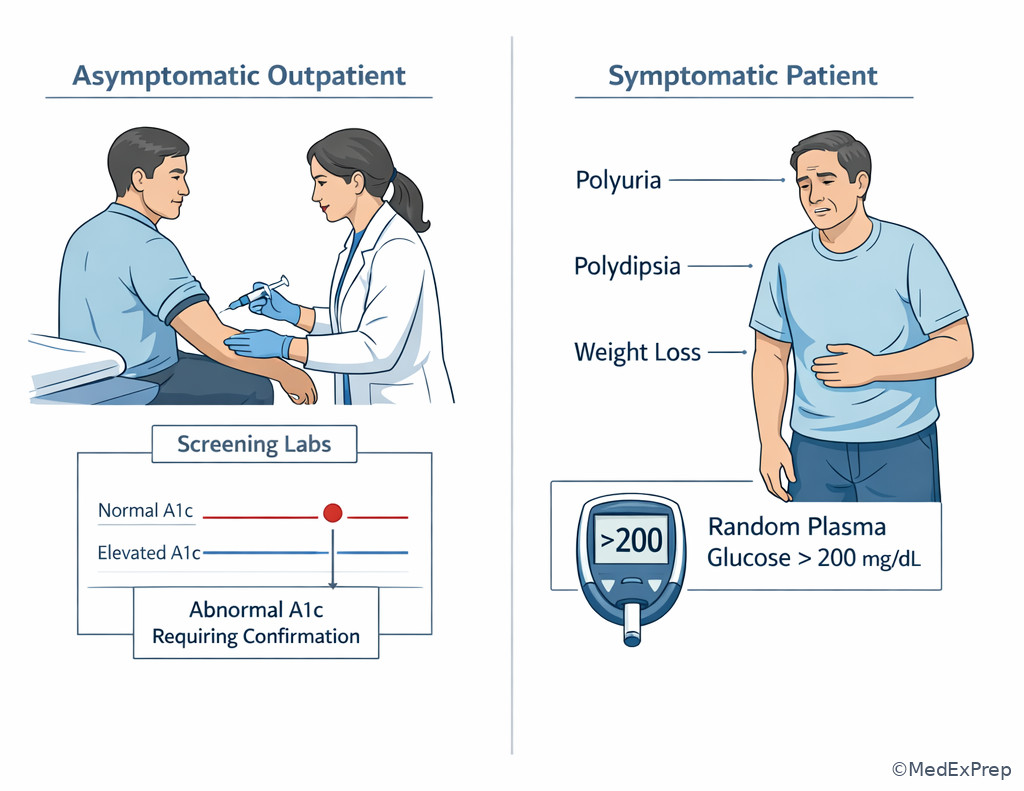
The next decision conflict is diagnose now versus repeat testing first. The single rule is symptom status. In a patient with classic symptoms of hyperglycemia or a hyperglycemic crisis, a random plasma glucose ≥ 200 mg/dL is sufficient for diagnosis. In an asymptomatic patient, an abnormal screening test typically requires confirmation, either by repeating the same test on another day or by obtaining a second abnormal diagnostic test.
Board stems deliberately blur this by giving mild fatigue or nocturia that is not clearly classic. The exam wants you to distinguish vague complaints from true hyperglycemic symptoms such as polyuria, polydipsia, unexplained weight loss, or crisis-level presentation. If the stem clearly says classic symptoms and random plasma glucose ≥ 200 mg/dL, choose diabetes without waiting. If the patient is asymptomatic and found through screening, choose repeat confirmation.
Another tested nuance: if two tests from the same sample are both diagnostic, diabetes is confirmed. If only one is abnormal and the other is not, repeat the abnormal test or repeat diagnostic testing. See Fig 2.
Exam takeaway: Random glucose can diagnose diabetes only with classic symptoms or crisis; asymptomatic abnormal tests usually need confirmation.
flowchart TD
A[Abnormal glycemic result] --> B{Classic symptoms or crisis?}
B -->|Yes| C{Random plasma glucose 200 or higher?}
C -->|Yes| D[Diagnose diabetes now]
C -->|No| E[Use standard diagnostic tests]
B -->|No| F{Two abnormal tests?}
F -->|Yes| G[Confirmed diabetes]
F -->|No| H[Repeat abnormal test or obtain second diagnostic test]
H --> I[Confirm or reclassify] B Worked example
A 34-year-old woman presents with 3 weeks of polyuria, polydipsia, blurred vision, and 12-lb unintentional weight loss. She has rheumatoid arthritis treated with hydroxychloroquine, iron-deficiency anemia from menorrhagia, and a recent viral URI. Random plasma glucose is 286 mg/dL. Sodium is 133 mEq/L, and TSH is normal. The stem asks for the most appropriate next step in diagnosis.
Reasoning chain: identify task → is confirmation required? Extract key facts → classic hyperglycemic symptoms and random plasma glucose well above 200 mg/dL. Apply rule → diabetes is diagnosed now; do not delay for repeat fasting labs. Eliminate distractors → iron deficiency may affect A1c, but A1c is not needed to make this diagnosis. The recent viral illness may tempt a type 1 framing, but classification comes later. Verify → symptoms plus random glucose satisfy the rule.
C Exam trap
D Checkpoint
Question: A 61-year-old man with coronary artery disease and obesity is seen for routine follow-up. He denies polyuria, polydipsia, weight loss, or blurry vision. A1c is 6.8%, but a same-day fasting plasma glucose is 118 mg/dL. What is the most appropriate next step?
- A. Diagnose diabetes because any single diagnostic-range A1c is definitive.
- B. Repeat the A1c or obtain another diagnostic test to confirm diabetes.
- C. Diagnose prediabetes because the fasting glucose is below 126 mg/dL.
- D. Ignore the A1c because fasting plasma glucose is always more accurate.
Answer: B
- A: Tempting because A1c ≥ 6.5% is a diagnostic-range value; wrong because the patient is asymptomatic and the second test is not diagnostic.
- B: Correct because discordant results in an asymptomatic patient require confirmation, typically by repeating the abnormal test or obtaining another accepted diagnostic result.
- C: Tempting because the fasting glucose is only prediabetes-range; wrong because a diagnostic-range A1c cannot simply be discarded.
- D: Tempting because plasma glucose reflects the present moment; wrong because fasting glucose is not categorically superior and A1c remains valid unless an assay problem is suspected.
- The random plasma glucose threshold that can diagnose diabetes with classic symptoms is 200 mg/dL.
- True or False: An asymptomatic patient with one abnormal A1c always has confirmed diabetes. False.
- Name the classic symptom triad commonly used on exam stems: polyuria, polydipsia, weight loss.
1.1.1.5 Choosing among FPG, A1c, and OGTT: use the right test for the question being asked
A Explanation
The third decision conflict is which diagnostic test best answers the clinical question. The single rule is this: choose the test that is reliable and appropriate for the setting, then interpret only that test’s threshold. FPG and A1c are the common outpatient tools. OGTT is more cumbersome but more sensitive in some borderline or high-suspicion situations. Random glucose is for symptomatic presentations, not routine screening.
On ABIM-style questions, OGTT becomes valuable when fasting glucose and A1c are borderline but suspicion remains high, especially in patients with strong risk factors or states in which postprandial dysglycemia emerges earlier. It is also the test exam writers use when they want to probe whether you remember the 2-hour threshold of 200 mg/dL instead of confusing it with fasting criteria.
Choose-vs-reject framing: choose FPG when a simple, standardized fasting measurement is available; choose A1c when you want a chronic glycemic estimate and no major assay limitation exists; choose OGTT when screening remains unresolved or a more sensitive post-load assessment is needed; reject random glucose as a diagnostic shortcut in an asymptomatic patient. See Fig 3.
Exam takeaway: Use A1c or fasting glucose for most outpatient screening, reserve OGTT for unresolved cases, and reserve random glucose for symptomatic patients.
flowchart LR
A[Need to evaluate dysglycemia] --> B{Symptomatic now?}
B -->|Yes| C[Random plasma glucose]
B -->|No| D{A1c reliable?}
D -->|Yes| E[A1c or fasting plasma glucose]
D -->|No| F[Fasting plasma glucose or OGTT]
E --> G{Borderline but suspicion remains high?}
F --> G
G -->|Yes| H[75-g OGTT]
G -->|No| I[Classify by available result]
See Fig 3 when deciding between convenience and sensitivity. The board often asks not just “what is diabetes?” but “what is the best next test?”
B Worked example
A 49-year-old woman with obesity, prior gestational diabetes, nonalcoholic fatty liver disease, and hypertension has fasting glucose values of 104 and 108 mg/dL over the past year. Current A1c is 5.8%. She denies symptoms. Her CBC is normal. She asks whether she “has diabetes yet.” The stem asks for the best next diagnostic test.
Reasoning chain: identify task → choose a test, not classify from current data alone. Extract key facts → high-risk patient, asymptomatic, borderline FPG and A1c, no obvious A1c limitation. Apply rule → a 75-g OGTT is reasonable when suspicion persists and post-load hyperglycemia may be missed by fasting values. Eliminate distractors → random glucose is wrong because she is asymptomatic; repeating the same borderline FPG may add less information; diagnosing diabetes now is unsupported. Verify → OGTT directly addresses the unresolved question.
C Exam trap
D Checkpoint
Question: A 57-year-old man with obesity, OSA, and hypertension has no osmotic symptoms. A1c is 5.6%, but repeated fasting plasma glucose values are 123 and 124 mg/dL over 6 months. Which test would be most useful if you want to detect dysglycemia missed by fasting measurements alone?
- A. Repeat random plasma glucose
- B. 75-g oral glucose tolerance test
- C. Fructosamine
- D. C-peptide
Answer: B
- A: Tempting because it is easy to obtain; wrong because he is asymptomatic and random glucose is not the preferred test for subtle outpatient diagnosis.
- B: Correct because OGTT can uncover post-load hyperglycemia when fasting glucose and A1c are borderline or discordant.
- C: Tempting because it reflects shorter-term glycemia; wrong because it is not the standard diagnostic test in this setting.
- D: Tempting because diabetes type classification may matter later; wrong because C-peptide does not establish the diagnosis of diabetes in this screening scenario.
1.1.1.6 A1c pitfalls and discordant results: when to trust plasma glucose instead
A Explanation
The fourth decision conflict is trust the A1c versus reject the A1c. The single resolving rule is whether the red-cell lifespan or hemoglobin measurement is likely distorted. A1c depends on hemoglobin exposure to glucose over time. If RBC survival is shortened, A1c may be falsely low. If RBC survival is prolonged, it may be falsely high. Some hemoglobin variants and assay methods can also create misleading results.
Common board-tested situations in which A1c may be unreliable include recent transfusion, recent major blood loss, hemolytic anemia, erythropoietin therapy, iron deficiency, advanced CKD with anemia, and some hemoglobinopathies. Pregnancy is also a setting in which standard nonpregnant diagnostic logic may not apply. When the stem gives a discordant picture such as striking hyperglycemia with a near-normal A1c, think altered RBC turnover or assay interference. In that case, choose plasma glucose-based criteria. See Fig 4.
Exam takeaway: When red-cell lifespan or hemoglobin measurement is abnormal, trust plasma glucose-based criteria over a suspicious A1c.
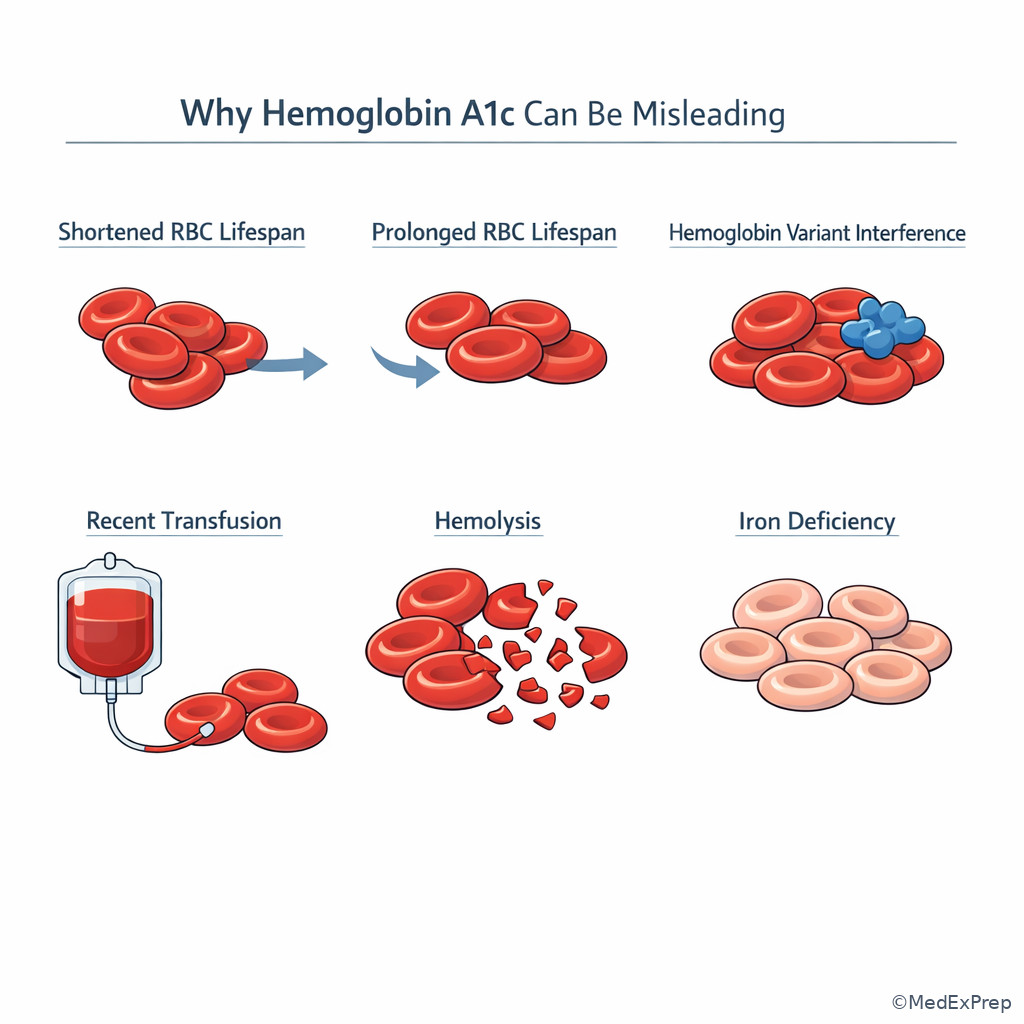
See Fig 4 when discordance appears. The exam rarely wants exhaustive assay science; it wants recognition that A1c can be wrong and that plasma glucose then becomes the preferred diagnostic anchor.
B Worked example
A 63-year-old woman with stage 4 CKD, anemia treated with erythropoietin, hypertension, and heart failure reports several months of polyuria and fatigue. A1c is 5.9%, but fasting plasma glucose is 154 mg/dL and a repeat fasting glucose 1 week later is 149 mg/dL. Ferritin is 420 ng/mL. The stem asks for the most appropriate interpretation.
Reasoning chain: identify task → resolve discordance. Extract key facts → CKD with anemia and erythropoietin use can distort A1c; two fasting glucose values are in the diabetes range. Apply rule → trust plasma glucose and diagnose diabetes. Eliminate distractors → the near-normal A1c is tempting, but it is the less reliable test here. Verify → repeated fasting plasma glucose ≥ 126 mg/dL confirms the diagnosis in an asymptomatic patient.
C Exam trap
D Checkpoint
Question: A 44-year-old man with hereditary spherocytosis and recent transfusion after trauma has fasting plasma glucose of 131 mg/dL. He denies symptoms. A1c is 5.4%. Which is the most appropriate next interpretation?
- A. No diabetes because A1c is normal.
- B. Diagnose diabetes immediately without confirmation because fasting glucose is abnormal.
- C. Suspect unreliable A1c and confirm diagnosis using plasma glucose-based testing.
- D. Use C-peptide to resolve whether the A1c or fasting glucose is correct.
Answer: C
- A: Tempting because the A1c looks reassuring; wrong because hemolysis and recent transfusion can invalidate it.
- B: Tempting because 131 mg/dL is in the diabetes range; wrong because he is asymptomatic and still needs confirmation.
- C: Correct because the A1c is unreliable, so accepted plasma glucose criteria should be used for confirmation.
- D: Tempting because endogenous insulin reserve seems relevant; wrong because C-peptide addresses classification, not diagnostic confirmation in this setting.
- True or False: Recent transfusion can make A1c unreliable. True.
- The most useful diagnostic substitute when A1c is invalid is plasma glucose-based testing.
- Name 3 A1c invalidators: hemolysis, erythropoietin use, hemoglobinopathy.
1.1.1.7 Prediabetes, overt diabetes, and forward diagnostic thinking
A Explanation
The last integration step is what to do with the category after you identify it. The single rule is to separate diagnosis from classification and from etiology. Prediabetes means increased metabolic risk but not yet diabetes. Overt diabetes means a diagnostic threshold has been crossed. Neither label by itself tells you whether the patient has type 1, type 2, or secondary diabetes; that comes next in later lessons.
ABIM stems may ask for the best next step after establishing diabetes. If the patient is lean, rapidly symptomatic, ketotic, or has other autoimmune disease, think ahead to type 1 or latent autoimmune diabetes and do not reflexively stop at “new type 2 diabetes.” If the patient has pancreatitis history, Cushing syndrome features, acromegaly, hemochromatosis, or diabetogenic medications, think ahead to secondary diabetes. But the lesson here is sequencing: first apply the correct diagnostic criteria, then move to classification. See Fig 5.
Exam takeaway: First decide normal versus prediabetes versus diabetes, then ask what type of diabetes or secondary cause is most likely.
flowchart TD
A[Abnormal glucose testing] --> B{Threshold reached?}
B -->|No| C[Normal or prediabetes]
B -->|Yes| D[Diabetes confirmed]
C --> E[Risk counseling and follow-up]
D --> F{Phenotype suggests autoimmune, insulin resistance, or secondary cause?}
F --> G[Type 1 vs Type 2 evaluation]
F --> H[Secondary diabetes evaluation]
See Fig 5 for the sequencing the exam expects. Many wrong answers are not wrong forever; they are wrong now because they skip ahead to classification before confirming the diagnosis.
B Worked example
A 39-year-old man with vitiligo, autoimmune thyroid disease, and BMI 23 kg/m2 presents with 2 months of weight loss and thirst. Random plasma glucose is 248 mg/dL. He is hemodynamically stable, bicarbonate is 24 mEq/L, and urine ketones are trace. The stem asks for the most appropriate next step after diagnosis.
Reasoning chain: identify task → not “does he have diabetes?” because that is already established by symptoms plus random glucose ≥ 200 mg/dL. Extract key facts → lean habitus, autoimmune history, weight loss. Apply rule → think ahead to type 1/LADA evaluation rather than assuming type 2. Eliminate distractors → repeating fasting glucose is unnecessary; calling it prediabetes ignores the threshold; jumping straight to secondary pancreatic diabetes is less supported than autoimmune disease. Verify → the next question after diagnosis is classification.
C Exam trap
D Checkpoint
Question: A 55-year-old woman with obesity, hypertension, and dyslipidemia has fasting plasma glucose 102 mg/dL and A1c 5.9% on routine screening. She asks whether she has diabetes. What is the most appropriate response?
- A. She has diabetes because A1c is abnormal.
- B. She has prediabetes because A1c is in the intermediate range.
- C. She has normal glycemia because fasting glucose is below 126 mg/dL.
- D. She requires immediate insulin because metabolic syndrome predicts progression.
Answer: B
- A: Tempting because the A1c is above normal; wrong because diabetes requires A1c ≥ 6.5%.
- B: Correct because A1c 5.9% falls in the prediabetes range even though fasting glucose is normal-range.
- C: Tempting because fasting glucose is not in diabetes range; wrong because glycemic category is based on any accepted diagnostic test and her A1c is abnormal in the prediabetes range.
- D: Tempting because progression risk is real; wrong because risk factors do not create a diabetes diagnosis or immediate insulin indication.
Exam Traps & Differentiators
- Most common wrong answer and why: diagnosing diabetes in any high-risk patient with abnormal-but-subthreshold values. Risk factors increase suspicion; they do not lower the diagnostic cutoff.
- Looks similar but isn't: asymptomatic patient with one abnormal A1c versus symptomatic patient with random glucose ≥ 200 mg/dL. The former usually needs confirmation; the latter usually does not.
- Related upcoming confusion: in Type 1 Vs Type 2 Diabetes, ketosis and weight loss affect classification, not the numeric criteria for diagnosis.
- Related upcoming confusion: in Secondary Diabetes Syndromes, glucocorticoids or pancreatic disease explain the cause of hyperglycemia but do not change the diagnostic thresholds.
| Stem says... | Think... | Do not choose... |
|---|---|---|
| Polyuria, polydipsia, weight loss, random glucose 248 mg/dL | Diabetes can be diagnosed now | Routine repeat fasting confirmation first |
| No symptoms, A1c 6.7%, fasting glucose 119 mg/dL | Asymptomatic discordance; confirm abnormal result | Immediate definitive diagnosis from one value alone |
| Recent transfusion, hemolysis, or erythropoietin use | A1c may be unreliable | Trust A1c over plasma glucose |
| Fasting glucose 124 mg/dL, A1c 6.3% | Prediabetes | Diabetes because risk is high |
| Borderline FPG and A1c but strong risk factors | Consider OGTT if the question asks for the best next test | Random glucose in an asymptomatic patient |
If the stem says...
- “Classic hyperglycemic symptoms” → think random plasma glucose may be diagnostic.
- “Routine screening” → think confirmation rules apply if only one test is abnormal.
- “Recent transfusion” → think reject A1c.
- “Borderline fasting glucose with persistent suspicion” → think OGTT.
- “Lean patient with weight loss and autoimmune history” → think diagnosis first, then type 1/LADA evaluation.
Exam takeaway: The same glucose value leads to different next steps depending on whether classic symptoms are present.
Tables
| Accepted diagnostic test | Diabetes threshold | Prediabetes range | Highest-yield use case |
|---|---|---|---|
| Fasting plasma glucose | ≥ 126 mg/dL | 100–125 mg/dL | Standard outpatient screening when fasting sample is available |
| 2-hour plasma glucose after 75-g OGTT | ≥ 200 mg/dL | 140–199 mg/dL | Borderline or unresolved cases; detects post-load dysglycemia |
| A1c | ≥ 6.5% | 5.7%–6.4% | Convenient chronic glycemic assessment when assay is reliable |
| Random plasma glucose | ≥ 200 mg/dL with classic symptoms or crisis | Not used to define prediabetes | Symptomatic or crisis presentation |
| Comparison point | FPG | A1c | OGTT |
|---|---|---|---|
| Requires fasting | Yes | No | Yes |
| Reflects chronic glycemia | No | Yes | No |
| Useful when RBC disorders present | Yes | No | Yes |
| Detects post-load abnormality missed by fasting values | No | Sometimes missed | Best |
| Most common board pitfall | Forgetting confirmation in asymptomatic patient | Ignoring assay limitations | Confusing 2-hour 200 with fasting 126 |
| Discordant scenario | Most likely issue | Best next move |
|---|---|---|
| A1c low, repeated fasting glucose high, hemolysis present | Falsely low A1c from shortened RBC survival | Use plasma glucose-based confirmation |
| A1c high, glucose values lower than expected, iron deficiency | Potential falsely elevated A1c | Correlate with plasma glucose; repeat with appropriate modality |
| Random glucose 220 mg/dL, asymptomatic | Insufficient standalone diagnostic context | Perform accepted confirmatory diagnostic testing |
| A1c 6.8%, fasting glucose 118 mg/dL, asymptomatic | Asymptomatic discordance | Repeat abnormal test or obtain second diagnostic test |
| Random glucose 240 mg/dL, polyuria and weight loss | Symptomatic diabetes | Diagnose now; proceed to classification and management |
Exam takeaway: OGTT is the board-style choice when fasting and A1c are borderline but suspicion remains high.
Algorithm / Approach
Exam takeaway: Start with symptoms, choose a valid diagnostic test, confirm if asymptomatic, and only then move to diabetes type or secondary-cause evaluation.
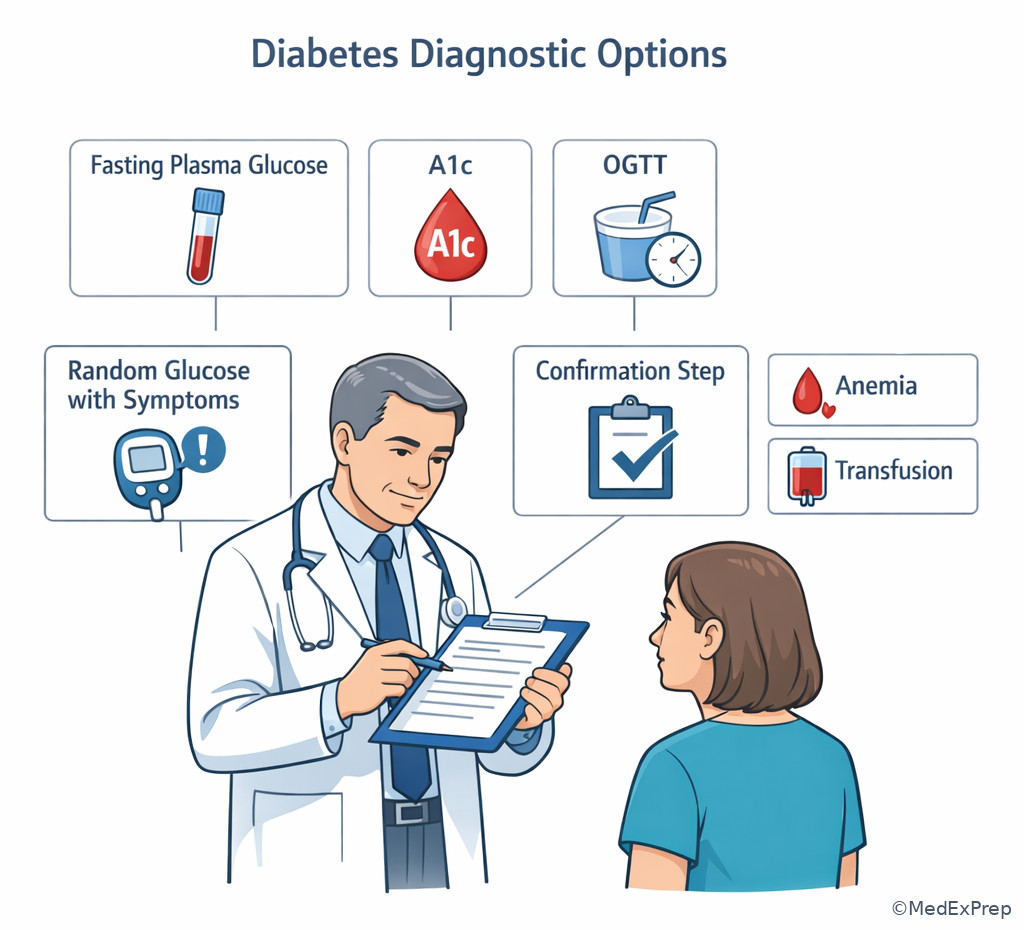
See Fig 6 as the master approach for question stems on this topic.
Exam takeaway: The correct next step depends on symptom status, test validity, and whether confirmation is still required.
Rapid Review
- FPG → diabetes begins at 126 mg/dL, not 125.
- 2-hour OGTT → diabetes begins at 200 mg/dL, not 180.
- A1c → diabetes begins at 6.5%, prediabetes ends at 6.4%.
- Random glucose → diagnostic only with classic symptoms or crisis.
- Asymptomatic screening abnormality → usually confirm before labeling diabetes.
- Two abnormal tests → can confirm diabetes without waiting for another visit.
- Discordant A1c and glucose → repeat or trust the valid modality, not the prettier number.
- Transfusion/hemolysis/EPO use → question A1c.
- Borderline FPG and A1c with strong suspicion → OGTT can unmask post-load diabetes.
- Prediabetes → risk state, not overt diabetes.
- Risk factors alone → never substitute for thresholds.
- Lean adult with new diabetes and autoimmune clues → diagnosis first, type 1/LADA evaluation next.
Self-check quiz
1.1.1.8 Question 1
A 50-year-old woman with obesity and hypertension has no osmotic symptoms. Her fasting plasma glucose is 124 mg/dL, repeated twice. Which glycemic category is most likely?
- A. Normal glycemia
- B. Prediabetes
- C. Diabetes mellitus
- D. Hyperglycemic crisis
1.1.1.9 Question 2
A 47-year-old man with obesity, dyslipidemia, and obstructive sleep apnea undergoes screening. Which A1c value meets the diagnostic threshold for diabetes in an otherwise asymptomatic adult, assuming the assay is valid?
- A. 5.9%
- B. 6.2%
- C. 6.4%
- D. 6.5%
1.1.1.10 Question 3
A 38-year-old woman presents with 4 weeks of polyuria, polydipsia, blurred vision, and 10-lb weight loss. She has celiac disease and iron deficiency from heavy menses. Random plasma glucose is 232 mg/dL. Which is the most appropriate next step?
- A. Repeat fasting plasma glucose on a different day before diagnosing diabetes
- B. Diagnose diabetes now and proceed to classification and treatment planning
- C. Order C-peptide first because type 1 diabetes is possible
- D. Order an OGTT because random plasma glucose is not diagnostic
1.1.1.11 Question 4
A 59-year-old man with coronary artery disease, obesity, and hypertension has no hyperglycemic symptoms. A1c is 6.7%, but fasting plasma glucose is 117 mg/dL. CBC is normal. Which is the most appropriate next step?
- A. Diagnose diabetes immediately based on the A1c alone
- B. Repeat the abnormal A1c or obtain another diagnostic test for confirmation
- C. Diagnose prediabetes because fasting glucose is below 126 mg/dL
- D. Ignore the A1c because fasting plasma glucose is the preferred diagnostic standard
1.1.1.12 Question 5
A 45-year-old woman with prior gestational diabetes, BMI 34 kg/m2, and NAFLD has fasting glucose 104 mg/dL and A1c 5.8% on repeated testing. She has no symptoms and asks for the best next diagnostic study if further evaluation is needed because suspicion remains high. Which is most appropriate?
- A. Random plasma glucose
- B. 75-g oral glucose tolerance test
- C. C-peptide level
- D. Serum insulin level
1.1.1.13 Question 6
A 62-year-old man with stage 4 CKD, anemia treated with erythropoietin, and heart failure reports fatigue and nocturia. He has no weight loss. A1c is 5.8%, fasting plasma glucose is 152 mg/dL, and repeat fasting glucose 1 week later is 147 mg/dL. Which interpretation is most appropriate?
- A. No diabetes because A1c is below 6.5%
- B. Diabetes is confirmed by repeated fasting plasma glucose despite likely unreliable A1c
- C. Prediabetes is most likely because nocturia is nonspecific
- D. OGTT must be performed before diabetes can be diagnosed
1.1.1.14 Question 7
A 41-year-old man with hereditary spherocytosis, recent splenectomy, and transfusion after postoperative bleeding presents for follow-up. He is asymptomatic. Fasting plasma glucose is 129 mg/dL; A1c is 5.3%. Which step is most appropriate?
- A. Reassure him that he does not have diabetes because A1c is normal
- B. Diagnose diabetes immediately because fasting glucose is above threshold
- C. Suspect an invalid A1c and confirm with repeat plasma glucose-based testing
- D. Use pancreatic autoantibodies to determine whether the fasting glucose is truly abnormal
1.1.1.15 Question 8
A 36-year-old man with vitiligo, autoimmune thyroid disease, and BMI 22 kg/m2 reports polyuria, thirst, and 15-lb weight loss over 6 weeks. Random plasma glucose is 246 mg/dL, bicarbonate is 24 mEq/L, and urine ketones are trace. Which is the most appropriate next step after establishing the diagnosis?
- A. Repeat fasting plasma glucose because he is not acidotic
- B. Classify the diabetes phenotype, with consideration of autoimmune diabetes
- C. Reassure him that this is prediabetes because ketones are only trace
- D. Diagnose secondary diabetes from occult pancreatitis first
Answer key
1.1.1.16 Question 1 — Answer: B. Prediabetes
Correct-answer logic: Fasting plasma glucose of 124 mg/dL lies in the prediabetes range of 100–125 mg/dL. Repetition confirms the pattern, but it remains below the diabetes threshold of 126 mg/dL. The mechanism-to-treatment logic is straightforward: chronic dysglycemia is present, but it has not crossed the threshold for overt diabetes. Authoritative sources: American Diabetes Association Standards of Care; Harrison's Principles of Internal Medicine.
- A. Normal glycemia: Tempting because she is asymptomatic and values are only mildly abnormal. Incorrect because the single discriminating clue is fasting glucose 124 mg/dL, which is above normal but below diabetes threshold.
- B. Prediabetes: Tempting because the value fits the classic intermediate range. Correct because repeated FPG 124 mg/dL remains within 100–125 mg/dL.
- C. Diabetes mellitus: Tempting because obesity and hypertension raise risk and the result is close to 126. Incorrect because the discriminating clue is that 124 mg/dL does not meet the diagnostic cutoff.
- D. Hyperglycemic crisis: Tempting only if one overinterprets any glucose abnormality as dangerous. Incorrect because there is no severe hyperglycemia, acidosis, or crisis presentation.
1.1.1.17 Question 2 — Answer: D. 6.5%
Correct-answer logic: The accepted A1c threshold for diabetes diagnosis is 6.5% or higher when measured by a standardized assay and interpreted in the right clinical setting. Values from 5.7% to 6.4% indicate prediabetes, not overt diabetes. Authoritative sources: ADA Standards of Care; ADA classification/diagnosis recommendations.
- A. 5.9%: Tempting because it is clearly abnormal and common on screening. Incorrect because it falls in the prediabetes range.
- B. 6.2%: Tempting because it feels close to a diabetes-level abnormality. Incorrect because it remains prediabetes.
- C. 6.4%: Tempting because it is the closest distractor and requires exact recall. Incorrect because the discriminating clue is that diabetes begins at 6.5%, not 6.4%.
- D. 6.5%: Tempting because it is the first A1c value that crosses the threshold. Correct because this is the standard diagnostic cutoff.
1.1.1.18 Question 3 — Answer: B. Diagnose diabetes now and proceed to classification and treatment planning
Correct-answer logic: Classic hyperglycemic symptoms plus random plasma glucose ≥ 200 mg/dL are sufficient to diagnose diabetes immediately. The mechanism-based reasoning is that symptomatic hyperglycemia with unequivocal plasma glucose elevation reflects overt diabetes; waiting for repeat fasting testing delays appropriate care. Iron deficiency might affect A1c interpretation, but it does not invalidate the symptomatic random glucose criterion. Sources: ADA Standards of Care; Harrison's.
- A. Repeat fasting plasma glucose on a different day before diagnosing diabetes: Tempting because repeat confirmation is a memorized rule. Incorrect because the discriminating clue is classic symptoms with random glucose 232 mg/dL.
- B. Diagnose diabetes now and proceed to classification and treatment planning: Tempting because the symptomatic threshold is clearly met. Correct because symptoms plus random glucose ≥ 200 mg/dL establish the diagnosis.
- C. Order C-peptide first because type 1 diabetes is possible: Tempting because celiac disease raises autoimmune suspicion. Incorrect because classification comes after diagnosis; the discriminating clue is that the diagnosis is already secured.
- D. Order an OGTT because random plasma glucose is not diagnostic: Tempting if one thinks OGTT is the gold standard for all cases. Incorrect because random plasma glucose is diagnostic in symptomatic patients.
1.1.1.19 Question 4 — Answer: B. Repeat the abnormal A1c or obtain another diagnostic test for confirmation
Correct-answer logic: In an asymptomatic adult, a single diagnostic-range A1c with a nondiagnostic fasting glucose requires confirmation. The mechanism is not biological but procedural: diagnosis must be secure when screening detects abnormality without clear symptoms. Because there is no obvious A1c invalidator here, the A1c is not rejected; it is confirmed. Sources: ADA Standards of Care.
- A. Diagnose diabetes immediately based on the A1c alone: Tempting because A1c 6.7% is above threshold. Incorrect because the discriminating clue is that he has no hyperglycemic symptoms and the second test is not diagnostic.
- B. Repeat the abnormal A1c or obtain another diagnostic test for confirmation: Correct because asymptomatic discordance requires confirmation of the abnormal result.
- C. Diagnose prediabetes because fasting glucose is below 126 mg/dL: Tempting because fasting glucose is only mildly elevated. Incorrect because a diagnostic-range A1c cannot simply be ignored; the correct move is confirmation.
- D. Ignore the A1c because fasting plasma glucose is the preferred diagnostic standard: Tempting because glucose feels more direct. Incorrect because A1c is an accepted diagnostic test when reliable.
1.1.1.20 Question 5 — Answer: B. 75-g oral glucose tolerance test
Correct-answer logic: In a high-risk but asymptomatic adult with borderline fasting glucose and A1c, OGTT is the most useful next diagnostic study when further evaluation is desired. The physiology is that post-load glucose abnormalities may appear before fasting levels become diagnostic. Prior gestational diabetes further increases suspicion. Sources: ADA Standards of Care; endocrine board review principles.
- A. Random plasma glucose: Tempting because it is easy and widely available. Incorrect because the discriminating clue is that she is asymptomatic, so random glucose is not the best test for subtle diagnosis.
- B. 75-g oral glucose tolerance test: Correct because OGTT is more sensitive for postprandial dysglycemia and unresolved high-risk cases.
- C. C-peptide level: Tempting because it relates to endogenous insulin reserve. Incorrect because the stem asks for diagnostic testing for dysglycemia, not diabetes type classification.
- D. Serum insulin level: Tempting because insulin resistance is likely. Incorrect because insulin levels are not standard diagnostic tests for diabetes in this setting.
1.1.1.21 Question 6 — Answer: B. Diabetes is confirmed by repeated fasting plasma glucose despite likely unreliable A1c
Correct-answer logic: CKD with anemia treated using erythropoietin can shorten RBC survival and distort A1c, often making it falsely low. Repeated fasting plasma glucose values of 152 and 147 mg/dL are both above the diabetes threshold and confirm the diagnosis. The discriminating mechanism is A1c invalidity from altered red-cell kinetics. Sources: ADA Standards of Care; Harrison's; endocrine literature on A1c limitations in CKD.
- A. No diabetes because A1c is below 6.5%: Tempting because A1c is often overtrusted. Incorrect because the discriminating clue is CKD-related anemia with erythropoietin use, which can invalidate A1c.
- B. Diabetes is confirmed by repeated fasting plasma glucose despite likely unreliable A1c: Correct because two fasting values exceed 126 mg/dL and the A1c is suspect.
- C. Prediabetes is most likely because nocturia is nonspecific: Tempting because nocturia alone is weak. Incorrect because the diagnosis rests on repeated fasting glucose values, not the symptom quality.
- D. OGTT must be performed before diabetes can be diagnosed: Tempting because OGTT is sensitive. Incorrect because OGTT is not required when accepted fasting criteria are already met repeatedly.
1.1.1.22 Question 7 — Answer: C. Suspect an invalid A1c and confirm with repeat plasma glucose-based testing
Correct-answer logic: Hemolytic disorders and recent transfusion can make A1c misleading. This asymptomatic patient has one fasting glucose in the diabetes range, but because he is asymptomatic he still needs confirmation. The best response is not to accept the normal A1c but to recognize that it may be invalid and confirm with plasma glucose-based testing. Sources: ADA Standards of Care.
- A. Reassure him that he does not have diabetes because A1c is normal: Tempting because the A1c appears objective. Incorrect because hereditary spherocytosis and recent transfusion are the single clues making A1c unreliable.
- B. Diagnose diabetes immediately because fasting glucose is above threshold: Tempting because 129 mg/dL exceeds the cutoff. Incorrect because the patient is asymptomatic and requires confirmation.
- C. Suspect an invalid A1c and confirm with repeat plasma glucose-based testing: Correct because the A1c is unreliable and the fasting abnormality needs plasma-based confirmation.
- D. Use pancreatic autoantibodies to determine whether the fasting glucose is truly abnormal: Tempting because autoimmune classification sometimes follows diagnosis. Incorrect because antibodies do not resolve whether the diagnostic plasma threshold has been confirmed.
1.1.1.23 Question 8 — Answer: B. Classify the diabetes phenotype, with consideration of autoimmune diabetes
Correct-answer logic: This patient already meets diabetes criteria because he has classic symptoms and random plasma glucose 246 mg/dL. The next board-style decision is classification. Lean body habitus, autoimmune history, and weight loss raise concern for autoimmune diabetes rather than routine insulin-resistant type 2 diabetes. The key mechanism-to-treatment link is that classification affects urgency of insulin planning and adjunctive testing. Sources: ADA Standards of Care; endocrine texts on adult autoimmune diabetes.
- A. Repeat fasting plasma glucose because he is not acidotic: Tempting because absence of DKA may falsely suggest the diagnosis is uncertain. Incorrect because the discriminating clue is symptomatic random plasma glucose ≥ 200 mg/dL.
- B. Classify the diabetes phenotype, with consideration of autoimmune diabetes: Correct because diagnosis is already established and autoimmune clues are prominent.
- C. Reassure him that this is prediabetes because ketones are only trace: Tempting because ketosis is minimal. Incorrect because prediabetes is incompatible with symptomatic random glucose 246 mg/dL.
- D. Diagnose secondary diabetes from occult pancreatitis first: Tempting because weight loss and diabetes can be seen in pancreatic disease. Incorrect because the discriminating clue is the autoimmune phenotype without pancreatic-history support.
Keep going with the full ABIM Endocrinology Prep Course (Endo)
You just studied the way members do, in the same lesson interface. Full access unlocks every lesson, the question bank and flashcards for a full year.
One payment · 1 year of access · No auto-renewal