1.1.1 - Type I Hypersensitivity Pathways
Type I Hypersensitivity Pathways
What you’ll learn
- D7: Mechanisms, Epidemiology, and Foundational Clinical Immunology → IgE sensitization sequence: trace allergen exposure to Th2 polarization, class switching, and mast-cell sensitization.
- D1: Allergic Disorders and Clinical Diagnosis → Pattern recognition: recognize the timing and phenotype that most strongly support Type I hypersensitivity.
- D2: Diagnostic Testing and Interpretation → Test logic: connect skin testing and serum specific IgE to the underlying pathway and explain why positive testing alone does not prove disease.
- D3: Therapeutics and Management → Mechanism-to-treatment logic: match mediator phase to acute treatment and prevention strategy.
- D5: Anaphylaxis, Adverse Reactions, and High-Risk Scenarios → Safety prioritization: identify when Type I mechanisms can escalate to systemic reactions requiring immediate epinephrine-based reasoning.
- D7 → Foundational clinical immunology: IgE production, Fc epsilon RI binding, mast-cell and basophil activation
- D1 → Allergic disorder recognition: immediate allergic symptom patterns across skin, airway, GI, and systemic presentations
- D2 → Testing interpretation: sensitization versus clinical allergy, test-context reasoning
- D3 → Therapeutics: mediator-directed treatment principles, prevention logic
- D5 → High-risk scenario framing: progression from local reaction to anaphylaxis
Why it matters
- Most board-relevant allergic emergencies and classic outpatient allergy disorders begin with this pathway, so mechanism recognition shortens the differential immediately.
- Questions often hide the diagnosis inside timing: symptoms within minutes to 2 hours after exposure strongly favor Type I hypersensitivity over delayed or non-IgE mechanisms.
- Testing errors usually come from confusing sensitization with clinical allergy; understanding the pathway prevents overdiagnosis and unsafe avoidance advice.
- Acute therapy choices make sense only if you know which mediators drive bronchospasm, vasodilation, pruritus, urticaria, and late-phase inflammation.
Key Terms & Must-Know Facts
1.1.1.1 Key terms
- Allergen: usually a protein capable of inducing IgE-mediated sensitization in susceptible hosts.
- Atopy: inherited tendency to make IgE responses to common environmental proteins.
- APC: antigen-presenting cell, typically dendritic cell in early sensitization.
- Th2 response: helper T-cell pattern promoting IL-4, IL-5, IL-13 and allergic inflammation.
- Class switching: B-cell recombination toward IgE production under cytokine influence.
- Specific IgE: allergen-directed IgE antibody.
- Fc epsilon RI: high-affinity IgE receptor on mast cells and basophils.
- Sensitization: immunologic preparation for reaction; may exist without symptoms.
- Cross-linking: allergen binding adjacent receptor-bound IgE molecules, triggering degranulation.
- Mast-cell degranulation: release of preformed mediators such as histamine and tryptase.
- Late-phase reaction: inflammatory wave hours later with recruited eosinophils and cytokines.
- Basophil: circulating granulocyte with IgE-mediated activation capacity.
- Tryptase: mast-cell mediator useful in selected systemic reaction evaluation.
- Anaphylaxis: severe systemic hypersensitivity with airway, breathing, circulatory, or multi-organ involvement.
1.1.1.2 Must-know facts
- First exposure typically sensitizes; subsequent exposure typically elicits immediate symptoms.
- Type I hypersensitivity is IgE-mediated and classically immediate.
- Mast cells are tissue-resident; basophils are circulating; both can participate in IgE-mediated reactions.
- Histamine explains much of the early pruritus, flushing, sneezing, rhinorrhea, and urticaria.
- Leukotrienes strongly contribute to bronchoconstriction and prolonged airway symptoms.
- A positive skin test or serum specific IgE means sensitization, not automatic clinical allergy.
- The key board clue favoring Type I hypersensitivity is rapid onset after reproducible exposure.
- When systemic symptoms are present, epinephrine outranks antihistamines and corticosteroids.
| High-yield element | What to remember | Why exams ask it |
|---|---|---|
| Timing | Minutes to about 2 hours after exposure | Separates immediate IgE reactions from delayed T-cell reactions |
| First exposure | Usually sensitization, not dramatic reaction | Common trap in food and drug stems |
| Effector cell | Mast cell is the classic tissue effector | Links mechanism to urticaria, wheeze, hypotension |
| Test meaning | Positive IgE test means sensitization only | Prevents overcalling allergy |
| Most dangerous endpoint | Anaphylaxis | Safety-first board reasoning |
| Immediate treatment | Intramuscular epinephrine for anaphylaxis | Frequent major exam discriminator |
Exam takeaway: Follow the sequence from sensitization to re-exposure to identify where testing and treatment fit.
flowchart LR
A[Allergen enters through skin or mucosa] --> B[Dendritic cell captures and presents antigen]
B --> C[Naive T cell skews to Th2]
C --> D[IL-4 and IL-13 drive B-cell class switching]
D --> E[Allergen-specific IgE produced]
E --> F[IgE binds Fc epsilon RI on mast cells and basophils]
F --> G[Re-exposure to same allergen]
G --> H[IgE cross-linking]
H --> I[Degranulation and lipid mediator release]
I --> J[Immediate symptoms]
J --> K[Late-phase inflammation]
Exam takeaway: Early barrier entry and dendritic-cell presentation set up the later IgE-mediated reaction.
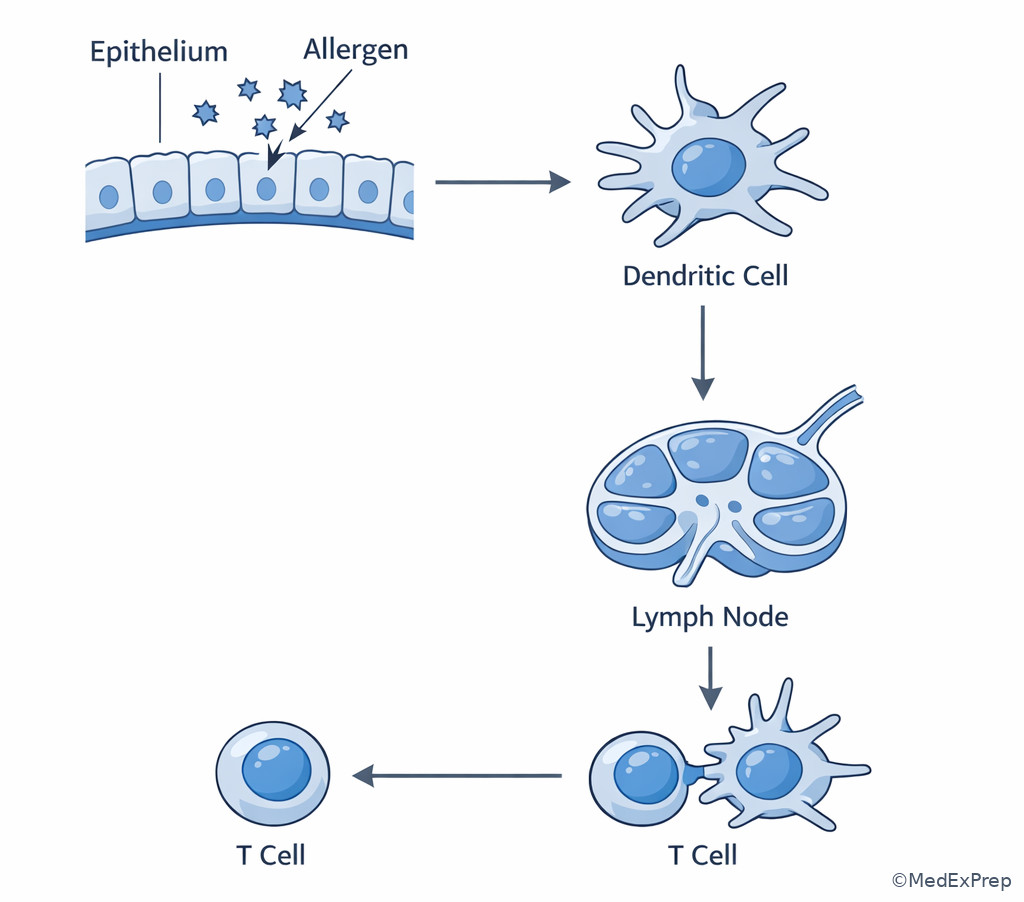
Core content
1.1.1.3 Sensitization: when exposure creates future risk instead of immediate disease
A Explanation
The first decision conflict is whether an exposure explains current symptoms or merely explains why a patient is now capable of reacting later. In Type I hypersensitivity, the first clinically silent step is sensitization. An allergen is sampled by dendritic cells, presented to naive T cells, and in an atopy-prone host the response skews toward Th2. Th2 cytokines, especially IL-4 and IL-13, drive B-cell class switching to allergen-specific IgE. That IgE then binds Fc epsilon RI on mast cells and basophils, “arming” them for future encounters. The practical choose-versus-reject rule: choose sensitization when testing or history shows immune recognition without a rapid, reproducible symptom pattern; reject “clinical allergy” if exposure has not caused consistent symptoms.
WHY THIS IS TESTED: Board questions want to know whether you can separate immunologic priming from actual disease. This distinction prevents two classic errors: overdiagnosing allergy from a positive test alone and misunderstanding why dramatic reactions usually occur after, not at, the first meaningful sensitizing exposure.
B Worked example
A 9-year-old boy with atopic dermatitis and mild seasonal rhinitis is referred after a broad food panel ordered elsewhere shows positive serum specific IgE to peanut, egg, and sesame. He has never knowingly eaten peanut, eats baked egg weekly without symptoms, and had one episode of vomiting after viral gastroenteritis. Total IgE is elevated. The board-style task is to identify whether he has established clinical allergy or sensitization only.
Reasoning chain: Identify the task: interpret an allergy test in context. Extract key facts: atopic child, positive specific IgE, but no reproducible immediate reaction history to peanut and ongoing tolerance of baked egg. Apply the rule: IgE positivity indicates sensitization, not necessarily clinical reactivity. Eliminate distractors: elevated total IgE is noise; one vomiting illness after a virus is not a convincing immediate food reaction. Verify safety: this child needs allergy-directed evaluation and risk stratification, not automatic lifelong avoidance of every positive test.
C Exam trap
D Checkpoint
Question: A 22-year-old woman with allergic rhinitis has positive skin tests to dust mite and cat dander. She reports daily symptoms around cats but no symptoms in dusty hotel rooms. Which statement is most accurate?
- She has clinical allergy to both dust mite and cat because both skin tests are positive.
- She is sensitized to both, but only the cat history currently supports clinical allergy.
- Her positive tests are false positives because she lacks symptoms to dust.
- Clinical allergy cannot be present if symptoms are limited to the upper airway.
- A: Tempting because positive testing feels definitive, but wrong because test positivity alone does not confirm symptomatic disease for each allergen.
- B: Tempting because it requires integrating history with testing, and it is correct because the symptom-exposure relationship is present for cat but not proven for dust mite.
- C: Tempting because a mismatch suggests test error, but wrong because true sensitization may exist without clinically obvious disease.
- D: Tempting if one incorrectly associates “allergy” only with anaphylaxis, but wrong because rhinitis is a classic IgE-mediated phenotype.
1.1.1.4 Re-exposure and mast-cell activation: the single step that creates immediate symptoms
A Explanation
The next decision conflict is whether a patient’s rapid symptoms come from simple exposure or from cross-linking of mast-cell-bound IgE. The one rule that resolves it is timing plus reproducibility: if the same exposure repeatedly causes sneezing, urticaria, wheeze, vomiting, or hypotension within minutes to roughly 2 hours, think re-exposure with effector-cell activation. Mast cells sit in tissues at portals of allergen entry—skin, respiratory mucosa, and GI tract. Reintroduced allergen bridges adjacent IgE molecules on Fc epsilon RI, triggering calcium-dependent signaling, degranulation, and synthesis of lipid mediators. Histamine produces itch, vasodilation, rhinorrhea, and wheal-and-flare; tryptase reflects mast-cell activation; leukotrienes and prostaglandins amplify bronchoconstriction, mucus, and vascular permeability.
WHY THIS IS TESTED: Examiners want you to identify the triggering event rather than just memorizing mediator names. If you know that symptoms require re-exposure and cross-linking, you can distinguish true IgE-mediated reactions from intolerances, delayed drug eruptions, and pseudoallergic phenomena. See Fig 1.
Exam takeaway: Rapid reproducible symptoms after re-exposure point to IgE cross-linking rather than mere sensitization.
flowchart TD
A[Patient has symptoms after exposure] --> B{Timing}
B -->|Minutes to 2 hours| C[Consider Type I hypersensitivity]
B -->|Delayed or prolonged onset| D[Consider non-IgE mechanisms]
C --> E{Prior sensitization likely?}
E -->|Yes| F[Allergen cross-links IgE on mast cell]
F --> G[Histamine tryptase leukotrienes]
G --> H[Urticaria wheeze rhinorrhea vomiting hypotension]
E -->|No clear prior exposure| I[Reassess history; sensitization may have occurred indirectly or previously]
D --> J[Use separate differential framework]
B Worked example
A 34-year-old man with allergic rhinitis, mild intermittent asthma, and GERD develops generalized pruritus, urticaria, throat tightness, and cough 10 minutes after eating shrimp at a work dinner. He mentions that he also drank red wine and recently started ibuprofen for back pain. Oxygen saturation is 95%, BP 98/62 mm Hg, and he has faint wheezing. The tempting but wrong clue is the wine, which may push examinees toward “sulfite intolerance” or a vague nonallergic reaction.
Reasoning chain: Identify the task: determine the most likely mechanism behind this immediate multisystem reaction. Extract key facts: prior atopic history, rapid onset after exposure, skin plus respiratory symptoms, possible GI/vascular involvement. Apply the rule: this is classic re-exposure with mast-cell activation through an IgE pathway unless proven otherwise. Eliminate distractors: GERD does not explain urticaria; ibuprofen can cause reactions but the meal-specific timing and food trigger are more compelling; isolated wine sensitivity would not best explain the full phenotype. Verify safety: because this pattern is consistent with anaphylaxis, urgent epinephrine reasoning takes priority over mechanistic perfection.
C Exam trap
D Checkpoint
Question: Which event most directly triggers the immediate allergic response in a sensitized patient?
- Production of total IgE by plasma cells
- Binding of a single IgE molecule to Fc epsilon RI
- Cross-linking of adjacent allergen-specific IgE molecules on mast cells by allergen
- Recruitment of eosinophils to tissue 12 hours later
- A: Tempting because IgE production is essential upstream, but wrong because it creates sensitization rather than the acute trigger.
- B: Tempting because receptor binding matters, but wrong because receptor occupancy arms the cell without causing degranulation by itself.
- C: Tempting because it precisely identifies the activation step, and it is correct because cross-linking is the immediate trigger for mast-cell degranulation.
- D: Tempting because eosinophils are strongly associated with allergy, but wrong because they are more characteristic of the late inflammatory phase.
- The single triggering step for immediate symptoms is allergen-mediated cross-linking of mast-cell-bound IgE.
- True or False: A patient can have allergen-specific IgE without current clinical symptoms. True.
- Name 3 early mediators or mediator groups: histamine, tryptase, leukotrienes.
1.1.1.5 Immediate phase versus late phase: choosing the right mediator logic
A Explanation
The decision conflict here is whether the question is asking about the minutes-phase reaction or the hours-phase inflammatory aftermath. The single clue that resolves it is timing. The immediate phase occurs within minutes and is driven by preformed and rapidly synthesized mediators from mast cells: histamine, tryptase, leukotrienes, prostaglandins, and platelet-activating factor. The late phase occurs several hours later and reflects cellular recruitment—especially eosinophils, basophils, and Th2-driven inflammation—leading to persistent congestion, bronchial hyperresponsiveness, and prolonged tissue symptoms. Choose immediate-phase logic when the stem emphasizes wheal-and-flare, abrupt sneezing, acute bronchospasm, or sudden urticaria. Reject it when the stem emphasizes sustained inflammation or recurrent symptoms hours after the trigger.
WHY THIS IS TESTED: Many treatment and testing questions hide in this distinction. Antihistamines can help pruritus and hives but do not replace epinephrine in systemic reactions. Corticosteroids are not rescue therapy for the immediate phase but are linked conceptually to later inflammatory control. The upcoming topic on eosinophils and cytokines deepens this late-phase biology. See Fig 3.
Exam takeaway: Timing is the fastest clue for choosing mast-cell mediator logic versus recruited inflammatory-cell logic.
flowchart LR
A[Allergen re-exposure] --> B[Mast-cell activation]
B --> C[Immediate phase minutes]
C --> D[Histamine tryptase leukotrienes prostaglandins]
D --> E[Pruritus urticaria sneezing bronchospasm]
B --> F[Late phase hours]
F --> G[Cell recruitment eosinophils basophils Th2 cytokines]
G --> H[Persistent congestion hyperreactivity ongoing inflammation]
Exam takeaway: Matching mediator release to organ effects helps distinguish acute rescue priorities from later inflammatory control.
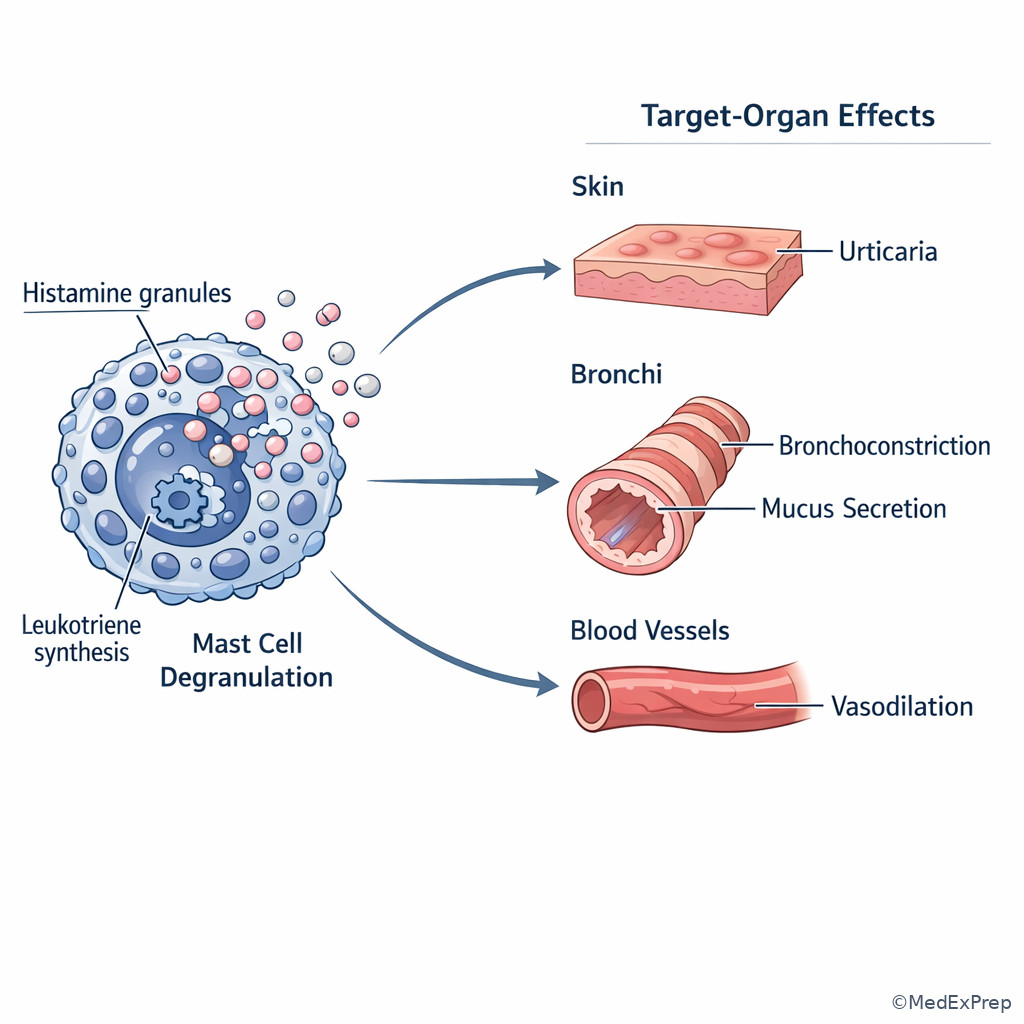
B Worked example
A 17-year-old girl with eczema and allergic rhinitis develops intense nasal itching, sneezing, and watery rhinorrhea within minutes of entering a house with cats. Four hours later, after leaving the house, she remains congested and coughs intermittently. She takes an oral antihistamine and asks why she still feels inflamed. The distracting detail is a low-grade temperature of 99.1°F after a long day outdoors, which can mislead toward infection.
Reasoning chain: Identify the task: distinguish immediate mediator effects from late-phase inflammation. Extract key facts: abrupt cat-triggered symptoms followed by persistent later symptoms. Apply the rule: early itching/sneezing fits histamine-rich immediate phase; ongoing congestion and cough hours later reflect late inflammatory recruitment. Eliminate distractors: fever is minimal and nonspecific; lack of purulent discharge and clear allergen link argue against acute infection. Verify treatment logic: antihistamines may relieve early symptoms, but persistent inflammatory disease often requires anti-inflammatory controller strategies depending on the organ system involved.
C Exam trap
D Checkpoint
Question: A patient develops a wheal-and-flare skin response 15 minutes after allergen skin testing and local induration that remains prominent several hours later. Which pairing best matches these phases?
- Early eosinophil influx; late histamine release
- Early histamine-mediated vasodilation; late cellular inflammatory recruitment
- Early immune complex deposition; late IgG complement activation
- Early bradykinin excess; late C1 inhibitor consumption
- A: Tempting because eosinophils are linked with allergy, but wrong because eosinophils are not the dominant immediate-phase driver.
- B: Tempting because it uses timing accurately, and it is correct because histamine shapes the early wheal-and-flare while later inflammation reflects recruited cells.
- C: Tempting if one confuses hypersensitivity types, but wrong because immune complexes describe a different mechanism.
- D: Tempting because angioedema differentials are high yield, but wrong because bradykinin-mediated processes are outside classic Type I IgE pathways.
1.1.1.6 Clinical phenotypes: recognizing Type I hypersensitivity across organ systems
A Explanation
The decision conflict now becomes: does this presentation fit a classic IgE-mediated phenotype, or should you reject Type I hypersensitivity and widen the differential? The single resolving clue is a rapid, reproducible exposure-symptom link plus a phenotype compatible with mast-cell mediator release. In the upper airway, think sneezing, itching, rhinorrhea, nasal congestion, and conjunctival itching after aeroallergen exposure. In skin disease, think urticaria, flushing, and pruritus. In GI disease, think rapid oral itching, vomiting, cramps, or diarrhea after food exposure. In systemic disease, think anaphylaxis with skin, respiratory, GI, and/or cardiovascular involvement. In lower airways, wheeze or cough may occur, but the board usually expects you to distinguish isolated asthma physiology from acute IgE-triggered systemic reactions.
WHY THIS IS TESTED: Not every itchy rash or breathing complaint is allergy. Exams reward recognition of the pattern plus timing plus trigger triad. If any of those pieces are missing, pause before choosing a classic Type I mechanism. See Fig 4 and Fig 5.
Exam takeaway: The same IgE pathway produces different board-style diagnoses depending on the dominant target organ.
flowchart TD
A[Type I hypersensitivity] --> B[Upper airway]
A --> C[Skin]
A --> D[GI tract]
A --> E[Lower airway]
A --> F[Multisystem]
B --> B1[Sneezing itching rhinorrhea conjunctivitis]
C --> C1[Urticaria flushing pruritus]
D --> D1[Oral itching vomiting cramps diarrhea]
E --> E1[Wheeze cough bronchospasm]
F --> F1[Anaphylaxis pattern]
Exam takeaway: Use organ distribution plus timing to distinguish localized allergic disease from systemic hypersensitivity.
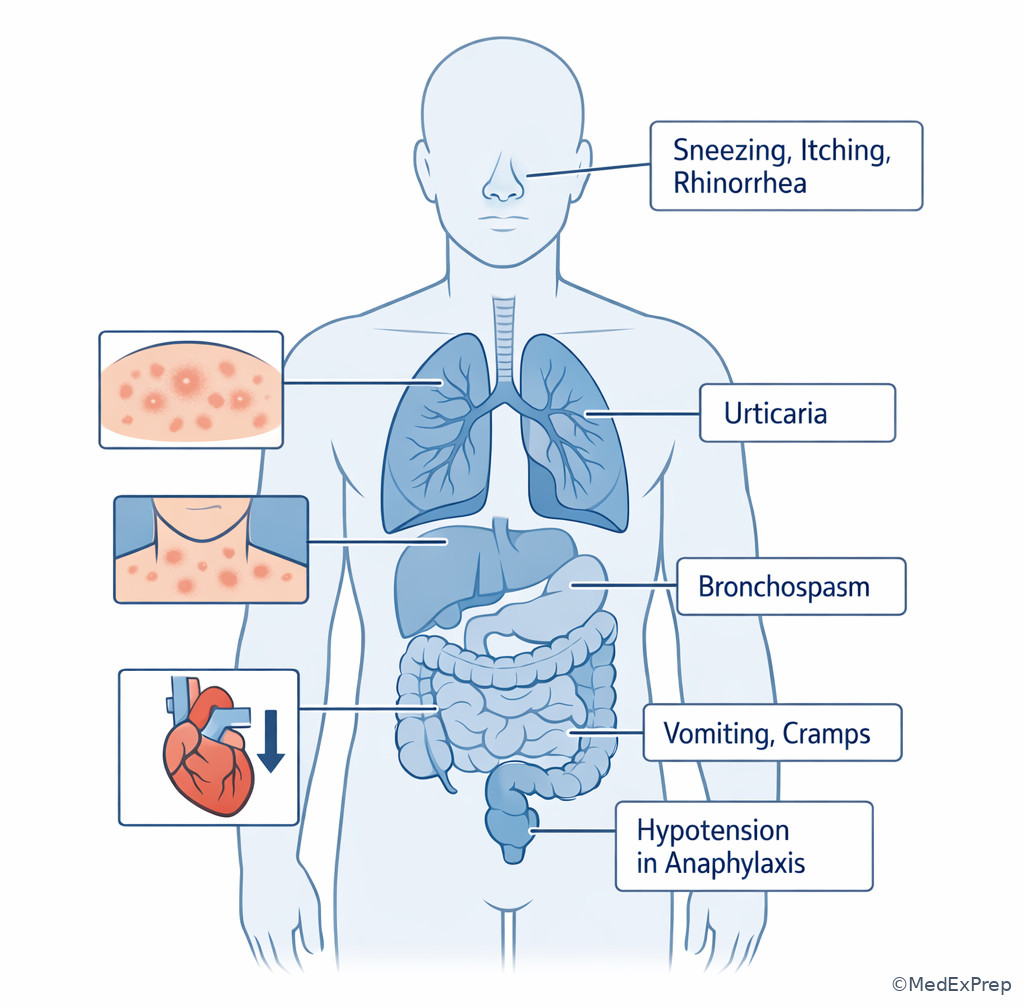
B Worked example
A 46-year-old woman with chronic sinus symptoms, hypertension, and migraines presents for evaluation of “allergies.” She reports nasal congestion year-round, facial pressure, and poor smell, but denies itching, sneezing, or clear trigger-specific worsening. She owns two cats and assumes they are the cause. Skin examination is normal; she has no urticaria history. The tempting but wrong clue is cat ownership, which often pushes examinees toward default IgE-mediated reasoning.
Reasoning chain: Identify the task: decide whether the phenotype fits Type I hypersensitivity. Extract key facts: congestion and pressure are present, but classic itch/sneeze/reproducibility are absent. Apply the rule: a rapid, reproducible exposure-symptom pattern is missing, so simple Type I hypersensitivity is not established. Eliminate distractors: cat ownership alone does not prove allergic rhinitis; migraine history is noise; chronic pressure and anosmia suggest other upper-airway disorders may need consideration. Verify: targeted testing may still be useful later, but the current pattern should not be reflexively labeled classic Type I disease.
C Exam trap
D Checkpoint
Question: Which presentation most strongly supports a Type I hypersensitivity phenotype?
- A 31-year-old man with chronic daily hives for 8 months without clear triggers and normal meals tolerated
- A 14-year-old girl with mouth itching and vomiting within 15 minutes of cashew ingestion on two separate occasions
- A 52-year-old woman with facial swelling that evolves over 24 hours while taking an ACE inhibitor
- A 27-year-old man with a pruritic eczematous rash 3 days after nickel belt-buckle exposure
- A: Tempting because hives suggest mast cells, but wrong because chronic spontaneous urticaria often lacks a reproducible allergen-specific immediate trigger.
- B: Tempting because the time course and reproducibility are classic, and it is correct because immediate recurrent food-triggered GI/oral symptoms fit IgE-mediated disease.
- C: Tempting because swelling raises allergy concern, but wrong because ACE inhibitor angioedema is bradykinin-mediated and delayed in pattern.
- D: Tempting because contact exposure causes rash, but wrong because delayed eczematous dermatitis suggests a T-cell mechanism instead.
- The most useful single clue supporting Type I hypersensitivity is rapid reproducible symptoms after a specific exposure.
- True or False: Chronic congestion without itch or sneeze strongly confirms allergic rhinitis. False.
- Name 3 common organ systems involved: skin, upper airway, GI tract (with lower airway and multisystem disease also important).
1.1.1.7 Testing and interpretation: why positive IgE is necessary for some questions but never sufficient by itself
A Explanation
The final decision conflict is whether to choose a test result or the clinical history as the main determinant of disease. The correct rule is integration: in Type I hypersensitivity, testing detects the presence of allergen-specific IgE or mast-cell reactivity, but diagnosis requires the right context. Skin prick testing and serum specific IgE are most useful when the history identifies plausible allergens and immediate symptoms. Choose testing when you need to support a history-based suspicion, assess candidate triggers, or guide management decisions such as avoidance or immunotherapy planning. Reject overtesting and reject diagnosis by panel alone. A positive result shows immunologic sensitization; a negative result lowers the likelihood of IgE-mediated disease for that allergen, though no test is perfect.
WHY THIS IS TESTED: Testing interpretation is one of the highest-yield ABAI reasoning skills. Mechanism-based questions often ask what a test means, not just whether it is “positive.” The best answer usually integrates pretest probability, exposure relevance, timing, and phenotype. See Fig 6.
Exam takeaway: Test results matter only after you decide whether the history makes IgE-mediated disease plausible.
flowchart TD
A[Possible allergic reaction] --> B{Immediate reproducible exposure pattern?}
B -->|Yes| C[Targeted skin test or serum specific IgE]
B -->|No| D[Reconsider non-IgE or nonallergic causes]
C --> E{Result}
E -->|Positive| F[Sensitization confirmed]
F --> G{History fits?}
G -->|Yes| H[Clinical allergy likely]
G -->|No| I[Sensitization without proven clinical allergy]
E -->|Negative| J[IgE-mediated allergy less likely; reassess exposure and differential] Exam takeaway: Skin testing visualizes immediate mast-cell reactivity but still requires clinical correlation.
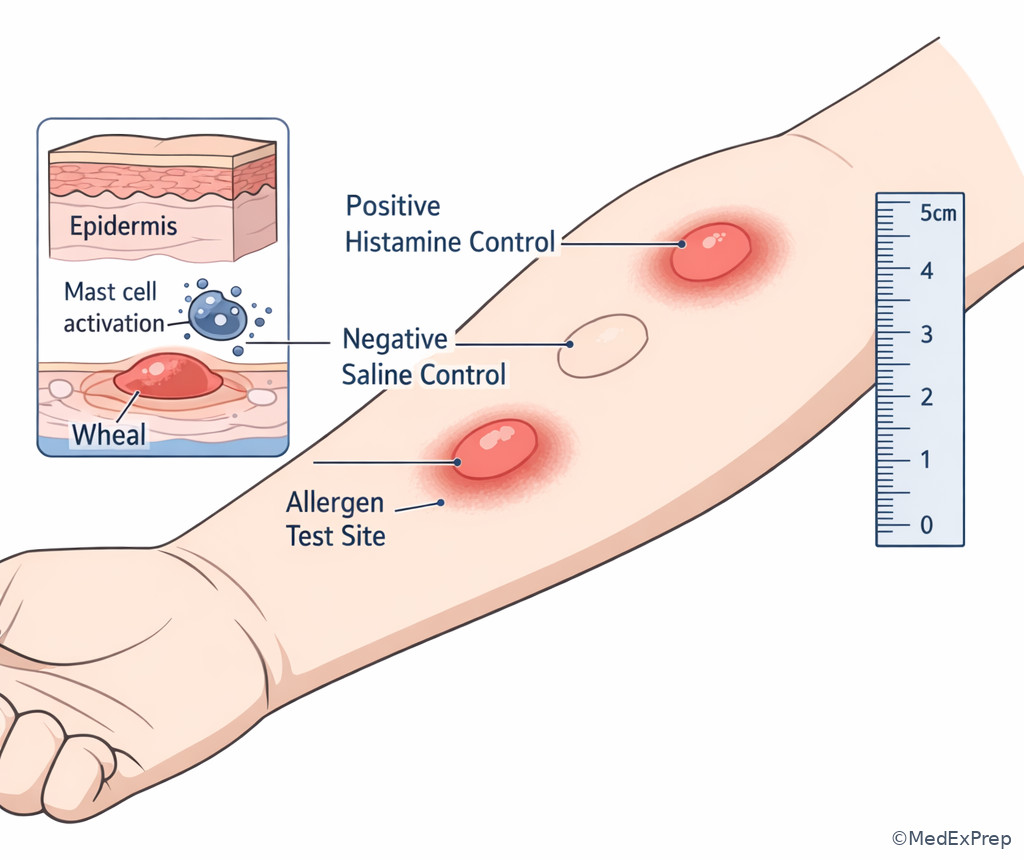
Exam takeaway: Laboratory positivity should be interpreted alongside exposure history rather than used as a stand-alone diagnosis.
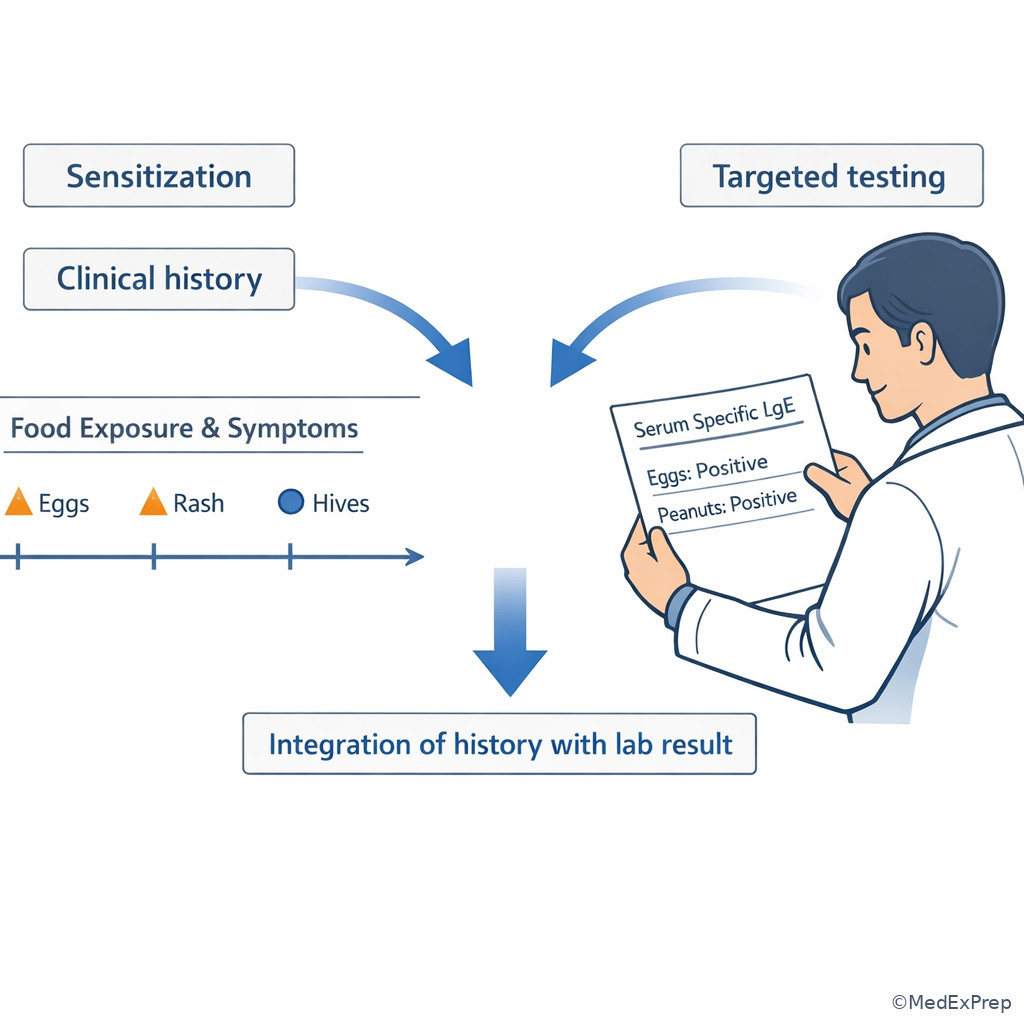
B Worked example
A 28-year-old man with asthma, eczema, and anxiety is referred after online testing reportedly showed “multiple severe allergies.” He has positive serum specific IgE to dog, peanut, and wheat. He has lived with a dog for 6 years without symptoms, eats wheat daily, and reports only one episode of lip itching after a peanut-containing dessert 2 years ago while also having oral ulcers from a viral illness. Total IgE is high. The tempting but wrong clue is the phrase “multiple severe allergies,” which invites broad avoidance.
Reasoning chain: Identify the task: choose the best interpretation of multiple positive tests. Extract key facts: current tolerance of dog exposure and wheat ingestion argues strongly against clinically significant allergy to those items. Peanut remains uncertain because there may have been a possible prior symptom, but the event was poorly specific. Apply the rule: targeted interpretation beats panel labeling. Eliminate distractors: anxiety and total IgE do not determine clinical allergy. Verify safety: unnecessary avoidance is harmful, especially with foods; further focused specialist evaluation may be appropriate.
C Exam trap
D Checkpoint
Question: Which statement best reflects appropriate interpretation of skin prick testing in suspected Type I hypersensitivity?
- A negative test confirms a nonallergic diagnosis in every case.
- A positive test confirms the allergen is clinically relevant regardless of symptoms.
- Testing is most informative when selected to match a convincing immediate exposure history.
- Skin prick testing is useful only after anaphylaxis, not for outpatient allergic disease.
- A: Tempting because negative tests are reassuring, but wrong because no test perfectly rules out all clinical possibilities in every context.
- B: Tempting because positivity signals immune recognition, but wrong because sensitization alone does not prove clinical reactivity.
- C: Tempting because it reflects real-world allergy reasoning, and it is correct because pretest probability and exposure history drive interpretability.
- D: Tempting if one associates allergy testing only with severe reactions, but wrong because outpatient rhinitis, food, and venom evaluations commonly use targeted testing.
Exam Traps & Differentiators
- Most common wrong answer: equating a positive IgE-based test with definitive disease. Why it is tempting: the pathway is literally IgE-mediated. Single clue that eliminates it: no reproducible immediate symptoms with exposure.
- Looks similar but isn’t: chronic spontaneous urticaria can involve mast cells yet often lacks an allergen-specific immediate trigger pattern.
- Looks similar but isn’t: ACE inhibitor angioedema may resemble “allergy,” but slower onset and bradykinin mechanism break the Type I pattern.
- Looks similar but isn’t: allergic contact dermatitis is exposure-related but delayed and T-cell mediated, not immediate IgE-mediated.
- Cross-topic trap: the upcoming lesson on non-IgE reaction mechanisms will cover pseudoallergic and direct mast-cell activation reactions that mimic Type I disease clinically; the discriminator is often the mechanism and exposure context, not just the presence of hives.
If the stem says “within minutes after exposure,” think immediate mediator release until proven otherwise.
If the stem says “positive test but no history of symptoms,” think sensitization without proven clinical allergy.
If the stem says “upper airway itch, sneeze, rhinorrhea after seasonal exposure,” think localized Type I phenotype rather than infection.
If the stem says “swelling without hives on an ACE inhibitor,” think bradykinin, not IgE.
If the stem says “hours-later persistent inflammation after an immediate event,” think late phase of the same allergic pathway, not necessarily a different disease.
| Feature | Type I hypersensitivity | Common confounder | Single discriminator |
|---|---|---|---|
| Food-triggered symptoms | Immediate oral itch, hives, vomiting, wheeze | Food intolerance | Immune-pattern reproducibility and possible multisystem involvement |
| Angioedema | Often with urticaria or other allergic symptoms | ACE inhibitor or hereditary angioedema | Bradykinin forms usually lack hives and are not classic immediate IgE reactions |
| Rash after exposure | Urticaria within minutes | Allergic contact dermatitis | Contact dermatitis is delayed and eczematous |
| Respiratory complaint | Wheeze with trigger-linked immediate onset | Chronic asthma without clear allergen trigger | Timing and multisystem context |
| Positive testing | Supports mechanism when history fits | Incidental sensitization | Clinical relevance depends on exposure-response history |
| Stem phrase | Best first thought | Why |
|---|---|---|
| “Minutes after peanut ingestion” | IgE-mediated food reaction | Classic immediate timing |
| “Next day blistering rash after antibiotic” | Not classic Type I pathway | Delayed pattern |
| “Positive cat IgE but no symptoms around cats” | Sensitization only for now | History does not confirm clinical allergy |
| “Hives plus hypotension” | Anaphylaxis framework | Systemic immediate hypersensitivity risk |
| “Congestion for months, no itching or sneezing” | Do not reflexively label Type I disease | Phenotype is incomplete for classic allergic rhinitis |
Algorithm / Approach
Exam takeaway: The most efficient board approach starts with timing and severity before testing details.
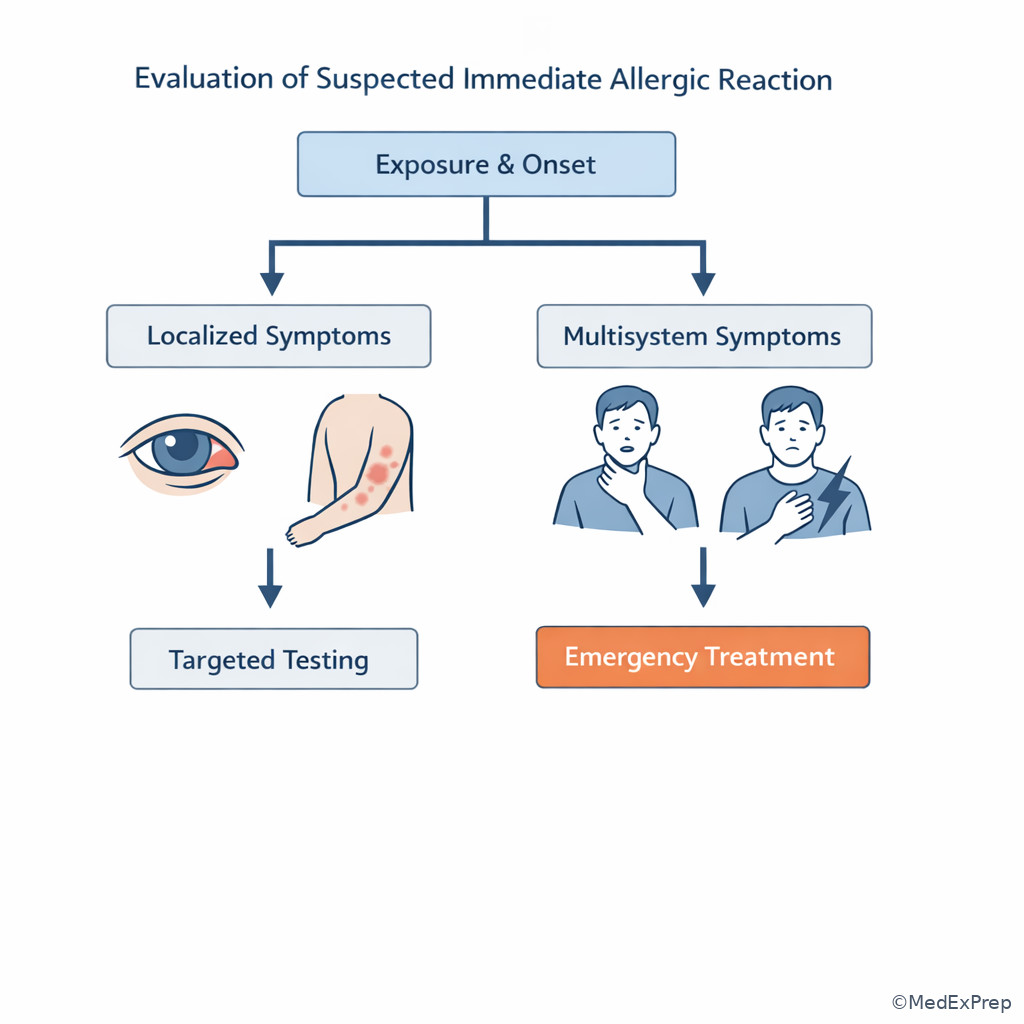
Rapid Review
- Sensitization → IgE presence without guaranteed symptoms
- Clinical allergy → requires symptom-producing re-exposure, not just a positive test
- Trigger step → allergen cross-linking of mast-cell-bound IgE
- Best timing clue → minutes to about 2 hours favors Type I pathway
- Histamine-rich phase → itch, wheal-and-flare, sneeze, rhinorrhea
- Leukotriene-heavy clue → prolonged bronchoconstrictive contribution
- Late phase → hours later, recruited inflammatory cells dominate
- Best effector cell to remember → tissue mast cell
- Basophil → circulating partner, not the classic tissue-resident primary cell
- Positive skin test → supports sensitization, not automatic disease
- Negative targeted test → lowers likelihood of IgE-mediated reaction to that allergen
- Localized rhinitis symptoms → can still be Type I disease without systemic involvement
- Hives plus hypotension → jump to anaphylaxis framework, not “just urticaria” thinking
- ACE inhibitor swelling → bradykinin clue, not classic IgE
- Delayed eczematous rash → think non-IgE mechanism instead of Type I
Self-check quiz
1. A 19-year-old man with seasonal allergic rhinitis develops sneezing and itchy eyes within minutes of mowing grass every spring. Which immune event most directly explains his immediate symptoms?
- Immune complex deposition in small vessels
- Allergen cross-linking of mast-cell-bound IgE
- T-cell-mediated keratinocyte apoptosis
- Bradykinin accumulation from ACE inhibition
2. A 7-year-old boy with eczema and allergic rhinitis has positive serum specific IgE to peanut on screening but has never eaten peanut and has had no immediate food reactions. Which interpretation is most appropriate?
- Clinical peanut allergy is confirmed
- He has immune tolerance to peanut
- He is sensitized to peanut without proven clinical allergy
- The test is uninterpretable because he has atopy
3. A 32-year-old woman with asthma and eczema develops diffuse urticaria, cough, and lightheadedness 15 minutes after eating walnut-containing cake at a party. She took cetirizine 10 minutes ago but continues to worsen. Which is the most appropriate next step?
- Administer intramuscular epinephrine
- Give oral corticosteroids and observe at home
- Order serum specific IgE before treatment
- Administer only an H2 blocker because histamine is the major mediator
4. A 24-year-old man with perennial congestion, OSA, and obesity has year-round nasal blockage and facial pressure but no sneezing, nasal itch, or clear trigger-related worsening. He asks whether this is “definitely allergy.” Which is the most appropriate interpretation?
- Classic Type I hypersensitivity is strongly supported by congestion alone
- Type I hypersensitivity is unlikely because allergic disease never causes congestion
- The phenotype is incomplete for classic Type I disease, so broader upper-airway differential reasoning is needed
- A serum total IgE level is sufficient to establish the diagnosis
5. A 41-year-old woman with allergic rhinitis and chronic urticaria has positive skin testing to cat, dog, and dust mite. She reports marked sneezing only around cats, no symptoms around dogs, and no clear worsening during travel or dust exposure. Which is the most appropriate interpretation?
- All three positive tests confirm equally important clinical allergies
- The cat result best matches clinical allergy; the others may represent sensitization without current relevance
- The dog and dust mite results are definitely false positives
- Chronic urticaria proves all three aeroallergens are clinically relevant
6. A 58-year-old woman with hypertension on lisinopril, osteoarthritis, and remote allergic rhinitis presents with tongue swelling that developed gradually over 8 hours. She has no urticaria, no pruritus, and no clear food trigger. Which diagnosis is most likely?
- IgE-mediated food allergy
- ACE inhibitor-associated bradykinin angioedema
- Acute spontaneous urticaria with angioedema
- Late-phase allergic rhinitis flare
7. A 26-year-old man with asthma and atopic dermatitis develops generalized hives and wheezing 20 minutes after ibuprofen. He tolerated ibuprofen several times in the past but also reports recurrent nasal polyps and chronic congestion. Which feature most requires caution before labeling this event a straightforward classic allergen-specific Type I pathway question?
- His history of asthma
- His history of atopic dermatitis
- His pattern of nasal polyps and chronic congestion suggesting an NSAID-related phenotype
- His prior tolerance of ibuprofen proving this cannot be hypersensitivity
8. A 13-year-old girl with eczema, allergic rhinitis, and anxiety has immediate oral itching after hazelnut once, but eats Nutella-containing products intermittently without symptoms. Serum specific IgE to hazelnut is low-positive. Which is the most appropriate next reasoning step?
- Diagnose definitive IgE-mediated hazelnut allergy and require lifelong strict avoidance
- Interpret the test as proving clinically relevant systemic food allergy
- Recognize discordance between test and history, with possible sensitization or limited reactivity rather than proven allergy
- Ignore the result entirely because low-positive tests are never meaningful
Answer key
1.1.1.8 1. Answer: B
A. Immune complex deposition in small vessels: Tempting because it is another immune-mediated hypersensitivity mechanism, but incorrect for this scenario because immediate seasonal sneezing and itchy eyes are classic mast-cell-mediated symptoms, not vasculitic immune complex disease. Single discriminating clue: minutes-after-grass exposure upper-airway symptoms. Source: AAAAI/ACAAI allergy practice parameters; Middleton’s Allergy: Principles and Practice.
B. Allergen cross-linking of mast-cell-bound IgE: Tempting because it directly links the mechanism to the symptom timing, and it is correct because re-exposure bridges adjacent IgE molecules on mast cells, releasing mediators that cause acute rhinitis/conjunctivitis symptoms. Single discriminating clue: immediate reproducible seasonal exposure pattern. Source: Middleton’s; UpToDate, “Pathophysiology of allergic disease.”
C. T-cell-mediated keratinocyte apoptosis: Tempting because delayed hypersensitivity is also board relevant, but incorrect because this mechanism fits severe delayed drug reactions or contact dermatitis rather than minutes-phase pollen symptoms. Single discriminating clue: onset is too rapid. Source: Harrison’s Principles of Internal Medicine.
D. Bradykinin accumulation from ACE inhibition: Tempting because it causes swelling reactions, but incorrect because bradykinin does not explain classic sneezing and itchy eyes after pollen exposure. Single discriminating clue: rhinoconjunctivitis phenotype rather than isolated angioedema. Source: Harrison’s; UpToDate on bradykinin-mediated angioedema.
1.1.1.9 2. Answer: C
A. Clinical peanut allergy is confirmed: Tempting because peanut-specific IgE sounds decisive, but incorrect because the child has no exposure-linked immediate reaction history. Single discriminating clue: never eaten peanut and no symptom pattern. Source: NIAID food allergy guidance; UpToDate on food allergy diagnosis.
B. He has immune tolerance to peanut: Tempting because he is asymptomatic, but incorrect because absence of known reaction without exposure does not prove tolerance. Single discriminating clue: no established ingestion tolerance. Source: NIAID guidelines; Middleton’s.
C. He is sensitized to peanut without proven clinical allergy: Tempting because it respects the test while avoiding overdiagnosis, and it is correct because positive specific IgE documents sensitization only. Single discriminating clue: positive test with no reproducible immediate reaction history. Source: NIAID food allergy guidelines; AAAAI practice resources.
D. The test is uninterpretable because he has atopy: Tempting because atopy increases false assumptions and broad sensitization, but incorrect because the result is still interpretable as sensitization. Single discriminating clue: atopy complicates relevance, not the existence of sensitization. Source: Middleton’s; UpToDate.
1.1.1.10 3. Answer: A
A. Administer intramuscular epinephrine: Tempting because it may feel aggressive, and it is correct because diffuse urticaria plus cough and lightheadedness minutes after food exposure indicate systemic immediate hypersensitivity/anaphylaxis risk. Antihistamines do not replace epinephrine in progressive systemic reactions. Single discriminating clue: multisystem involvement with worsening symptoms after ingestion. Source: World Allergy Organization anaphylaxis guidance; AAAAI/ACAAI practice parameter.
B. Give oral corticosteroids and observe at home: Tempting because steroids are often used in allergic disease, but incorrect because they are not first-line rescue therapy for acute systemic reactions. Single discriminating clue: active respiratory and presyncopal symptoms require immediate stabilization. Source: WAO anaphylaxis guidance.
C. Order serum specific IgE before treatment: Tempting because identifying the trigger matters, but incorrect because testing never precedes stabilization in a likely anaphylactic event. Single discriminating clue: urgent treatment priority. Source: AAAAI/ACAAI anaphylaxis parameter.
D. Administer only an H2 blocker because histamine is the major mediator: Tempting because histamine contributes to hives, but incorrect because bronchospasm and systemic compromise involve broader mediators and require epinephrine. Single discriminating clue: cough and lightheadedness, not isolated pruritus. Source: WAO; UpToDate.
1.1.1.11 4. Answer: C
A. Classic Type I hypersensitivity is strongly supported by congestion alone: Tempting because congestion is common in allergic rhinitis, but incorrect because congestion without itch, sneeze, or trigger-linked immediacy is nonspecific. Single discriminating clue: incomplete allergic phenotype. Source: Rhinitis practice parameters; UpToDate on allergic vs nonallergic rhinitis.
B. Type I hypersensitivity is unlikely because allergic disease never causes congestion: Tempting because the case seems atypical, but incorrect because congestion can absolutely occur in allergic rhinitis; it is just not specific enough by itself. Single discriminating clue: the issue is insufficiency, not impossibility. Source: Rhinitis parameters.
C. The phenotype is incomplete for classic Type I disease, so broader upper-airway differential reasoning is needed: Tempting because it preserves nuance, and it is correct because classic Type I pattern recognition depends on timing, trigger specificity, and compatible symptoms—not congestion alone. Single discriminating clue: lack of itching, sneezing, and trigger-linked worsening. Source: AAAAI/ACAAI rhinitis guidance; Middleton’s.
D. A serum total IgE level is sufficient to establish the diagnosis: Tempting because total IgE sounds global, but incorrect because it is neither specific nor diagnostic for allergic rhinitis. Single discriminating clue: total IgE does not establish exposure relevance. Source: UpToDate; allergy practice standards.
1.1.1.12 5. Answer: B
A. All three positive tests confirm equally important clinical allergies: Tempting because all are positive and plausible aeroallergens, but incorrect because clinical relevance depends on matched history. Single discriminating clue: symptoms occur only around cats. Source: AAAAI practice parameters on aeroallergen testing.
B. The cat result best matches clinical allergy; the others may represent sensitization without current relevance: Tempting because it integrates history and testing, and it is correct because only cat exposure reliably produces symptoms. Single discriminating clue: exposure-symptom concordance for cat alone. Source: AAAAI/ACAAI testing guidance; Middleton’s.
C. The dog and dust mite results are definitely false positives: Tempting because they do not match symptoms, but incorrect because they may represent real sensitization without current clinically obvious disease. Single discriminating clue: positive tests can be true yet not clinically dominant. Source: UpToDate on test interpretation.
D. Chronic urticaria proves all three aeroallergens are clinically relevant: Tempting because chronic urticaria sounds allergic, but incorrect because chronic spontaneous urticaria is usually not explained by positive aeroallergen tests. Single discriminating clue: urticaria history does not validate aeroallergen relevance. Source: Urticaria guidelines; Middleton’s.
1.1.1.13 6. Answer: B
A. IgE-mediated food allergy: Tempting because tongue swelling raises concern for an allergic emergency, but incorrect because there is no food trigger, no urticaria, no pruritus, and the onset is gradual over hours. Single discriminating clue: lisinopril use with nonurticarial slow swelling. Source: AAAAI angioedema resources; UpToDate on ACE inhibitor angioedema.
B. ACE inhibitor-associated bradykinin angioedema: Tempting because the medication history fits perfectly, and it is correct because bradykinin-mediated angioedema typically presents without hives or itch and may evolve over hours. Single discriminating clue: ACE inhibitor exposure plus absence of urticaria. Source: Harrison’s; UpToDate.
C. Acute spontaneous urticaria with angioedema: Tempting because urticaria can involve swelling, but incorrect because the stem lacks hives and pruritus. Single discriminating clue: isolated swelling phenotype. Source: Urticaria guidelines.
D. Late-phase allergic rhinitis flare: Tempting because late-phase allergy causes lingering inflammation, but incorrect because isolated tongue swelling is not a rhinitis phenotype. Single discriminating clue: target organ mismatch. Source: Rhinitis practice parameters.
1.1.1.14 7. Answer: C
A. His history of asthma: Tempting because asthma increases severity risk in allergic reactions, but incorrect because asthma alone does not specifically challenge the mechanism label. Single discriminating clue: asthma is a risk modifier, not the key mechanistic separator here. Source: AERD and NSAID hypersensitivity reviews; UpToDate.
B. His history of atopic dermatitis: Tempting because atopy is associated with allergic disease, but incorrect because eczema does not specifically point away from a classic allergen-specific IgE pathway. Single discriminating clue: eczema is background atopy, not the discriminator. Source: Middleton’s.
C. His pattern of nasal polyps and chronic congestion suggesting an NSAID-related phenotype: Tempting because it introduces a different mechanism, and it is correct because aspirin/NSAID-exacerbated respiratory disease and related NSAID reaction phenotypes can mimic “allergy” but are not simply classic allergen-specific Type I pathways. Single discriminating clue: nasal polyps plus chronic respiratory disease. Source: AAAAI practice parameter on NSAID hypersensitivity; UpToDate.
D. His prior tolerance of ibuprofen proving this cannot be hypersensitivity: Tempting because prior tolerance sounds reassuring, but incorrect because some drug reaction phenotypes can still appear later; prior tolerance does not close the case. Single discriminating clue: mechanism can depend on phenotype rather than first-dose inevitability. Source: Drug allergy texts and practice parameters.
1.1.1.15 8. Answer: C
A. Diagnose definitive IgE-mediated hazelnut allergy and require lifelong strict avoidance: Tempting because immediate oral itching plus positive testing raises concern, but incorrect because intermittent tolerance strongly argues against a simple definitive conclusion from this limited history. Single discriminating clue: tolerated hazelnut-containing products. Source: Food allergy practice guidance; UpToDate.
B. Interpret the test as proving clinically relevant systemic food allergy: Tempting because the test is positive, but incorrect because low-positive IgE without consistent systemic reactions does not prove clinically significant systemic allergy. Single discriminating clue: discordant history. Source: NIAID guidelines; Middleton’s.
C. Recognize discordance between test and history, with possible sensitization or limited reactivity rather than proven allergy: Tempting because it may feel less decisive, and it is correct because board reasoning prioritizes history-test integration, especially when tolerance exists. Single discriminating clue: repeated tolerated exposures outweigh a stand-alone low-positive result. Source: NIAID food allergy guidelines; UpToDate.
D. Ignore the result entirely because low-positive tests are never meaningful: Tempting because overtesting produces noise, but incorrect because even low-positive results may be relevant in the right clinical context. Single discriminating clue: the issue is nuanced interpretation, not dismissal. Source: AAAAI/ACAAI food allergy resources.
Keep going with the full ABAI Allergy & Immunology Prep Course (Allergy)
You just studied the way members do, in the same lesson interface. Full access unlocks every lesson, the question bank and flashcards for a full year.
One payment · 1 year of access · No auto-renewal